Ever looked at your medicine bottle and felt confused by those small stickers with symbols and words like "May cause drowsiness" or "Take on empty stomach"? You’re not alone. These aren’t just random decorations-they’re pharmacy warning icons, designed to keep you safe. But if you’ve ever taken eye drops by mouth because you misread the dropper symbol, or skipped a dose because you thought "take with food" meant you had to eat a full meal first, you’ve seen how these warnings can backfire.
What Are Pharmacy Warning Icons?
Pharmacy warning icons are visual cues-stickers with pictures, colors, and short text-that pharmacists put on prescription bottles. They’re meant to tell you important things fast: Don’t drive after taking this. Don’t mix with alcohol. Don’t crush the pill. Unlike long instruction sheets, these icons work even if you can’t read well, don’t speak English, or are in a hurry. They’re part of a system called Cautionary and Advisory Labels (CALs), first pushed by the Institute for Safe Medication Practices (ISMP) in the 1990s. By 2007, most big U.S. pharmacies started using them.These aren’t just random pictures. Each one has a meaning. A yellow sticker with a sleeping person usually means the drug makes you sleepy. A red circle with a slash over a glass of wine means don’t drink alcohol. A blue icon with a clock might mean take it on an empty stomach. The colors matter too: yellow says "be careful," red says "danger," and white or green often mean "recommended." But here’s the problem-many people don’t know what the colors mean.
Why Do These Icons Exist?
Medication errors kill at least 7,000 people in the U.S. every year, according to the FDA. A lot of those errors come from patients misunderstanding their labels. Maybe they didn’t know their blood pressure pill could make them dizzy. Or they thought "take twice daily" meant every 12 hours, not morning and night. These icons were created to stop that.They’re especially helpful for older adults, non-English speakers, and people with low health literacy. The FDA found that when symbols are paired with simple text, errors drop by 40% among people who don’t speak English well. A study in New Zealand showed their national system improved patient understanding by 22% compared to the U.S.’s patchwork system. That’s because New Zealand uses one standard set of 10 icons across all pharmacies. In the U.S.? CVS uses 14. Walgreens uses 17. Independent pharmacies often use over 20. That inconsistency confuses people.
Common Warning Icons and What They Really Mean
Here are the most common ones you’ll see-and what they actually mean, based on real patient misunderstandings:- Sleeping person on yellow background - "This medicine may make you very sleepy. Don’t drive, operate machinery, or make important decisions." Many patients think it just means "feel tired," not that it’s dangerous to be active.
- Glass of wine with a red slash - "Do not drink alcohol while taking this." But 32% of patients in one study thought it meant "don’t drink alcohol all week," not just while on the drug.
- Dropper with a drop falling into an eye - "For external use only." One Reddit user said their mom took eye drops orally because she thought the dropper meant it was meant to be swallowed.
- Empty stomach with a clock - "Take on an empty stomach." Most patients think this means "no food for 2 hours before," but the real rule is usually "no food 1 hour before and after."
- Pill with a slash through it - "Do not crush or chew." But 57% of patients in a U.S. Pharmacist study thought it meant "don’t swallow whole," so they broke the pill and spat it out.
Even simple phrases like "Take with food" are misunderstood. A 2022 survey found 68% of patients didn’t know "with food" just means a snack or light meal-not a full steak dinner. And here’s the scariest part: 41% of patients say they "understand" a label, but later prove they got it wrong.
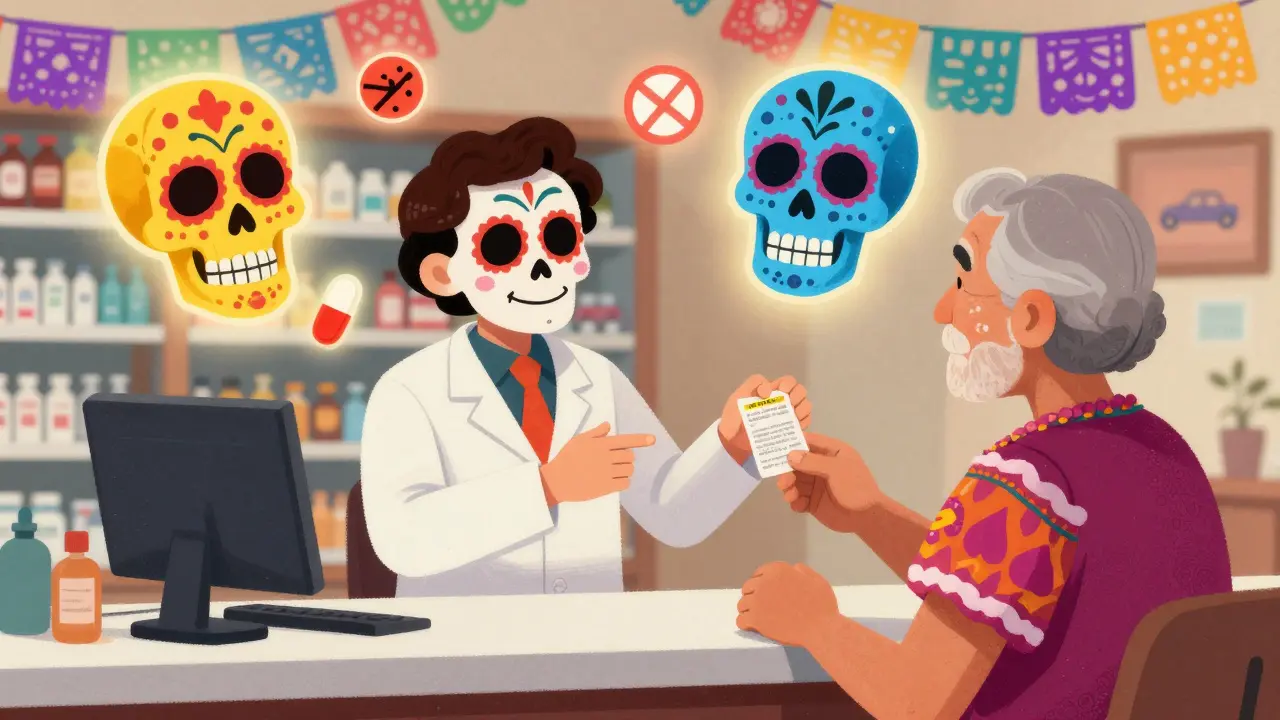
Why Do People Keep Misunderstanding Them?
There are three big reasons:- Too many labels. A 2020 FDA survey found 63% of patients said their bottle looked like a "sticker bomb." When there are 8 warnings on a bottle, people stop reading. Pharmacists often over-label out of fear, putting on every possible warning-even if it doesn’t apply to you.
- Small text. FDA rules say warning text must be at least 6-point font. That’s tiny. If you’re 70 and don’t wear reading glasses, you can’t read it.
- Symbols aren’t universal. The "radioactive" symbol for "external use only" is used in the U.S., but 68% of people with low health literacy think it means "dangerous" or "toxic," not "don’t swallow." Symbols that work in one country don’t always work in another.
And then there’s the digital gap. Some pharmacies now add QR codes to labels that link to video instructions. Great idea-unless you’re a senior who doesn’t use smartphones. Pew Research says 24% of Americans over 65 don’t regularly use the internet. So now you’ve got a safety tool that leaves out the people who need it most.
What’s Changing in 2025?
The FDA is finally stepping in. In September 2022, they released draft rules to standardize 12 core warning icons nationwide. By 2026, every pharmacy in the U.S. should use the same set. CVS already cut its 14 labels down to 12 in late 2023. Walgreens is following suit by mid-2024. This is a big deal.Some pharmacies are testing smarter systems. Kaiser Permanente tried augmented reality labels-point your phone at the bottle and a video plays showing how to take the medicine. In tests, comprehension jumped from 58% to 89%. The University of Pittsburgh is working on AI that customizes labels based on your age, medical history, and literacy level. For example, if you’re 82 and have memory issues, the label might say: "Take this pill at 8 a.m. every day. Set a phone alarm."
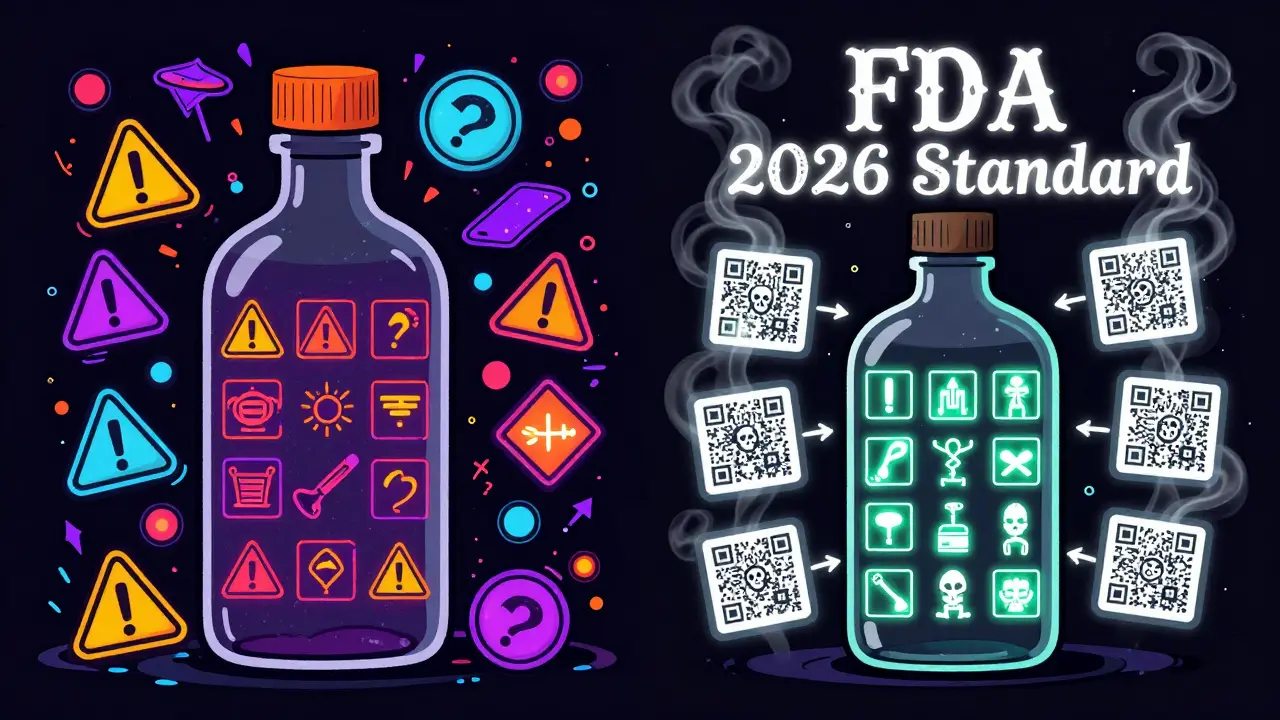
What You Can Do Right Now
You don’t have to wait for the system to fix itself. Here’s what works:- Ask your pharmacist to explain each sticker. Don’t be shy. Say: "Can you walk me through what each of these means?" Most pharmacists are happy to help.
- Take a photo of your label. Show it to a family member or friend. Sometimes another pair of eyes catches what you miss.
- Use the ISMP’s free tool. The Institute for Safe Medication Practices offers a "Medication Safety Self-Assessment" online. It’s simple, takes 5 minutes, and helps you spot common misunderstandings.
- Ask for large-print labels. Most pharmacies can print a bigger version if you ask. Some even offer audio labels on USB drives.
- Don’t guess. If you’re unsure what a symbol means, call your pharmacy. Don’t risk it.
The Bigger Picture
These little stickers are part of a $615 billion drug industry. And they’re not just about safety-they’re about money. Medication errors cost the U.S. $21.3 billion a year in extra hospital visits, ER trips, and lost work. The Congressional Budget Office estimates that standardized icons could prevent 12,000 to 18,000 dangerous events by 2030 and save $1.2 billion.But no icon replaces a conversation. Dr. Michael Cohen from ISMP says: "Standardized warning labels are necessary but insufficient without proper patient counseling." That’s the truth. A sticker tells you what to do. A pharmacist tells you why.
Next time you pick up a prescription, don’t just grab the bottle. Look at the labels. Ask questions. And if you’re helping someone else-like an older parent-help them understand too. These icons are meant to protect you. But they only work if you know what they mean.
What does the yellow sticker with a sleeping person mean on my medicine?
It means the medication can make you very drowsy or impair your ability to think clearly. You should avoid driving, operating heavy machinery, or making important decisions after taking it. Many people think it just means "feel tired," but the real risk is that you could fall asleep suddenly or react slowly in an emergency.
Why do some pharmacies have more warning labels than others?
In the U.S., there’s no national standard yet. CVS uses 14 warning icons, Walgreens uses 17, and independent pharmacies often use over 20. This inconsistency confuses patients who switch pharmacies. The FDA is pushing for a single set of 12 standardized icons by 2026 to fix this problem.
Can I ignore a warning label if I’ve taken the medicine before without problems?
No. Warning labels are based on how the drug affects most people, not just you. Just because you didn’t get dizzy last time doesn’t mean you won’t this time. Your body changes with age, other medications, or health conditions. Always follow the label, even if you think it doesn’t apply.
What does "take on an empty stomach" really mean?
It usually means take the medicine at least one hour before eating and wait at least one hour after taking it before you eat. Some people think it means no food all day, which isn’t true. If you’re unsure, ask your pharmacist for the exact timing.
Are there alternatives to sticky warning labels?
Yes. Some pharmacies now offer digital options like QR codes that link to video instructions, or audio labels on USB drives. Large-print labels are also available if you ask. But these aren’t perfect-QR codes don’t help if you don’t use smartphones, and audio labels require a device to play them. The best solution is still a clear conversation with your pharmacist.
What should I do if I think I misread a warning label?
Call your pharmacy immediately. Don’t wait for symptoms. Tell them what you thought the label said and what you actually did. They can advise if you’re at risk and whether you need to see a doctor. Many errors are caught early this way.
If you’re caring for someone older or with memory issues, write down their medication schedule. Use a pill organizer. Set phone alarms. Keep a list of all their meds and the warning icons on each bottle. These small steps prevent big problems.
Medication safety isn’t just the pharmacist’s job. It’s yours too. You’re the last line of defense. Don’t assume. Ask. Double-check. And if something doesn’t make sense-trust your gut. It’s better to call once too many than to risk your health because you thought you understood.
Bailey Adkison
December 25, 2025 AT 07:42Mussin Machhour
December 25, 2025 AT 18:13Carlos Narvaez
December 26, 2025 AT 00:42Harbans Singh
December 27, 2025 AT 08:52Justin James
December 28, 2025 AT 22:31Zabihullah Saleh
December 29, 2025 AT 04:44Winni Victor
December 29, 2025 AT 06:06Rick Kimberly
December 30, 2025 AT 10:11