Most people think if their nose is stuffed up, their face hurts, and their mucus is green, they need antibiotics. But here’s the truth: sinusitis is almost always viral-and antibiotics won’t help. In fact, taking them when you don’t need them can hurt you more than help.
What Is Sinusitis, Really?
Sinusitis, also called rhinosinusitis, is when the lining of your sinuses-those hollow spaces around your nose, eyes, and forehead-gets swollen and inflamed. It’s not a single disease. It’s your body’s reaction to something irritating it. Most of the time, that something is a cold virus. About 90 to 98% of acute sinus infections are viral, according to the American College of Allergy, Asthma, and Immunology. That means your immune system is fighting off a cold, and your sinuses are just caught in the crossfire.
Only 2 to 10% of cases are bacterial. That’s a tiny fraction. But because the symptoms can feel the same at first, doctors and patients often mix them up. And that’s where the problem starts.
Viral vs. Bacterial: How to Tell the Difference
You can’t tell just by looking at your snot. Green mucus doesn’t automatically mean bacteria. Viruses can make thick, discolored discharge too. The real clues are in the timeline and how your symptoms behave.
Viral sinusitis usually starts like a cold: runny nose, mild facial pressure, maybe a low-grade fever. Symptoms peak around day 3 to 5, then slowly get better. Most people feel back to normal within 7 to 10 days. If you’re improving after a week, even if you still have some congestion, it’s almost certainly viral.
Bacterial sinusitis behaves differently. Two patterns stand out:
- Symptoms last longer than 10 days without getting better.
- You start feeling better after 5 or 6 days-then suddenly get worse again. This is called the "double-worsening" pattern. It’s a red flag.
Other signs that point to bacteria:
- Thick, yellow-green mucus that doesn’t clear up
- Severe pain or pressure on one side of your face
- Fever over 102°F (38.9°C) lasting more than 3 days
- Pain in your upper teeth-your sinuses sit right above them, so infection can radiate
These signs don’t guarantee bacteria, but they’re strong enough to make a doctor pause and consider antibiotics.
When Do Antibiotics Actually Help?
Antibiotics are powerful tools-but only against bacteria. They do nothing to viruses. Giving them for viral sinusitis is like using a hammer to fix a leaky faucet. It doesn’t work, and it can cause damage.
The Infectious Diseases Society of America and the American Academy of Otolaryngology agree: don’t start antibiotics unless symptoms last more than 10 days, or if they get worse after initial improvement.
If you do need them, here’s what works:
- Amoxicillin 500mg three times a day for 5 to 10 days is the first choice for most adults.
- If you’ve taken antibiotics recently or live in an area with high resistance, your doctor might prescribe amoxicillin-clavulanate (Augmentin) instead.
Don’t take azithromycin (Zithromax), clarithromycin, or trimethoprim-sulfamethoxazole (Bactrim) unless specifically told to. These drugs have high resistance rates against the bacteria that cause sinus infections. Studies show they often fail.
And here’s the kicker: even when antibiotics are needed, they only help a little. A Cochrane review found that for every 15 people treated with antibiotics for bacterial sinusitis, only one person felt noticeably better by day 7 to 15. The rest? They would’ve recovered just fine without them.
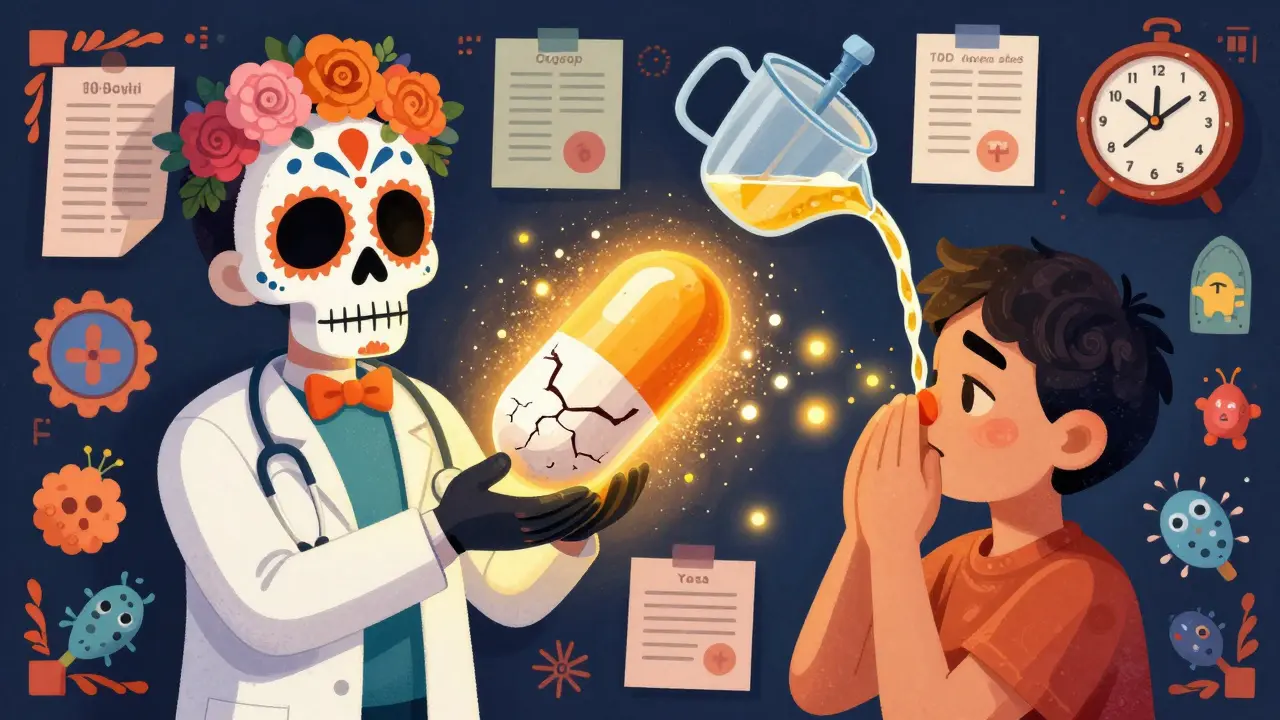
What to Do Instead (When You Don’t Need Antibiotics)
If your sinusitis is viral-and it probably is-your best weapons are simple, safe, and free:
- Hydrate. Drink at least 2 to 3 liters of water a day. Thinner mucus drains better.
- Saline nasal irrigation. Use a neti pot or nasal spray with sterile salt water. Do it 2 to 3 times a day. It flushes out viruses, mucus, and irritants. Most people get the hang of it after 3 or 4 tries.
- Humidify. Keep indoor humidity between 40% and 60%. Dry air makes mucus thick and sticky.
- Pain relief. Take acetaminophen (Tylenol) or ibuprofen (Advil) as needed. Avoid decongestant sprays like oxymetazoline (Afrin) beyond 3 days-they can cause rebound congestion.
- Rest. Your body needs energy to fight the virus. Don’t push through it.
These steps aren’t just "home remedies." They’re backed by science. A 2022 study in The Laryngoscope found that 75% of people using saline irrigation correctly saw faster symptom relief and fewer repeat infections.
The Hidden Dangers of Unnecessary Antibiotics
Every time you take an antibiotic you don’t need, you’re playing Russian roulette with your future health.
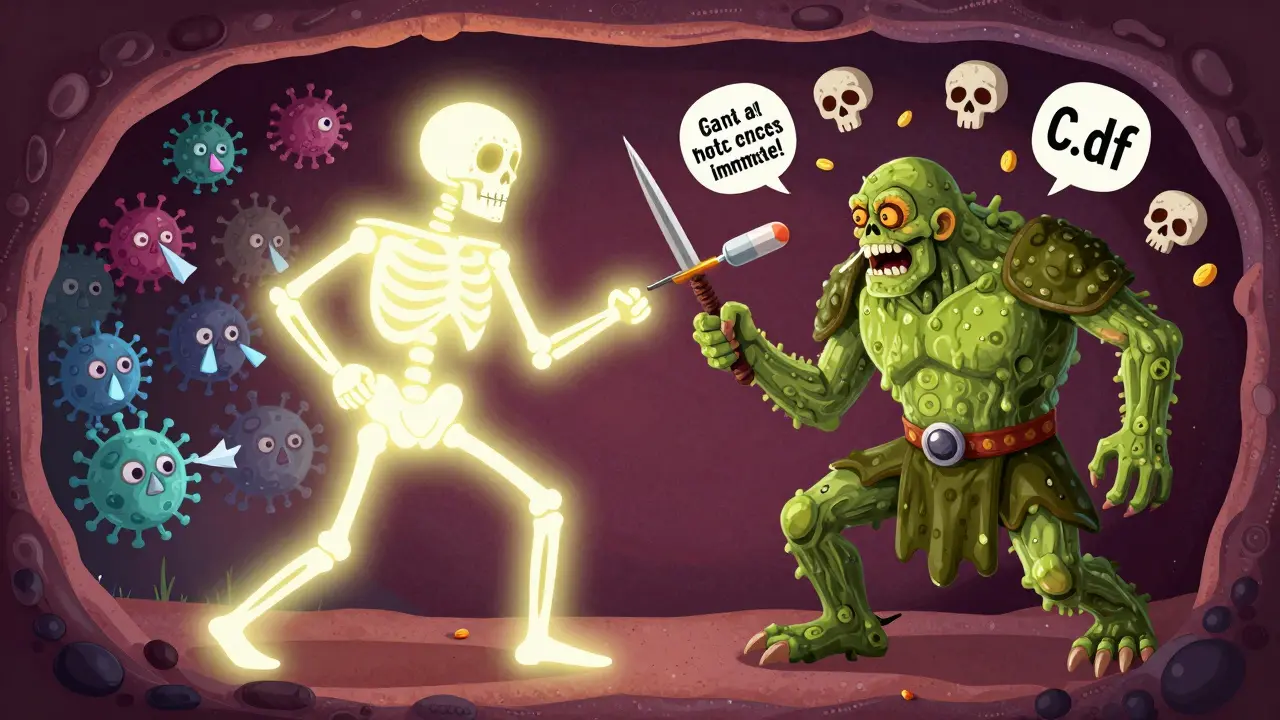
Antibiotics don’t just kill bad bacteria. They wipe out the good ones too-the ones that live in your gut, mouth, and nose and help keep you healthy. That disruption can lead to:
- Clostridioides difficile (C. diff) infection: a severe, sometimes deadly diarrhea that can strike after antibiotics. It has a 15% to 30% chance of coming back, and kills up to 30% of vulnerable patients.
- Antibiotic resistance: Bacteria evolve. Overuse makes them stronger. The CDC says 2.8 million antibiotic-resistant infections happen in the U.S. every year, and 35,000 people die from them.
- More doctor visits. People who take unnecessary antibiotics for sinusitis are more likely to need them again next time-even if it’s still viral.
One patient in Scotland developed C. diff after taking azithromycin for what turned out to be a viral infection. She spent 11 days in the hospital. That’s preventable.
Why Do Doctors Still Prescribe Them?
It’s not because they’re careless. It’s because patients expect them. A 2021 survey found that 55% of people believe antibiotics are needed if symptoms last more than 3 days. That’s not true. But it’s what they’ve heard.
On Reddit, 68% of people said they got antibiotics for sinus symptoms lasting less than 7 days. Most felt better in 48 hours-not because of the drug, but because their immune system finally caught up.
Doctors face pressure. Patients want a pill. Insurance doesn’t always cover time-consuming consultations. So sometimes, the easiest path is the wrong one.
But things are changing. The CDC’s "Get Smart" campaign has cut inappropriate antibiotic requests by 27% in clinics that use their free educational materials. When patients understand the science, they’re more willing to wait.
What’s New in Sinusitis Care?
Science is catching up. In May 2023, the FDA approved the first rapid test for bacterial sinusitis: SinuTest™. It checks for specific bacterial markers in nasal secretions and is 89% accurate. It’s not everywhere yet-but it’s coming.
Researchers are also testing nasal probiotics. A 2024 trial showed they reduced recurrent sinus infections by 42% compared to placebo. Imagine treating your sinuses like your gut-with good bacteria.
And in the future, doctors might test your genes to see if you’re likely to respond to certain antibiotics. That could cut unnecessary prescriptions by half.
When to See a Doctor
You don’t need to rush to the clinic for every sniffle. But if you have any of these, get help:
- Fever above 102°F lasting more than 3 days
- Severe headache that doesn’t improve with painkillers
- Swelling around your eyes or vision changes
- Stiff neck or confusion
- Symptoms lasting more than 14 days
These could mean complications-like an abscess or infection spreading to your brain. Rare, but serious.
Final Takeaway
Most sinus infections are viral. They suck, but they’ll pass. Antibiotics won’t speed that up. They just add risk.
Wait. Watch. Hydrate. Irrigate. Rest. If symptoms drag past 10 days or get worse after improving, then talk to your doctor. That’s when antibiotics might actually help.
Protecting yourself from unnecessary antibiotics isn’t just about your health-it’s about protecting everyone’s. Every time you avoid an unneeded pill, you help slow the rise of superbugs. That’s real power.
Is green mucus a sign of a bacterial sinus infection?
Not necessarily. Viral infections can also cause thick, green mucus. The color alone doesn’t mean bacteria are present. What matters more is how long symptoms last and whether they get worse after improving. Green discharge is common in both types of sinusitis.
Can I use a neti pot if I have sinusitis?
Yes, and it’s one of the most effective things you can do. Use distilled, sterile, or previously boiled water with non-iodized salt. Rinse 2 to 3 times daily to flush out mucus and irritants. Most people see improvement within a few days. Just avoid tap water-it can carry dangerous organisms.
How long should I wait before seeing a doctor for sinusitis?
Wait at least 10 days if symptoms are slowly improving. If they get worse after day 5 to 7, or if you develop high fever, severe pain, or vision changes, see a doctor right away. Don’t rush to antibiotics before then-most cases resolve on their own.
Are antibiotics ever unnecessary for sinusitis?
Yes-over 90% of the time. Most sinus infections are viral and will clear without antibiotics. Taking them when not needed increases your risk of side effects and antibiotic resistance. Guidelines from the CDC and American Academy of Family Physicians strongly advise against antibiotics for symptoms under 10 days.
What’s the best over-the-counter remedy for sinus pressure?
Ibuprofen or acetaminophen for pain and inflammation. Saline nasal sprays or irrigation are more effective than decongestants for long-term relief. Avoid nasal decongestant sprays (like Afrin) beyond 3 days-they can make congestion worse over time.
Kelly McRainey Moore
January 22, 2026 AT 11:06Green snot doesn’t mean bacteria, but man, it sure looks scary. I used to panic every time I saw it until I learned the timeline trick. Now I just drink tea, nap, and wait it out. No antibiotics needed. 🌿
Amber Lane
January 24, 2026 AT 06:55Saline rinses changed my life. I used to get sinus infections every other month. Now? Barely a sniffle. Just use distilled water. Don’t be lazy.
Ashok Sakra
January 25, 2026 AT 22:02WHY DO DOCTORS STILL GIVE ANTIBIOTICS?!?!?! I took azithromycin for a cold and ended up in the ER with diarrhea that smelled like hell. I hate medicine.
Gerard Jordan
January 26, 2026 AT 09:47THIS. So many people don’t know this! 🙌 I’m a nurse and I literally hand out this info like candy. Saline rinse + hydration = free magic. 🤫💧
michelle Brownsea
January 27, 2026 AT 09:50It’s not just about antibiotics-it’s about societal ignorance, medical overreach, and the dangerous myth that ‘more intervention equals better care.’ We’ve pathologized normal immune responses, and now we’re paying the price with superbugs, microbiome collapse, and infantilized patients who believe a pill fixes everything. This post? It’s not just informative-it’s a civic duty.
lokesh prasanth
January 28, 2026 AT 06:00neti pot bad. tap water bad. u need to boil water. i did it once. got sick. dont trust science.
Malvina Tomja
January 28, 2026 AT 18:03Oh, so now we’re supposed to just ‘wait’? What if I’m a working mom with three kids? You think I can just ‘hydrate and rest’? That’s rich. Meanwhile, my boss expects me to show up with a snotty face. So yes-I want the pill. And no, I don’t care about your superbugs.
Samuel Mendoza
January 28, 2026 AT 21:5990% viral? Prove it. Where’s the double-blind study? I’ve seen people get better after antibiotics. Coincidence? I think not.
Glenda Marínez Granados
January 28, 2026 AT 21:59So… we’re supposed to trust a 2024 nasal probiotic trial but not the guy who says ‘I took amoxicillin and felt better’? 😏 The real antibiotic is placebo. And it’s free.
Yuri Hyuga
January 30, 2026 AT 20:10This is one of the most important public health messages of our time. 🌍 Antibiotic resistance isn’t a future threat-it’s happening now, in real time, in hospitals, in homes, in our children. Thank you for sharing this with clarity and compassion. We need more of this. Keep going.
MARILYN ONEILL
February 1, 2026 AT 10:15I read this and I just… I can’t believe people still fall for this. I mean, really? You think your body can fight off a sinus infection without a real drug? That’s like saying your car can fix its own engine. You need the right tool. Antibiotics are that tool. Period.
Coral Bosley
February 1, 2026 AT 22:57I got prescribed amoxicillin for a 4-day cold once. I didn’t take it. I cried for three days, drank broth, and slept under a humidifier. I felt better on day 6. The doctor called me a ‘health rebel.’ I wore it like a badge.