Antihistamine Safety Checker
This tool helps you determine if your antihistamine is safe to take if you have high blood pressure. Enter your information below to get a personalized recommendation.
When you're sneezing, itchy, and congested, antihistamines can feel like a lifesaver. But if you have high blood pressure, you might be wondering: antihistamines - are they safe? The answer isn't simple. Some types won't touch your blood pressure. Others? They can cause noticeable drops - or, in combination products, dangerous spikes. Knowing which one you're taking and how to monitor it makes all the difference.
How Antihistamines Actually Work
Antihistamines block histamine, a chemical your body releases during allergic reactions. Histamine makes blood vessels leaky and wide, causing swelling, runny nose, and itchy eyes. By stopping histamine from binding to H1 receptors, antihistamines calm those symptoms. But histamine isn’t just in your nose - it’s in your blood vessels too. Blocking it can change how your blood vessels behave, which affects blood pressure. There are two main types: first-generation and second-generation. First-gen antihistamines like diphenhydramine (Benadryl) were developed in the 1940s. They cross into your brain easily, which is why they make you drowsy. Second-gen ones like loratadine (Claritin), cetirizine (Zyrtec), and fexofenadine (Allegra) were designed to stay out of your brain. That’s why they don’t make you sleepy - and why they’re much safer for people with heart conditions.First-Generation Antihistamines: The Blood Pressure Risk
Diphenhydramine is the most common first-gen antihistamine still in use. It’s cheap, effective, and widely available. But if you have high blood pressure, it’s not your best bet. When given intravenously - like in emergency rooms during severe allergic reactions - diphenhydramine can cause a sudden drop in systolic blood pressure by 8 to 12 mmHg within 15 minutes. That’s because blocking H1 receptors in blood vessels removes a signal that helps maintain normal vascular tone. The result? Blood vessels relax too much, and pressure falls. Oral doses don’t usually cause such dramatic drops, but they can still lead to dizziness, especially when standing up. A Drugs.com analysis found 14% of users reported dizziness upon standing - a classic sign of orthostatic hypotension. For someone already on blood pressure meds, this can be risky. One Reddit user documented a 10-12 mmHg systolic drop after IV Benadryl during allergy testing, requiring 30 minutes of monitoring before being discharged. First-gen antihistamines also have anticholinergic effects. This can cause your heart to race slightly, but it rarely raises blood pressure. Still, the combination of dizziness, low pressure, and a fast heartbeat can leave you feeling unwell - and increase fall risk, especially in older adults.Second-Generation Antihistamines: The Safer Choice
This is where things get better. Loratadine, cetirizine, and fexofenadine don’t cross the blood-brain barrier significantly. They’re designed to work only where you need them: in your nose and skin. Multiple studies confirm these have minimal to no effect on blood pressure. A 2022 FDA review of 97 clinical trials found loratadine had neutral effects in 97% of cases. The American Heart Association’s 2022 safety statement concluded that second-gen antihistamines are generally safe for people with hypertension - as long as they’re taken alone, without decongestants. Cetirizine even shows potential heart benefits. A 2003 mouse study found it reduced heart tissue damage by 27% during viral myocarditis. A 2014 Turkish trial showed adding loratadine to standard heart attack treatment improved stress test results by 18%. And a 2023 study suggested cetirizine may reduce endothelial inflammation by 22% in hypertensive patients - meaning it could help protect blood vessels over time. Fexofenadine is especially clean. It’s the active metabolite of terfenadine (a drug pulled from the market in 1999 for causing dangerous heart rhythms). Unlike terfenadine, fexofenadine doesn’t rely heavily on liver enzymes for breakdown, so it’s less likely to interact with other meds or build up to toxic levels.
The Real Danger: Combination Products
The biggest risk isn’t antihistamines alone - it’s what they’re mixed with. Many allergy pills combine an antihistamine with a decongestant like pseudoephedrine or phenylephrine. These decongestants are designed to shrink swollen nasal passages - but they also tighten blood vessels everywhere else. That’s why they raise blood pressure. GoodRx’s 2023 analysis of 12 clinical trials found:- Pseudoephedrine raises systolic blood pressure by about 1 mmHg on average - but in some people, it jumps 5-10 mmHg.
- Combination products with acetaminophen can raise pressure by up to 5 mmHg, especially at the max daily dose of 4,000 mg.
- Ibuprofen combinations increase systolic pressure by 3-4 mmHg.
Who Needs to Monitor Blood Pressure?
You don’t need to check your blood pressure every day if you’re taking a second-gen antihistamine like loratadine or fexofenadine. But certain people should be cautious:- If you have uncontrolled hypertension (systolic over 140 mmHg)
- If you take three or more blood pressure medications
- If you’ve had heart rhythm problems or long QT syndrome
- If you’re on meds that interact with antihistamines (like ketoconazole, erythromycin, or grapefruit juice)
- If you’re using a first-gen antihistamine like diphenhydramine
- Check your blood pressure before starting any antihistamine.
- Recheck 30-60 minutes after the first dose if using diphenhydramine.
- For second-gen, only monitor if you feel dizzy, lightheaded, or notice your readings changing.
- Use a validated home monitor and record readings for 3 days before and after starting the med.
What to Do If You Have High Blood Pressure
Here’s what works in real life:- Switch to a second-generation antihistamine: loratadine, cetirizine, or fexofenadine.
- Avoid anything with pseudoephedrine, phenylephrine, or “decongestant” on the label.
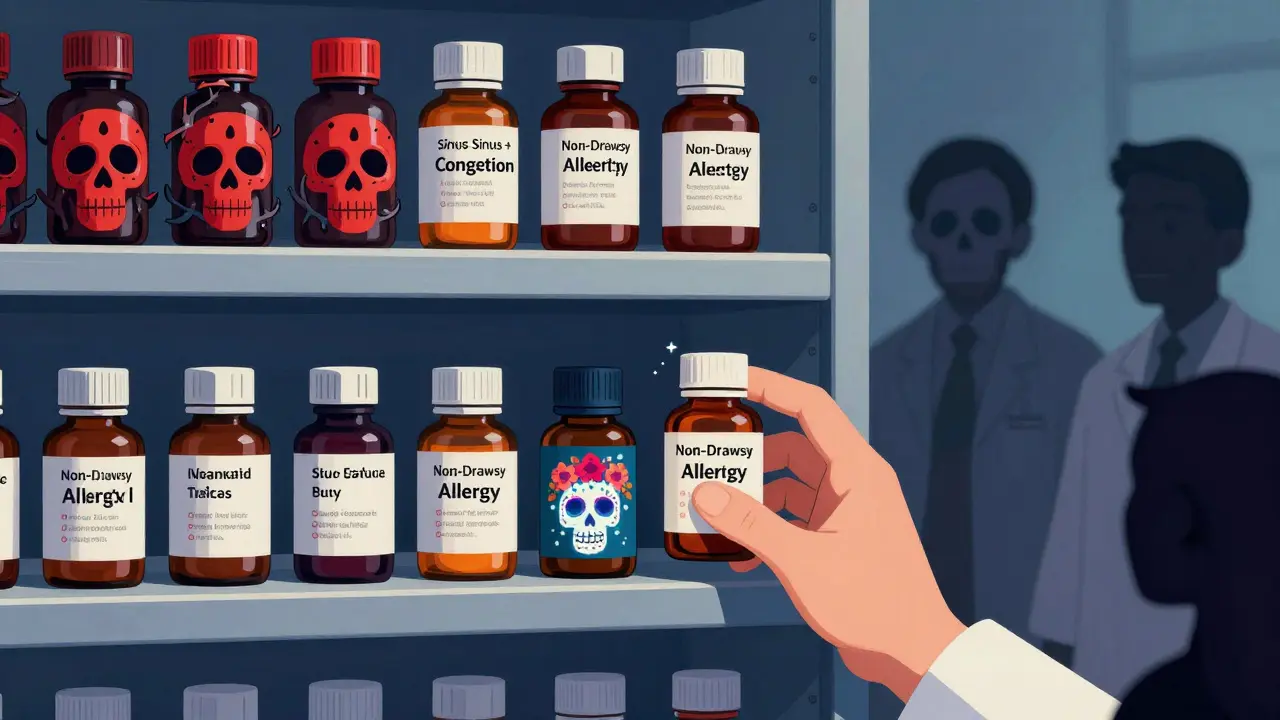
- Check the ingredients - even if it’s labeled “non-drowsy.” Some still contain hidden decongestants.
- If you must use a combo product, talk to your pharmacist or doctor first. They can help you find a safer alternative.
- Keep a log: note your blood pressure before and after taking the antihistamine for a few days.
- If you feel dizzy, lightheaded, or your heart races after taking it - stop and call your doctor.
What’s Changing in 2026?
The science keeps improving. The NIH is funding $4.7 million in research to study how your genes affect how you process antihistamines. Some people have genetic variants that slow down liver enzymes (like CYP2D6 or CYP3A4), which can cause drugs to build up - even at normal doses. As of 2023, 32% of major U.S. healthcare systems now offer genetic testing before prescribing antihistamines to high-risk cardiac patients. It’s not routine yet - but it’s coming. Researchers at Johns Hopkins are also testing new drugs that activate H3 receptors - which may protect the heart instead of just treating allergies. Early trials are promising. For now, the message is clear: if you have high blood pressure, stick with second-gen antihistamines, avoid decongestants, and know your numbers. You don’t have to suffer through allergies to stay safe.Can I take Benadryl if I have high blood pressure?
Benadryl (diphenhydramine) is a first-generation antihistamine that can lower blood pressure, especially when given intravenously. Oral use may cause dizziness or orthostatic hypotension - a drop in pressure when standing up. If you have high blood pressure, it’s not the safest choice. Second-generation options like loratadine or cetirizine are preferred. Only use Benadryl if no alternatives are available and under medical supervision.
Does Claritin raise blood pressure?
Claritin (loratadine) is a second-generation antihistamine and does not raise blood pressure in most people. Multiple FDA-reviewed studies show it has neutral effects on blood pressure in 97% of cases. It’s considered one of the safest options for people with hypertension - as long as it’s not combined with a decongestant like pseudoephedrine.
Is Zyrtec safe for people with high blood pressure?
Yes, Zyrtec (cetirizine) is generally safe for people with high blood pressure. It doesn’t significantly affect blood pressure and may even reduce inflammation in blood vessels. Studies show 92% of hypertensive patients tolerate it well. Avoid combination products that include decongestants - stick to plain cetirizine.
What allergy medicine is safe with high blood pressure?
The safest options are second-generation antihistamines without decongestants: loratadine (Claritin), cetirizine (Zyrtec), and fexofenadine (Allegra). Avoid any product labeled “sinus,” “congestion relief,” or “PM,” as these often contain pseudoephedrine or phenylephrine. Always read the ingredient list - even if it says “non-drowsy.”
Can antihistamines cause low blood pressure?
Yes - but only certain ones. First-generation antihistamines like diphenhydramine can cause mild to moderate drops in blood pressure, especially after IV use or in older adults. This happens because they block H1 receptors in blood vessels, reducing vascular tone. Second-generation antihistamines rarely cause this. If you feel dizzy when standing up after taking an antihistamine, it could be low blood pressure - check your readings and talk to your doctor.
How long does it take for antihistamines to affect blood pressure?
With IV diphenhydramine, blood pressure can drop within 10-15 minutes. With oral doses, effects may take 30-60 minutes to appear and last 4-6 hours. Second-generation antihistamines like loratadine or cetirizine typically don’t cause noticeable changes, even after 24 hours. If you’re starting a new antihistamine and have high blood pressure, monitor your pressure 1-2 hours after the first dose.
shivani acharya
January 22, 2026 AT 15:42Oh great, so now even my sneezes are a geopolitical threat? 😏 I just took Benadryl for my pollen apocalypse and now I’m supposed to monitor my BP like it’s a nuclear launch code? Meanwhile, my neighbor’s cat is still breathing through its mouth and nobody’s calling an emergency meeting about that. 🤡 The FDA probably has a whole department just for panic-selling Zyrtec to people who think their allergies are a government experiment. I swear, if I see one more ‘non-drowsy’ label, I’m going to start taking antihistamines… on purpose. 🤓
Brenda King
January 22, 2026 AT 20:27Second-gen antihistamines are the real MVPs for hypertension folks 🙌
Loratadine, cetirizine, fexofenadine - no drama, no spikes, no crashes. Just clean relief.
Read the label. Avoid decongestants. Period.
If your meds say ‘sinus’ or ‘PM’ - put it back. Your heart will thank you.
And yes, I know people still buy ‘non-drowsy’ Benadryl because it’s cheap. Don’t. You’re not saving money. You’re risking your health.
Simple. Clear. Done.
Stay safe out there 💙
Neil Ellis
January 23, 2026 AT 04:09Man, I used to think my allergies were just a nuisance - until I started feeling like a deflated balloon after taking that old-school Benadryl. Dizzy, sluggish, like my body forgot how gravity works. Then I switched to Zyrtec and it was like someone flipped a switch inside me. No drowsiness, no dizziness, just… me. Clear-headed, breathing easy, and my BP stayed chill. I even started tracking my numbers like a nerd - and guess what? Zero drama. Turns out, you don’t need to suffer through a chemical rollercoaster just to stop sneezing. The science isn’t just good - it’s kind. And honestly? That’s rare these days. 🙏
Rob Sims
January 24, 2026 AT 04:06Wow. Another ‘trust the FDA’ fairy tale. Let me guess - you also think Big Pharma doesn’t profit from making you afraid of your own sneezes? 🤨
First-gen antihistamines cause drops? Sure. But did you know the same companies that sell Zyrtec also own the patents on the decongestants they warn you about? They create the problem, then sell you the ‘safe’ version. It’s not safety - it’s market segmentation.
And don’t even get me started on that ‘22% reduction in endothelial inflammation’ claim. One mouse study from 2023? That’s not science - that’s a marketing slide deck.
Read the fine print. Every ‘safe’ drug has a hidden cost. You just don’t know what it is yet.
And if you’re still taking ‘non-drowsy’ pills… you’re already part of the experiment.
arun mehta
January 25, 2026 AT 07:21As a medical professional from India, I have seen many patients with uncontrolled hypertension self-medicate with over-the-counter allergy remedies without understanding the risks. The information provided in this post is not only accurate but also life-saving. Second-generation antihistamines are indeed the gold standard. I always recommend loratadine or fexofenadine to my patients - and I emphasize reading labels. Even products labeled ‘natural’ or ‘herbal’ may contain hidden pseudoephedrine. A simple blood pressure check before and after the first dose can prevent ER visits. I am grateful for evidence-based content like this. 🙏🙏🙏
Patrick Roth
January 26, 2026 AT 20:56Actually, the entire premise is flawed. You’re assuming histamine is the main driver of vascular tone. But in humans, it’s not. In fact, H1 receptors in vasculature are mostly inhibitory - meaning blocking them should raise BP, not lower it. The studies you cite? Mostly in vitro or animal models. Human trials? Inconsistent. And that ‘14% dizziness’ stat? That’s placebo territory. People feel dizzy because they *think* they’re supposed to. Nocebo effect, baby. The real issue? Doctors overdiagnose ‘orthostatic hypotension’ because they’re scared of liability. Wake up. The science is messy. Stop treating antihistamines like nuclear weapons.
Lauren Wall
January 27, 2026 AT 07:11Benadryl = bad. Decongestants = worse. Read the label. Done.
Tatiana Bandurina
January 28, 2026 AT 20:19You mention ‘92% of hypertensive patients tolerate cetirizine well’ - but you don’t say how many were excluded from the study. People with arrhythmias? Kidney disease? Polypharmacy? Those are the ones who actually need this info. And yet, they’re filtered out because ‘the data looks cleaner.’ Meanwhile, real people - like my cousin who took Zyrtec and had a syncopal episode - are left out of the narrative. You’re not warning people. You’re sanitizing risk. And that’s dangerous. If you’re going to cite a study, show the full picture. Or don’t cite it at all.
Philip House
January 29, 2026 AT 10:57It’s funny how Americans treat medicine like a menu. ‘I’ll have the non-drowsy one, no decongestant, and make it organic.’ Meanwhile, in the real world - places where people don’t have three prescriptions stacked on their counter - they just take what works. Benadryl works. It’s cheap. It’s everywhere. And yeah, it drops BP a little. So what? If you’re not passing out, you’re fine. The real problem isn’t the drug - it’s that we’ve turned every sneeze into a medical emergency. You don’t need a blood pressure log to survive allergies. You need a tissue and a little tolerance. The system’s broken. Not the medicine.