For millions of Medicare beneficiaries, the cost of daily medications used to be a hidden tax on retirement. A blood pressure pill, a cholesterol medicine, or a diabetes drug-each one adding up until out-of-pocket spending hit thousands. But in 2025, everything changed. Thanks to the Medicare Part D reforms under the Inflation Reduction Act, the system now actively shields people from runaway drug costs, especially when they use generic drugs.
How Much You Save with Generics in 2025
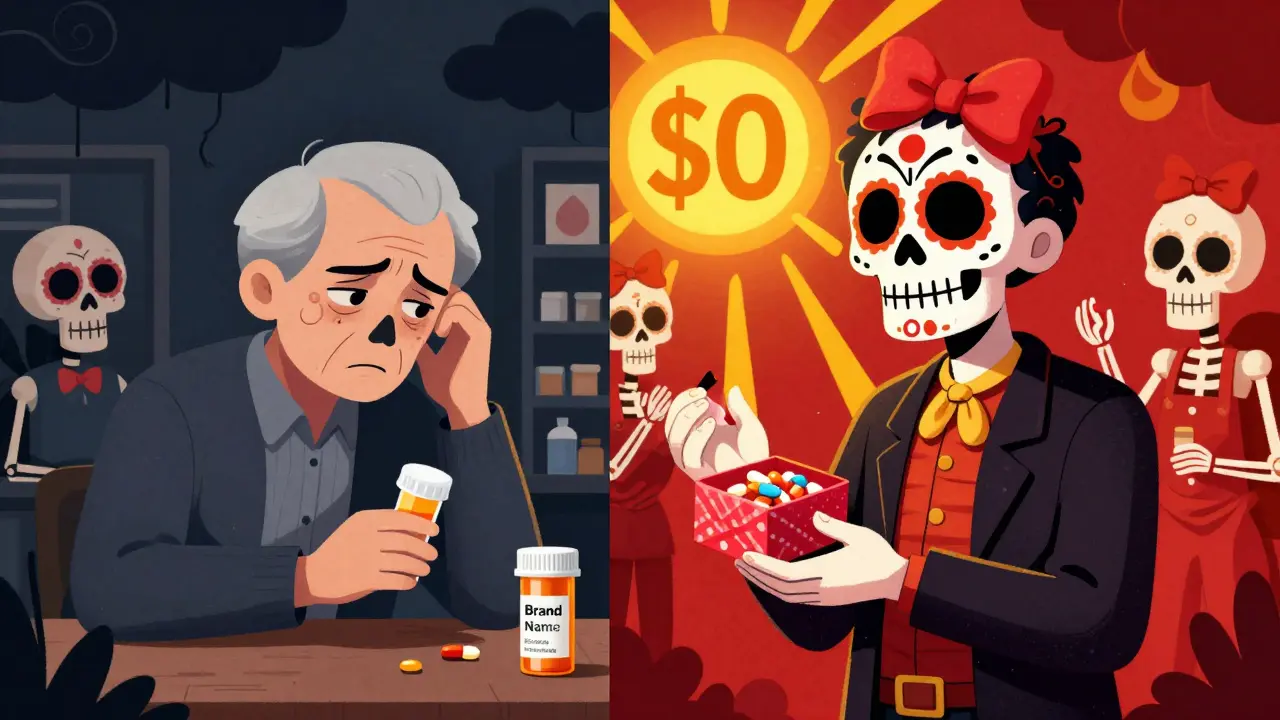
Before 2025, if you took a few generic medications every month, you could easily spend $7,000 to $8,000 a year before hitting catastrophic coverage. Now, the cap is $2,000. That’s a 75% drop in what you might pay out of your own pocket. For someone on three or four common generics, this often means paying less than $100 a month instead of $300 or more.
The math is simple: once you hit $2,000 in true out-of-pocket spending (TrOOP), you enter catastrophic coverage. From that point on, you pay $0 for generics for the rest of the year. No more surprises. No more bills. Just your pills, free.
According to the Centers for Medicare & Medicaid Services (CMS), this change alone will save Medicare beneficiaries a collective $7.4 billion in 2025. That’s not a guess-it’s based on real data from plan bids and enrollment numbers. About 11 million people will save an average of $400 a year just by switching to generics and staying under the cap.
What You Actually Pay: Copays and Coinsurance
Here’s how it breaks down in 2025:
- Deductible: Up to $590 (same as 2024). Not all plans have one-some waive it entirely.
- Initial Coverage: After the deductible, you pay 25% of the drug’s cost. For generics, that often means $10 or less for a 30-day supply.
- Catastrophic Coverage: Once you hit $2,000 in out-of-pocket spending, you pay $0 for generics.
Median copays for preferred generics are consistently around $10 across both standalone Prescription Drug Plans (PDPs) and Medicare Advantage Prescription Drug plans (MA-PDs). That’s the same whether you’re with UnitedHealthcare, Humana, or a smaller local insurer.
But here’s the catch: you don’t pay premiums toward that $2,000 cap. Only what you pay at the pharmacy counts. So if your plan charges $40 a month for premiums, that doesn’t help you reach the cap. Only your copays, coinsurance, and deductible payments do.
PDP vs. MA-PD: Which Saves More?
There are two main ways to get Part D coverage: standalone drug plans (PDPs) or Medicare Advantage plans with drug coverage (MA-PDs).
On the surface, they look similar. But the numbers tell a different story.
MA-PDs have an average monthly drug premium of just $7. PDPs? Around $39. That’s nearly six times more. For someone taking two generics a month, that’s over $380 extra a year just in premiums.
And while both types of plans charge similar copays for generics, MA-PDs often bundle drug coverage with other benefits-like dental, vision, or fitness memberships. That means you’re getting more value for less money.
Still, PDPs are popular. Why? Because they let you keep your original Medicare and choose any doctor. But if you’re looking to save, MA-PDs win-especially if you’re on mostly generics.
Who Gets the Best Deal? Low-Income Beneficiaries
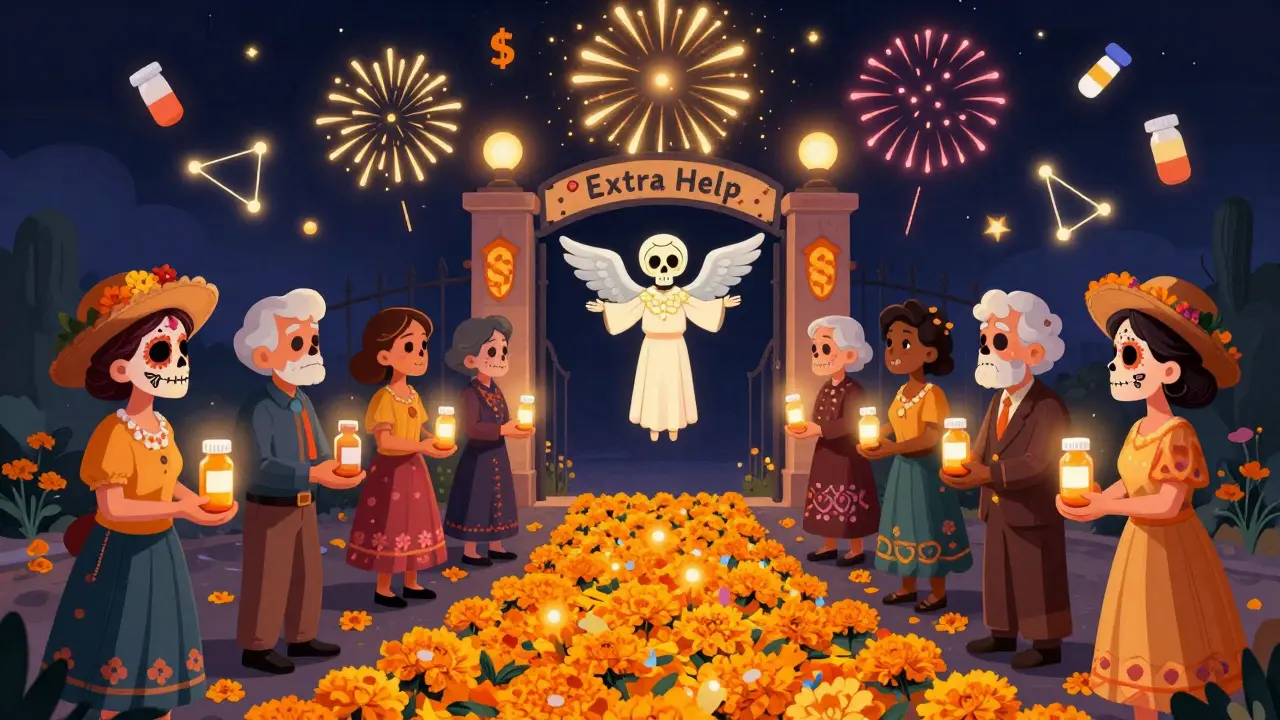
If your income is below a certain level, you may qualify for Extra Help (also called Low-Income Subsidy or LIS). This program is a game-changer.
- Deductible: $0
- Generic copay: $0 to $4.50
- No coverage gap
That means someone on LIS could pay $3.50 for their generic statin, $2 for their metformin, and never pay more than $10 a month-even if they take five different generics. And they never have to worry about hitting a $2,000 cap because they’re already in catastrophic coverage from day one.
Only about 30% of eligible people enroll in Extra Help. If you’re on a fixed income and take generics, you should check your eligibility. It’s free to apply through Social Security.
Why Some People Still Struggle
Not everyone is enjoying the savings. A 2024 survey by the Medicare Rights Center found that 23% more people called their helpline about generic drug changes than the year before.
Here’s why:
- Therapeutic substitution: Your plan might switch your generic from one manufacturer to another-even if they’re the same drug. Sometimes the new version has a higher copay.
- Step therapy: You might have to try a cheaper generic first, even if your doctor says you need a different one.
- Formulary changes: Plans can drop a generic from their list mid-year. You’ll get a notice, but it’s too late if you’re already on it.
Also, many people don’t realize that manufacturer discounts count toward the $2,000 cap. That’s a big deal. If your drug has a discount (like from a rebate), that money counts as if you paid it. So even if you pay $5 at the pharmacy, $15 of the drug’s cost might be counted toward your cap. That helps you hit the $2,000 limit faster.
But 41% of beneficiaries still don’t understand how this works. They think they’re paying more than they are. And that confusion leads to stress-and sometimes, skipping doses.
What You Need to Do Now
You don’t have to wait for next year. The changes are active now. Here’s what to do:
- Check your plan’s formulary: Use the Medicare Plan Finder tool. Search for your exact generic drugs. See which plans cover them at $0 or $5.
- Compare premiums and copays: A plan with a $30 premium might have $2 copays. Another with a $10 premium might have $15 copays. Total cost matters more than just the premium.
- Ask about prior authorization: Some plans still require extra steps for generics. Call your plan and ask: “Do I need approval for my current generic?”
- Apply for Extra Help: If you’re on a fixed income, even if you think you make too much, apply. The rules are broader than most people think.
And if you’re switching plans during Open Enrollment (October 15 to December 7), make sure your new plan covers your drugs at the same or lower cost. Don’t assume it will.
The Bigger Picture: Generics Are Saving Medicare
Generics make up 84% of all Part D prescriptions but only 27% of total spending. That’s the power of generics. They’re not just cheaper-they’re the backbone of cost control.
The Inflation Reduction Act didn’t just cap out-of-pocket spending. It also forced drugmakers to pay rebates if they raise prices faster than inflation. That’s hitting brand-name drugs hardest-but it helps generics stay affordable.
By 2028, generic use in Part D is expected to climb to 87%. That’s because the system is now designed to reward people for choosing them. And as biosimilars (generic versions of biologic drugs) roll out, we’ll see even more savings.
The goal isn’t just to cut costs-it’s to make sure people take their meds. Because when someone skips a pill because it’s too expensive, it leads to hospital visits, ER trips, and higher costs for everyone. The new Part D rules are finally aligning incentives: save money, stay healthy, and keep the system running.
What’s Coming Next
The Selected Drug Subsidy Program starts in 2026. It will give plans a 10% subsidy to lower costs for certain high-cost generics. That could mean even lower copays for drugs like insulin analogs or complex heart medications.
CMS is also tightening rules around formulary changes. Plans will now have to give longer notice before dropping a drug. And there’s talk of making the $2,000 cap permanent-not just for 2025, but forever.
For now, the message is clear: if you’re on generics, you’re in the best position to save. The system is built to help you. You just need to know how it works.
Do I still pay anything after hitting the $2,000 cap?
No. Once you reach $2,000 in out-of-pocket spending for the year, you enter catastrophic coverage. For generic drugs, your copay drops to $0 for the rest of the year. You still pay your monthly premium, but nothing else for your meds.
Do generic drug copays vary between Medicare plans?
Yes, but not as much as you’d think. Most plans have similar copays for preferred generics-usually $10 or less for a 30-day supply. The bigger difference is in premiums. MA-PDs often have much lower premiums than standalone PDPs, making them better overall value if you’re on generics.
Can my plan switch my generic medication without telling me?
No. If your plan changes your generic to a different version with a higher cost, they must notify you in advance. But they can still switch you to another generic in the same class. Always check your plan’s formulary each year, and ask your pharmacist if your medication changed.
Does Extra Help cover all my generic drugs?
Yes. If you qualify for Extra Help (Low-Income Subsidy), you pay $0 to $4.50 for generics, with no deductible and no coverage gap. It’s the most protective Part D coverage available. Apply through Social Security-even if you think you don’t qualify.
Why do some people still pay a lot even with Part D?
Three reasons: they’re on brand-name drugs, they’re not using the Plan Finder to compare plans, or they don’t know how TrOOP (true out-of-pocket) costs work. Manufacturer discounts count toward the $2,000 cap, but many beneficiaries don’t realize that. That means they think they’re farther from the cap than they really are.
Taylor Mead
February 19, 2026 AT 15:14Finally, some real relief for folks on fixed incomes. I’ve seen too many seniors skip doses just to make ends meet. This $2,000 cap isn’t just policy-it’s a lifeline. And the fact that manufacturer discounts count toward it? That’s the kind of detail most people miss, but it’s the secret sauce that gets you to $0 faster.
Nina Catherine
February 20, 2026 AT 00:37i just applied for extra help last month and got approved!! i was scared i made too much but turns out i was under the limit by like $200. now my metformin is $1.50 and my blood pressure med is free. best thing ever. thanks for the post!!
Hariom Sharma
February 21, 2026 AT 04:40As someone from India, I’ve seen how generic drugs change lives here too. But the U.S. system finally catching up? That’s huge. You don’t need fancy pharma to save lives-just smart policy. MA-PDs are the way to go if you’re on generics. Premiums are dirt cheap and you get dental too. Win-win.
Amrit N
February 22, 2026 AT 11:22my plan switched my generic last month and i didn’t even notice till my bill went up. i thought i was safe cause i was under 2k… but turns out the new version had a higher copay. never assume. check your formulary every year. seriously.
Robert Shiu
February 24, 2026 AT 05:12Just talked to my mom this morning-she’s 71, on three generics, and had no idea about the $0 after $2,000 rule. She was about to switch plans thinking she’d save more. I walked her through the Plan Finder. Her copay dropped from $42 to $8. She cried. Not because of the money-because she finally feels like the system sees her.
Greg Scott
February 24, 2026 AT 12:37They say generics are 84% of prescriptions but only 27% of costs? That’s wild. It’s like the system was designed to reward smart choices. Why do people still pick PDPs? I don’t get it. MA-PDs have lower premiums and extra perks. Unless you need a specific doctor, why not?
Laura B
February 25, 2026 AT 12:35It’s fascinating how the structure of incentives here aligns perfectly with public health outcomes. By making generics financially effortless, you’re not just reducing out-of-pocket costs-you’re reducing hospitalizations, ER visits, and long-term decline. This isn’t just a savings program. It’s preventative care disguised as insurance reform. And it’s working. The data doesn’t lie: when people can afford their meds, they take them. Simple. Human. Effective.
aine power
February 27, 2026 AT 01:41Generics work. Cap works. MA-PD wins.
Courtney Hain
February 27, 2026 AT 08:02Let me tell you what they’re not telling you. The $2,000 cap? It’s a trap. The real cost isn’t what you pay at the pharmacy-it’s what the drugmakers are secretly charging through rebates and middlemen. And don’t get me started on how CMS is quietly pushing biosimilars to replace generics. That’s not savings-that’s corporate consolidation. They want you thinking you’re getting a deal while the real players shift control. The ‘$0 for generics’? It’s a smokescreen. Next thing you know, they’ll start rationing which generics are ‘preferred.’ And you’ll be stuck paying for the ones they don’t like.
Jana Eiffel
February 27, 2026 AT 11:29The moral architecture of this reform is profoundly elegant. It does not merely redistribute financial burden-it reorients the entire relationship between the individual and the system from one of transactional vulnerability to one of dignified, predictable care. The recognition that therapeutic adherence is not a personal failing but a structural imperative represents a paradigm shift in public policy. To treat medication as a fundamental right, not a privilege contingent on economic status, is not merely prudent-it is ethically indispensable. The fact that manufacturer rebates are counted toward TrOOP is not a technicality; it is a philosophical affirmation that the value of health cannot be commodified without consequence. We are witnessing not a policy adjustment, but the quiet, institutional recalibration of justice.