Medication Side Effect Checker
How to use this tool
This tool applies the 4-step method from the article to determine if your symptoms are likely medication side effects or disease symptoms. Enter your answers for each question to get a clear probability assessment.
When you start a new medication, it’s normal to wonder: is this new feeling part of your illness, or is it the drug itself? A headache after starting blood pressure medicine - is that your condition worsening, or is it just a side effect? A sudden wave of fatigue - is your depression getting worse, or is it the antidepressant? These questions aren’t just annoying; they can change your treatment path. Misreading a side effect as disease progression can lead to unnecessary tests, extra pills, or even hospital visits. According to the FDA, adverse drug reactions send about 1.3 million people to the emergency room every year in the U.S. And in nearly one out of every three cases, patients blame their symptoms on their illness when it’s actually the medicine causing the problem.
What Exactly Is a Side Effect?
A side effect is an unintended reaction to a drug that happens at normal doses. It’s not a mistake or overdose - it’s just how your body responds to the chemical. The World Health Organization defines it clearly: any unintended response to a medication given for treatment, diagnosis, or prevention. These aren’t rare surprises. Some are so common, they’re listed right on the pill bottle. Nausea? That happens in 25-30% of people starting a new medication. Dry mouth? 12-18%. Drowsiness? 10-15%. These numbers come from the American Society of Health-System Pharmacists and are backed by real-world data from millions of patients.
Side effects usually show up in predictable ways. If you take an antihistamine like diphenhydramine for allergies, you’ll likely feel sleepy within an hour. If you start an SSRI like sertraline for depression, you might notice nausea or insomnia within the first week. These aren’t random - they’re built into the drug’s biology. And here’s the good news: many side effects fade. About 60-70% of them get better on their own after a few weeks as your body adjusts. That’s why doctors often say, “Give it two weeks” before deciding whether to keep the drug.
What Are Disease Symptoms?
Disease symptoms are the body’s way of telling you something’s wrong. They come from the illness itself - not the treatment. The American Pharmacists Association defines them as “observable or measurable manifestations of a pathological condition.” In other words, they’re the real deal. If you have depression, your brain chemistry is off. That leads to fatigue (85% of patients), trouble sleeping (78%), poor concentration (72%), and low mood. If you have high blood pressure, you might feel dizzy or have headaches - not because of the pill, but because your arteries are tight.
These symptoms follow the disease’s natural path. They don’t pop up the day you start a new pill. They build slowly, flare up during stress, or get worse over time. If your arthritis pain slowly creeps up over months, that’s the disease. If your joint pain spiked the week after you started a new cholesterol drug? That’s probably the medication.
How to Tell Them Apart: The 4-Step Method
Doctors don’t guess. They use a clear, repeatable process. You can use this too - just write it down.
- Check the timeline. Did the symptom start within 1-4 weeks of beginning the medication? That’s a red flag. Side effects usually show up fast. Disease symptoms don’t care when you started a pill - they follow their own schedule. If you’ve had joint pain for years and suddenly got it worse 10 days after starting a new drug? That’s not your arthritis acting up.
- Look at the dose. Does the symptom get worse when you take more of the drug? If doubling your dose makes your dizziness twice as bad, that’s a classic side effect. About 70% of side effects are dose-dependent. Disease symptoms? They don’t care how many pills you take. Your fatigue from depression won’t vanish if you skip a dose.
- See if it fades. Many side effects go away after a few weeks. If your nausea from an SSRI disappeared after three weeks, that’s normal. If your fatigue got worse over time? That’s more likely the disease.
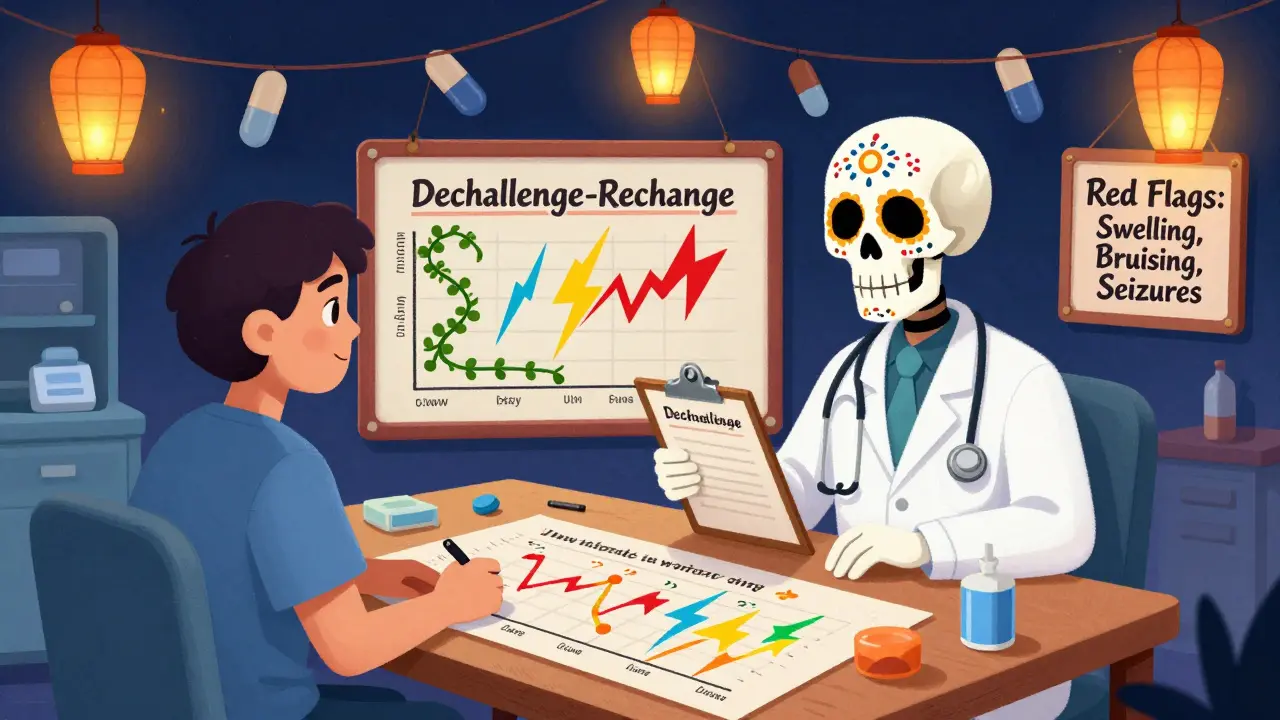
- Try a drug holiday. Under your doctor’s supervision, stop the medication for a few days. If the symptom disappears - and comes back when you restart it - that’s a 90% sign it’s the drug. This is called the “dechallenge-rechallenge” method. It’s not something to do alone. But it’s one of the most accurate ways to confirm a side effect.
Common Confusions: What’s Really Going On?
Some symptoms are notorious for being misread. Here’s what patients often get wrong:
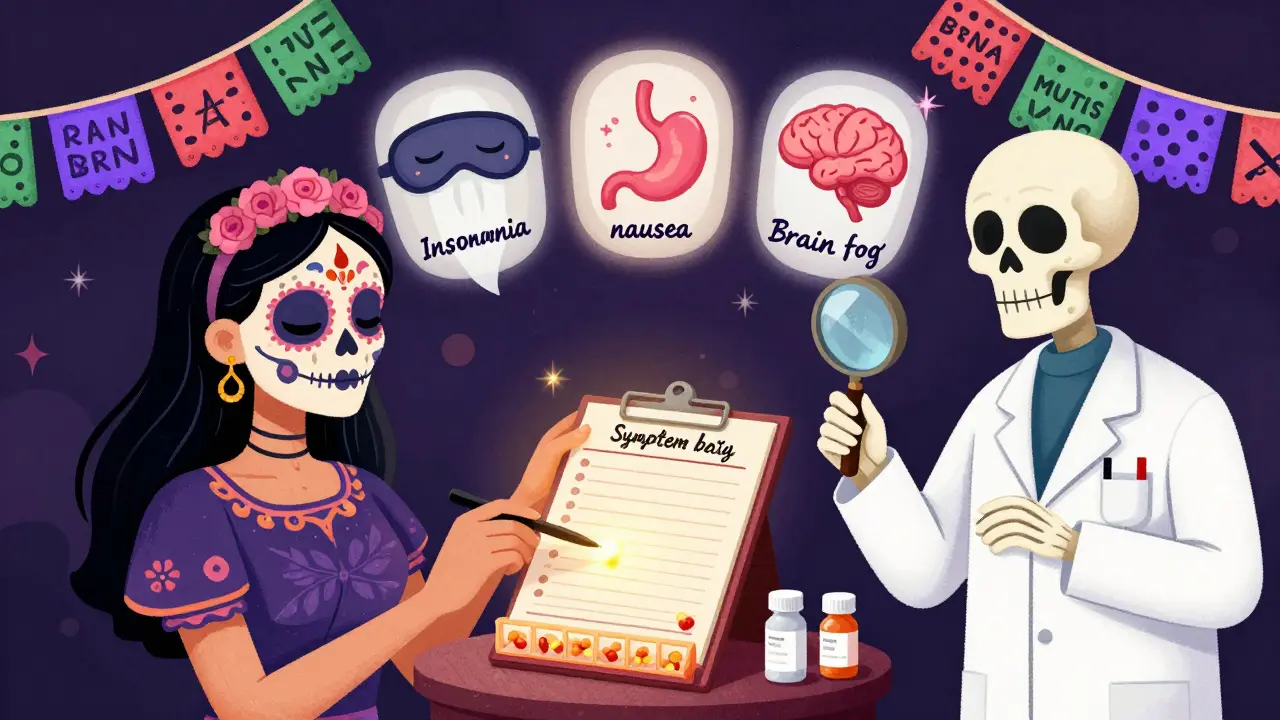
- SSRIs and insomnia: You start sertraline for depression. You can’t sleep. You think your depression is getting worse. Actually, 30-40% of people on SSRIs get insomnia early on - it’s a side effect. It often improves after two weeks. Treating it with sleep pills just adds another drug.
- ACE inhibitors and cough: Lisinopril is a common blood pressure pill. About 1 in 5 people get a dry, tickly cough. It’s not a cold. It’s not asthma. It’s the drug. Many patients suffer for months before their doctor realizes.
- Antipsychotics and weight gain: Olanzapine can cause a 4-6 kg weight gain in the first three months. Patients think they’re just eating more. But it’s the drug altering hunger signals. This isn’t laziness - it’s pharmacology.
- Anticholinergics and memory: Older adults on medications for allergies, bladder issues, or stomach problems often get confused or forgetful. Doctors call it “early dementia.” But 15-20% of these cases are just side effects. Stop the drug - and the memory clears.
A 2022 survey of over 12,000 patients found that 63% had at least one side effect they mistook for their disease. Gastrointestinal issues, sleep problems, and brain fog were the top three. That’s not just inconvenient - it’s dangerous.
What to Do When You’re Not Sure
You don’t need to be a doctor to figure this out. Here’s what works:
- Keep a symptom diary. Write down: what time you took your pill, what you felt, how bad it was (1-10 scale), and how long it lasted. A 2022 study showed this improves diagnostic accuracy by 41%. Use a notebook or a free app like Medisafe.
- Track your meds. Make a list of every pill, supplement, and OTC drug you take. Even aspirin or melatonin can interact. Bring this list to every appointment.
- Ask your pharmacist. They’re trained to spot side effects. Ask: “What are the common side effects of this? Could this symptom be one of them?”
- Don’t stop cold turkey. Some drugs can cause serious withdrawal if stopped suddenly. Always talk to your doctor before changing anything.
When to Worry: Red Flags
Not all side effects are harmless. Some need immediate attention:
- Allergic reactions: Hives, swelling of the face or throat, trouble breathing. This is not a side effect - it’s an emergency. Call 911.
- Severe rash or blistering: Could be a dangerous skin reaction like Stevens-Johnson syndrome.
- Unexplained bruising or bleeding: Could mean your blood is thinning too much.
- Sudden confusion or seizures: Could be a drug interaction or toxicity.
If you have any of these, get help right away. For everything else, track it. Write it down. Talk to your provider.
The Bigger Picture: Why This Matters
This isn’t just about feeling better. It’s about safety. In the U.S., 350,000 people are hospitalized each year because side effects were mistaken for disease progression. In older adults, misattributed side effects are one of the leading causes of unnecessary hospital stays. And it’s getting worse. With 35% of patients taking five or more drugs, the chances of a hidden interaction are high. That’s why tools like AI-powered monitoring systems (like MedAware’s SafetyRx) and electronic health records that flag drug interactions are becoming standard in hospitals.
But you don’t need AI to protect yourself. You just need to be aware. The FDA and WHO now require drug labels to clearly separate disease symptoms from side effects. Patient advocacy groups like MedShadow.org have cut emergency visits by 28% just by teaching people how to ask the right questions.
Final Takeaway: You’re Not Imagining It
If you feel off after starting a new medication, you’re not being paranoid. You’re being smart. Side effects are real. They’re common. And they’re often confused with the very thing you’re trying to treat. The key is to pause, observe, and document. Don’t assume. Don’t ignore. Don’t panic. Just track. And talk to your doctor with data - not just feelings.
Medication isn’t magic. It’s chemistry. And chemistry has rules. Learn them. Your body will thank you.
Can a side effect turn into a permanent problem?
Yes, but it’s rare. Most side effects fade after stopping the drug. However, some can cause lasting damage if not caught early - like kidney injury from long-term NSAID use, or movement disorders from antipsychotics. That’s why monitoring matters. If a side effect lasts more than a few months or gets worse, talk to your doctor. It may not be normal.
Do all medications have side effects?
Yes. Every medication - even aspirin or vitamin D - has potential side effects. The difference is how common and how severe they are. Some drugs have mild, temporary side effects. Others carry serious risks. The FDA requires all approved drugs to list side effects, even if they affect just 1 in 1,000 people. That’s why reading the patient information sheet matters.
Can I stop a medication if I think it’s causing side effects?
Never stop a prescribed medication without talking to your doctor first. Some drugs, like antidepressants or blood pressure pills, can cause dangerous withdrawal symptoms if stopped suddenly. Instead, document your symptoms and schedule a follow-up. Your doctor can help you taper safely or switch to another option.
Are side effects more common in older adults?
Yes. As we age, our bodies process drugs differently. Liver and kidney function slow down, which means medications stay in the system longer. This increases the risk of side effects. Older adults are also more likely to take multiple drugs, which raises the chance of interactions. That’s why doctors often prescribe lower doses for seniors and monitor them more closely.
How do I know if a symptom is from a drug interaction?
Drug interactions happen when two or more medications affect each other. Symptoms can mimic disease - like confusion, dizziness, or irregular heartbeat. The best way to check is to list every drug you take (including supplements) and ask your pharmacist or doctor to run it through a drug interaction checker. Tools like the FDA’s Drug Interaction Checker or hospital-based systems can flag risks you might miss.
Jonathan Noe
February 13, 2026 AT 00:58Pat Mun
February 14, 2026 AT 14:00Annie Joyce
February 16, 2026 AT 00:05Skilken Awe
February 17, 2026 AT 02:43Gloria Ricky
February 18, 2026 AT 04:24Jim Johnson
February 18, 2026 AT 19:07Luke Trouten
February 20, 2026 AT 05:00Kristin Jarecki
February 20, 2026 AT 14:02Sonja Stoces
February 21, 2026 AT 03:18Suzette Smith
February 23, 2026 AT 02:09Craig Staszak
February 24, 2026 AT 01:33andres az
February 24, 2026 AT 02:57