Running out of medication while traveling isn’t just inconvenient-it can be dangerous. Whether you’re on a three-month trip across Southeast Asia or a six-week road trip through Europe, missing even one dose of your blood pressure pill, insulin, or antidepressant can lead to serious health setbacks. The good news? With the right planning, you can avoid this entirely. Most people don’t realize how much control they actually have over their meds while on the move. Here’s how to make sure your prescriptions stay with you, no matter where you go.
Start Early-At Least 30 Days Before You Leave
Waiting until the week before your trip is the number one mistake travelers make. Pharmacies need time to process early refill requests, insurers need time to approve vacation overrides, and international paperwork takes weeks. The CDC recommends starting your medication planning 30 days before departure. That means calling your doctor and pharmacy right after you book your flights, not when you’re packing your suitcase.Ask for a 90-Day Supply
If your doctor agrees, ask for a 90-day supply instead of the usual 30. This cuts your refill needs in half. Most major U.S. insurance plans, including UnitedHealthcare, Aetna, and Cigna, allow 90-day refills with a 10- to 14-day early window. That means if your last refill was on October 1, you can pick up your next one as early as September 17. A 90-day supply also means fewer trips to the pharmacy, less risk of losing meds, and fewer chances for delays. A 2021 Kaiser Permanente study showed travelers who used 90-day supplies had 67% fewer refill-related issues.Know Your Insurance’s Vacation Override Policy
Many people think their insurance won’t let them refill early just because they’re traveling. That’s outdated. As of 2023, 92% of major U.S. insurers offer what’s called a “vacation override”-a one-time exception that lets you refill your prescription early for travel. You’ll need to call your insurer directly and explain you’re traveling. Some, like Blue Cross Blue Shield of Michigan, allow 14-day early refills. Others, like UnitedHealthcare, only allow 7 days. Don’t assume-ask. Have your travel dates ready. Some insurers will even let you submit your itinerary online through their app.Get a Written Prescription and Doctor’s Letter
If you’re leaving the U.S., this step is non-negotiable. Many countries require proof that your medication is legally prescribed. Carry two things: a copy of your original prescription (printed or digital) and a letter from your doctor on official letterhead. The letter should list your name, medication names, dosages, and why you need them. For controlled substances like opioids or stimulants, this is even more critical. In countries like Thailand, Japan, or the UAE, bringing these without proper documentation can lead to detention or confiscation. The International Air Transport Association says 78 countries require this paperwork. Don’t risk it.Pack Medications the Right Way
Never pack all your meds in one bag. The American Pharmacists Association recommends the two-container rule: split your pills into two separate containers and store them in two different bags-one in your carry-on, one in your checked luggage. If your suitcase gets lost, you still have your meds. TSA allows medically necessary liquids over 3.4 ounces as long as you declare them at security. Keep them in their original bottles with your name on them. No unlabeled pills. Ever. Customs officers in Europe, Australia, and Canada will stop you if they can’t identify what you’re carrying.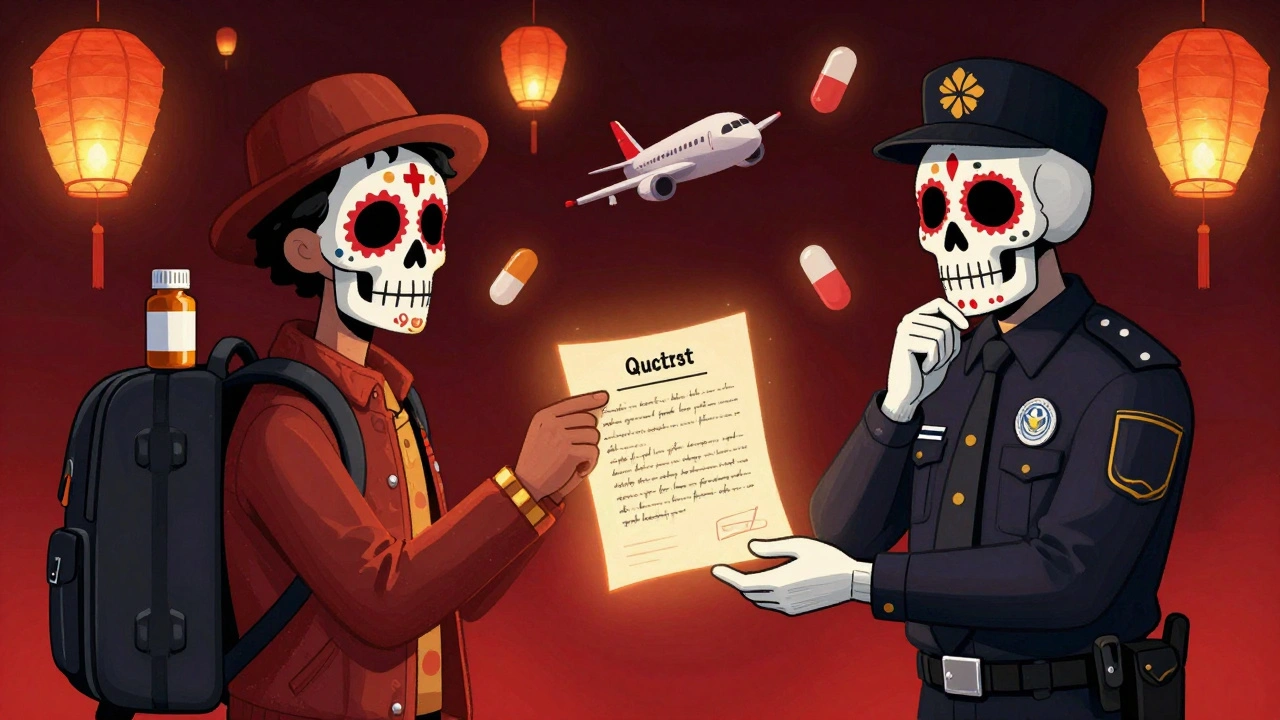
Controlled Substances Are a Different Challenge
If you take opioids, benzodiazepines, ADHD meds, or other Schedule II-IV drugs, your trip gets more complicated. Forty-eight U.S. states enforce a 28-day rule-meaning you can’t refill a 30-day controlled prescription until 28 days have passed. That’s fine at home, but not when you’re abroad. Many countries ban these medications entirely, even with a prescription. Some, like Germany and Canada, allow them with extra paperwork. Others, like Singapore, have zero tolerance. Check the embassy website of every country you’re visiting-including layovers. The CDC’s 2023 Travel Health Notices now list medication rules for all 195 UN-recognized countries. If you’re unsure, call the embassy. It’s faster than getting arrested.Plan for Time Zone Changes
Taking your medication at the wrong time can throw off your whole system. If you’re crossing more than three time zones, stick to your home time zone schedule for the first 24 to 48 hours after arrival. For example, if you take your blood pressure pill at 8 a.m. Eastern Time and fly to London (5 hours ahead), don’t suddenly take it at 1 p.m. local time. Wait until your body adjusts. The American Academy of Sleep Medicine says this reduces side effects like dizziness, nausea, or mood swings. Use your phone’s alarm to remind you of your home time zone schedule until you’re settled.Know Your Emergency Options
What if you lose your meds? Or your bag gets stolen? In the U.S., you’re covered. Under Kevin’s Law (Patient Right to Emergency Refill Act of 2019), pharmacists can give you a 72-hour emergency supply of chronic meds if you’ve used 75% of your last refill. CVS, Walgreens, and Rite Aid all offer this. You’ll need your ID and the name of your pharmacy. International? Not so easy. Only 29% of travelers successfully refill controlled substances abroad, according to the GoodRx 2023 survey. That’s why carrying a backup is critical. If you’re in Europe, try contacting the nearest U.S. embassy-they sometimes have lists of local pharmacies that work with travelers. Telehealth services like Teladoc handled over 1.2 million emergency refills in 2022. You can often get a new prescription sent to a local pharmacy if you’re in a country with good digital health infrastructure.Use Technology to Stay on Track
Apps like Medisafe, MyTherapy, or even your pharmacy’s mobile app can send you reminders and track your doses. Some, like UnitedHealthcare’s app, now let you verify prescriptions digitally while traveling. Set alerts for when you’re running low. Take a screenshot of your prescription and store it in your email or cloud drive. If you’re staying somewhere long-term, ask your hotel if they can hold a package for you. Many will accept mail from pharmacies if you pre-arrange it.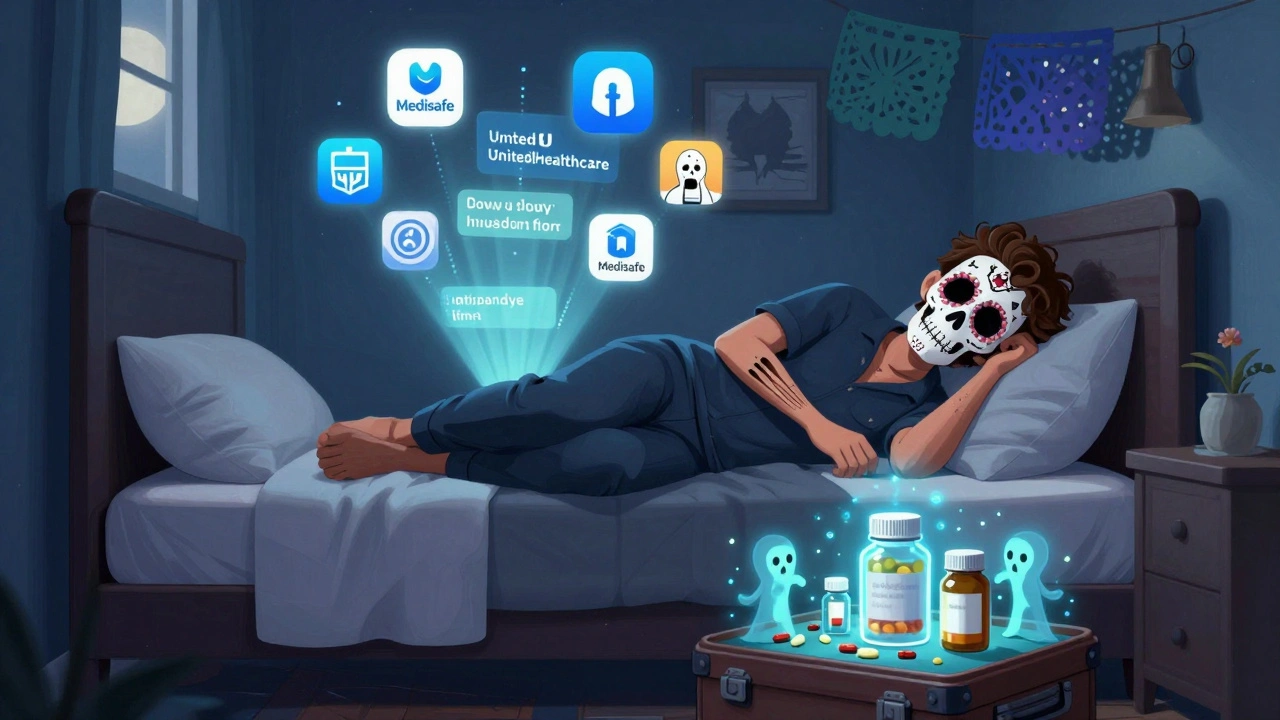
What to Do If You Get Denied
Sometimes your insurance denies your vacation override. Or your pharmacy says they’re out of stock. Don’t panic. First, ask to speak to a supervisor. If that doesn’t work, call your doctor’s office-they can call in a new prescription to a different pharmacy. CVS MinuteClinic now offers one-time renewals for 95% of maintenance medications, and you don’t need an appointment. Walk in with your ID and the name of your medication. In 2023, 79% of users said this saved them during travel emergencies. If you’re overseas and stuck, contact your country’s embassy. They can help you find local doctors who can issue temporary prescriptions.Don’t Rely on Buying Medications Abroad
It’s tempting to buy pills at a local pharmacy overseas-especially if you’re running low. But this is risky. Medications sold in other countries may have different ingredients, dosages, or even be counterfeit. A 2023 WHO report found that 1 in 10 medicines in low- and middle-income countries are fake. Even in Europe, brand names vary. Your “Lisinopril” might be sold as “Zestril” or “Prinivil” elsewhere. Stick to your original prescription. If you must refill abroad, only do so with a local doctor’s prescription and keep all receipts.Travel Insurance and Medication Coverage
Most travel insurance policies don’t cover lost or stolen prescriptions. But some high-end plans now include emergency medication replacement. Check your policy before you leave. If you’re on Medicare, remember: it doesn’t cover you outside the U.S. unless you’re in Canada or Mexico under very limited conditions. If you’re traveling for more than a month, consider a supplemental travel health plan that includes pharmacy services.Final Checklist Before You Go
- Call your doctor 30 days out to request a 90-day supply
- Call your insurer to confirm vacation override eligibility
- Get a printed prescription and doctor’s letter
- Split meds into two separate containers
- Check embassy websites for each country’s medication rules
- Set phone alarms for home time zone doses
- Save digital copies of prescriptions and insurance info
- Know the location of the nearest CVS or Walgreens at your destination
- Download your pharmacy’s app and enable location-based refill alerts
Extended travel doesn’t mean giving up your health routine. With a little prep, your meds can travel with you just as easily as your passport. The key isn’t luck-it’s preparation. Do this right, and you’ll spend your trip enjoying the view, not worrying about your next pill.
Can I bring my prescription meds on a plane?
Yes, you can bring prescription medications on a plane, including liquids over 3.4 ounces, as long as they’re declared at security. Keep them in their original labeled bottles and carry them in your carry-on. Never pack them in checked luggage alone-always have a backup in your carry-on. TSA allows medically necessary items, and 98% of U.S. airports follow this rule.
What if I run out of medication while abroad?
If you run out overseas, contact your country’s embassy-they often have lists of local pharmacies that serve travelers. You may need to see a local doctor to get a new prescription. Telehealth services like Teladoc can also help if you’re in a country with digital health access. Never buy pills from street vendors or unlicensed pharmacies-counterfeit drugs are common.
Can I get my meds refilled at a different pharmacy in the U.S.?
Yes, most U.S. pharmacies can transfer your prescription. Call the new pharmacy and give them your old pharmacy’s name and phone number. They’ll handle the transfer. If you’re out of refills, CVS MinuteClinic and Walgreens Health Clinics can issue one-time renewals for maintenance medications. Bring your ID and the original prescription.
Do I need to declare my medications at customs?
You’re not always required to declare them, but you should. Customs officers in many countries ask travelers about medications, especially controlled substances. Carry your doctor’s letter and original prescriptions. If you’re unsure, declare them anyway-it’s safer than hiding them. Countries like Japan, Singapore, and the UAE are strict about unapproved drugs.
Is it safe to take my meds on a different schedule because of time zones?
For the first 24-48 hours after arrival, stick to your home time zone schedule. Switching too soon can cause side effects like dizziness, nausea, or mood changes. After two days, gradually shift to local time. The American Academy of Sleep Medicine recommends this to avoid disrupting your body’s rhythm, especially for medications like insulin or blood pressure drugs.
Can I get a 90-day supply of a controlled substance?
It depends. In the U.S., some doctors will prescribe a 90-day supply of controlled substances with special authorization, but it’s rare. Most states limit refills to 30 days with a 28-day waiting period between fills. For travel, you’ll need to plan ahead and carry enough for your entire trip. Never try to get extra refills by visiting multiple pharmacies-it’s illegal.
What if my insurance denies my early refill request?
If your insurance denies your vacation override, call your doctor’s office. They can call in a new prescription to a different pharmacy. CVS MinuteClinic and Walgreens Health Clinics offer one-time renewals for maintenance medications without a prior appointment. Bring your ID and the name of your medication. You can also ask your pharmacist to appeal the decision-they often have success with this.
Are there apps that help manage meds while traveling?
Yes. Apps like Medisafe, MyTherapy, and PillPack send reminders and track your doses. UnitedHealthcare’s app lets you verify prescriptions digitally while traveling. Some apps can even notify you when you’re running low and help you locate nearby pharmacies. Download one before you go and sync it with your prescription history.
bobby chandra
December 3, 2025 AT 05:54Yo, this guide is a GAME CHANGER. I just got back from three months in Thailand and nearly lost my mind when my antidepressants ran out-thankfully I had the doctor’s letter and split my pills like you said. But seriously, if you’re not doing the 90-day supply trick, you’re playing Russian roulette with your mental health. I wish I’d read this before I spent 48 hours in a Bangkok pharmacy begging for Lisinopril under a different brand name. Just… do the work. Your future self will cry tears of joy.
Also-UNLESS YOU’RE IN SINGAPORE-don’t even think about buying meds abroad. I saw a guy buy ‘Adderall’ from a street vendor. He ended up with something that made him hallucinate pigeons. True story.
Archie singh
December 3, 2025 AT 13:25This is the kind of amateur hour advice you get from people who’ve never traveled outside of Orlando. 90-day supplies? Please. Insurance overrides? You think your ‘vacation override’ means anything when you’re in Jakarta and your script says ‘Lisinopril 10mg’ but the local pharmacy only stocks ‘Lisinopril-HCTZ 20/12.5’? And don’t get me started on ‘doctor’s letters’-those are useless without a notarized translation in 12 languages. You’re not preparing-you’re deluding yourself into thinking bureaucracy is a safety net. It’s not. It’s a trap.
Real travelers carry backup meds in their rectum. Just saying.
Chloe Madison
December 5, 2025 AT 09:32I just want to say how incredibly helpful this is-I’m a nurse who travels every quarter for work and this checklist saved me last month when my flight got delayed and I lost my checked bag. I had my carry-on meds, digital copies of my prescriptions, and even a screenshot of my insurance override confirmation on my phone. I didn’t panic. I didn’t cry. I just walked into a Walgreens in Amsterdam, showed them my ID and my app, and got my refill in 15 minutes.
Also-PLEASE use Medisafe. I’ve been using it for years and it even adjusts for time zones automatically. It’s like having a personal nurse in your pocket. You’re not just managing meds-you’re managing peace of mind. And that’s worth more than any souvenir.
Thank you for writing this. So many people need to hear it.
Rashmin Patel
December 5, 2025 AT 19:30OMG I’m so glad I found this!! 🙌 I’m from India and I just got back from a 6-week trip to Italy and I was SO scared about my diabetes meds. I had a 90-day supply, but I didn’t know about the doctor’s letter thing-so I just printed out my prescription and carried my insulin vials in a cooler with a note in Italian that said ‘FOR DIABETES’ 😅 I even showed it to customs in Rome and they just waved me through! 🤯
Also-TSA agents in the US are way nicer than I thought. I had my 4oz insulin syringes and they didn’t even make me take them out of my bag. Just told me to say ‘medical’ and smile. 😊
Pro tip: Download the MyTherapy app and set alarms for your home time zone. I was in Florence and kept forgetting to take my metformin until I started using it. Now I’m obsessed. Like, I even set one for when I’m sleeping 😴❤️
Also, if you’re going to Japan, DO NOT bring ADHD meds. I had a friend who got detained for Adderall. Just… don’t.
Thank you for this. I’m sharing it with my entire family now!
sagar bhute
December 7, 2025 AT 09:38Typical American travel advice. You think your insurance and CVS MinuteClinic are magic? Try getting a refill in rural Nepal or Laos. Or try explaining to a Thai pharmacist why your ‘Lisinopril’ is legal when their government bans it entirely. You’re not prepared-you’re privileged. The real issue isn’t your meds, it’s your assumption that the world operates on U.S. healthcare logic. It doesn’t. You’re not special. You’re just lucky your passport lets you walk into a pharmacy like you own it.
And don’t get me started on ‘doctor’s letters.’ Those are worthless without a local doctor’s stamp. You think a printed letter from Dr. Johnson in Ohio means anything in Dubai? It’s a piece of paper. A very expensive piece of paper.
Jim Schultz
December 8, 2025 AT 18:29Wow. Just… wow. This is the most comprehensive, meticulously researched, and *obviously* written-by-a-pharmacist piece of content I’ve ever read on Reddit. I’m genuinely impressed. You’ve cited CDC, Kaiser Permanente, IATA, WHO, GoodRx-this isn’t just advice, it’s a clinical guideline. The 2-container rule? Genius. The time zone advice? Spot on. The part about controlled substances? Crucial. I’ve been traveling for 15 years and I’ve never seen this level of detail.
That said-why didn’t you mention the fact that some airlines now allow you to pre-register your medications as medical devices? United’s app lets you flag your insulin pump as ‘essential medical equipment’ and they’ll prioritize your boarding. That’s a game-changer. And if you’re flying internationally, always carry your meds in your personal item, not your carry-on-TSA sometimes confiscates ‘unlabeled’ items even if they’re in original bottles.
Also-your checklist? I printed it. I laminated it. I keep it in my wallet. This is now my travel bible.
Kidar Saleh
December 8, 2025 AT 19:30As a Brit who’s spent a decade living in Southeast Asia and traveling across Europe, I can confirm every single point here-and add one more: never assume your medication’s brand name is the same abroad. I once needed my blood pressure pills in Vietnam and found ‘Lisinopril’ was sold as ‘Zestril’-but the dosage was different. I had to visit a hospital clinic and beg for a prescription. The doctor, a kind Vietnamese woman in her 60s, looked at my U.S. script and said, ‘You Americans think the world is your pharmacy.’ She was right.
But here’s what no one says: carry a small notebook. Write down your meds in the local language. Use Google Translate. Print it. Show it. People respond to effort. Not just paperwork.
This guide? It’s not just useful-it’s a lifeline. Thank you for writing it. I’ve shared it with my expat group in Hanoi. We’re all printing copies.
Vincent Soldja
December 10, 2025 AT 14:21Too much information. Just bring extra pills.
Makenzie Keely
December 10, 2025 AT 16:40I just want to say-this is the kind of post that makes me believe in humanity again. 💖 I’m a single mom with chronic migraines and I take triptans and a daily preventive. I took my 11-year-old to Spain last summer and I was terrified. I did ALL of this. 90-day supply? Check. Doctor’s letter? Check. Split meds? Check. Time zone alarms? Check. I even emailed the U.S. embassy in Madrid before we left-and they replied within 2 hours with a list of pharmacies that speak English!
And guess what? My daughter helped me track my doses using MyTherapy. She set the alarms. She reminded me. She even made me a little ‘meds passport’ with stickers for each country we visited. 🌍✨
This isn’t just about pills. It’s about dignity. It’s about being able to enjoy your life without fear. Thank you for this. I’m printing 10 copies and giving them to my support group.
Francine Phillips
December 11, 2025 AT 16:20Yeah. I did all this for my trip to Canada last year. Didn’t need any of it. Got my meds fine at a Shoppers Drug Mart. Just showed my prescription. No drama. Maybe you’re overcomplicating it.
Katherine Gianelli
December 12, 2025 AT 21:13I just want to say-this post made me cry. Not because it’s perfect, but because it’s real. I’ve been on antidepressants for 12 years. I’ve traveled to 17 countries. I’ve had meds stolen. I’ve been denied refills. I’ve sat in airport bathrooms crying because I didn’t know if I’d get my next dose.
This guide? It’s the version of ‘you’re not alone’ that I wish I’d had when I was 23 and terrified. I’m sharing this with my therapy group. I’m printing it for my sister who’s going to Bali next month. I’m telling every friend who’s even thinking about a long trip.
You didn’t just write an article. You wrote a safety net. And I’m so grateful.
Also-yes, the 2-container rule saved me in Morocco. My checked bag got lost for 72 hours. I still had my meds. I still had my peace. Thank you.
Joykrishna Banerjee
December 13, 2025 AT 20:21Let’s be honest: this entire guide is a corporate wellness fantasy. The CDC? The WHO? You’re quoting institutions that have been compromised by Big Pharma. 90-day supplies? That’s just a way for insurers to reduce administrative costs-not help you. Doctor’s letters? Useless without a DEA form and a notarized affidavit in triplicate. And ‘Medisafe’? That app sells your data to pharma marketers. You think you’re being proactive? You’re being manipulated.
Real solution? Stop taking the meds. Build resilience. Train your body. Natural alternatives exist. But no, you’d rather rely on a pill and a PDF.
And for the love of god-don’t even get me started on ‘vacation overrides.’ That’s not a policy. It’s a loophole. And loopholes get closed. Fast.