When a patient walks into a hospital with high blood pressure, diabetes, or an infection, they don’t get to pick their medication. The drug they receive is chosen long before they arrive-by a team of pharmacists, doctors, and economists sitting in a conference room, reviewing data, cost reports, and clinical studies. This is the hidden engine behind every pill dispensed in a hospital: the hospital formulary.
A hospital formulary isn’t just a list. It’s a living, breathing system that decides which drugs are available, which ones get replaced, and which ones get banned. And when it comes to generic drugs, the process is more rigorous than most people realize. It’s not enough that a generic is FDA-approved. Hospitals demand more. They want proof-not just that it works, but that it works better, safer, or cheaper than the alternatives.
How Formularies Work: The Science Behind the List
Every hospital with more than 100 beds has a Pharmacy and Therapeutics (P&T) committee. These are not casual groups. Members are board-certified pharmacists, physicians with deep specialty training, and sometimes healthcare economists. They meet monthly, sometimes weekly, to review new drug requests and reassess existing ones.
The process starts with a request. A doctor, pharmacist, or even a nurse can submit a formulary dossier-usually 10 to 20 pages long-detailing clinical evidence, cost data, and patient outcomes. The committee then digs in. They look at at least 15 to 20 peer-reviewed studies for each drug class. For antibiotics, they check resistance patterns. For antihypertensives, they examine adherence rates and blood pressure control over time.
But here’s what most people don’t know: FDA approval is just the starting line. The real test is the Orange Book-a public database from the FDA that rates drugs for therapeutic equivalence. A generic must show it delivers the same amount of active ingredient into the bloodstream within 80% to 125% of the brand-name version. That’s not a guess. It’s measured through blood tests in controlled trials. Only then does the hospital begin its own evaluation.
Why Generics? It’s Not Just About Price
Yes, generics cost less. But hospitals don’t pick them just because they’re cheaper. They pick them because they’re smarter.
In 2023, generic drugs made up 90% of all prescriptions filled in U.S. hospitals-but only 26% of the total drug spending. That’s the power of formularies. By steering prescriptions toward high-value generics, hospitals saved over $140 billion in 2022 alone. But savings aren’t just about the sticker price. A study from Johns Hopkins found that switching to a formulary-preferred generic anticoagulant didn’t just cut costs-it reduced hospital readmissions by 18% because patients were more likely to take it consistently.
Formularies also look at total cost of care. A cheaper pill might seem like a win, but if it causes more side effects, longer hospital stays, or more ER visits, it’s actually costing more. That’s why top hospitals now use predictive analytics to model how a drug choice affects downstream costs-like ICU admissions, lab tests, or follow-up appointments.
The Tier System: What Patients Never See
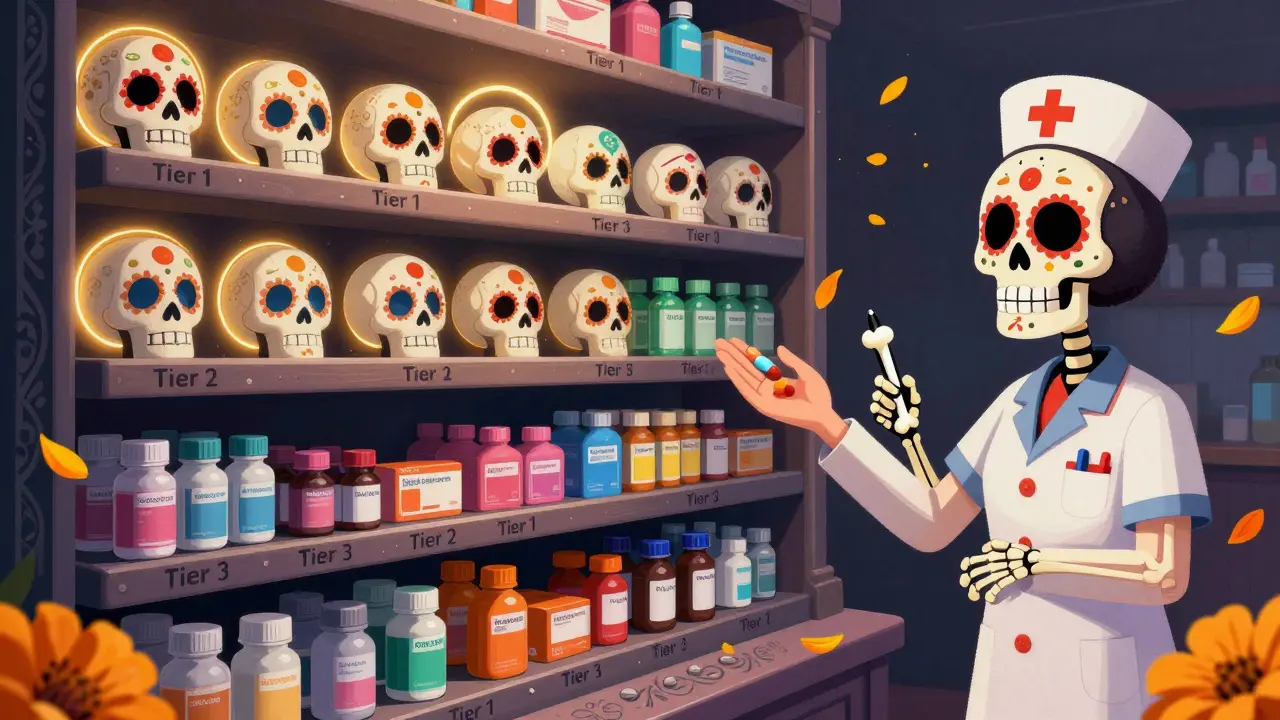
Hospital formularies are divided into tiers-usually three to five. Tier 1 is where the generics live. These are the drugs with the strongest evidence and lowest cost. Patients pay the least for them, often just a $5 copay. Tier 2 might include slightly more expensive generics or those with minor formulation differences. Tier 3 and above are usually brand-name drugs or newer agents that require special approval.
Here’s the catch: if a drug isn’t on the formulary, it’s not automatically available. A doctor can still prescribe it, but the pharmacy won’t stock it. The patient may need prior authorization, or worse, be sent to an outside pharmacy. That’s why formularies matter so much. They shape what’s easy to get-and what’s not.
Real-World Problems: Supply Shortages and Switching Chaos
It sounds simple: pick the best generic. But real life is messy.
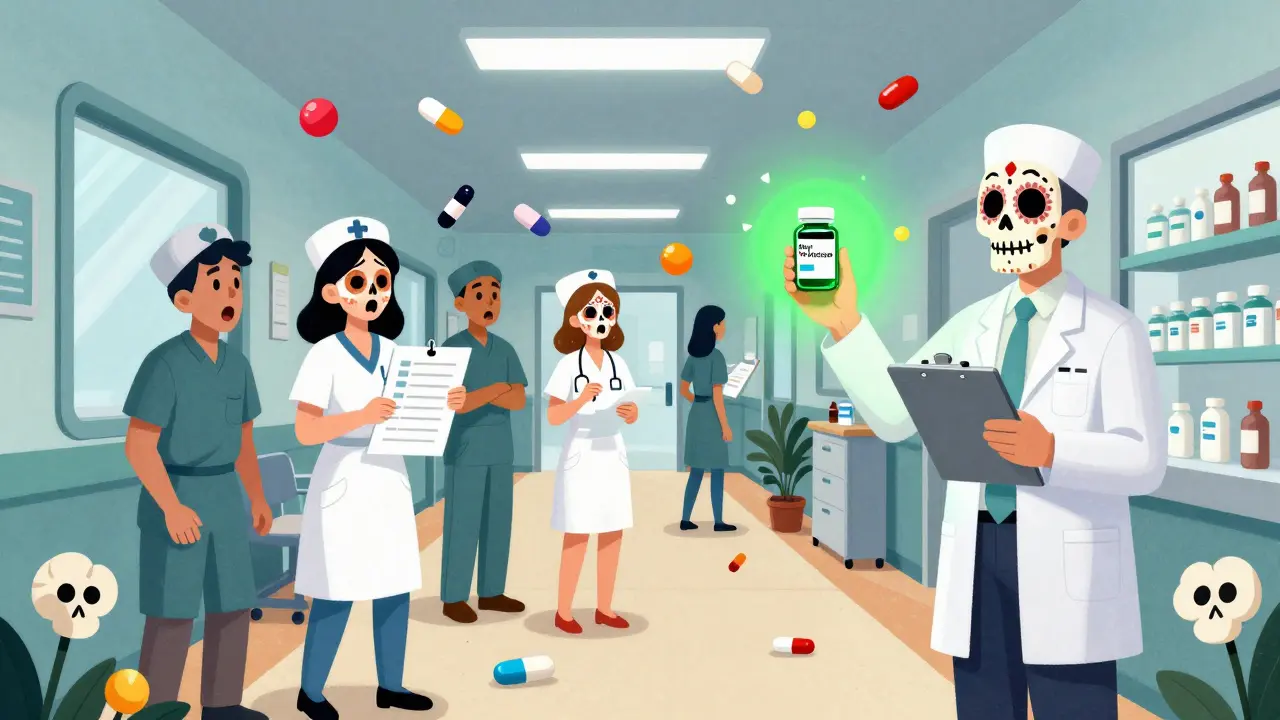
In 2022, over 268 generic medications faced shortages in the U.S. Some were due to manufacturing issues. Others were because one company stopped making a version because it wasn’t profitable. When that happens, hospitals scramble. A drug that was on Tier 1 might be pulled overnight. Pharmacists have to find an alternative-sometimes from a different manufacturer with a different pill shape, color, or dosing schedule.
And that’s when things go wrong. Nurses report confusion when a patient’s morning pill suddenly looks different. One study found that 73% of nursing staff experienced temporary medication errors during formulary transitions. Even small changes-like a pill going from oval to round-can trigger mistakes, especially with elderly patients or those on multiple drugs.
Some hospitals have created “therapeutic alternatives committees” to prepare for this. At Mayo Clinic, they proactively identify backup drugs for every high-use generic. When one drug runs out, they already have a plan. Success rate? 98%.
Conflict in the System: Doctors vs. Pharmacists
Not everyone agrees on what belongs on the formulary.
Pharmacists push for substitution. They want to swap out one generic for another if it’s equivalent and cheaper. But doctors often resist. They’ve built trust with a specific brand. They’ve seen how a patient responds to it. They don’t want to risk changing something that works.
A 2022 survey by the American Pharmacists Association found that 57% of pharmacists reported conflicts with physicians over generic substitutions. One cardiologist in Chicago told a reporter: “I’ve had patients stabilize on a generic from Company A. Switch them to Company B? I’ve seen their creatinine levels spike. I don’t care if the FDA says they’re the same.”
That’s why formularies now include exceptions. If a doctor requests a non-formulary drug for a valid clinical reason, they can get approval. But it takes time. And that delay? It’s frustrating for patients and providers alike.
The Future: Personalized Formularies and Biosimilars
The next frontier isn’t just about cost-it’s about precision.
Eighteen percent of academic medical centers are now testing pharmacogenomics in their formularies. That means if a patient has a genetic marker that makes them metabolize a drug too slowly, the formulary might automatically block certain generics and recommend alternatives. This isn’t science fiction-it’s happening in hospitals in Boston, Minneapolis, and San Francisco.
And then there are biosimilars. These are the next generation of generics-for biologic drugs like insulin, rheumatoid arthritis treatments, and cancer therapies. But they’re not simple copies. Their approval process is more complex. Only 37% of hospital formularies have clear protocols for evaluating them. That’s changing fast. With the Inflation Reduction Act pushing for lower drug prices by 2025, expect biosimilars to flood formularies in the next two years.
What’s Next? The System Is Getting Stronger
Hospital formularies aren’t perfect. They’re slow. They’re bureaucratic. They sometimes feel impersonal. But they’re also the reason hospitals can afford to treat thousands of patients every day without going broke.
More than 98% of large U.S. hospitals now have formal formularies. And they’re getting smarter. They’re using real-world data, predictive modeling, and patient outcomes-not just price tags-to make decisions. They’re being forced to adapt by regulatory pressure, supply chain chaos, and rising drug costs.
The goal hasn’t changed since the 1970s: give patients the safest, most effective drugs at the lowest cost. But the tools? They’ve evolved. Today’s formularies don’t just save money. They save lives.
What is a hospital formulary?
A hospital formulary is an official, continuously updated list of medications approved for use within a healthcare system. It’s managed by a Pharmacy and Therapeutics (P&T) committee and includes drugs selected based on clinical effectiveness, safety, and cost. Only medications on the formulary are routinely stocked and dispensed unless a special exception is made.
How are generic drugs chosen for a hospital formulary?
Generic drugs are evaluated using strict criteria: FDA therapeutic equivalence (confirmed via the Orange Book), clinical evidence from 15-20 peer-reviewed studies, safety data from adverse event reports, and total cost of care-not just acquisition price. Formulary committees also consider patient adherence, formulation differences, and supply reliability before approving a generic.
Why do hospitals prefer generics over brand-name drugs?
Hospitals prefer generics because they offer the same clinical outcomes at a fraction of the cost. In 2023, generics made up 90% of prescriptions but only 26% of drug spending. Many generics also improve adherence and reduce readmissions, lowering long-term costs. Formularies prioritize them not just for savings, but because they often deliver better overall value.
Can doctors prescribe drugs not on the formulary?
Yes, but it’s harder. If a drug isn’t on the formulary, the prescriber must submit a prior authorization request, often with clinical justification. The pharmacy may not stock it, forcing the patient to go to an outside pharmacy. Some hospitals require committee approval for non-formulary drugs, especially if they’re expensive or have limited evidence.
What role do pharmacists play in formulary decisions?
Pharmacists lead the evaluation process. They review clinical data, monitor drug shortages, assess therapeutic alternatives, and manage substitutions. They’re also the ones who implement formulary changes at the bedside-training nurses, updating electronic systems, and ensuring patients receive the correct medication. Many are board-certified in pharmacotherapy (BCPP) and serve as voting members of the P&T committee.
Stephen Rudd
March 8, 2026 AT 23:12Erica Santos
March 9, 2026 AT 11:06George Vou
March 10, 2026 AT 21:42Scott Easterling
March 11, 2026 AT 17:40Mantooth Lehto
March 13, 2026 AT 07:57Melba Miller
March 14, 2026 AT 12:43Katy Shamitz
March 15, 2026 AT 01:25Nicholas Gama
March 16, 2026 AT 04:59Mary Beth Brook
March 17, 2026 AT 10:29Neeti Rustagi
March 18, 2026 AT 21:26Dan Mayer
March 19, 2026 AT 06:55Janelle Pearl
March 20, 2026 AT 06:24Ray Foret Jr.
March 21, 2026 AT 17:46Samantha Fierro
March 21, 2026 AT 21:06