Imagine forgetting to refill your blood pressure pills. You run out. You feel dizzy. You don’t call the pharmacy because you’re busy, tired, or just didn’t remember. This happens to millions of people taking generic medicines for chronic conditions like diabetes, high cholesterol, or thyroid issues. Now imagine never having to think about it again. That’s what automated refills do - they remove the hassle so your health doesn’t suffer because of forgetfulness.
How Automated Refills Actually Work
Automated refill systems don’t just send you a reminder. They trigger a refill request automatically, usually 5 to 7 days before you’re likely to run out. This isn’t magic - it’s built into pharmacy software that tracks your prescription history, dosage, and refill patterns. When you sign up, the system learns how fast you use your meds. If you take one pill a day for 30 days, it knows to refill every 28 days. No calls. No apps to open. No waiting in line. Major pharmacies like CVS, Walgreens, and Amazon Pharmacy have had these systems running since at least 2015. Today, 63% of Medicare Part D plans offer them. They’re not optional extras anymore - they’re standard. And they’re mostly free. You don’t pay extra to enroll. You just need to give consent, which you can do online, over the phone, or in person at the pharmacy counter. The system connects to your electronic health record. If your doctor changes your dose - say, from 240 mg to 360 mg of diltiazem - the pharmacy should get that update. But here’s the catch: sometimes they don’t. That’s when problems happen.Why People Love Them (And Why Some Don’t)
People who use automated refills for generic medicines report real peace of mind. On Trustpilot, 73% of positive reviews mention “convenience” and “no more missed doses.” One Reddit user in Glasgow said, “I take five generics for heart and thyroid stuff. Before this, I was always running out. Now I just open my mailbox and there it is.” Studies back this up. A 2016 analysis of Medicare data found patients on automatic refills had:- 7.2% higher adherence for statins
- 3.9% higher for blood pressure meds (RASA)
- 6.8% higher for diabetes drugs
How Amazon’s RxPass Changes the Game
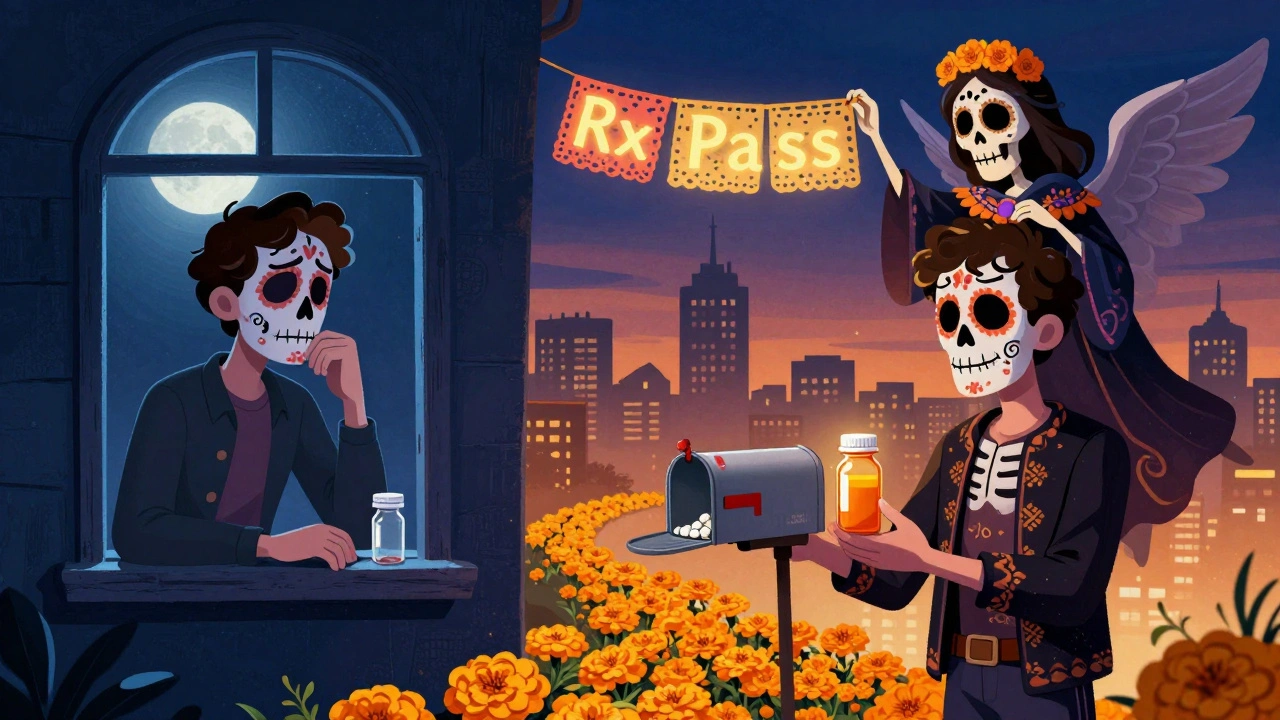
In January 2023, Amazon Pharmacy launched RxPass - a subscription service for 60 common generic medications. For $5 a month, Amazon Prime members in 45 U.S. states get unlimited refills. No co-pays. No insurance hassle. It’s not just cheap - it’s effective. A 2025 study in JAMA Network Open found RxPass users refilled their meds 18% more often than before. Why? Because the barrier of cost was gone. People who skipped refills because of the $15 co-pay suddenly started taking their pills regularly. RxPass works because it’s simple. You pick your meds. You pay $5. You get them delivered. No forms. No phone calls. No waiting for insurance approval. It’s a different model - not just automation, but subscription-based access. This isn’t available everywhere yet. But it’s a sign of where things are headed: affordability + automation = better adherence.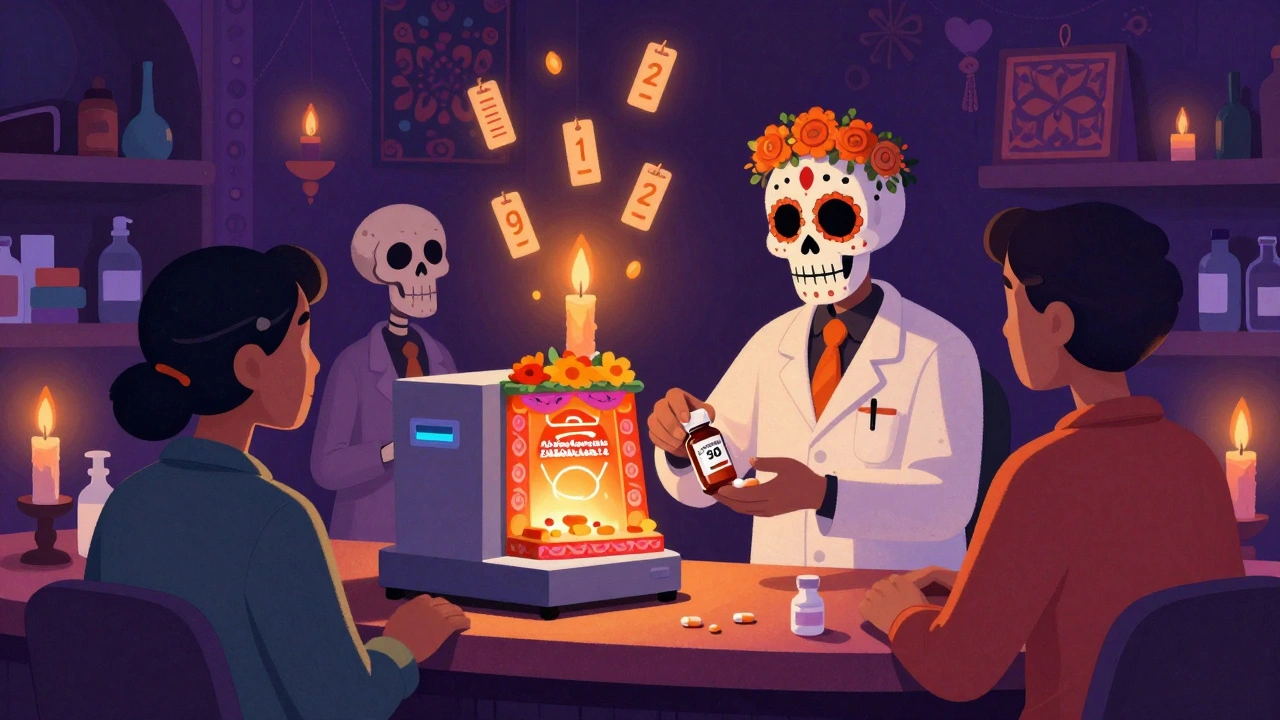
What You Need to Know Before Signing Up
Enrolling takes about 10 minutes. You can do it through your pharmacy’s website, app, or by asking the pharmacist. You’ll need:- Your prescription number
- Your phone number or email
- Consent to receive refill notifications
Red Flags to Watch For
Automated refills are helpful - but not foolproof. Here’s what to watch:- Unexpected deliveries: If you haven’t taken your meds in months but get a new bottle, call the pharmacy. You might have been enrolled without realizing it.
- Dosage changes: Always check the label. If your doctor changed your dose, confirm the pharmacy got the update.
- Too many refills: If you’re getting refills every 60 days on a 90-day prescription, ask why. Some PBMs do this to boost profits.
- No communication: If you never get a text, email, or call before your refill ships, your system might be broken. Ask for a confirmation.
What’s Next for Automated Refills
The market for pharmacy automation is growing fast - from $5.8 billion in 2022 to an expected $12.3 billion by 2027. Why? Because it saves money. Medicare Part D plans get bonus payments if their members have high adherence rates. Automated refills help them hit those targets. Pharmacies save money too. Clarity Ventures found automated systems reduce manual refill follow-ups by 37%. That means fewer staff hours spent answering the same phone call over and over. Future upgrades are coming. CVS now syncs refill data with Apple Health. AI will soon predict when you’re likely to miss a dose based on your past behavior - not just your schedule. Imagine getting a text: “You skipped your last two refills. Want to pause this one?” But there’s a trade-off. The more automated it gets, the less human contact you have. Pharmacists used to be the ones checking in: “How’s your blood pressure?” “Any side effects?” Now, that conversation might disappear.How to Make It Work for You
If you’re on generic meds for a chronic condition, automated refills are one of the easiest ways to stay healthy. Here’s how to use them right:- Ask your pharmacy if they offer automatic refills - don’t wait for them to ask you.
- Enroll in writing or online. Keep a copy of your consent.
- Check every new bottle. Compare the dose to your doctor’s latest note.
- Review your meds every 3 months. If you stopped taking one, call to cancel the refill.
- Use SMS or email alerts. Don’t rely on your memory.
- If you use Amazon RxPass, make sure you’re getting the right generics. Not all are covered.
Are automated refills safe for seniors?
Yes, if used correctly. Seniors benefit most because memory issues make them more likely to miss doses. But they often need help enrolling - 83% require assistance. Always ask a pharmacist or family member to help set it up. Check each new refill for dosage changes.
Can I cancel an automated refill anytime?
Absolutely. You can pause or cancel at any time through your pharmacy’s app, website, or by calling them. No penalty. No fine print. If you’re not using the meds anymore - stop the refills. Don’t wait for them to arrive.
Do automated refills cost more?
No. Enrolling is free. You pay the same co-pay or price as if you ordered manually. Amazon RxPass is an exception - it’s a flat $5/month subscription for 60 generics, which often saves money compared to insurance co-pays.
What if my doctor changes my dose?
Always confirm with your pharmacy. Electronic systems don’t always update in real time. A patient in 2024 kept getting 240 mg of diltiazem after their doctor increased it to 360 mg. That’s why you must check the label every time. If something looks wrong, call the pharmacy immediately.
Are automated refills available for all generic medicines?
Most chronic condition generics are covered - blood pressure, cholesterol, diabetes, thyroid, and antidepressants. But short-term meds like antibiotics or painkillers usually aren’t eligible. Check with your pharmacy. Amazon RxPass only includes 60 specific generics, so not all are included.
Can I use automated refills with mail-order pharmacies?
Yes, and many people do. Mail-order services often offer 90-day supplies automatically. But be careful - some PBMs trigger refills early to make more money. If you get a refill every 60 days on a 90-day prescription, ask why. You might be paying for extra pills you don’t need.
Joe Lam
December 5, 2025 AT 09:36This is the kind of lazy healthcare innovation that makes me sick. Automated refills don’t improve outcomes-they just turn patients into passive recipients of corporate logistics. You think a text alert replaces clinical judgment? Please. The real problem is we’ve outsourced responsibility to algorithms while doctors get paid more for prescribing than for counseling. This isn’t progress-it’s pharmaceutical capitalism dressed up as convenience.
And don’t get me started on RxPass. $5 a month? That’s a Trojan horse. Amazon doesn’t care if you live or die. They care about data. Your refill patterns, your adherence metrics, your blood pressure trends-all fed into their AI to sell you more shit. You’re not a patient. You’re a data point with a prescription number.
People are dying because they’re taking pills they don’t need, and now we’re incentivizing it with subscription models. This isn’t healthcare. It’s Amazon Prime for pills. And you’re all clapping like it’s revolutionary.
Wake up. The pharmacy is not your friend. The algorithm is not your doctor. And your life is not a subscription service.
Jenny Rogers
December 6, 2025 AT 02:34One must question the ethical underpinnings of this so-called innovation. The mechanization of pharmacological adherence, while superficially efficient, fundamentally erodes the sacred patient-provider relationship. The physician’s role has always been not merely to prescribe, but to observe, to inquire, to adapt. To engage in the delicate dance of clinical intuition. By delegating this to an algorithm, we abdicate moral agency.
Furthermore, the notion that convenience equates to health is a dangerous fallacy. The body is not a machine that can be serviced by automated replenishment cycles. Human physiology demands contextual awareness-dietary changes, renal function, drug interactions-that no software can comprehend without human oversight.
And yet, we celebrate this as progress. We glorify efficiency over empathy. We mistake automation for care. The irony is not lost: in our quest to eliminate human error, we have institutionalized systemic neglect.
One must ask: who benefits? Not the patient. Not the physician. The PBM. The shareholder. The corporate entity that sees human vulnerability as a revenue stream. This is not medicine. It is commodification cloaked in UI design.
Rachel Bonaparte
December 6, 2025 AT 14:20Okay but have you ever stopped to think about who’s really controlling these systems? I did a deep dive after my mom got her diltiazem dose wrong-turns out, the pharmacy software is owned by a subsidiary of a company that also owns a major insurance provider that’s linked to a private equity firm that invested in a lobbying group that pushed for the 2018 Medicare Part D overhaul.
It’s not a coincidence that refills are triggered early. It’s a designed feature. They want you to keep taking the pills, even if you don’t need them, because then the insurance company gets to claim ‘high adherence’ and get bonus payments, and the pharmacy gets to bill for extra shipments, and the middleman gets their cut. And you? You’re just the sucker who thinks it’s helping you.
And don’t even get me started on Amazon RxPass. That’s not a service. That’s a data harvesting operation disguised as a discount. They’re building a health profile on every Prime member. One day, your premiums will go up because your refill history shows you’re ‘non-compliant’ with lifestyle changes. They’ll say, ‘We see you took your statin but still ate bacon.’
This isn’t innovation. It’s surveillance capitalism with a pill bottle.
I’ve been researching this for 18 months. I’ve got screenshots. I’ve filed FOIA requests. Someone needs to expose this. And no, the FDA won’t. They’re too cozy with the industry.
Check your bottle. Always. And if you see a label that says ‘Automated Refill: Enrolled 03/2023’-you didn’t sign up for that. Someone did it for you. And they’re making money off your silence.
Scott van Haastrecht
December 7, 2025 AT 23:38Let’s be real. This entire article is a PR stunt written by a pharmacy marketing intern. You talk about ‘peace of mind’ like it’s a virtue. It’s not. It’s numbness. People aren’t taking their meds because they’re healthy-they’re taking them because they’re too scared to face the consequences of stopping. And now we’ve made it easier to stay in denial.
7.2% higher adherence? Big deal. That’s still 92.8% of people who didn’t magically become compliant. You think a text message fixes depression? Or poverty? Or the fact that half these people can’t afford food but somehow have $15 for a co-pay?
And RxPass? $5 a month? That’s not a deal. That’s a trap. You think Amazon gives a damn about your thyroid? They care about your shipping address. Your purchase history. Your Amazon Prime membership. You’re not a patient. You’re a customer. And your meds are just another product in your cart.
This isn’t healthcare. It’s a scam wrapped in a UX design. And you’re all falling for it because it’s easy. And easy is what they sell you when they’ve already given up on you.
Chase Brittingham
December 8, 2025 AT 16:13I get why this feels like magic-it’s not. It’s just good, quiet care. I’ve watched my dad go from forgetting his meds to getting them delivered every month without a single call. He’s 78. He doesn’t do apps. He doesn’t like phones. But he opened his mailbox last week and there it was: his blood pressure pills, right on time.
Yes, there are risks. Yes, you have to check the label. Yes, systems fail. But the alternative? Him missing doses because he’s tired, or confused, or just didn’t want to deal with another phone call. That’s not convenience. That’s neglect.
Automated refills don’t replace human care. They just make space for it. The pharmacist who used to spend 40 minutes a day answering refill calls? Now they have time to ask, ‘How’s your sleep?’ or ‘Any dizziness?’
And yeah, Amazon RxPass is weird. But if someone who skipped their statin because it cost $20 now takes it because it’s $5 a month? That’s not capitalism. That’s compassion with a subscription model.
It’s not perfect. But it’s better than watching someone die because they forgot to refill.
michael booth
December 10, 2025 AT 03:05Automated refill systems represent a paradigm shift in chronic disease management. The empirical data is unequivocal: improved adherence correlates directly with reduced hospitalization rates and lower long-term healthcare expenditures. The structural efficiency gains are quantifiable and significant.
Moreover, the elimination of procedural friction-such as manual refill requests and pharmacy wait times-reduces cognitive load for patients managing multiple comorbidities. This is not merely a convenience; it is a clinical intervention.
Concerns regarding dosage synchronization are valid but addressable through interoperable EHR integration and real-time alert protocols. The issue is not automation per se, but implementation fidelity.
It is imperative that regulatory bodies and pharmacy chains prioritize audit trails, patient opt-in transparency, and automated reconciliation with prescriber updates. The technology is mature. The infrastructure exists. What is lacking is consistent enforcement.
Let us not conflate corporate profit motives with systemic benefit. The goal must remain patient outcomes-not revenue streams.
Heidi Thomas
December 11, 2025 AT 18:33So you’re telling me I’m supposed to trust a computer to know when I need my pills but not trust my own memory? That’s rich. I’ve been on the same meds for 12 years. I know when I’m running low. I don’t need a robot sending me a bottle I didn’t ask for.
And don’t even get me started on RxPass. $5 a month? That’s how much I pay for my Netflix. Now I’m supposed to believe Amazon cares about my thyroid? They’re just trying to lock me into their ecosystem. Next thing you know, they’ll start selling me protein powder because I refill my cholesterol med.
Check your bottle? Yeah right. I’m supposed to compare the label to my doctor’s note every month? That’s not healthcare. That’s homework. And I already did enough of that in med school.
This whole thing is a scam. They want you dependent. They want you addicted to the system. So you never question it. So you never ask why your pill count is always off.
I canceled mine. Took the pill. Forgot to refill. No big deal. I’m still alive. And I didn’t pay Amazon a dime.
Alex Piddington
December 13, 2025 AT 08:23To those concerned about automation replacing human interaction: I understand the fear. But let’s not romanticize the past. Before automated refills, how many patients were lost to silence? How many never called because they were afraid, embarrassed, or too overwhelmed to ask for help?
Automation doesn’t replace the pharmacist. It frees them. The pharmacist who used to spend hours on refill calls can now sit with a patient who’s scared, who’s confused, who needs to talk about side effects or cost or depression. That’s the real win.
And yes-systems fail. But we fix them. We don’t abandon them. We audit them. We demand better integration. We push for real-time EHR syncs and mandatory patient confirmations.
There is dignity in simplicity. There is safety in consistency. And for millions of people who wake up every day and forget to take their pills-not because they don’t care, but because life is too heavy-this is not a flaw. It’s a lifeline.
Let’s not let perfection be the enemy of survival.