Pediatric Antihistamine Dosing Calculator
Dosing Calculator
Recommended Dose:
Medication:
Weight Range:
Important: This is for children 2 years and older. Consult your pediatrician for infants or if you're unsure about dosage.
Why Pediatric Antihistamine Dosing Is So Dangerous
Parents reach for antihistamines like Benadryl, Zyrtec, or Claritin when their child has a runny nose, itchy rash, or seasonal allergies. It seems simple: give a little liquid, wait for relief. But under the surface, this everyday action carries serious risks. In 2022 alone, over 21,000 children under 6 ended up in emergency rooms because of antihistamine mistakes. Most of these weren’t accidents-they were preventable dosing errors.
The biggest problem? Diphenhydramine, the active ingredient in Children’s Benadryl, is still widely used-even though it’s not safe for routine use in young kids. It crosses the blood-brain barrier easily, causing drowsiness, confusion, and in overdose, seizures or stopped breathing. Second-generation antihistamines like cetirizine (Zyrtec) and loratadine (Claritin) are far safer because they don’t cross into the brain as much. Yet, many caregivers still grab the old standby because it’s familiar, cheap, or labeled "children’s."
How Dosing Errors Actually Happen
It’s not that parents are careless. They’re confused. Here’s how the mistakes stack up:
- Kitchen spoons are not measuring tools. A tablespoon from your kitchen might hold 7.5mL-or just 2.5mL. That’s a 300% difference. A study in Annals of Internal Medicine found this single mistake caused overdoses in nearly half of the cases reviewed.
- Confusing concentrations. Children’s Benadryl liquid is 12.5mg per 5mL. Adult Benadryl is 25mg or 50mg per tablet. A grandparent might think "one tablet for a toddler" is fine. In 2022, a 23-month-old was hospitalized after getting a full adult tablet instead of the correct 3.75mL dose.
- Weight vs. age charts. Many labels say "for ages 2-5." But weight matters more. A 30-pound 4-year-old needs more than a 15-pound 2-year-old. Yet, 78% of parents on Reddit admitted they didn’t know whether to use age or weight to decide the dose.
- Same syringe for multiple meds. One parent uses the same syringe for Zyrtec, Tylenol, and Benadryl. Each has a different concentration. Mixing them up leads to accidental overdose.
What the Numbers Really Mean
Let’s cut through the noise with exact numbers:
| Weight | Diphenhydramine (Benadryl) | Loratadine (Claritin) | Cetirizine (Zyrtec) |
|---|---|---|---|
| 20-24 lbs | 3.75 mL (9.3 mg) | 2.5 mL (2.5 mg) | 2.5 mL (2.5 mg) |
| 25-37 lbs | 5 mL (12.5 mg) | 5 mL (5 mg) | 5 mL (5 mg) |
| 38-49 lbs | 7.5 mL (18.75 mg) | 7.5 mL (7.5 mg) | 7.5 mL (7.5 mg) |
Notice something? For kids under 40 pounds, loratadine and cetirizine are dosed the same way-once a day. Diphenhydramine? It’s every 4-6 hours. More doses = more chances to mess up. That’s why emergency visits for diphenhydramine are 83% higher than for the others, even though fewer kids take it.
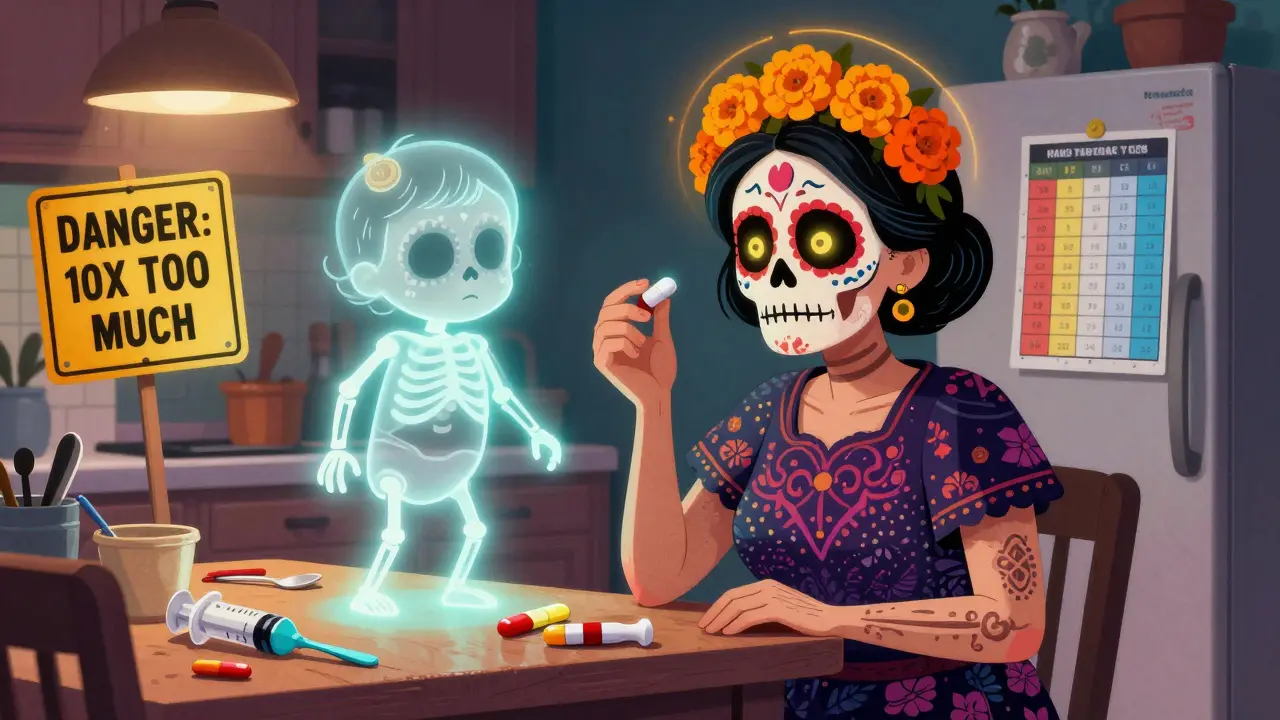
Why First-Generation Antihistamines Should Be Avoided
Diphenhydramine has a narrow safety window. The difference between a helpful dose and a dangerous one is tiny-about 2:1. That means if you give 10% too much, you’re already in risk territory. Compare that to cetirizine, which has a 10:1 safety margin. You’d need to give five times the right dose to hit danger.
The American Academy of Pediatrics (AAP) says: Don’t use diphenhydramine for colds or routine allergies in kids under 2. Yet, 67% of pediatricians report parents still asking for it. Why? Because it makes kids sleepy-and some parents think that’s helpful for a restless night. But sedation isn’t a feature. It’s a side effect that can mask breathing problems. In infants, it can cause apnea. In toddlers, it can trigger hallucinations or heart rhythm issues.
How to Measure Correctly-Every Time
Forget spoons. Forget guessing. Here’s what actually works:
- Get an oral syringe. Buy one at any pharmacy for under $2. Make sure it’s marked in milliliters (mL), not teaspoons. Use it only for medicine.
- Use the syringe that comes with the bottle. If it’s missing, ask the pharmacist for a new one. They’re required to include one by FDA rules since 2011.
- Measure at eye level. Hold the syringe steady and look straight at the line. Don’t tilt it up or down.
- Never reuse a syringe. Clean it after each use, but use a new one for each different medicine. Cross-contamination is real.
- Double-check the concentration. Is it 12.5mg/5mL? 5mg/5mL? Write it down if you need to. Don’t assume.
Parents who use these steps cut their dosing error risk by 62%, according to the CDC. That’s not a small improvement-it’s life-changing.
What to Do If You Think You Made a Mistake
Don’t wait. Don’t hope it’s fine. If you gave the wrong dose-whether it’s too much, too little, or the wrong medicine-call Poison Control immediately at 1-800-222-1222. They’re free, available 24/7, and trained to walk you through what to do next.
Signs of overdose include:
- Extreme drowsiness or inability to wake up
- Fast or irregular heartbeat
- Flushed skin or dry mouth
- Difficulty breathing
- Seizures or uncontrolled movements
If you see any of these, go to the ER. Don’t call your pediatrician first. Time matters.
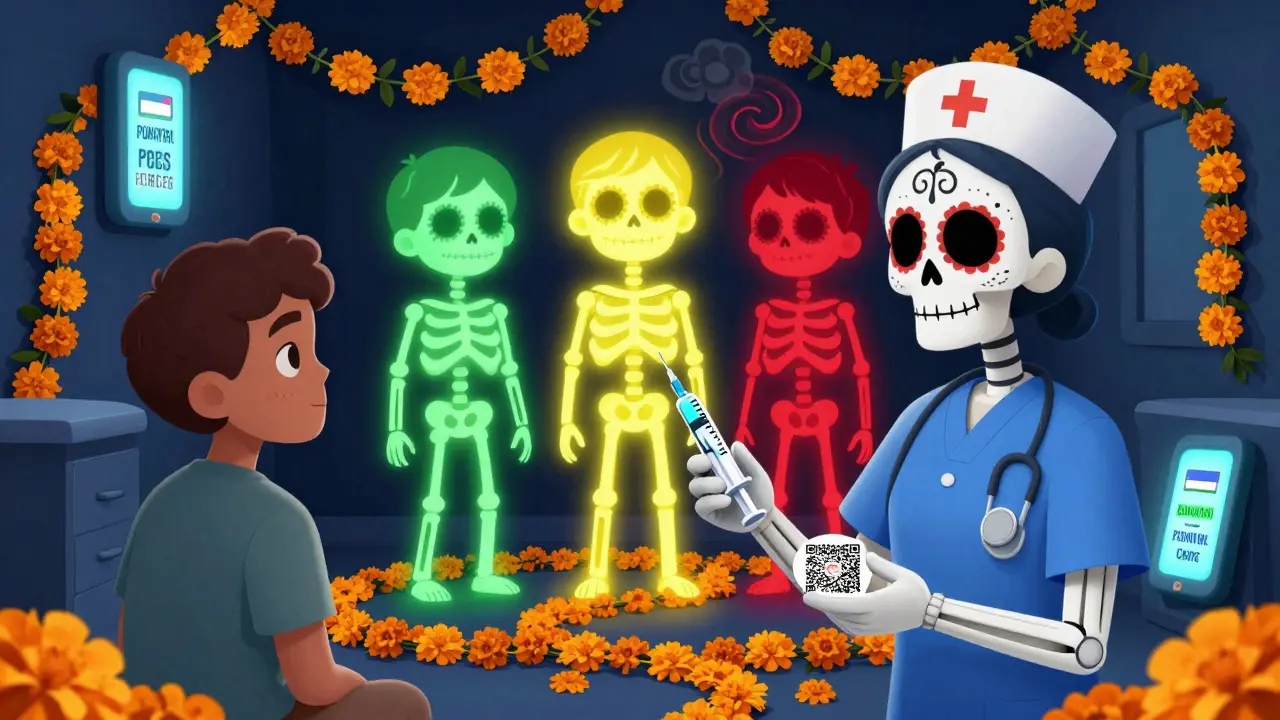
Tools That Actually Help
Technology can reduce errors-not add to them.
- Medication apps: Apps like MedsHelper or MyTherapy let you scan the bottle, input your child’s weight, and get a visual guide with voice confirmation. One study showed they reduce errors by 47%.
- QR codes on labels: The FDA is rolling out QR codes on pediatric meds that link to short videos showing exactly how to measure. Pilot programs at Boston Children’s Hospital cut errors by over half.
- Color-coded charts: Many clinics now use "Dose Right" programs-color-coded charts taped to the fridge that match your child’s weight to the right dose. Ask your pediatrician for one.
What’s Changing-and What’s Not
There’s good news: Second-generation antihistamines like Zyrtec and Claritin now make up 68% of pediatric use, up from 42% in 2010. That’s because doctors, pharmacists, and parents are learning. Hospitals use electronic systems that flag wrong doses before they’re given. Pharmacists now catch 19% of errors before the medicine leaves the counter.
But the old habits die hard. Grandparents, who make up only 18% of caregivers, are responsible for 37% of dosing errors. Why? They learned from a time when "a teaspoonful" was enough. They don’t know about milliliters, syringes, or weight-based dosing. This isn’t about blame-it’s about education. Show them the syringe. Let them see the label. Let them hear the pharmacist.
Final Rule: When in Doubt, Don’t Give It
If you’re unsure about the dose, the medicine, or the timing-wait. Call your pediatrician. Call Poison Control. Text a friend who’s a nurse. Don’t guess. Antihistamines aren’t harmless. Even a small mistake can land your child in the ICU.
For most common allergies, you don’t need antihistamines at all. Saline sprays, humidifiers, and avoiding triggers work better for kids under 6. Save the medicine for when it’s truly needed-and then use it exactly right.
Can I give my child Benadryl for a cold?
No. The FDA and American Academy of Pediatrics strongly advise against using diphenhydramine (Benadryl) for colds in children under 2, and it’s not recommended for routine use in any child. It doesn’t treat the virus, and the sedation it causes can mask serious breathing problems. Use saline drops, a humidifier, and rest instead.
Is Zyrtec or Claritin safer than Benadryl for kids?
Yes. Both cetirizine (Zyrtec) and loratadine (Claritin) are second-generation antihistamines with much wider safety margins. They’re less likely to cause drowsiness, confusion, or heart issues. They’re dosed once a day, reducing the chance of accidental overdose. For routine allergies, they’re the preferred choice for children over 1 year old.
What if my child spits out the medicine?
Don’t re-dose. If your child spits out or vomits the medicine, wait and call your pediatrician. Re-dosing can lead to overdose. Instead, try using a flavored version, giving it slowly with a syringe toward the inside of the cheek, or mixing it with a small amount of applesauce (if the label allows).
Can I use a kitchen teaspoon if I don’t have a syringe?
Never. Kitchen teaspoons vary from 2.5mL to 7.5mL. That’s a 300% error range. A teaspoon labeled "1 tsp" might deliver 3 times too much or too little. Always use the oral syringe that comes with the medicine or buy one at the pharmacy. It’s the only way to be accurate.
How do I know if my child’s dose is based on weight or age?
Look at the dosing chart on the bottle. If it lists weights (like 20-24 lbs), use weight. If it only lists ages, ask your pharmacist or pediatrician for the correct weight-based dose. Weight is always more accurate than age, especially for kids under 5.
Ed Mackey
February 5, 2026 AT 06:19Been there. Used a kitchen spoon once. Kid got super drowsy, looked like a zombie. Never again. Bought a syringe for $1.50 at CVS. Game changer. Still use it for Tylenol too. Just say no to spoons.
Katherine Urbahn
February 6, 2026 AT 16:50It is imperative, nay-non-negotiable-that caregivers utilize only calibrated oral syringes for pediatric medication administration. The fact that anyone still relies on kitchen utensils is not merely negligent; it is a systemic failure of public health education. The FDA has mandated accurate dosing tools since 2011. Why are we still having this conversation?
Alex LaVey
February 7, 2026 AT 07:07Hey everyone-just wanted to say how glad I am that this post is out there. I’m a dad of two, and I didn’t know half this stuff until my oldest had a reaction to Benadryl. Now I keep a labeled syringe in the medicine cabinet, and I even made a little chart for my mom. She’s 72, grew up with ‘a teaspoon for everything.’ But when I showed her the weight chart and said, ‘This could save a life,’ she cried and said she’d do better. We all can. Small steps.
Jhoantan Moreira
February 8, 2026 AT 19:34Love this! 🙌 I’m from the UK and we’ve been pushing this syringe thing for years here too. My sister-in-law used to give her kid Benadryl with a dessert spoon. Now? She has a whole drawer of color-coded syringes. I sent her this article. She said it was ‘the most useful thing I’ve read since the baby arrived.’
Justin Fauth
February 10, 2026 AT 05:12ARE YOU KIDDING ME?! We’re letting grandparents give kids liquid Benadryl like it’s cough syrup?! This is why America’s healthcare system is a dumpster fire. If you can’t measure 5 mL, you shouldn’t be parenting. Get your act together. This isn’t rocket science.
Meenal Khurana
February 11, 2026 AT 05:41Use syringe. Check weight. Skip Benadryl. Done.
Joy Johnston
February 12, 2026 AT 03:51As a pediatric nurse, I can’t tell you how many times I’ve had to explain this to parents. The biggest myth? ‘It helps them sleep.’ No. It masks symptoms. It can cause respiratory depression in infants. I’ve seen it. We had a 14-month-old come in with a heart rate of 180 after a single adult tablet. He’s fine now. But it took an ER visit. Please, please, please: use Zyrtec or Claritin. One dose. Once a day. Less room for error. And if you’re unsure? Call your pharmacist. They’re there to help.
Shelby Price
February 12, 2026 AT 14:57I didn’t know Zyrtec and Claritin were dosed the same. That’s wild. I’ve been using Benadryl for my 3-year-old because it’s ‘what I remember.’ Guess I’m due for an update. Thanks for the chart. Saved it.
Jesse Naidoo
February 14, 2026 AT 05:01So why do pharmacies still sell diphenhydramine for kids if it’s so dangerous? Are they just trying to make money? My cousin’s kid almost died from this. I’m not mad-I’m just… confused. Who’s responsible here? The FDA? The manufacturers? Why isn’t this banned? Why is it still on shelves?
Zachary French
February 15, 2026 AT 07:12Let me get this straight-people are still using spoons? Like, actual spoons? From the kitchen? Are we living in 1987? I’m not even kidding. I had a friend who gave her kid a full adult tablet because ‘it’s just a little more.’ She didn’t even call Poison Control until the kid was blue. This isn’t ignorance-it’s reckless. And now we’re supposed to be ‘understanding’? Nah. We need to shame this behavior. No more ‘parents are just trying their best.’ Sometimes, trying your best means doing the damn research.
Daz Leonheart
February 16, 2026 AT 13:26You’re not alone. I used to wing it too. Then my daughter got a rash, I gave her Benadryl, and she passed out for 45 minutes. Scared the hell out of me. Now I have a whole system: syringe, weight chart taped to the fridge, and I always double-check the label. It’s a habit now. And honestly? It’s peace of mind. You got this. Start small. One syringe. One change. That’s all it takes.
Amit Jain
February 17, 2026 AT 14:50Good post. In India, many parents use spoon because no syringe available. But now many pharmacies give free syringe with medicine. Also, Zyrtec cheaper than Benadryl now. Use Zyrtec. One time a day. Easy.
Demetria Morris
February 19, 2026 AT 08:12I’m not saying this is the end of the world, but if you’re giving your child anything with diphenhydramine before age 2, you’re playing Russian roulette with their brain. And yes, I know that sounds dramatic. But I’ve seen the ER reports. The seizures. The intubations. It’s not a myth. It’s real. And it’s preventable. So if you’re still using it for ‘a little sleep’-stop. Please.