Skipping a pill here and there might seem harmless-maybe you forgot, felt fine, or couldn’t afford it. But when it becomes a pattern, the consequences aren’t just inconvenient. They’re life-threatening. Medication nonadherence-failing to take drugs exactly as your doctor ordered-is one of the most dangerous, yet ignored, problems in modern healthcare. It’s not about being lazy or irresponsible. It’s about systems failing people, costs stacking up, and misunderstandings going uncorrected. And the toll? It’s massive.
People Are Dying Because They Skip Their Meds
Every year in the U.S., around 125,000 people die because they didn’t take their medications as directed. That’s more than deaths from car accidents or homicides. For people over 50, the risk is even worse-nonadherence makes you 30 times more likely to die than if you were murdered. These aren’t hypothetical numbers. They come from data tracked by the OECD, Magellan Health Insights, and peer-reviewed studies in Frontiers in Pharmacology.
Think about heart disease. If you’re on a blood thinner or beta-blocker and skip doses, your risk of stroke or heart attack spikes. For someone with diabetes who skips insulin, blood sugar swings can lead to kidney failure, nerve damage, or coma. In transplant patients, missing even one dose of anti-rejection drugs can cause organ failure within days. And for mental health conditions like depression or schizophrenia, inconsistent medication use leads to relapse, hospitalization, and suicide risk.
One study found that nearly 67% of Americans don’t take their medications correctly. That’s two out of every three people. And it’s not just occasional forgetfulness. Many stop because they feel better-then never go back. But for chronic conditions, feeling fine is the point of the medicine, not proof you don’t need it anymore.
Your Body Doesn’t Work in Short-Term Increments
Medications aren’t like painkillers. You don’t pop a pill, feel relief, and call it quits. Most drugs for high blood pressure, cholesterol, asthma, or thyroid disorders work by maintaining a steady balance in your body. Skip a dose, and that balance breaks. It doesn’t just reset the next day-it triggers a cascade of stress responses.
Take blood pressure medication. If you miss a few doses, your arteries tighten, your heart works harder, and your blood vessels start to stiffen. Over time, this leads to permanent damage. The same goes for statins. Cholesterol doesn’t disappear after one pill-it’s a daily battle against buildup in your arteries. Stopping means plaque starts forming again, and you’re back at risk for a heart attack.
Even antibiotics are dangerous if not completed. Stopping early doesn’t just make the infection come back-it breeds superbugs. Bacteria that survive the incomplete treatment become stronger, resistant, and harder to kill. This isn’t science fiction. The CDC lists antibiotic resistance as one of the top global health threats.
It’s Costing You-And the System-Billions
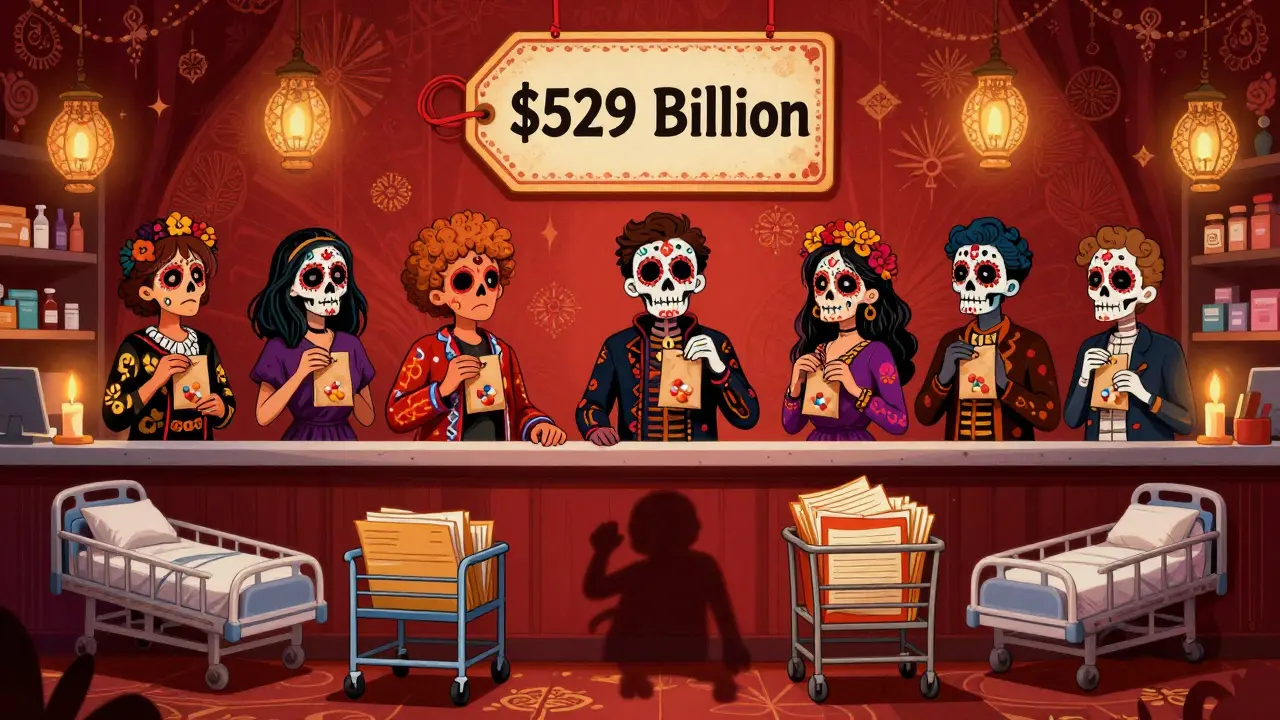
Skipping meds doesn’t save money. It costs far more in the long run. In 2016, nonadherence cost the U.S. healthcare system $529 billion. That’s more than the entire annual budget of the Department of Defense. These costs come from emergency room visits, hospital stays, and treatments for complications that could have been prevented.
One in five Medicare readmissions within 30 days is directly tied to patients not taking their drugs. And half of those readmissions are completely preventable. Each hospitalization can cost $15,000 to $50,000. Multiply that by hundreds of thousands of cases, and you see why insurers and hospitals are pushing hard for adherence programs.
On an individual level, skipping meds often leads to higher out-of-pocket costs. You might avoid paying $10 for a pill, but end up paying $5,000 for an ER trip. The National Center for Health Statistics found that 8.2% of working-age adults skipped meds because they couldn’t afford them. That’s millions of people choosing between groceries and their next dose.
Why People Don’t Take Their Meds-It’s Not Just Forgetfulness
People don’t skip pills because they’re careless. They do it because the system makes it hard.
Cost is the biggest barrier. Even with insurance, copays for chronic meds can hit $50, $100, or more per month. For someone living paycheck to paycheck, that’s not a choice-it’s a survival decision.
Complex regimens are another killer. Imagine taking seven different pills at three different times a day, with food, without food, with water, without caffeine. It’s overwhelming. No wonder people give up. Studies show adherence drops sharply after the first few months as the novelty wears off and the burden sets in.
Fear of side effects stops people too. If you read the leaflet and see “risk of liver failure” or “severe depression,” it’s natural to panic-even if the chance is 1 in 10,000. Many patients don’t talk to their doctors about these fears. They just stop.
Lack of communication plays a huge role. Doctors often assume patients understand why a drug matters. But most patients leave the office with half the information. They don’t know what the drug does, what happens if they skip it, or how long it takes to work. And if they feel dismissed when they ask questions, they stop asking.
And for Black, Latino, Indigenous, and low-income communities, the problem is deeper. Historical mistreatment, language barriers, pharmacy deserts, and distrust in the medical system make adherence even harder. These aren’t individual failures-they’re systemic ones.
What Actually Works to Fix This
There are solutions-and they’re proven. But they’re not being used enough.
Pharmacist-led programs have boosted adherence by 15-20%. Pharmacists can review your whole med list, simplify dosing schedules, and answer questions in plain language. Yet most insurance plans don’t pay for these services.
Text message reminders improve adherence by 12-18%. Simple, daily alerts work better than you’d think. One trial showed patients who got texts were far less likely to end up in the hospital.
Blister packs and pill organizers help people who take multiple meds. Pre-sorted packs with days and times labeled remove the guesswork.
Medication therapy management (MTM) is a free service offered by many pharmacies and insurers. A pharmacist sits down with you, reviews all your drugs, checks for interactions, and helps you set up a routine. But most people don’t know it exists.
AI tools are now being used to predict who’s at risk of skipping meds. Hospitals analyze refill patterns, appointment no-shows, and even social determinants to flag high-risk patients before they end up in the ER. Some systems are 85% accurate.
But none of this works without policy change. Right now, doctors get paid for prescribing, not for making sure you take the pills. Pharmacies get paid for filling, not for following up. Until payment models reward outcomes-not volume-this problem won’t get better.
What You Can Do Right Now
You don’t need a perfect system to protect your health. Start with these steps:
- Ask your doctor: “What happens if I miss a dose?” and “Is there a cheaper or simpler version of this drug?”
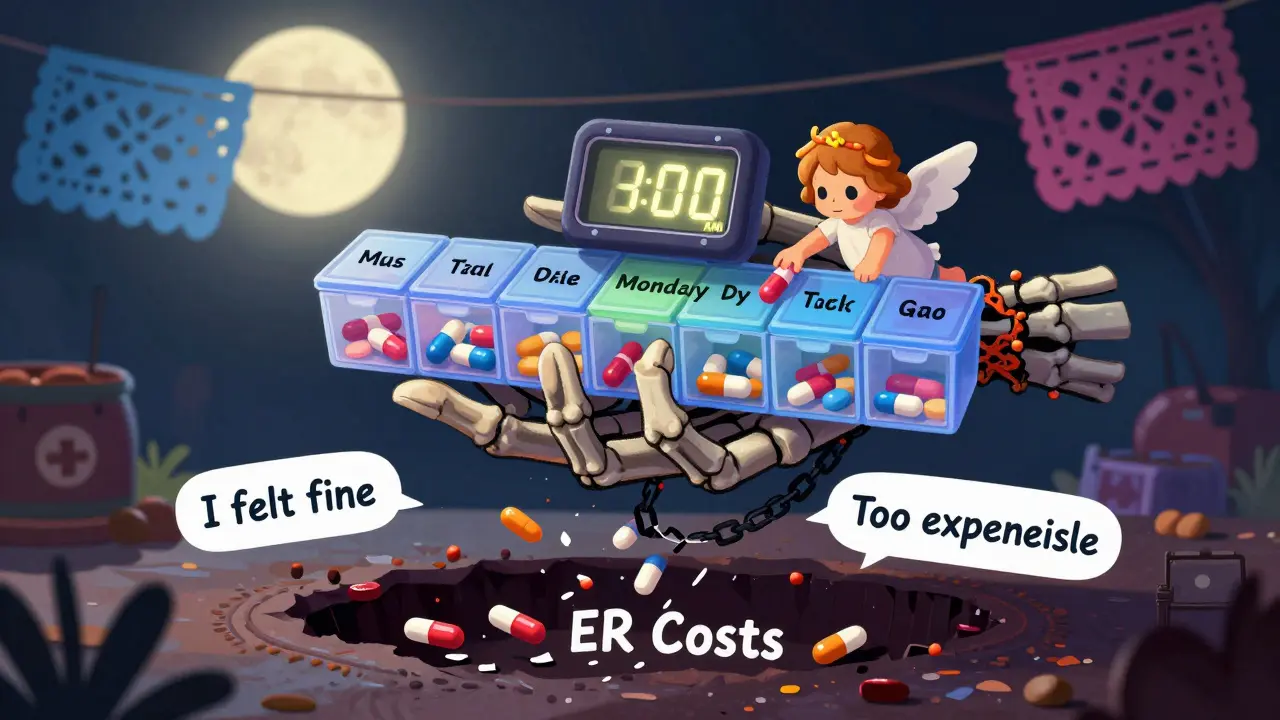
- Use a pill organizer. Even a basic weekly one cuts missed doses by half.
- Set phone alarms. Label them with what the pill is for: “Blood pressure-keeps heart strong.”
- Call your pharmacy. Ask if they offer free delivery, bulk refills, or MTM services.
- Don’t stop because you feel fine. If your meds are working, that’s why you’re still alive.
If cost is the issue, ask about patient assistance programs. Most drugmakers have them. Some pharmacies offer $4 generic lists. You don’t have to choose between eating and breathing.
It’s Not Your Fault-But It’s Your Power
Nonadherence isn’t a moral failing. It’s a sign that healthcare isn’t working for you. But you still have control. You can ask for help. You can ask for alternatives. You can use tools that make it easier. And you can tell your story-because when enough people speak up, systems change.
Your health isn’t a checklist. It’s your life. And every pill you take is a step toward keeping it.
What happens if I miss one dose of my medication?
Missing one dose rarely causes immediate harm, but it can disrupt the steady level your body needs-especially for chronic conditions like high blood pressure, diabetes, or seizures. For some drugs, like antibiotics or birth control, skipping even one dose can reduce effectiveness. Always check with your pharmacist or doctor about what to do if you miss a dose-don’t guess.
Why do people stop taking their meds even when they know it’s dangerous?
Cost is the top reason-many can’t afford copays. Others fear side effects, feel better and think they don’t need it anymore, or get overwhelmed by complex schedules. Some distrust the medical system or don’t fully understand why the drug matters. It’s rarely about laziness. It’s about barriers that aren’t being addressed.
Can I just stop taking a medication if I don’t like the side effects?
Never stop a prescribed medication without talking to your doctor. Some side effects fade after a few weeks, and others can be managed with dose changes or alternatives. Stopping suddenly can cause withdrawal symptoms, rebound effects, or worsen your condition. Always ask: “Is there another option?” before quitting.
Are there free or low-cost ways to get my prescriptions?
Yes. Many drug manufacturers offer patient assistance programs for low-income individuals. Pharmacies like Walmart, Target, and CVS have $4 generic lists for common medications. You can also ask your pharmacist about Medication Therapy Management (MTM), which is often free through Medicare or private insurance. Don’t assume you can’t afford it-ask first.
How do I know if I’m adherent enough?
Most experts say you need to take at least 80% of your prescribed doses to get full benefit. That means missing no more than 2-3 doses a month on a daily med. If you’re unsure, track your doses for a week using a simple calendar or app. If you’re missing more than one dose a week, talk to your doctor about simplifying your regimen.
Can technology help me remember to take my meds?
Absolutely. Simple tools like phone alarms, pill dispensers with lights and sounds, or apps like Medisafe or MyTherapy can improve adherence by 12-18%. Some pharmacies even offer smart blister packs that text you when it’s time to take your pills. Technology isn’t magic-but it’s one of the most effective tools we have.
Why do some people get in trouble for not taking their meds while others don’t?
It’s not about punishment-it’s about access. People with good insurance, transportation, health literacy, and supportive providers are more likely to stay on track. Those without those supports-especially in low-income or minority communities-are more likely to struggle. The system isn’t fair. But awareness and advocacy can change that.
Marian Gilan
January 26, 2026 AT 11:04so u know what i think? this whole med thing is just a big pharma scam to keep us hooked. they make the drugs expensive on purpose so we gotta keep buying. they dont want us healthy, they want us dependent. i skipped my blood pressure pills for a week and guess what? i felt better. coincidence? i think not. 🤡
Conor Murphy
January 28, 2026 AT 00:51hey, i just wanna say this hit me right in the chest. my dad passed last year from a stroke-he skipped his meds because the copay was $90/month. he worked two jobs and still couldn’t afford it. this isn’t about laziness. it’s about a system that doesn’t care. 💔
Conor Flannelly
January 29, 2026 AT 09:51there’s a quiet tragedy here that no one talks about: the erosion of trust. people don’t skip meds because they’re careless-they skip because they’ve been burned. told one thing by the doctor, another by the pharmacist, another by the internet. when your body becomes a battlefield of conflicting advice, you stop listening. not because you don’t care, but because you’ve learned that no one else does either. 🌱
Patrick Merrell
January 30, 2026 AT 12:39people who skip meds are just weak. if you can’t follow simple instructions, you shouldn’t be trusted with your own life. stop making excuses and take your pills. it’s not rocket science. 🚫
shivam utkresth
January 30, 2026 AT 20:38in india, we call this 'dawa chhodna'-but the real issue? 80% of the time, the doctor prescribes 5 meds without explaining what each does. i saw my uncle take 12 pills a day and still end up in the hospital. he thought the green one was for energy. the system doesn't educate, it just dispenses. we need community health workers, not just apps. 🙏
John Wippler
January 31, 2026 AT 00:22you know what’s wild? we’ll spend $100 on a gym membership to stay healthy but won’t spend $10 on a pill that keeps us alive. it’s not about willpower-it’s about reprogramming how we value our bodies. every pill you take is an act of rebellion against chaos. keep showing up for yourself, even on the days you feel fine. you’re not broken-you’re becoming. 💪
Joanna Domżalska
February 1, 2026 AT 05:50so 125k deaths? that’s 0.04% of the population. you’re acting like this is the end of the world. people die from everything. why not talk about how bad air quality kills more? or how fast food kills more? this is just fearmongering dressed up as concern. 🤷♀️
Josh josh
February 1, 2026 AT 07:14bro i missed my antihistamine for 3 days and my face swelled up like a balloon. now i use a pill box with a alarm that goes off and plays my dog barking. works better than any app. also pharmacies are shady-ask for generics. they’re the same thing. also i got my insulin for 5 bucks at walmart. stop overthinking it
bella nash
February 3, 2026 AT 02:07It is imperative to underscore that pharmaceutical nonadherence constitutes a multifaceted public health exigency, predicated upon structural socioeconomic disparities, cognitive dissonance regarding therapeutic efficacy, and the absence of standardized patient education protocols. The imperative for systemic intervention is not merely advisable-it is non-negotiable.
SWAPNIL SIDAM
February 3, 2026 AT 18:46my aunt took her pills every day for 10 years. one day she just stopped. said she felt like she was dying inside even though her numbers were perfect. they found her two weeks later. she didn’t die from the disease. she died from loneliness. nobody asked if she was okay. just if she took her meds. 😢