Medication Interaction Checker
Key Recommendations
Many people take medications to manage chronic conditions - high blood pressure, diabetes, depression, high cholesterol - but they don’t realize that their daily habits might be making side effects worse. It’s not always the drug itself. Sometimes, it’s what you eat, how much you sleep, or whether you move your body at all. The good news? Simple, science-backed lifestyle changes can cut side effects in half - without touching your prescription.
Food Can Make or Break Your Medication
What you eat doesn’t just affect your weight or energy. It directly changes how your body handles drugs. Grapefruit juice is the most famous offender. One glass a day can boost statin levels by up to 50%, raising your risk of muscle pain and liver stress. If you’re on a statin like atorvastatin or simvastatin, skip grapefruit entirely. Same goes for Seville oranges and pomelos.
Then there’s vitamin K. Found in kale, spinach, broccoli, and Brussels sprouts, it interferes with blood thinners like warfarin. Eating a big salad one day and none the next can make your blood clot too fast or too slow. The fix? Keep it steady. If you like greens, eat about the same amount every day - around 150 mcg of vitamin K. That’s one cup of raw spinach or half a cup cooked.
For people on metformin for diabetes, stomach upset is common. But a 2022 study found that eating the same amount of carbs at each meal - no more than 30g - cuts nausea and diarrhea by 37%. That means no giant pasta bowls at dinner. Instead, spread carbs evenly: oatmeal for breakfast, a small apple with nuts for a snack, and a quarter of a sweet potato with dinner.
And if you’re on GLP-1 drugs like semaglutide (Ozempic, Wegovy), nausea hits 73% of users during dose increases. But slowing down meals - chewing each bite 20-30 times - and eating smaller portions (under 500 calories per meal) drops that to 29%. Avoid spicy, fatty, or acidic foods. Eat your last meal at least three hours before bed. Drink water throughout the day - 2.2 liters for women, 3 liters for men. Hydration helps your gut handle the drug better.
Movement Isn’t Just for Fitness - It’s for Medication Safety
Exercise doesn’t just help you lose weight. It helps your body process meds more efficiently. For people on beta-blockers (like metoprolol or atenolol), fatigue is a common complaint. But a 2022 American Heart Association study showed that starting with just 10 minutes of walking twice a day, then building up to 30 minutes five days a week, improved energy levels by 41% in eight weeks.
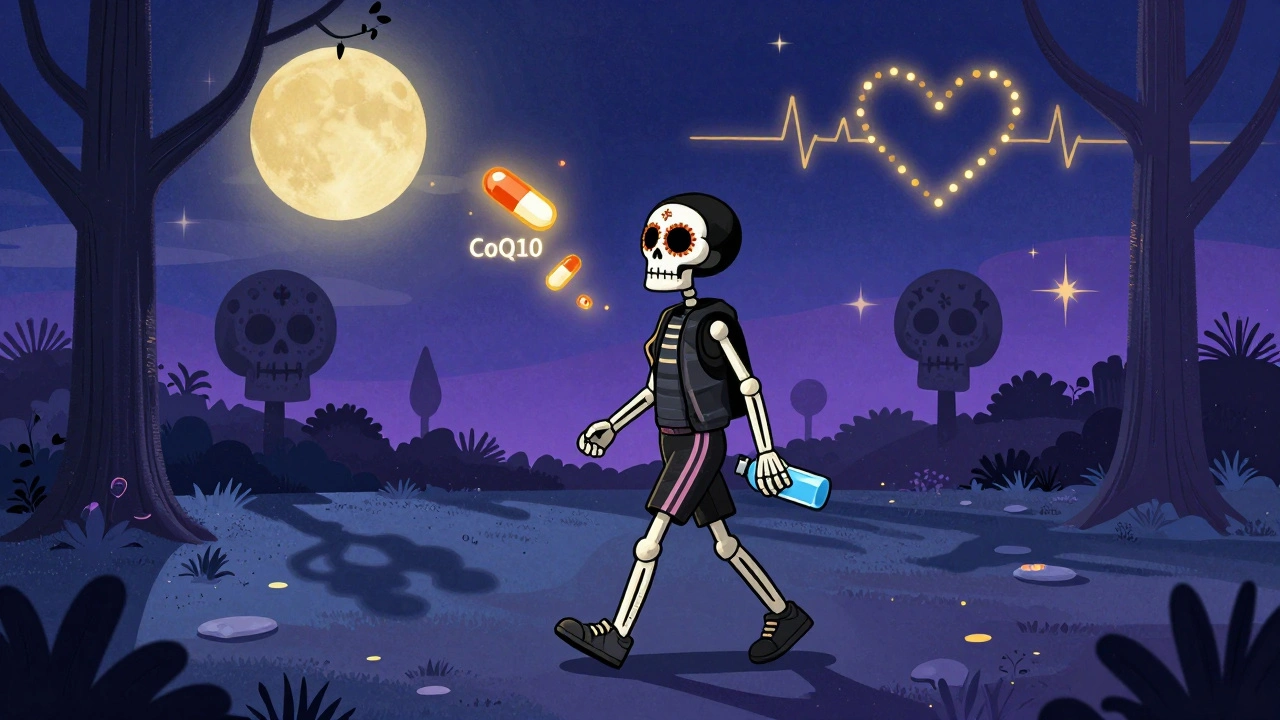
Statin users often complain of muscle aches. A 2021 study in the Journal of the American College of Cardiology found that adding 200mg of coenzyme Q10 daily - along with two weekly strength sessions (two sets of 10 reps at 60% of your max weight) - reduced muscle pain from 29% to just 11%. CoQ10 isn’t magic, but it helps your muscles recover when statins lower your body’s natural levels.
For antipsychotic medications - used for schizophrenia or bipolar disorder - weight gain is a major side effect. The National Institute of Mental Health recommends 45 minutes of moderate-to-vigorous exercise every day (heart rate between 120-140 bpm) plus 30g of protein per meal. That’s two eggs at breakfast, a chicken breast at lunch, and a cup of lentils at dinner. This combo limits annual weight gain to 2.1kg - compared to nearly 8kg without it.
Even if you’re on blood pressure meds, movement helps. Walking 150 minutes a week (30 minutes, five days) lowers systolic pressure by 5-8 mmHg. That’s the same drop you’d get from one pill. Under your doctor’s watch, this could mean lowering your dose - or even stopping one.
Sleep Is a Hidden Medication Booster
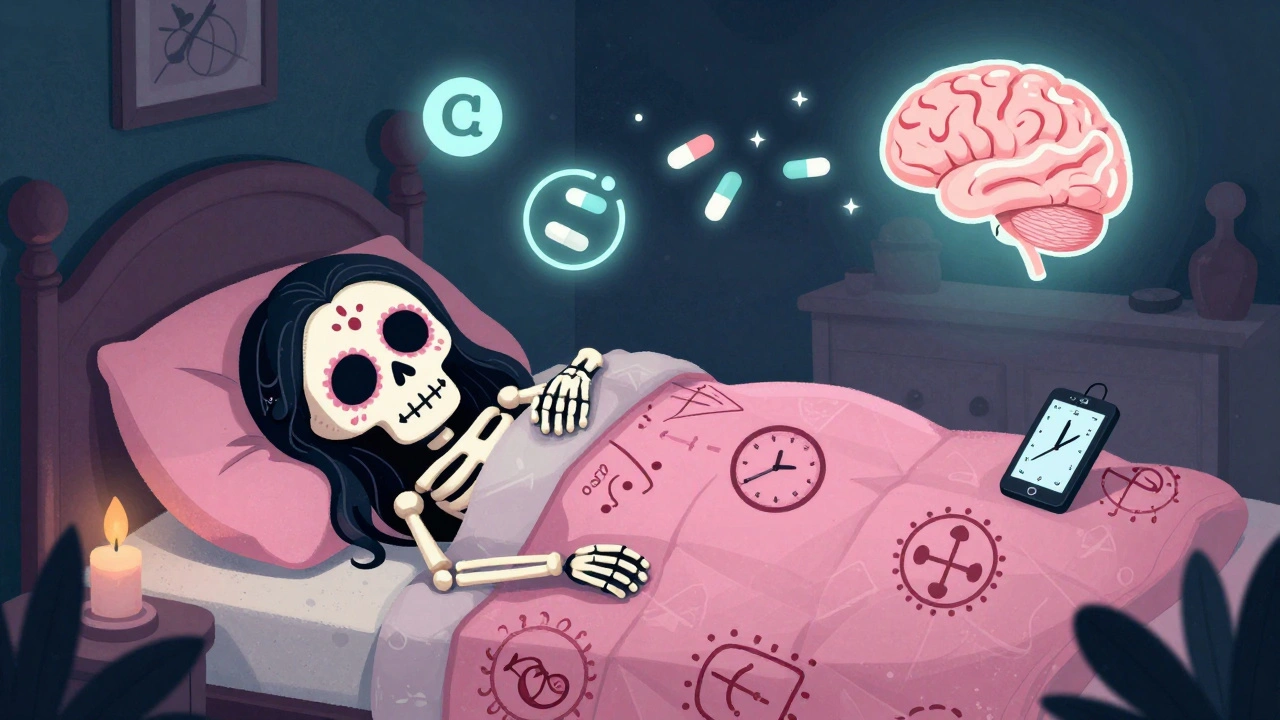
Most people think sleep is just rest. But your liver works overtime while you’re asleep - breaking down drugs, clearing toxins, balancing hormones. If you’re sleeping less than 7 hours, your body’s ability to process meds drops by 22%. That’s especially true for drugs handled by the CYP3A4 enzyme - like statins, some antidepressants, and anti-anxiety meds.
Try this: Go to bed and wake up at the same time every day, even on weekends. Keep your room cool (around 18°C), dark, and quiet. Avoid screens for 60 minutes before bed. If you use your phone in bed, your brain doesn’t associate it with rest. Use a simple alarm clock instead.
One study found that people who improved their sleep quality (measured by sleep trackers) saw better results from antidepressants - and fewer side effects like drowsiness or weight gain. That’s because good sleep lowers cortisol, the stress hormone that makes meds less effective.
Stress Is Making Your Meds Work Harder
Chronic stress raises cortisol. High cortisol makes blood sugar spike, blood pressure climb, and inflammation grow - all things your meds are trying to fix. But if stress stays high, your body fights the drugs instead of cooperating.
A 2021 JAMA Psychiatry study showed that 30 minutes of mindfulness meditation daily lowered cortisol by 27%. That led to a 31% improvement in antidepressant effectiveness and fewer side effects like nausea, insomnia, or weight gain.
You don’t need to sit cross-legged for an hour. Try this: Sit quietly for 10 minutes twice a day. Breathe in for four counts, hold for four, exhale for six. When your mind wanders (it will), gently bring it back to your breath. Use a free app like Insight Timer or just set a timer on your phone.
Walking in nature helps, too. A 20-minute stroll in a park - no phone, no podcast - lowers stress markers better than a gym session. Your body doesn’t care if it’s “exercise.” It just needs calm.
What You’re Probably Doing Wrong
Many people think, “I’m taking my pill, so I don’t need to change anything.” That’s the biggest mistake. A 2020 Harvard Medical School report found that 45% of people on statins eat worse after starting the drug - thinking, “The pill will fix it.” But diet still drives cholesterol levels. The pill just covers the damage.
Another common error: skipping meals to “save calories” while on diabetes meds. That can cause dangerous low blood sugar. Or drinking alcohol with anxiety meds - which can slow breathing to dangerous levels.
And timing matters. Taking a blood pressure pill at night instead of morning can cut side effects like dizziness by 40%. Some diuretics make you pee too much if taken late - so take them before 4 p.m. Check with your pharmacist or doctor. Don’t assume the label says it all.
How to Start - Without Overwhelming Yourself
You don’t need to overhaul your life tomorrow. Pick one thing. Just one.
- If you’re on metformin and have stomach issues? Start with eating smaller meals and chewing slower.
- If you’re tired on beta-blockers? Add two 10-minute walks this week.
- If you’re on antidepressants and gaining weight? Add 30g of protein to breakfast.
- If you’re on warfarin? Pick one leafy green and eat the same amount every day.
Track it for two weeks. Write down how you feel - energy, sleep, nausea, mood. Bring it to your next appointment. Doctors rarely ask about this - so be the one to start the conversation.
Most clinics still don’t screen for lifestyle factors before adjusting meds. But the tide is turning. The American Medical Association launched a new tool in 2024 to help doctors ask about diet, sleep, and activity during visits. You can be part of that change - just by speaking up.
When to Talk to Your Doctor
Lifestyle changes help - but they don’t replace medication. Never stop or lower your dose on your own. Rebound high blood pressure, uncontrolled diabetes, or sudden depression relapse can be life-threatening.
Do talk to your doctor if:
- Side effects are making you skip doses
- You’re gaining weight unexpectedly
- You feel more tired than usual
- You’re eating or drinking things that might interact (grapefruit, alcohol, supplements)
Bring your notes. Show your progress. Ask: “Could lifestyle changes help me reduce my dose?” Most doctors are open to it - if you come prepared.
The goal isn’t to stop your meds. It’s to make them work better - so you feel stronger, sleep deeper, and live fuller - without being ruled by side effects.
Can lifestyle changes really reduce the need for medication?
Yes - but only under medical supervision. Studies show that consistent lifestyle changes like regular exercise, better sleep, and balanced eating can lower blood pressure, improve blood sugar control, and reduce cholesterol enough to allow doctors to reduce doses of medications for hypertension, type 2 diabetes, and high cholesterol. For example, 150 minutes of walking per week can lower systolic blood pressure by 5-8 mmHg - the same as one pill. But never adjust your dose yourself. Always work with your doctor.
What foods should I avoid with my meds?
Avoid grapefruit and its juice with statins, some blood pressure drugs, and certain anti-anxiety meds - it can raise drug levels dangerously. Limit vitamin K-rich foods (kale, spinach, broccoli) if you take warfarin, but keep your intake steady. Avoid alcohol with antidepressants, sedatives, or painkillers - it can cause drowsiness, liver damage, or breathing problems. Always check your medication’s patient leaflet or ask your pharmacist for a list of food interactions.
How long does it take for lifestyle changes to reduce side effects?
It varies. Some changes, like better sleep or hydration, can improve how you feel in days. For things like muscle pain from statins or nausea from GLP-1 drugs, it usually takes 4-8 weeks to see real improvement. A 2022 study found that patients needed 8-12 weeks of consistent lifestyle coaching to reduce side effects significantly. Patience and consistency matter more than speed.
Can exercise make side effects worse?
Rarely - if done right. Some people on beta-blockers feel dizzy at first when starting exercise because their heart rate doesn’t rise as expected. Start slow: 10 minutes of walking twice a day. If you feel lightheaded, stop and sit down. For those on diuretics, drink water before and after exercise to avoid dehydration. People with heart conditions should get clearance from their doctor before starting a new routine. But overall, exercise reduces side effects - it doesn’t cause them.
Should I take supplements to reduce side effects?
Only if your doctor says so. Coenzyme Q10 (200mg daily) has been shown to help with statin-related muscle pain. Magnesium may ease constipation from opioids. But many supplements interfere with meds. St. John’s wort can make antidepressants, birth control, and blood thinners less effective. Vitamin E can thin your blood too much if you’re on warfarin. Always tell your doctor what supplements you’re taking - even “natural” ones.
iswarya bala
December 11, 2025 AT 03:27omg this is literally life changing i started eating the same amount of spinach every day and my warfarin levels are finally stable 😭 thank you for writing this
Ruth Witte
December 12, 2025 AT 19:43YES. I was on Ozempic and thought I was just doomed to be nauseous forever. Started chewing each bite 30 times and drinking water between bites. 2 weeks later I could actually enjoy dinner again. 🙌
Courtney Black
December 14, 2025 AT 19:15It’s fascinating how we’ve outsourced our biology to pills while ignoring the fact that our bodies were designed to thrive on rhythm - not randomness. The liver doesn’t care about your willpower. It cares about consistency. Sleep at the same time. Eat the same macros. Move at the same cadence. Your enzymes aren’t metaphors. They’re biochemical accountants. And if you keep depositing chaos, don’t be shocked when your balance goes negative.
Modern medicine treats symptoms like bugs in a software update. But the system? The system is the lifestyle. You don’t patch a corrupted OS by installing more antivirus. You reboot it with structure. And structure - real, daily, unsexy structure - is what the study authors quietly begged us to do.
Anna Roh
December 16, 2025 AT 16:21so like... if i just stop eating and sleep 12 hours, does that mean i don’t need meds anymore? just asking for a friend who’s currently crying over her kale salad.
Ronald Ezamaru
December 17, 2025 AT 07:18As someone who’s been on metformin for 8 years, the carb-splitting advice saved me. I used to eat 80g of carbs at dinner and wonder why I felt like a zombie. Now I have 25g at each meal - oatmeal with cinnamon, a small pear, lentils with roasted veggies. Nausea dropped from daily to once a week. And I didn’t need to change my prescription. Just my plate.
Also - hydration. I started carrying a 1L bottle and sipping all day. My brain fog lifted. Not because of magic. Because my kidneys stopped fighting the drug.
Suzanne Johnston
December 18, 2025 AT 22:43There’s a quiet revolution happening here - not in labs or pharmaceutical patents, but in the kitchen, the walking path, and the bedroom. We’ve been sold the myth that health is a transaction: pill for symptom. But biology is a conversation. And if you’re shouting through noise - erratic meals, fractured sleep, chronic stress - no drug can hear you.
This isn’t about discipline. It’s about alignment. Your body isn’t broken. It’s just out of sync. The meds are trying to compensate for a lifestyle that was never meant to be sustained. And that’s why the side effects persist. Not because the drug is flawed. But because the context is.
Lauren Dare
December 20, 2025 AT 17:28Wow. So if I follow all this, I’ll be able to stop my blood pressure meds? Let me guess - the next article is titled ‘How to Reverse Diabetes by Hugging a Tree.’
Also, I’m on warfarin. I eat kale. I drink grapefruit juice. I sleep at 3 a.m. and take my pill at 11 p.m. I’m fine. My doctor says so. You’re just a blog.
Taya Rtichsheva
December 22, 2025 AT 16:07so like... i took my pill and then ate a whole pizza and then cried because i felt bad but then slept for 12 hours so i guess its fine right??
Katherine Rodgers
December 24, 2025 AT 07:35LOL the ‘chew each bite 20-30 times’ thing. So now I’m supposed to turn dinner into a meditation retreat? My stomach doesn’t need yoga. It needs less GLP-1 agonists. But sure, let’s blame the food.
Also, coq10? Really? That’s the ‘science-backed’ solution? I’ve seen more legit studies on how gummy bears cure colds.
Tiffany Sowby
December 26, 2025 AT 04:12Oh great. Another ‘lifestyle change’ guilt trip from people who don’t have to work 3 jobs, raise kids, and still have to remember to take their pills. My ‘lifestyle’ is surviving. Not optimizing.
And if I eat the same amount of spinach every day, my landlord will still raise my rent. My meds will still cost $800. My boss will still yell. So thanks for the advice, but I’ll keep taking my pills and eating pizza.
Steve Sullivan
December 26, 2025 AT 05:56I used to think meditation was for people who had too much time. Then I started doing 10 minutes of breathing before bed - just four in, four hold, six out. No app. No candle. Just me and my phone on airplane mode.
Three weeks later, my anxiety meds didn’t make me feel like a zombie anymore. My sleep improved. I stopped waking up at 3 a.m. thinking about my tax return. I didn’t change my dose. I just changed my breath.
It’s not magic. It’s biology. And it’s cheaper than another prescription.
Kathy Haverly
December 27, 2025 AT 00:27Of course this article ignores that Big Pharma doesn’t want you to know you can reduce meds with lifestyle. They profit from dependency. The AMA tool? A distraction. The real agenda? To make you feel guilty so you’ll keep buying their supplements, their fitness trackers, their ‘wellness’ retreats.
Meanwhile, the actual cause of your side effects? The poison in your food, the toxins in your water, the EMFs from your phone. Not your kale. Not your sleep schedule. Your environment is poisoned. And they want you to blame yourself.
Andrea Petrov
December 28, 2025 AT 18:40Wait - you’re telling me my antidepressants aren’t working because I’m stressed? What if I’m stressed because the system is broken? Because my rent is $2800? Because my kid has autism and insurance won’t cover therapy? This article is a luxury for people who have time to chew their food 30 times.
And why is everyone acting like this is new? My grandmother took garlic and sunshine for hypertension in the 1950s. We’ve regressed. This isn’t a guide. It’s a confession that we’ve abandoned real care for chemical band-aids.
Darcie Streeter-Oxland
December 30, 2025 AT 03:30It is, indeed, a matter of considerable interest that the efficacy of pharmacological intervention may be significantly modulated by the patient’s adherence to a regimen of dietary constancy, circadian synchronisation, and physical activity. The empirical evidence, while suggestive, remains insufficiently robust to warrant a paradigm shift in clinical practice without further longitudinal cohort analysis.
Moreover, the notion that ‘chewing each bite 20–30 times’ constitutes a clinically validated intervention borders on the whimsical, and may be better classified as anecdotal heuristic rather than evidence-based protocol.
Simran Chettiar
December 31, 2025 AT 05:26you know what i realized? we are not machines. we are not apps that can be updated with a new version. we are living beings who need rhythm, not rules. the body remembers. it remembers when you sleep. it remembers when you eat. it remembers when you breathe. the pill is just a helper. the real healing? it happens when you stop fighting yourself. when you stop trying to be perfect. when you just show up - even if it’s just one cup of spinach. even if it’s just 10 minutes of walking. even if it’s just one breath before you cry.
you don’t need to fix everything. you just need to stop breaking yourself.
and if you think this is too soft? then you haven’t been sick long enough.