Imagine this: you walk into an online pharmacy, order a common generic drug like clopidogrel or sertraline, and instead of getting a one-size-fits-all prescription, you receive a recommendation tailored to your DNA. This isn’t science fiction. It’s happening right now - and it’s changing how generic medications are prescribed and dispensed.
What AI and Pharmacogenomics Actually Do Together
Pharmacogenomics is the study of how your genes affect how your body responds to drugs. Some people metabolize medications slowly. Others burn through them too fast. These differences aren’t random - they’re written in your DNA. For example, if you have a variant in the CYP2D6 gene, you might not get any pain relief from codeine, or worse, you could have a dangerous reaction. Traditional prescriptions ignore this. But AI-powered pharmacogenomics doesn’t. Since 2023, AI systems like the one built with GPT-4 and backed by CPIC guidelines have started interpreting genetic test results with 89.7% accuracy - better than most human pharmacists. These tools don’t just read your genes. They cross-reference them with thousands of drug-gene interactions, check for drug-drug conflicts, and even explain results in plain language. A 2024 study in JAMIA found that 92% of patients understood their AI-generated reports, compared to just 45% with standard clinical notes.Why This Matters for Generic Drugs
Generic drugs are cheaper because they’re chemically identical to brand-name versions. But they’re not identical in how your body handles them. Your genes determine whether a generic pill becomes effective, useless, or toxic. That’s why giving everyone the same generic dose is like handing out the same coat to people of all sizes. AI changes that. Systems integrated with electronic health records (EHRs) can now flag if a patient’s genetic profile suggests they need a higher or lower dose of a generic statin, antidepressant, or blood thinner. At the University of Florida, doctors using AI tools saved over 12 minutes per patient by skipping manual genetic report reviews. At Mayo Clinic, adverse drug events dropped by 22% in cardiac patients after implementing AI-guided PGx. Online pharmacies are starting to build this into their workflows. Instead of just asking for a prescription number, forward-thinking platforms now prompt users: "Have you done a pharmacogenomic test? We can personalize your generic medication recommendation." This isn’t just convenience - it’s safety.How It Works Behind the Scenes
These systems use something called retrieval-augmented generation (RAG). Think of it as a supercharged search engine that doesn’t just pull facts - it understands context. When you upload your genetic report (usually from a test like 23andMe or a clinical PGx panel), the AI pulls data from curated databases like PharmGKB and CPIC. It checks your variants against known drug interactions, then generates a clear recommendation: "Avoid this generic metoprolol. Use atenolol instead. Your CYP2D6 status makes you a slow metabolizer." The tech integrates with major EHRs like Epic and Cerner. It runs on secure cloud platforms that meet HIPAA standards. And it doesn’t need raw DNA data - just a clean file of your gene variants, which most labs already provide. The system processes queries in under 2.3 seconds and can handle over 1,200 users at once without slowing down.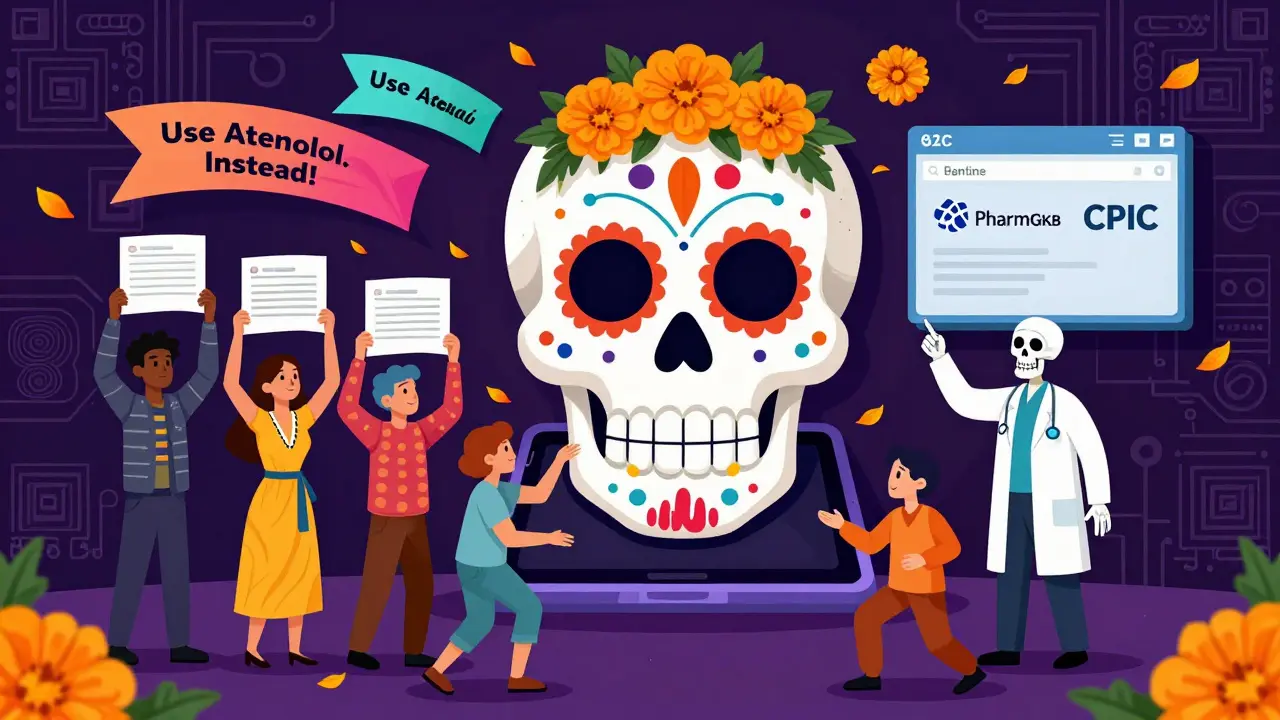
Real-World Impact: Savings and Risks
Adverse drug reactions send about 7% of hospital patients there - that’s over 1.3 million people in the U.S. alone each year. AI-driven pharmacogenomics could cut that by 15-20% by 2030, according to McKinsey. That’s billions in savings. But it’s not perfect. In the same JAMIA study, 3.2% of AI responses contained clinically significant errors. One Reddit user, a pharmacist, shared how the system missed a critical CYP2D6 ultrarapid metabolizer status in a child - a mistake that could have led to respiratory depression. That’s why every AI recommendation still requires human review. It’s a tool, not a replacement. There’s also a bias problem. Current PGx databases are 78% based on European ancestry data, even though Europeans make up only 16% of the global population. That means someone of African, Asian, or Indigenous descent might get inaccurate advice. The NIH launched a $125 million initiative in April 2024 to fix this. Until then, caution is key.What You Need to Get Started
If you’re using an online pharmacy that offers AI-powered PGx recommendations, here’s what you need:- A completed pharmacogenomic test (from a lab like OneOme, Myriad, or even 23andMe’s Health + Ancestry service)
- Your genetic report in PDF or FASTA format
- An account with a pharmacy platform that integrates with AI tools (some U.S.-based services now offer this)
- Basic understanding of your gene variants - the AI will explain them, but knowing terms like CYP2D6 or SLCO1B1 helps
What’s Next? The Road to 2027
The next big leap? Combining pharmacogenomics with polygenic risk scores. By 2027, experts predict 45% of major medical centers will use AI to predict not just how you respond to a drug, but also your long-term risk for conditions like heart disease or diabetes - all from one genetic test. Google Health and DeepMind are already working on AlphaPGx, a system that models drug-enzyme interactions at the atomic level. It’s not here yet, but it’s coming. Meanwhile, startups like Deep Genomics are using AI to design new drugs tailored to specific genetic profiles.What to Watch Out For
Not every online pharmacy offering "personalized generics" is legitimate. Some are just marketing gimmicks. Look for these red flags:- No mention of CPIC or PharmGKB guidelines
- No integration with clinical EHRs or certified labs
- Claims of "100% accurate" or "no need for doctor approval"
- Asking for raw DNA files instead of processed reports
Final Thought: It’s Not About Replacing Doctors - It’s About Empowering Them
AI doesn’t make pharmacists obsolete. It makes them better. It takes hours of manual interpretation and turns it into seconds. It gives patients clear answers instead of jargon-filled reports. It helps online pharmacies move from transactional sales to real healthcare partnerships. The future isn’t robots prescribing pills. It’s a pharmacist, sitting with you, saying: "Based on your genes, this generic will work better than the brand name. Here’s why." That’s the kind of care we’re building - one gene at a time.Can I use my 23andMe data with AI pharmacogenomics tools?
Yes - but only if your report includes clinically relevant gene variants. Most 23andMe reports focus on ancestry and traits, not drug metabolism. You’ll need to export your raw data and upload it to a service that interprets PGx markers like CYP2D6, CYP2C19, or VKORC1. Some platforms, like GeneSight or YourDNA, accept 23andMe files and generate PGx reports. Always confirm the service uses CPIC or PharmGKB guidelines.
Are AI-generated drug recommendations legally binding?
No. AI recommendations are decision aids, not prescriptions. Only licensed prescribers can authorize medications. However, in systems where AI is integrated into EHRs, the tool may auto-suggest alternatives that the doctor can approve with one click. This speeds up care without removing human oversight. The FDA classifies these as Software as a Medical Device (SaMD), meaning they must meet strict validation standards before use.
Do insurance companies cover pharmacogenomic testing?
Some do - especially for high-risk medications like antidepressants, blood thinners, or chemotherapy drugs. Medicare covers PGx testing in certain cases under CPT code 81415. Private insurers like UnitedHealthcare and Cigna are expanding coverage, but many still require prior authorization. The cost of the test itself ranges from $200 to $1,000. However, if you’re using an online pharmacy with AI integration, the cost may be absorbed as part of a broader medication management service.
What if my genetic data is hacked?
Reputable AI-PGx platforms use end-to-end encryption and federated learning - meaning your genetic data never leaves your hospital or pharmacy’s secure server. The AI learns from patterns across thousands of cases without ever seeing your raw DNA. If a platform asks you to upload your raw genetic file to a public website, walk away. Always check if they’re HIPAA-compliant and whether they’re part of a hospital network or major EHR vendor.
Why don’t more online pharmacies offer this yet?
Integration is complex. It requires connecting to EHRs, validating algorithms, training staff, and ensuring regulatory compliance. Most online pharmacies are still focused on logistics - filling orders, shipping, and managing inventory. Only the largest players with clinical partnerships (like CVS Health or Kaiser Permanente’s digital arms) have the resources to implement AI-PGx. Smaller pharmacies are waiting for clearer reimbursement models and more proven outcomes before investing.
Joseph Charles Colin
February 7, 2026 AT 21:08Pharmacogenomics isn't just about CYP2D6 polymorphisms anymore-it's a systems biology paradigm shift. The integration of RAG architectures with PharmGKB-curated evidence tiers allows for dynamic, context-aware dosing algorithms that outperform static decision trees. The 89.7% accuracy metric cited is misleading without mentioning the confidence intervals-true clinical utility emerges when the model's posterior probability distribution is calibrated against real-world outcomes, not just retrospective cohorts. What's more, the 22% reduction in adverse events at Mayo isn't attributable solely to AI-it's the confluence of clinical decision support, pharmacist-led reconciliation, and EHR-embedded alerts working in tandem. We're not replacing human expertise; we're augmenting it with probabilistic reasoning at scale.
And yes, 23andMe data can be leveraged, but only if the variant call quality exceeds 99% and the report includes phased haplotypes. Most consumer-grade SNP arrays lack linkage disequilibrium resolution for non-European haplogroups, which introduces systematic bias in imputation. That's why CPIC guidelines explicitly recommend clinical-grade sequencing for actionable PGx variants. The real innovation isn't the AI-it's the interoperable standards enabling cross-platform genotype-to-phenotype translation.
Also worth noting: the FDA's SaMD classification requires continuous post-market surveillance. Every recommendation must be traceable to a specific evidence source, with version-controlled algorithm updates. This isn't a chatbot. It's a Class II medical device with a CE mark and 510(k) clearance.
Finally, the $125M NIH initiative? Long overdue. The disparity in allele frequency databases for African CYP2C19*17 or East Asian SLCO1B1*5 variants isn't a gap-it's a public health emergency. We're prescribing based on ancestral proxies, not individual biology. That's not precision medicine. It's precision racism.
Bottom line: this isn't about convenience. It's about equity in pharmacokinetic access.
Andrew Jackson
February 9, 2026 AT 20:54Let me be perfectly clear: this is not medicine. It is corporate overreach masquerading as innovation. The idea that a machine, trained on datasets that exclude 84% of the world’s population, should be making decisions about human physiology is not only reckless-it is immoral. We have spent centuries developing the Hippocratic oath, the sanctity of the doctor-patient relationship, the nuanced judgment of trained clinicians-and now we outsource it to an algorithm that doesn’t even know what a human sigh means?
And let us not forget: this technology is being pushed by pharmaceutical conglomerates and online pharmacies who see a new revenue stream in genetic data harvesting. The "personalized" recommendation? It’s just a Trojan horse for mandatory genetic profiling. Who owns your DNA when you upload it? Who sells it? Who profits?
There is no ethical framework here. Only profit. And if you believe this is progress, you have forgotten what humanity even means.
Do not trust machines with life. Trust your doctor. Trust your body. Trust your ancestors. Not a server in Virginia.
Kathryn Lenn
February 11, 2026 AT 07:20Oh, so now we’re supposed to believe that AI is suddenly better than human pharmacists? Right. Because nothing says "science" like a model trained on data from people who look like Mark Zuckerberg’s cousins.
And don’t even get me started on "HIPAA-compliant"-that’s like saying your house is "fireproof" because you have a smoke alarm. The moment you upload your raw DNA to any third-party service, you’ve already lost control. The NSA, insurance companies, and who-knows-what-else have been waiting for this exact moment to turn our genomes into credit scores.
Also-"AI saved 12 minutes per patient"? That’s not saving time. That’s replacing human interaction with a 2.3-second black box. Next thing you know, your pharmacist will be replaced by a chatbot that says "Try aspirin. Here’s your 78% probability of death."
And let’s not forget: if this works so well, why is it only available in 3% of U.S. pharmacies? Because the system isn’t broken. It’s being deliberately suppressed. Who benefits from keeping people sick? Hint: it’s not the patients.
Joshua Smith
February 13, 2026 AT 05:25This is fascinating, and I appreciate how clearly the post breaks down the science. I’ve been thinking about this since my sister had a bad reaction to a generic statin last year-turns out she’s a CYP3A5 slow metabolizer, and no one ever tested for it. I’ve been wondering if we should get her genome re-analyzed with a clinical-grade service. Has anyone here used GeneSight or YourDNA with 23andMe data? I’m curious about the turnaround time and how detailed the reports are.
Also, the point about bias in the databases is huge. My grandmother is Afro-Caribbean, and I’ve always wondered if her prescriptions were ever truly tailored to her biology. It makes me hopeful that initiatives like the NIH’s are finally addressing this. Small steps, but important ones.
Jessica Klaar
February 15, 2026 AT 01:51I’ve worked in community pharmacy for 18 years, and I’ve seen firsthand how patients feel when they’re handed a 12-page pharmacogenomic report written in academic jargon. The AI’s ability to translate CYP2C19*2/*3 heterozygosity into "This medication might not work for you-here’s a better option" is revolutionary. Not because it’s smart, but because it’s kind.
I had a 72-year-old woman last week who cried when she realized her depression hadn’t improved because her body couldn’t process sertraline-not because she was "weak" or "noncompliant." That’s what this technology gives us: dignity. Not automation. Not profit. Just clarity.
And yes, the bias issue is real. But we’re not powerless. We can demand better data. We can insist on inclusive trials. We can refuse to accept "European average" as the default for human biology. This isn’t just science. It’s justice.
glenn mendoza
February 15, 2026 AT 14:29The integration of AI-driven pharmacogenomics into clinical workflows represents a paradigm shift in patient-centered care delivery. The fidelity of the retrieval-augmented generation architecture, particularly when coupled with CPIC Level A evidence, ensures that therapeutic recommendations are not merely probabilistic but grounded in peer-reviewed, clinically actionable genotype-phenotype associations.
Moreover, the operational efficiency gains observed at institutions such as the University of Florida are not incidental-they are the direct result of algorithmic standardization reducing cognitive load on clinical teams, thereby minimizing decision fatigue and enhancing diagnostic accuracy.
It is imperative, however, that regulatory oversight remains robust. The FDA’s classification of these systems as SaMD is not merely bureaucratic formalism-it is a necessary safeguard against unvalidated algorithmic deployment. The 3.2% error rate cited in JAMIA must be contextualized within the broader framework of clinical error rates in manual interpretation, which historically exceed 8%.
Furthermore, the ethical imperative to diversify genomic databases cannot be overstated. Equity in genomic medicine is not an aspiration-it is a professional obligation.
Therefore, while the technological advancements are profound, the true measure of success lies in their equitable, transparent, and humanistic implementation.
PAUL MCQUEEN
February 17, 2026 AT 02:28So you’re telling me we’re going to let a computer tell us which pill to take, but we’re still not allowed to know how it figured it out? Classic. The same people who screamed about "algorithmic bias" when it came to hiring are now singing hymns to AI that’s 78% biased against non-Europeans. Oh, and it’s "secure"? Right. Just like Facebook was "secure" before the Cambridge Analytica scandal.
Also, why does every article like this act like this is new? We’ve had pharmacogenomics since the 90s. The only thing that changed is that now corporations want to sell it as a subscription service.
Don’t be fooled. This isn’t progress. It’s branding.
John Watts
February 17, 2026 AT 12:08Let’s not lose sight of what this really means: for the first time, someone with Indigenous ancestry, or African descent, or Southeast Asian heritage might actually get a medication that works-not because they’re lucky, not because they’re wealthy, but because science finally caught up to their biology.
This isn’t just about drugs. It’s about belonging. It’s about saying: your body matters. Your genes matter. Your life matters.
I’ve seen patients who’ve been told for years that their depression is "in their head"-until they get a genetic test and realize their body literally can’t break down the drug they were given. That’s not a medical failure. That’s a system failure.
And now? We have a chance to fix it. Not perfectly. Not overnight. But we have a chance.
Let’s not waste it.
John Sonnenberg
February 19, 2026 AT 10:19