When a patient walks into the pharmacy with a prescription for a brand-name drug, the pharmacist’s job isn’t just to fill it. It’s to make sure they get the right medication at the right price - without compromising safety or effectiveness. That’s where authorized generics come in. These aren’t your typical generics. They’re the exact same pill, made by the same company, with the same active and inactive ingredients. The only difference? No brand name on the label.
What Exactly Is an Authorized Generic?
An authorized generic is a brand-name drug that’s sold without the brand name. The manufacturer - say, Pfizer or Merck - produces it under the same conditions, using the same formula, same fillers, same coating. It’s identical. The FDA defines it clearly: it’s a listed drug approved under the original New Drug Application, just packaged differently. You won’t find it in the Orange Book as a separate entry because it’s not a different product. It’s the brand, in disguise.
Regular generics, by contrast, are copies. They have the same active ingredient, but the inactive ones - like gluten, lactose, or gelatin - can change. That’s fine for most people. But for someone with celiac disease, a severe allergy, or a religious dietary restriction, even a tiny change in filler can cause problems. Authorized generics solve that.
When Should You Recommend an Authorized Generic?
There are three clear situations where an authorized generic isn’t just a good idea - it’s the best choice.
1. When Patients Have Inactive Ingredient Sensitivities
Imagine a patient with celiac disease who’s been on a brand-name statin for years. They’ve never had a reaction. Then their insurance switches them to a generic. Suddenly, they’re bloated, fatigued, their blood work is off. Why? The generic used wheat starch as a filler. The brand didn’t.
Authorized generics avoid this. Since they use the exact same inactive ingredients as the brand, they’re safe for people with allergies, intolerances, or dietary needs. This includes patients avoiding animal products (gelatin capsules), those with lactose intolerance, or people with rare sensitivities to dyes or preservatives.
Always ask: "Has this patient had a reaction to any generic before?" If yes, an authorized generic is the next logical step - not just another generic.
2. For Narrow Therapeutic Index (NTI) Drugs
Some drugs don’t allow room for error. Warfarin. Levothyroxine. Phenytoin. These are NTI drugs. A 5% change in blood levels can mean a clot, a seizure, or a thyroid crash.
Studies show that 3-5% of patients on NTI drugs have problems after switching to a regular generic. Why? Even small differences in how the pill breaks down can affect absorption. Authorized generics don’t have this risk. They’re the same pill. Same dissolution profile. Same bioavailability.
If a patient is stable on brand-name levothyroxine and you’re offered a cheaper generic, pause. Check if an authorized generic is available. If it is, recommend it. The cost difference is still huge - often 50-70% less - but the safety margin stays intact.
3. When Modified-Release Formulas Are Involved
Think extended-release tablets, delayed-release capsules, or patches. These aren’t just about the active ingredient. They’re about how the drug is released over time. A regular generic might meet bioequivalence standards in a lab, but in real life, it could release too fast or too slow.
Authorized generics bypass this uncertainty. They’re made on the same production line, with the same coating, same matrix, same technology. If the brand works, the authorized generic will too.
How to Spot an Authorized Generic
They don’t look like the brand. That’s the whole point. The color, shape, markings - all different. But the NDC code tells the real story.
Check the National Drug Code directory. If the labeler code matches the brand-name manufacturer (Pfizer, AbbVie, etc.) or an authorized licensee like Prasco or Greenstone, it’s an authorized generic. If it’s a company like Teva or Mylan, it’s a regular generic.
The FDA updates its list quarterly. As of September 2023, there were 257 authorized generics on the list - about 5% of all brand-name drugs with generic alternatives. Most are oral tablets or capsules. You won’t find many in injectables or inhalers yet, but that’s changing.
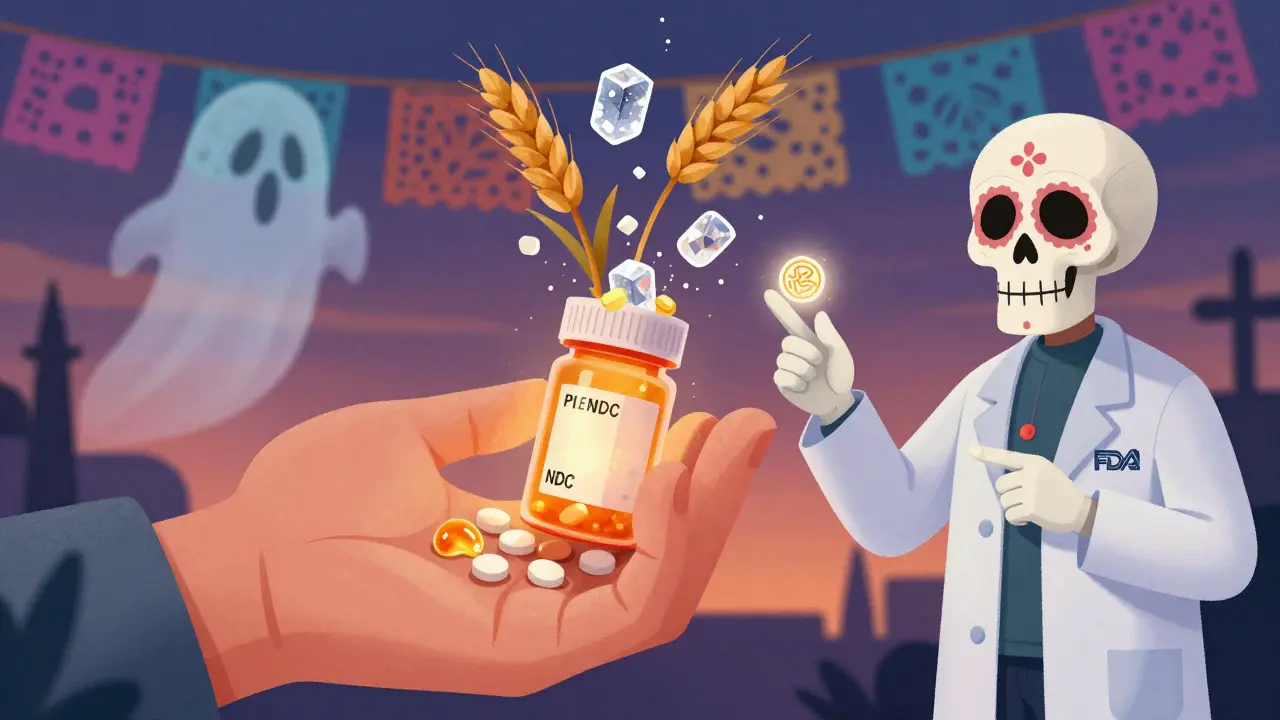
Cost Savings - But Watch Out for Insurance Tricks
Authorized generics typically cost 20-80% less than the brand. That’s huge. But here’s the catch: insurance companies don’t always treat them like generics.
A 2022 study found that 63% of pharmacy benefit managers (PBMs) put authorized generics in the brand-name tier. So even though the pill is identical, the patient pays like they’re getting the brand. That defeats the purpose.
Always check the patient’s formulary before recommending. If the authorized generic is priced higher than the regular generic, ask why. Sometimes, switching to the regular generic is still better - if the patient doesn’t have ingredient sensitivities.
What to Tell Your Patients
Patients get confused when their pill looks different. They think it’s not the same. That’s why counseling isn’t optional - it’s essential.
Use this script: "This is the exact same medicine you’ve been taking. The company that makes the brand also makes this version. The only difference is the name on the bottle. It’s cheaper, but just as safe and effective. You’ll get the same results."
Studies show that when patients are properly counseled, only 8% stop taking the medication after a change in appearance. Without counseling? That number jumps to 27%.
For patients with chronic conditions - diabetes, epilepsy, heart disease - this isn’t just about cost. It’s about adherence. And adherence saves lives.
Legal and Documentation Rules
Federal law lets pharmacists substitute authorized generics unless the prescriber wrote "Do Not Substitute." But state rules vary. In 42 states, substitution is allowed without extra steps. In 18, you must notify the prescriber.
Always check your state’s pharmacy board guidelines. Document every substitution with a "DA" modifier in your billing system. Keep records showing the authorized generic is therapeutically equivalent to the brand. You don’t need a signed note from the doctor - but you do need to be able to prove it if audited.
Limitations and What’s Not Covered
Not every brand has an authorized generic. Only 5% do. And even when they’re available, they might not be in stock. Some wholesalers carry them - AmerisourceBergen and Cardinal Health do. McKesson often doesn’t.
Also, rare cases exist where the manufacturer tweaks the formula slightly when launching an authorized generic. It’s uncommon, but always double-check the FDA’s latest notice if you’re unsure.
The Future of Authorized Generics
The number of authorized generics is growing - up 18% per year from 2010 to 2019. Consumer interest is rising too. GoodRx reports a 47% jump in searches for "authorized generics" in just one year.
Legislation like the Affordable Insulin Now Act may expand access to these drugs for high-cost medications. Professional groups like the American Pharmacists Association are working on new guidelines for 2024.
As value-based care takes hold, pharmacists who understand and recommend authorized generics will play a bigger role. Not just as dispensers - but as clinical decision-makers.
Final Thought: It’s Not About Cheapest - It’s About Right
Generics are great. But not all generics are equal. Authorized generics fill a critical gap: safety without sacrifice. They’re the bridge between brand-name reliability and generic affordability.
Next time you see a prescription for a brand-name drug, ask yourself: Is there an authorized generic? Does the patient need it? Is the insurance letting them save? If the answer is yes to any of those - don’t just fill the script. Recommend the right version.
Are authorized generics the same as brand-name drugs?
Yes. Authorized generics are manufactured by the same company that makes the brand-name drug, using the exact same active and inactive ingredients. The only differences are the label, packaging, and price. They are chemically and therapeutically identical.
Why do authorized generics cost less than brand-name drugs?
They cost less because they don’t carry the marketing, advertising, or patent protection costs of the brand. The manufacturer sells them directly to pharmacies or distributors at a lower price, passing savings to patients - without changing the product.
Can I substitute an authorized generic without the prescriber’s permission?
In most cases, yes - as long as the prescription doesn’t say "Do Not Substitute." Federal law allows it, and 42 U.S. states permit pharmacists to make this substitution without notifying the prescriber. However, 18 states require prescriber notification, so always check your state’s rules.
How do I know if a generic is an authorized generic?
Check the National Drug Code (NDC) directory. If the labeler code matches the original brand manufacturer (like Pfizer or Merck) or an authorized licensee (like Prasco or Greenstone), it’s an authorized generic. You can also consult the FDA’s quarterly updated list of authorized generics.
Why might insurance charge me more for an authorized generic?
Some pharmacy benefit managers (PBMs) classify authorized generics under the brand-name tier instead of the generic tier. Even though the drug is identical, this means higher out-of-pocket costs for patients. Always verify the formulary before recommending it.
Are authorized generics safe for people with food allergies?
Yes - and that’s one of their biggest advantages. Unlike regular generics, which can change inactive ingredients like gluten, lactose, or gelatin, authorized generics use the same fillers as the brand. This makes them safer for patients with celiac disease, lactose intolerance, or dietary restrictions based on religion or ethics.
Ted Conerly
January 11, 2026 AT 05:18Authorized generics are the unsung heroes of pharmacy practice. Most patients don’t know the difference between a regular generic and an authorized one, but the clinical implications are massive. For someone on levothyroxine or warfarin, switching to a regular generic isn’t just a cost save-it’s a gamble. The bioequivalence standards are loose. Authorized generics remove that uncertainty entirely. And yes, the cost difference is still huge. Pharmacies need to stop treating them like brand-name drugs in the formulary. If the pill is identical, the copay should be too.
Christine Milne
January 11, 2026 AT 08:57This is a textbook example of pharmaceutical industry manipulation. Authorized generics are nothing more than a marketing ploy to maintain profit margins under the guise of patient safety. The FDA’s definition is deliberately vague to appease Big Pharma. There’s no clinical evidence that authorized generics outperform regular generics in real-world settings. The only difference is the label. Patients are being misled into thinking they’re getting something superior. This isn’t science-it’s corporate theater.
Mario Bros
January 12, 2026 AT 14:38Man, I wish more pharmacists knew this. I switched to an authorized generic for my statin last year and didn’t even notice. My bill dropped from $120 to $30. The pill looked different, so I freaked out for a sec-until my pharmacist explained it. He didn’t just hand me the bottle. He sat down and walked me through it. That’s the kind of care we need more of. Seriously, if your pharmacist doesn’t explain this stuff, find a new one.
Jake Nunez
January 14, 2026 AT 06:21As someone who grew up in a household where religious dietary restrictions were non-negotiable, this hits hard. My mom couldn’t take any generic because of gelatin capsules. We spent years paying full price for brand-name meds. When we finally found an authorized generic that matched the original fillers? It was a game-changer. This isn’t just about cost. It’s about dignity. People shouldn’t have to choose between their faith and their health.
McCarthy Halverson
January 14, 2026 AT 14:56Check NDC codes. Match labeler. Confirm with FDA list. Document DA modifier. Know your state rules. That’s it.
Dwayne Dickson
January 14, 2026 AT 15:31While the clinical rationale for authorized generics is sound, one must consider the structural inequities in pharmaceutical distribution. The fact that PBMs classify these drugs as brand-name tiered products speaks to the deeper dysfunction in U.S. healthcare economics. The manufacturer retains control over the supply chain, effectively monopolizing the generic market under a different label. This is not patient-centered care-it is regulatory arbitrage disguised as innovation. Furthermore, the reliance on NDC codes assumes a level of pharmacy system interoperability that does not exist in rural or under-resourced settings. The burden of verification falls disproportionately on frontline pharmacists who lack time, training, or institutional support to perform this due diligence. Until reimbursement structures are reformed, the theoretical benefits of authorized generics remain inaccessible to the populations who need them most.
Michael Marchio
January 15, 2026 AT 00:02Let me tell you something. I’ve been in this game for 32 years. I’ve seen generics come and go. I’ve seen patients crash because their thyroid med changed. I’ve seen people stop taking their meds because the pill looked different. And I’ve seen pharmacies cut corners because they’re too lazy to check the NDC. You think this is complicated? It’s not. It’s simple: if the brand makes it, and the label says it’s the same, then it’s the same. The problem isn’t the science. The problem is the people who don’t care enough to look. I’ve had techs argue with me about this. They say, ‘But it’s cheaper!’ I say, ‘So’s poison if you don’t read the label.’ If you’re not checking the labeler code, you’re not a pharmacist-you’re a vending machine operator.
Bradford Beardall
January 16, 2026 AT 04:02This is fascinating. I’ve never thought about how packaging affects adherence. I’ve seen patients refuse meds because the color changed. But I never connected it to authorized generics. Do you think this could be a public health campaign opportunity? Like, ‘Same Pill, Different Label’? Maybe partner with patient advocacy groups? I’m curious-have any studies tracked long-term adherence differences between patients switched to authorized generics vs. regular generics? Also, how common is it for patients to request them by name? I’ve never heard someone say, ‘Can I get the authorized version?’
Jake Kelly
January 17, 2026 AT 22:20I’ve seen firsthand how a simple explanation can change everything. One of my patients with epilepsy was terrified after her pill changed. She thought it was fake. We sat down, showed her the FDA page, and explained the authorized generic thing. She cried. Not from sadness-from relief. She said, ‘I didn’t know I could ask for this.’ That’s the real win here. It’s not about the pill. It’s about trust. And pharmacists are the only ones who can build that.
neeraj maor
January 19, 2026 AT 09:22Authorized generics? More like authorized scams. The government and Big Pharma are in cahoots. They want you to think these are safe, but they’re just repackaging the same drugs to keep you hooked. The real reason they’re cheaper is because they’re being sold through shell companies to avoid taxes. And the FDA list? It’s curated. They hide the bad ones. You think they’d let you know if the fillers were laced with something? No way. Read the fine print on the NDC. Look at the manufacturer’s parent company. You’ll find connections to defense contractors. This isn’t medicine. It’s social control.
Kunal Majumder
January 21, 2026 AT 08:22