Starting a new medication can feel overwhelming. You might be told it’s necessary, but no one explains what it actually does, how to take it right, or what could go wrong. That’s a problem. In fact, nearly half of all people stop taking their prescriptions early because they don’t understand them. And it’s not just about forgetting - it’s about not knowing what to expect. The good news? You don’t have to guess. You have the right - and the power - to ask clear, specific questions before you even leave the office.
What is this medication, and why am I taking it?
Start with the basics. Ask for the exact name - both brand and generic. Too many errors happen because patients mix up similar-sounding drugs. One person took a blood thinner meant for someone else because the names sounded alike. Ask: "What condition is this meant to treat?" and "How will I know it’s working?" Some medications ease symptoms right away. Others take weeks. If you don’t know what improvement looks like, you might think it’s not working and quit too soon. A 2022 study found that 68% of people stop their meds early because they didn’t know how long it should take to see results.How and when should I take it?
This is where most mistakes happen. "Take once daily" sounds simple - until you find out it needs to be taken on an empty stomach, or with food, or at bedtime. Some pills can’t be crushed. Some can’t be taken with grapefruit juice. Ask: "Exactly when should I take it?" "Should I take it with food?" "What if I miss a dose?" The American Hospital Association found that 34% of patients misunderstand dosage instructions. That’s not because they’re careless - it’s because they weren’t given clear, simple directions. Write it down. Say it back: "So I take one 50mg pill every morning with breakfast?" If your doctor says yes, you’ve just cut your risk of error in half.What side effects should I expect?
Everyone talks about side effects like they’re scary monsters. But most aren’t. Many are mild, temporary, and go away after a few days. The key is knowing which ones are normal - and which ones mean you need help right away. Ask: "Which side effects should I expect in the first week?" "Which ones mean I should call you or go to the ER?" For example, dizziness or nausea might fade in a few days. But chest pain, swelling, or trouble breathing? That’s urgent. A 2023 review in BMJ found that 28% of hospital admissions from medications were preventable - often because patients didn’t know what was dangerous. Don’t just get a list. Ask for context.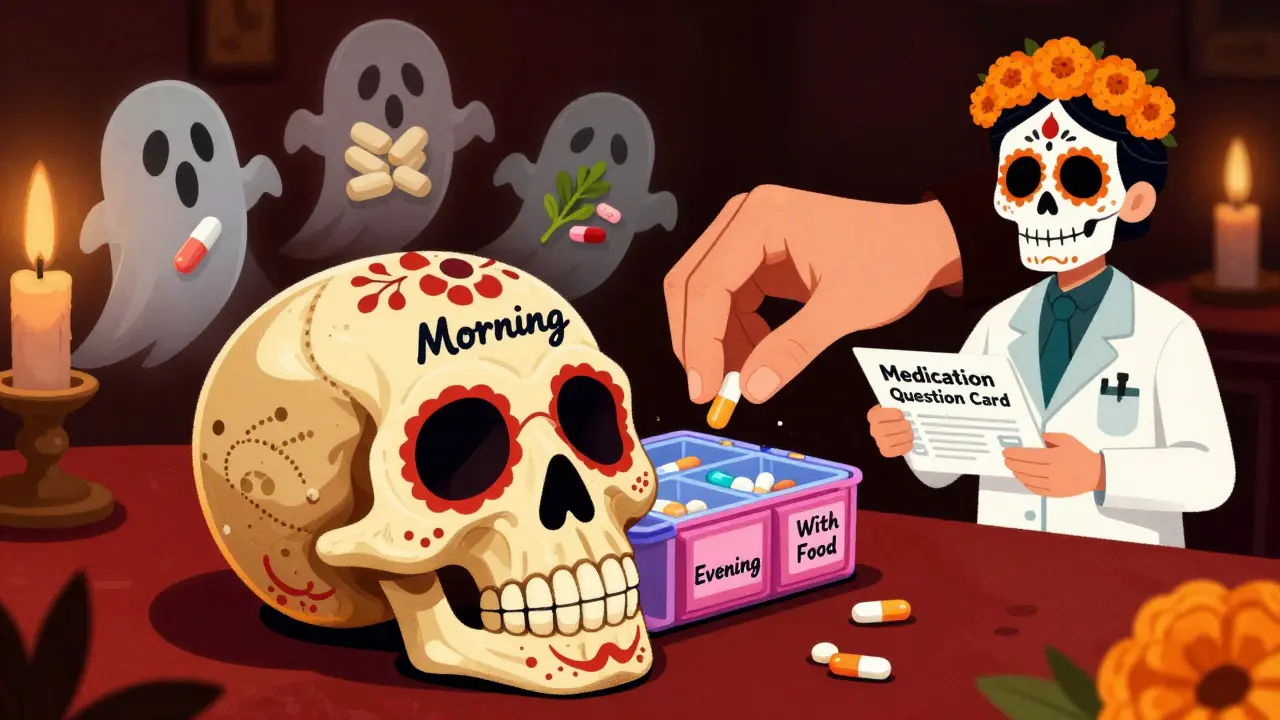
Will this interact with anything else I’m taking?
You might be on more meds than you realize. Prescription drugs, over-the-counter painkillers, vitamins, herbal supplements - they all mix. A 2021 study showed that 40% of adults take five or more medications daily. That raises interaction risks by 85%. Ask: "Does this interact with my other pills?" "What about my daily supplements?" Even something as simple as St. John’s Wort can cancel out antidepressants. Bring a list - not just a mental note - of everything you take. The American Pharmacists Association found that patients who bring a written list reduce interaction risks by 63%. Don’t rely on memory. Write it down.Are there cheaper or better alternatives?
Cost is a silent killer. One in four people skip doses because they can’t afford their meds. Ask: "Is there a generic version?" "Are there other drugs that work the same way but cost less?" Your doctor might not bring this up unless you ask. Insurance plans now require providers to discuss cost options - and 72% of them do. If you’re on a tight budget, this question alone could save you hundreds a year. Also, ask: "Is there a reason this specific drug was chosen over others?" Sometimes it’s because it’s new. Other times, it’s because it’s right for your body. If you’ve had bad reactions to similar drugs before, say so. Your history matters.Should I consider genetic testing?
This might sound advanced, but it’s becoming common. Pharmacogenetic testing looks at your genes to predict how your body will respond to certain drugs. It can tell if you’ll need a higher or lower dose - or if a drug might not work at all. Genomind’s testing, used in over 300,000 cases by late 2023, shows it can predict 60-80% of how people respond to antidepressants, blood thinners, and pain meds. Ask: "Could genetic testing help me avoid side effects or ineffective treatment?" It’s not for everyone - but if you’ve tried multiple meds with bad results, it’s worth discussing. Many clinics now offer it as part of routine care.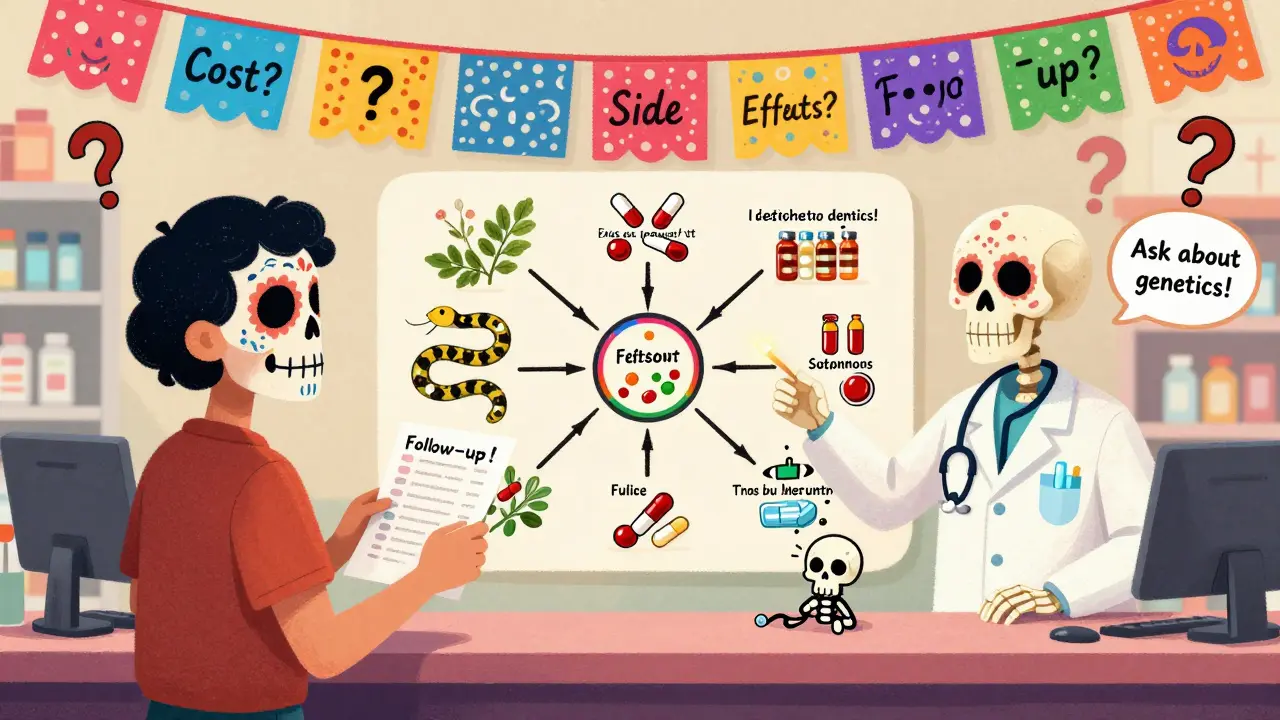
When and how will we check if it’s working?
Medication isn’t a one-time fix. It needs follow-up. Ask: "When should I come back?" "Will I need blood tests?" "What happens if this doesn’t work?" A 2022 AMA study found that nearly half of patients never schedule a follow-up - even when their doctor told them to. That’s dangerous. If your blood pressure doesn’t drop, or your anxiety doesn’t ease, you need to know what to do next. Don’t wait until you feel worse. Plan the next step before you leave.How do I stay on track?
Adherence is the biggest hurdle. Studies show that writing down answers improves memory by 70%. Use a pill organizer. Set phone alarms. Download a medication tracker app. Some platforms like Hero Health now include these exact questions in their onboarding - and users who use them have 38% fewer missed doses. If you’re struggling with memory or routine, say so. Your doctor can recommend tools. Some clinics even give out visual "Medication Question Cards" with icons for people with low literacy - and those cards improved understanding by over 50%.What if I’m still unsure?
You don’t have to make a decision in 15 minutes. If you leave the appointment feeling confused, that’s not okay. Ask: "Can I get this in writing?" "Can I talk to the pharmacist?" Most pharmacies offer free 10-minute consultations with a pharmacist - and they’re trained to explain meds in plain language. You can also call your insurance provider. Many have nurse lines that help you understand prescriptions. Don’t feel guilty for needing more time. Medications are powerful. You deserve to understand them fully.What if my doctor gets annoyed when I ask too many questions?
A good doctor welcomes questions - they’re part of safe care. If your provider seems rushed or dismissive, it’s not about you. It’s about system pressures. Most primary care visits last under 16 minutes. That’s not enough time for deep discussion. You can say: "I really want to get this right. Can we schedule a follow-up just to go over the meds?" Or ask to speak with a pharmacist. Many clinics now have medication counselors built into their teams. If you feel disrespected, it’s okay to find another provider. Your safety matters more than politeness.
Can I stop the medication if I don’t like the side effects?
Never stop a prescription without talking to your doctor first. Some medications cause dangerous withdrawal symptoms if stopped suddenly - like antidepressants or blood pressure pills. Others need to be tapered slowly. If side effects are unbearable, call your doctor. They might adjust the dose, switch you to another drug, or suggest ways to manage the symptoms. Stopping on your own can lead to rebound effects, hospital visits, or worse. Always ask: "What happens if I stop this?" before you start.
Do I need to tell my doctor about herbal supplements?
Yes - always. Many people think supplements are "natural," so they’re safe. But that’s not true. St. John’s Wort can make birth control fail. Garlic supplements can thin your blood. Omega-3s can interact with blood pressure meds. A 2023 study found that 31% of patients didn’t tell their doctor about supplements - and 12% of those ended up in the ER with avoidable reactions. List everything: vitamins, herbs, teas, even CBD. Your doctor needs the full picture.
How do I know if a side effect is serious enough to call the doctor?
Use this simple rule: if it’s new, sudden, and scary - call. Specific warning signs include: chest pain, trouble breathing, swelling of face or throat, severe rash, confusion, unusual bleeding, or thoughts of self-harm. For mental health meds, if you feel worse instead of better after a week, that’s a red flag. Don’t wait. Keep a list of emergency symptoms your doctor gives you - and keep it where you can find it. Many pharmacies now give out printed warning cards with your prescription.
What if I can’t afford this medication?
You’re not alone. One in four people skip doses because of cost. Ask your doctor: "Is there a generic?" "Can I get a 90-day supply?" "Is there a patient assistance program?" Many drug companies offer free or low-cost meds for people who qualify. Pharmacies like CVS and Walgreens have $4 generic lists. Some states have prescription discount cards. Don’t assume you can’t afford it - ask. Your doctor might not know the options unless you bring it up. Also, check your insurance plan’s formulary - sometimes a different brand is covered better.
Nandini Wagh
February 26, 2026 AT 20:10PS: I now have a sticky note on my fridge that says 'NO GRAPEFRUIT' in Sharpie. My cat hates it. Worth it.
Holley T
February 28, 2026 AT 03:14Ashley Johnson
March 1, 2026 AT 21:25Also, my neighbor's dog died after the vet gave it heart meds. The vet said 'it was old' but I know better. I'm not taking anything until I get a full chemical breakdown and a notarized letter from the Pope saying it's safe. I've started drinking lemon water and standing on my head. It's working. My anxiety is gone. Probably because I'm not poisoned.
tia novialiswati
March 3, 2026 AT 16:42Now I print out these exact questions and hand them to my doctor. They're shocked. In a good way! I even got a sticker on my pill bottle that says 'ASK ME ABOUT MY MEDS' 😄
You got this. You're not being a burden - you're being brave. And your life matters. 💖
Maranda Najar
March 5, 2026 AT 06:48My mother took her last pill at 3 a.m. on a Tuesday. She didn’t know if it was supposed to make her sleepy or numb. She didn’t know if the numbness was the medicine or the despair. She didn’t know if she was supposed to call. She didn’t call.
This isn’t advice. This is a lifeline. And if you’re reading this - please, for the love of all that’s holy - write down the questions. Say them out loud. Even if your voice shakes. Even if they roll their eyes. Even if they say, 'You’re overthinking it.' You’re not. You’re surviving.
Christina VanOsdol
March 7, 2026 AT 05:52Also, pharmacogenetic testing? That's just the beginning. They're already using your DNA to predict how likely you are to sue them. If your genes say 'high litigiousness' - they give you the placebo. I know. I work in medical data. I'm not paranoid. I'm just informed. 🤐
Brooke Exley
March 7, 2026 AT 08:09Now I say: 'I want to be an active partner in my care.' And guess what? They light up. It’s like I handed them a magic wand. Suddenly, they’re explaining things with diagrams. Offering pamphlets. Scheduling follow-ups.
One time I asked if I could bring my sister to the appointment to help me remember. They said YES. And now she’s my medication coach. We even made a Spotify playlist called 'Pill Time Vibes' with alarms. 🎶
You’re not a burden. You’re a hero. Keep asking. Keep showing up. You’ve got this.
Alfred Noble
March 7, 2026 AT 18:03One thing I’d add: always ask what the pill looks like. I had a guy take his neighbor’s 'blue oval' pill because he forgot his own. Turned out it was Adderall. He got hospitalized for tachycardia.
Also - if your doc says 'it’s fine' and you’re still scared? Go to the pharmacy. Pharmacist will talk to you for 15 mins for free. They’re the real MVPs. 🙏