When a medication disappears from the pharmacy shelf, it’s not just a supply chain problem-it’s a crisis for the patient sitting in the exam room. They didn’t ask for this. They trusted their doctor, filled their prescription, and now they’re handed a different pill with no explanation. No warning. No context. And that’s when trust breaks.
Drug shortages aren’t rare. In 2023, nearly 300 medications in the U.S. were in short supply. Cardiovascular drugs, cancer treatments, antibiotics-these aren’t niche prescriptions. These are life-sustaining medicines. And when they vanish, the burden doesn’t fall on manufacturers alone. It falls on the provider-the clinician who has to tell a patient their treatment just changed, and often, without the tools or time to do it right.
What Providers Are Responsible For
It’s not enough to say, “We don’t have your drug anymore.” That’s a sentence that ends conversation, not care. Providers have a clear responsibility: communicate early, clearly, and compassionately. The European Medicines Agency and the FDA agree: transparency isn’t optional. It’s a standard of care.
Here’s what that looks like in practice:
- Identify the exact medication-brand name, generic name, strength, and form. If the patient was on metformin 500mg tablets, say that. Don’t say “your diabetes pill.”
- Explain why it’s unavailable. Was it a manufacturing delay? A raw material shortage? A regulatory hold? Patients don’t need the full supply chain breakdown, but they need to know it’s not random.
- Offer alternatives with evidence. Not just “take this instead.” Say: “This alternative has been studied in 12,000 patients and works just as well for your condition. Here’s how we know.”
- Give a timeline. “We expect this to be back in 4 to 6 weeks.” Even if it’s an estimate, a date gives patients control. Silence creates panic.
- Provide contact info. Tell them who to call if they have questions. A pharmacist? A nurse line? A dedicated email? Don’t leave them guessing.
The CDC recommends writing all materials at a 6th- to 8th-grade reading level. No jargon. No acronyms. No “therapeutic equivalence.” Just plain language: “This medicine does the same job as your old one, but it’s made by a different company.”
What Happens When Communication Fails
When providers don’t communicate well, patients pay the price.
One patient on Reddit wrote: “My heart medication vanished. My doctor handed me a new pill without saying why. I didn’t know if it was safe. I stopped taking it for two weeks.” That’s not an outlier. A 2023 survey of 2,400 patients found that 72% said they’d accept a substitute-but only if they understood why the change was necessary.
Patients who weren’t warned ahead of time reported higher anxiety. One study using the Hospital Anxiety and Depression Scale showed a 31% spike in anxiety scores when patients learned about shortages at the pharmacy counter-instead of during a scheduled visit.
And the consequences go deeper. When patients don’t understand their new treatment, they’re more likely to skip doses, stop taking it altogether, or switch to unsafe alternatives. In 2022, 18% of medication errors during shortages were traced to poor communication-not to the drugs themselves.
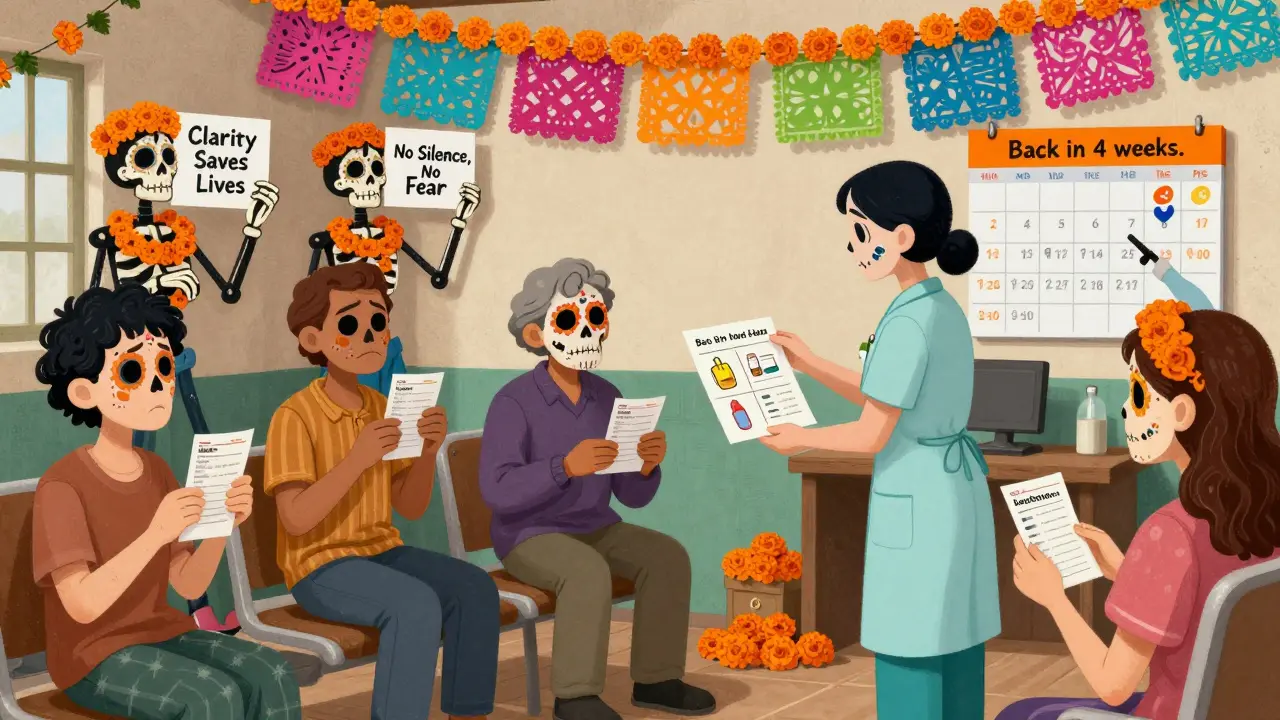
Worse, patients who feel left in the dark lose trust. Dr. Jane Smith at Johns Hopkins found that 73% of patients felt less confident in their provider after a poorly handled shortage. That’s not just a bad experience. It’s a breakdown in the therapeutic relationship.
How the Best Providers Handle It
Some clinics have turned this crisis into a model of care.
Mayo Clinic’s SHIP protocol (Shortage Handling and Information Protocol) trains every provider to use a simple 5-point script during shortages:
- “I know this is stressful.”
- “Your medication isn’t available right now because…”
- “Here’s what we’re switching to-and why it works.”
- “This change will last about [timeframe].”
- “Here’s who to call if you have questions.”
They also use visual aids: simple charts comparing old and new meds, side-by-side with dosing instructions. One study showed that using these visuals improved patient understanding from 61% to 92%.
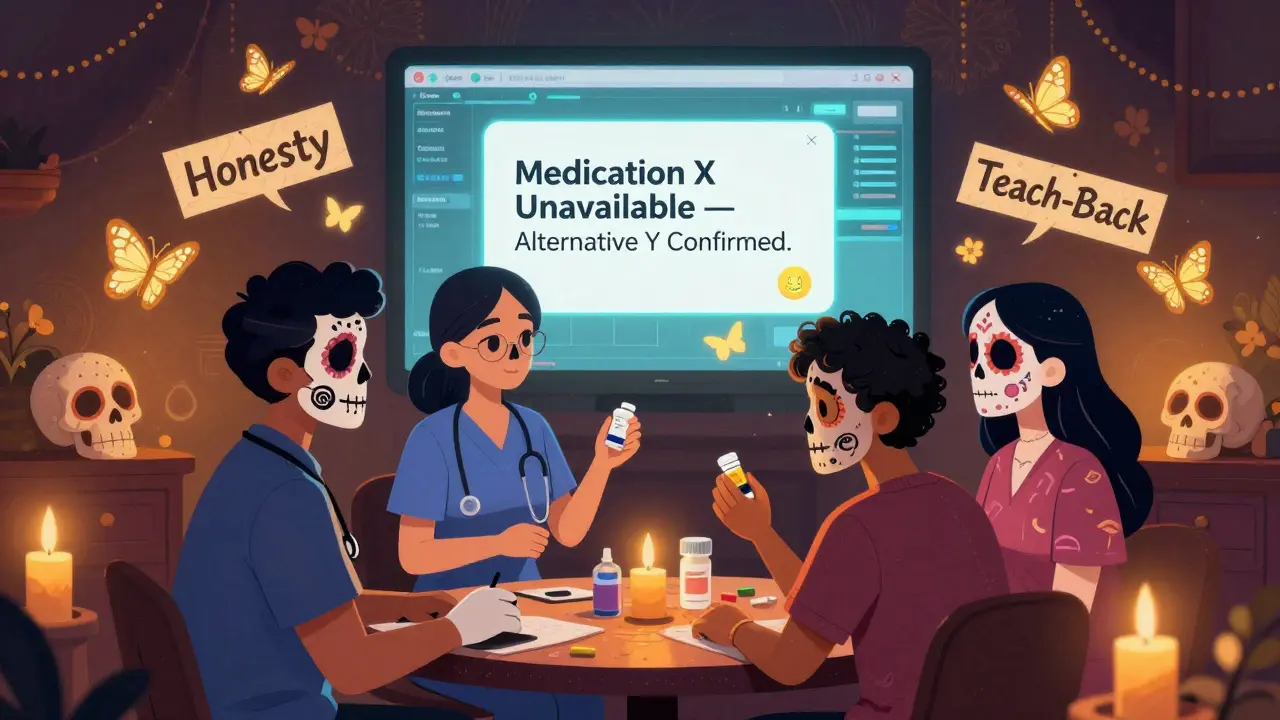
Kaiser Permanente integrated shortage alerts directly into their electronic health record. When a provider opens a patient’s chart, a pop-up says: “Medication X is currently unavailable. Recommended alternative: Y. Patient notified on 1/15/2026.” That saves time and ensures no one slips through the cracks.
At Memorial Sloan Kettering, specialized communication nurses handle all cancer drug shortages. They don’t just explain options-they listen. They ask: “What are you most worried about?” And they answer. That’s the difference between a transaction and a relationship.
The Hidden Barriers
Not every provider has the same resources.
Rural clinics? Only 32% have any system to track drug shortages in real time. Many still rely on pharmacy calls or word-of-mouth. That’s dangerous. In rural areas, patients often travel hours for care. If they show up for a refill and get handed a new drug with no prep, they may not come back.
Language barriers? Patients with limited English proficiency are 3.2 times more likely to misunderstand shortage information. A Spanish-speaking patient told a nurse: “They gave me a new pill. I didn’t know if it was for my blood pressure or my diabetes.” That’s not confusion-it’s a safety risk.
Time? The average primary care visit lasts 15.7 minutes. How do you fit in a full explanation of a drug shortage, alternatives, emotional reassurance, and teach-back verification in that window? You don’t. That’s why the best providers use team-based approaches. A nurse handles the initial notification. A pharmacist reviews alternatives. The provider focuses on the patient’s concerns.
What You Can Expect Now-And What’s Coming
The Joint Commission made this official in 2024: every healthcare facility must have a structured, empathetic communication plan for drug shortages by January 2025. No more ad-hoc responses. No more silence.
And it’s not just about rules. It’s about incentives. Medicare and Medicaid are starting to tie payment quality to how well providers manage shortages. If patients stop treatment because they weren’t informed, that counts against the provider.
By 2027, AI tools will predict shortages before they happen-using global supply data, weather patterns affecting manufacturing, and even geopolitical events. Some hospitals are already testing them. But even the smartest AI can’t replace a human voice saying: “I’m sorry this happened. Let’s get you through it.”
Bottom Line
Drug shortages aren’t going away. But how providers respond to them is entirely in their control.
It’s not about having the perfect drug on the shelf. It’s about having the right conversation in the room. Patients don’t need perfection. They need honesty. They need clarity. They need to know someone is looking out for them-even when the system fails.
Every provider has the power to turn a moment of fear into a moment of trust. All it takes is saying the truth, simply, and with care.
What should a provider say when a patient’s medication is in shortage?
A provider should clearly identify the affected medication (brand and generic name, strength, form), explain why it’s unavailable in simple terms, offer a clinically supported alternative with evidence, state the expected duration of the shortage, and provide direct contact information for follow-up questions. They should also verify patient understanding using the teach-back method: “Can you explain how you’ll take this new medication?”
Is it enough to just give a patient a different pill without explanation?
No. Simply handing over a new medication without context increases patient anxiety, reduces adherence, and erodes trust. Studies show that 72% of patients will accept an alternative only if they understand why the change was necessary. Without explanation, patients may stop taking the medication, switch to unsafe substitutes, or avoid future care.
How can providers communicate effectively with patients who have low health literacy?
Use plain language-no medical jargon. Write materials at a 6th- to 8th-grade reading level. Use visuals like side-by-side charts comparing old and new medications. Confirm understanding with teach-back: ask the patient to explain the instructions in their own words. For non-English speakers, use certified medical interpreters-never family members. Avoid assuming understanding based on nodding or silence.
Are providers legally required to communicate about drug shortages?
Yes, under guidelines from the Joint Commission and the European Medicines Agency. Starting in 2025, U.S. healthcare facilities must have formal, documented communication protocols for drug shortages to maintain accreditation. Failure to do so can result in penalties or loss of certification. While not every detail is federally mandated, the standard of care now requires transparent, timely, and empathetic communication.
What tools can help providers manage communication during shortages?
Integrated electronic health record (EHR) alerts that flag shortages when viewing a patient’s profile, pre-written patient handouts in plain language, visual medication comparison charts, and automated notification systems (email or text) sent 30 days before a predicted shortage. Some clinics use trained communication specialists to handle complex cases, especially in oncology or mental health. Training staff in the CDC’s “Chunk, Check, Change” method also improves clarity and retention.
Diane Croft
February 28, 2026 AT 23:02Donna Zurick
March 2, 2026 AT 08:36Mariah Carle
March 3, 2026 AT 14:32Pankaj Gupta
March 4, 2026 AT 08:06Alex Brad
March 5, 2026 AT 06:20Renee Jackson
March 5, 2026 AT 19:32RacRac Rachel
March 6, 2026 AT 17:36Jane Ryan Ryder
March 7, 2026 AT 09:13Callum Duffy
March 9, 2026 AT 07:42Chris Beckman
March 10, 2026 AT 16:18Levi Viloria
March 11, 2026 AT 04:00Helen Brown
March 12, 2026 AT 17:06