Imagine this: you’ve just finished a long pumping session, your fridge is full of precious ounces, and then you get a prescription for an antibiotic or a painkiller. Your mind immediately races. Do I throw it all away? Is my baby safe? The short answer is usually no-you don’t need to toss everything. In fact, fewer than 2% of medications require you to stop breastfeeding completely. Most of the time, with a little planning and some smart labeling, you can keep your supply up and feed your baby safely.
The key isn't panic; it's precision. When you take medication, some of it passes into your milk. The goal is to manage breast milk storage so that any milk expressed while drug levels are high gets set aside, while the rest stays available for your little one. Let’s walk through exactly how to handle this without wasting a single drop unnecessarily.
Understanding the "Pump and Dump" Myth
First, let’s clear up a huge misconception. You might have heard the term "pump and dump" thrown around like it’s standard procedure for every pill you pop. It’s not. According to Dr. Thomas Hale’s widely respected reference, *Medications and Mothers' Milk*, most drugs fall into the L1 (safest) or L2 categories, meaning they pose minimal risk to infants. Even for stronger medications, complete cessation is rarely needed.
So why do people still say "pump and dump"? Because if you feel engorged and uncomfortable, you need to relieve pressure to maintain your supply. But instead of throwing that milk in the trash, you store it. This is where labeling becomes your best friend. You aren't dumping it because it’s "bad"; you’re setting it aside because it contains higher concentrations of the drug. Once the medication clears your system, that milk might be fine to use, or you might decide to discard it based on your doctor’s advice. Either way, keeping it labeled and separate gives you options.
The Golden Rules of Storage During Medication
Before we talk about labels, let’s lock down the basics of storage. The rules don’t change just because you’re taking medicine, but the stakes feel higher, so stick to the guidelines strictly. The American Academy of Pediatrics (AAP) and the CDC provide a simple framework often called the "Rule of 4s":
- Room Temperature: Up to 4 hours.
- Refrigerator: Up to 4 days.
- Freezer: Up to 6 months (best quality) or up to 12 months (acceptable).
When managing medication, timing is everything. If your doctor advises you to avoid feeding during peak drug concentration, you’ll likely need to express milk at specific times. For example, if you take a pill in the morning, your milk might have the highest drug levels 1-2 hours later. Expressing and storing that specific batch separately allows you to nurse or feed from pre-medication stores instead.
| Storage Location | Maximum Duration | Notes for Medication Management |
|---|---|---|
| Room Temp (up to 77°F) | 4 Hours | Use only for immediate feeding. Not recommended for storing medication-affected milk long-term. |
| Cooler with Ice Packs | 24 Hours | Great for travel. Keep ice packs frozen solid before starting. |
| Refrigerator | 4 Days | Antimicrobial properties decrease after day 4. Label clearly with date and med info. |
| Freezer (Inside Fridge) | 6 Months | Ideal for long-term separation of medication batches. Don't fill bags to the top. |
| Deep Freezer | 12 Months | Best for preserving quality over very long periods. |
Labeling Like a Pro: What Goes on the Bag?
This is the part that saves you from confusion later. Standard labeling includes the date and time of expression. But when medication is in the mix, you need more data. Think of each bag as a medical record for that specific batch of milk.
Here’s what you should write on every container:
- Date and Time of Expression: Essential for tracking freshness.
- Baby’s Name: Crucial if multiple caregivers are involved.
- Medication Name: Write the exact name of the drug (e.g., Amoxicillin, Ibuprofen).
- Dosage and Time Taken: Note when you took the pill relative to pumping. For example, "Took 500mg at 8 AM, pumped at 10 AM."
- Status: Mark it as "Pre-Med," "During Med," or "Post-Med Clearance."
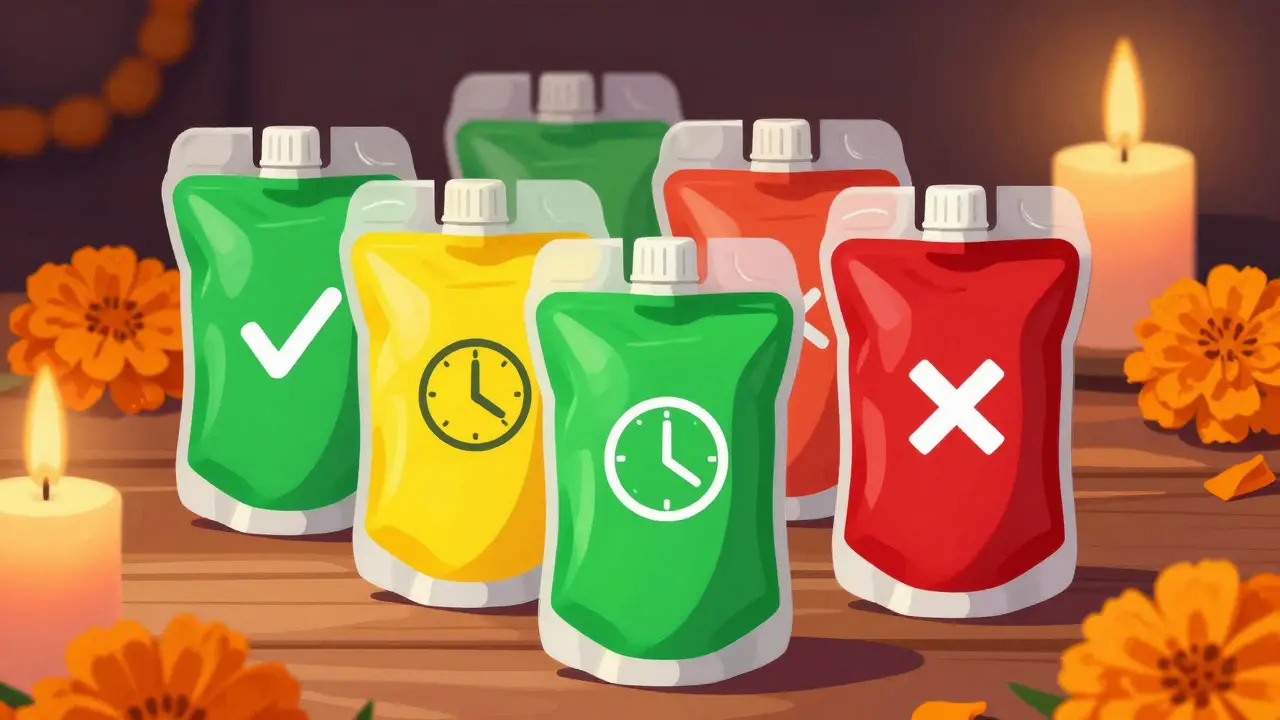
Use waterproof markers. Trust me, condensation will try to erase your hard work. Some moms find success using color-coded stickers. For instance, green for "Safe to Feed," yellow for "Wait/Check," and red for "Discard After Date." This visual cue helps partners or grandparents who might be feeding the baby know exactly which bottle to grab without reading small print.
Separating Batches: A Practical Strategy
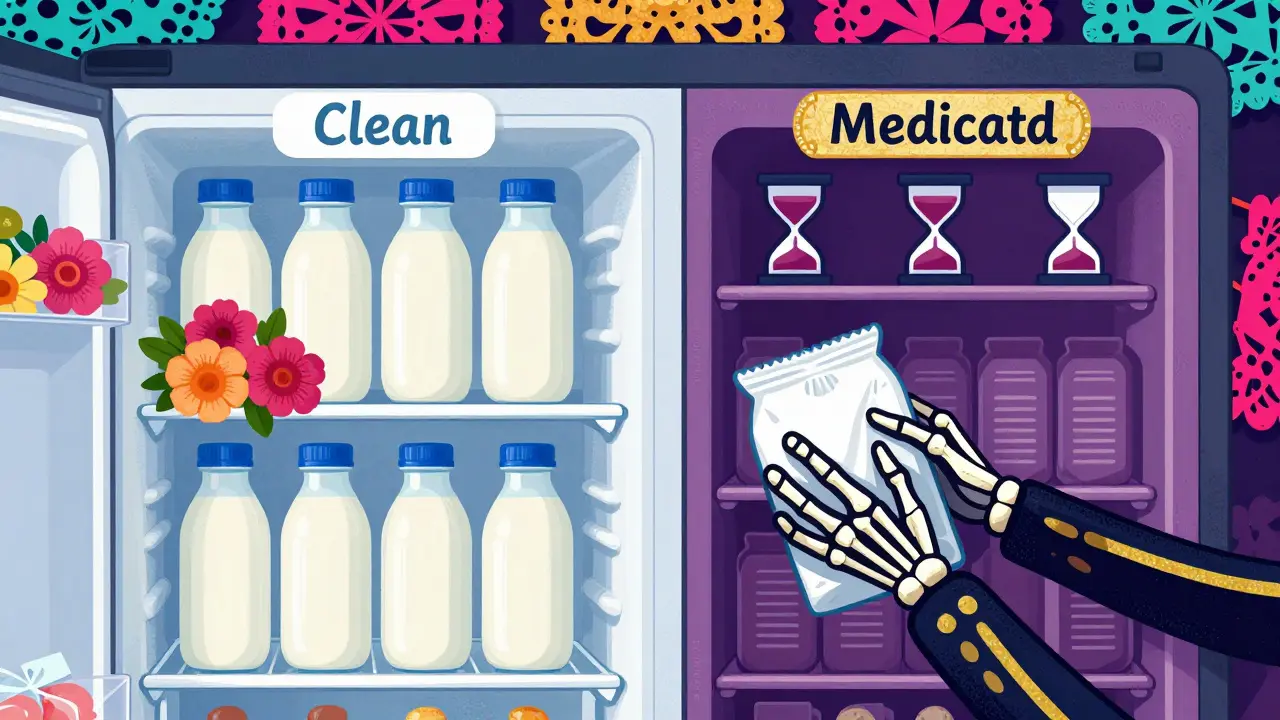
You don’t need to throw away all your milk. Instead, create two distinct zones in your freezer or fridge: "Clean" and "Medicated."
Let’s say you’re starting a 7-day course of antibiotics. On Day 1, before you take the first dose, pump and store that milk in the "Clean" zone. Take your medication. Two hours later, when drug levels are peaking, pump again. Label this batch clearly with the medication details and place it in the "Medicated" zone. Continue nursing or feeding from your "Clean" stock for the next few feeds. As the medication leaves your system (usually within 24-48 hours for many common drugs), your milk returns to baseline.
Dr. Ruth Lawrence, co-author of *Breastfeeding: A Guide for the Medical Profession*, emphasizes that strategic timing is far superior to stopping entirely. By separating these batches, you ensure that if you run low on clean milk, you have a backup plan. Plus, if your doctor confirms the medication is safe after a certain period, you might even be able to use the "Medicated" milk once the drug has cleared, depending on the half-life of the substance.
Common Mistakes to Avoid
Even well-meaning parents make errors here. Based on community feedback from forums like BabyCenter and Reddit’s r/breastfeeding, here are the biggest pitfalls:
- Mixing Batches: Never pour old milk into new milk unless both are cold and you label the combined volume with the oldest date. Mixing medication-affected milk with clean milk contaminates the clean supply. Keep them separate.
- Ignoring Half-Life: Different drugs leave your body at different speeds. Short-acting meds might clear in hours; others take days. Always ask your pharmacist: "What is the half-life of this drug, and when is it safe to resume normal feeding?"
- Overfilling Containers: Breast milk expands when frozen. If you fill a bag to the brim, it could burst. Leave at least an inch of space at the top. This is especially important for smaller, medication-separated batches.
- Thawing Errors: Thaw frozen milk in the refrigerator or under warm running water. Never microwave it. Also, once thawed, use it within 24 hours and do not refreeze. If you thaw a "Medicated" batch and decide not to use it, it must be discarded.
When to Call the Expert
If you’re unsure, don’t guess. Contact your healthcare provider or an International Board Certified Lactation Consultant (IBCLC). They can look up your specific medication in databases like LactMed (maintained by the National Library of Medicine) to give you precise advice. Many pharmacies now offer lactation counseling services-ask your pharmacist if they can check drug compatibility before you leave the counter.
Remember, your goal is to protect your baby while maintaining your supply. With clear labels, separated storage, and accurate information, you can navigate temporary medications without stress or waste.
Do I really need to throw away breast milk when taking medication?
In most cases, no. Fewer than 2% of medications require complete cessation of breastfeeding. For most drugs, you simply need to time your feeds or store specific batches separately until the medication clears your system. Always consult your doctor or pharmacist for guidance on your specific prescription.
How long does medication stay in breast milk?
It depends on the drug's half-life. Generally, it takes about 5 half-lives for a medication to be mostly eliminated from your body. For many common antibiotics and pain relievers, this means 24 to 48 hours. However, some medications linger longer. Check resources like LactMed or ask your pharmacist for the specific clearance time.
Can I mix breast milk taken before medication with milk taken during medication?
No, you should not mix them. Keeping pre-medication milk and medication-affected milk separate ensures that you always have a known-safe supply for your baby. Mixing them contaminates the clean milk and makes it difficult to track safety timelines.
What is the best way to label breast milk for medication safety?
Use waterproof markers or labels to write the date, time of expression, baby’s name, medication name, dosage, and time the medication was taken. Consider adding a status tag like "Pre-Med" or "During Med" to make it easy for anyone feeding the baby to understand the contents at a glance.
Is "pump and dump" necessary for all medications?
No, "pump and dump" is rarely medically necessary. It is primarily used to relieve engorgement when you cannot feed the baby due to high drug levels. The milk doesn't necessarily need to be discarded if stored properly and labeled, though some mothers choose to discard it for peace of mind. Strategic timing of feeds is usually sufficient.