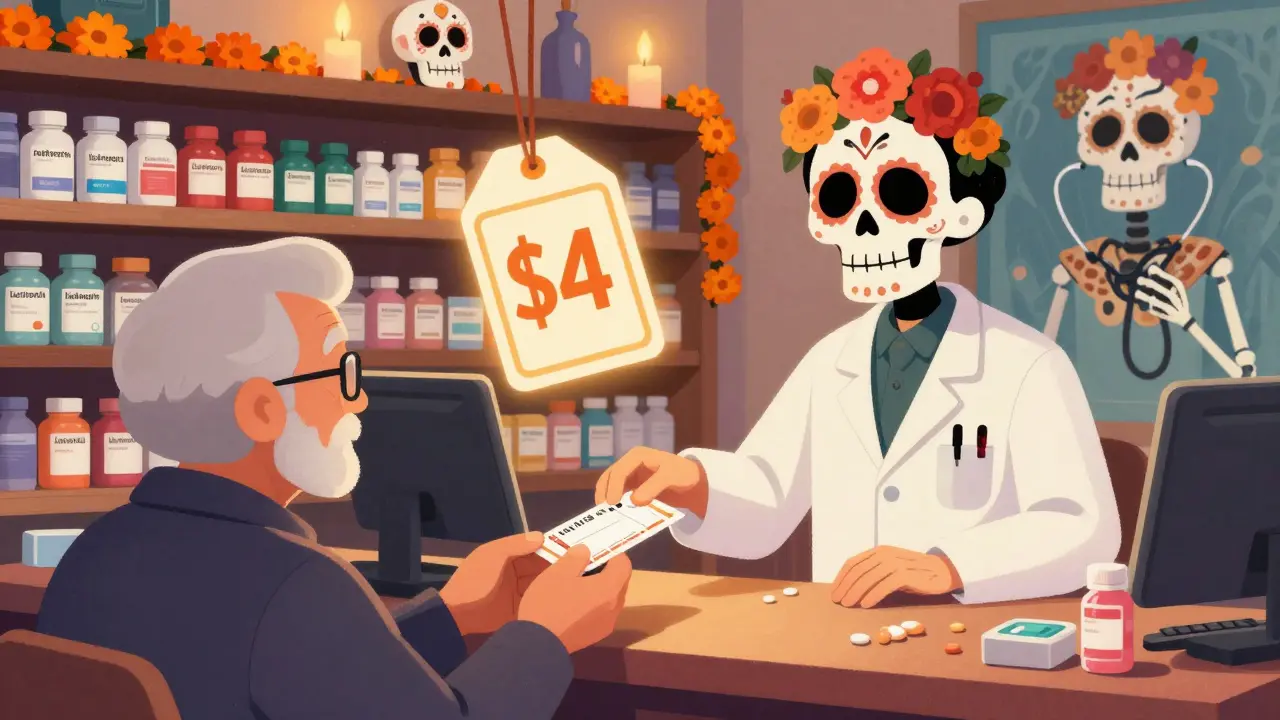
Ever paid $50 for a simple generic pill-only to find out a few blocks away, the same medicine cost $4? You’re not alone. In 2026, cash prices for identical medications can vary by more than 300% between pharmacies in the same city. This isn’t a glitch. It’s how the system works. And if you’re paying out of pocket-whether you’re uninsured, have a high-deductible plan, or just want to skip insurance bureaucracy-you need to know how to shop smarter.
Why Cash Prices Vary So Much
Pharmacies don’t set prices randomly. They’re responding to a complex web of deals between drug manufacturers, pharmacy benefit managers (PBMs), and the pharmacies themselves. A brand-name drug like Humira might cost $700 at one pharmacy and $750 at another. But the generic version? It could be $1.89 at one store and $16 at the next. That’s not a typo. The reason? Manufacturers offer deep discounts to pharmacies that bring them volume. Big chains like CVS or Walgreens pay more because they don’t negotiate as hard. Independent pharmacies and grocery stores like Kroger or Walmart often get better deals because they buy in bulk or have direct agreements. And then there are discount programs like GoodRx, which negotiate cash prices directly with pharmacies in exchange for sending customers their way. A 2021 NIH study found that for generic cardiovascular drugs, the average cash price at national chains was $64.42. At supermarkets, it was $28.17. That’s more than half off. And that’s just the average. In Springfield, Massachusetts, one study found Atorvastatin (generic Lipitor) ranging from $4.50 to $140 at different pharmacies-same drug, same dose, same day.How to Find the Lowest Cash Price
You don’t need a degree in pharmacy management to save money. You just need three tools and five minutes per prescription.- Always ask for the cash price first-before showing your insurance. Many people assume insurance will always be cheaper. It’s not. Sometimes, the cash price with a coupon is lower than your copay. Pharmacists are used to this question. Don’t feel awkward.
- Use at least three price comparison apps. GoodRx is the most popular, but don’t rely on it alone. Cross-check with RxSaver and WellRX. Each app pulls data from different pharmacy networks. One might show a $3 price at a nearby Rite Aid, while another shows $1.99 at a local independent pharmacy you didn’t even know existed.
- Check local independent pharmacies. Big chains get all the attention, but small pharmacies often have unadvertised discounts. If you’re a regular, ask. UnityPoint Health found that 38% of independent pharmacists offer extra discounts to loyal customers. No coupon needed. Just a friendly conversation.
Best Discount Tools for Cash Buyers
Here’s what works in 2026:- GoodRx: Serves over 200 million users. Saves an average of 88% on generics and 42% on brand names. Works at 70,000+ pharmacies. Download the app or print a coupon.
- RxSaver: Often has lower prices than GoodRx for certain drugs. Good for checking alternatives.
- WellRX: Strong in rural areas and smaller chains. Sometimes shows prices not listed elsewhere.
- BuzzRx: Offers discounts on both generics and some brand drugs. Good for chronic conditions.
- Kroger’s $4/$9 Program: If you shop at Kroger, they offer 30-day supplies of 70+ generics for $4, and 90-day supplies for $9. No coupon needed. Just ask at the pharmacy counter.
When Discount Apps Don’t Help
Not every drug saves you money with a coupon. Brand-name drugs like Humira, Enbrel, or insulin often have little to no discount on GoodRx because manufacturers don’t allow it. But here’s the trick: ask your doctor if a generic alternative exists. For example, instead of Humira (brand), you might switch to adalimumab (generic). The difference? $700 vs. $70. One Reddit user in Chicago found the same insulin vial priced at $98, $145, $210, and $345-all within a two-mile radius. They used GoodRx to find the $98 option. Without checking, they would’ve paid $345.Mail-Order and Non-Profit Options
If you take medications long-term, consider mail-order pharmacies. RXOutreach.com is a non-profit that offers generic drugs at deeply discounted prices to people with household incomes at or below 300% of the federal poverty level ($45,000 for one person in 2023). You don’t need to be uninsured. Even if you have Medicare or Medicaid, you can still qualify. They offer 90-day supplies of common meds like metformin, lisinopril, and levothyroxine for as little as $10-$25. Shipping is free. Orders take 7-10 days. For stable, long-term prescriptions, this is one of the best deals around.Medicare Users: Don’t Skip This Step
If you’re on Medicare Part D, your plan’s formulary changes every year. What was cheap in 2025 might be expensive in 2026. During open enrollment (October 15-December 7), log into Medicare.gov and use their Plan Finder tool. Look for plans with low copays on your specific drugs. Often, switching plans saves $100-$300 a year. Also, check if your plan has a preferred pharmacy network. CVS, Walgreens, and Walmart often have lower copays there. Even if you have insurance, you can still use GoodRx at non-preferred pharmacies-if the cash price is lower than your copay.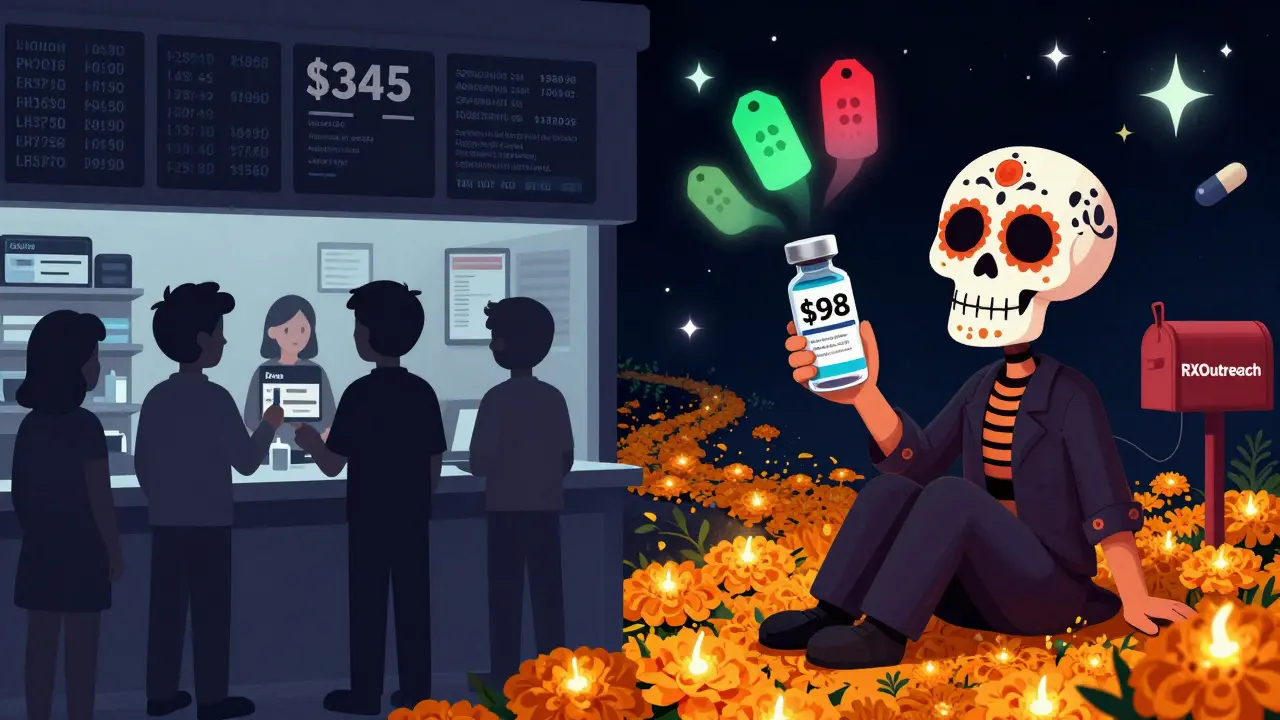
Real Savings, Real Stories
- A woman in Ohio paid $15.99 for metformin at Walgreens. Used GoodRx. Paid $1.89 at a local pharmacy. Saved $14.10 per month. That’s $170 a year. - A man in Texas needed Synthroid. His insurance copay was $45. GoodRx showed $32 at Walmart. He switched. Saved $13 per refill. Over a year: $156. - A retired couple in Florida took five prescriptions. After comparing prices, they cut their monthly drug bill from $420 to $98. All by shopping around. These aren’t outliers. They’re standard results.What Doesn’t Work
- Buying from online pharmacies without verification. Sites like “CanadaPharmacyOnline” or random Amazon sellers aren’t regulated. You risk counterfeit or expired drugs. - Assuming your insurance is always better. Many people pay $20 copays when the cash price is $8. Always ask. - Ignoring independent pharmacies. They’re not always cheaper, but they’re often more flexible. Ask if they have a loyalty discount.Start Today
You don’t need to change your life. Just do this now: Take one prescription you’re currently paying for. Open GoodRx. Type in the name. Compare it to RxSaver. Then walk into the nearest independent pharmacy and ask: “What’s your cash price for this?” It takes 10 minutes. The average savings? 50-90% for generics, according to Dr. Aaron Kesselheim at Harvard Medical School. That’s not luck. That’s strategy. The system is stacked against you. But you’re not powerless. You just need to know where to look.Is it legal to use GoodRx instead of insurance?
Yes. You can choose to pay cash instead of using your insurance. Pharmacies are required to give you the cash price upon request. Using a GoodRx coupon doesn’t violate any rules-it’s just a way to access a negotiated discount. Your insurance won’t be billed, and you won’t get penalized.
Why is my generic drug more expensive than the brand-name version?
It’s rare, but it happens. Sometimes, the brand-name drug has a manufacturer coupon or rebate that lowers its price below the generic’s cash cost. Other times, the generic is produced by a small supplier with higher costs. Always check both prices. A 2023 Consumer Reports study found this occurred in about 3% of cases, mostly with newer generics or those made overseas.
Can I use GoodRx with Medicare Part D?
Yes, but only if you’re paying cash. If you use GoodRx, Medicare won’t cover the cost, and it won’t count toward your deductible or out-of-pocket maximum. But if the GoodRx price is lower than your Medicare copay, it’s still worth it. Many seniors use GoodRx for drugs not covered by their plan or when the cash price beats their copay.
Do all pharmacies accept GoodRx?
Most do-over 70,000 across the U.S. But not every location accepts it. Chain pharmacies like CVS, Walgreens, and Walmart almost always do. Smaller independent pharmacies may not. Always call ahead or check the app’s map feature before going. Some pharmacies accept GoodRx only for generics, not brand names.
How often should I check prices?
Check every time you refill. Prices change weekly. A drug that was $5 last month could be $12 this month due to supply issues, manufacturer pricing shifts, or pharmacy promotions. Set a reminder every 30 days. It takes less than 5 minutes and can save you hundreds a year.
Are there any risks to using discount apps?
The main risk is price inaccuracies. About 12.7% of users in a 2022 study reported seeing outdated prices. Always confirm the price at the pharmacy before paying. Also, don’t use apps that ask for personal data or credit card info upfront. Stick to trusted names like GoodRx, RxSaver, and WellRX. They’re free and don’t require registration.
Kathy Scaman
January 28, 2026 AT 11:17Just used GoodRx for my metformin and saved $12. I didn’t even know my local grocery pharmacy had a $1.99 deal. Why does no one talk about this?!
fiona vaz
January 28, 2026 AT 22:40This is exactly why I stopped trusting insurance for generics. I used to pay $35 copays until I started checking cash prices. Now I pay $2 for my blood pressure med. It’s not rocket science, just common sense.
Also, independent pharmacies are underrated. My local one gives me 10% off if I ask. No coupon. Just say hi and be polite.
Do this once a month. Your wallet will thank you.
Sue Latham
January 30, 2026 AT 08:49Wow, someone finally wrote this without sounding like a pharmaceutical sales rep. I mean, GoodRx isn’t magic-it’s just capitalism working for the consumer for once. Who knew you could outsmart the system with a smartphone and a 30-second Google search?
Also, if you’re still paying full price because ‘insurance is easier,’ you’re not lazy-you’re just being exploited. And that’s on you.
Mindee Coulter
January 30, 2026 AT 12:41Walmart $4 program saved my life last year. I take 3 meds. Used to be $180/month. Now $28. No joke. Just walk in and ask. They’ll do it. No questions. No drama.
Also, RxSaver sometimes beats GoodRx. Always check both. Don’t be lazy.
Bryan Fracchia
February 1, 2026 AT 09:31There’s something deeply human about this. We’ve been taught to trust systems-insurance, big pharma, corporate pharmacies-but the truth is, the system doesn’t care about you. It cares about margins.
What’s beautiful is that you don’t need to fight it. You just need to know where to look. A 10-minute search can mean $200 a month. That’s a weekend trip. A new pair of shoes. A meal with your kid.
It’s not about being a rebel. It’s about being smart. And it’s available to anyone with a phone.
Chris Urdilas
February 2, 2026 AT 16:43Let me guess-you also think ‘buying in bulk’ is a financial strategy and ‘organic kale’ fixes your anxiety.
Look, I get it. Saving $14 on metformin feels like a win. But let’s not pretend this is systemic change. The real problem is that people need insulin and can’t afford it, and GoodRx doesn’t fix that.
So congrats. You saved $170. Meanwhile, someone’s choosing between food and their heart meds. We’re just rearranging deck chairs.
Mel MJPS
February 4, 2026 AT 08:35I had no idea Kroger had a $4 program. I’ve been shopping there for years and never asked. Just walked in today and got my levothyroxine for $4. I cried. Not because I’m emotional-but because I felt stupid for not asking sooner.
Thank you for this. Seriously.
Phil Davis
February 5, 2026 AT 13:21GoodRx is great. But here’s the dirty secret: pharmacies make more profit on cash sales than on insurance claims. That’s why they’ll happily give you the discount. They’re not being nice. They’re optimizing.
So don’t feel guilty for using it. Just know: you’re not breaking the system. You’re just using its own logic against it.
Lance Long
February 5, 2026 AT 19:25You’re not just saving money-you’re reclaiming your power. Every time you ask for the cash price, you’re saying: ‘I see through the noise.’
That one conversation with the pharmacist? That’s activism. That $1.89 metformin? That’s resistance.
Don’t let anyone tell you this doesn’t matter. It matters more than you know. Keep doing this. Keep sharing. Someone’s life is waiting to be changed by your next search.
Irebami Soyinka
February 7, 2026 AT 00:55USA be like: ‘Ohhh let me use GoodRx to save $14 on my metformin’ while in Nigeria, we pay $0.50 for the same pill at local clinics and no one has insurance 🤡
Y’all got a whole system built on scamming people with ‘healthcare’ and now you’re proud of finding a coupon? 😭
Real talk: fix the system, not your pharmacy bill. #GlobalHealthJustice
Anna Lou Chen
February 8, 2026 AT 11:02Ah yes, the neoliberal fantasy of individualized pharmacological liberation through algorithmic coupon aggregation. You’ve been co-opted by the very architecture of commodified care, mistaking market arbitrage for liberation.
GoodRx is not empowerment-it’s the soothing balm of late-stage capitalism, allowing you to feel like a hero while the structural violence of pharmaceutical monopolies continues unabated.
You’re not saving money. You’re participating in the illusion of agency. The PBM still owns your insulin. The manufacturer still owns your dignity.
But by all means, keep comparing $1.89 to $16. It’s cathartic.
Amber Daugs
February 10, 2026 AT 08:34Why do people still use GoodRx? It’s just a middleman. If you’re so cheap, why not just buy from Canada? At least then you’re actually getting real medicine instead of some middleman’s ‘discount’ that’s probably just a scam.
And don’t even get me started on those ‘independent pharmacies’-half of them don’t even have licensed pharmacists on staff anymore. You’re risking your life for $1.89.
John Rose
February 11, 2026 AT 03:29I tested this with my dad’s lisinopril. GoodRx said $2.50 at CVS. RxSaver said $1.99 at a small pharmacy 3 miles away. I went, paid cash, and the pharmacist asked if I wanted to join their loyalty program. He gave me 15% off next refill.
It’s not about being a genius. It’s about being curious. And if you’re not checking prices, you’re literally throwing money away.
Start with one prescription. Do it now. You won’t regret it.
Mark Alan
February 11, 2026 AT 05:50MY MOM JUST SAVED $300 A YEAR BECAUSE OF THIS POST 😭😭😭
She’s 72, doesn’t use tech, thought insurance was the only way. I showed her GoodRx. She found her meds at Walmart for $3. She cried. I cried.
THIS IS THE MOST IMPORTANT THING I’VE EVER SHARED.
PLEASE SHARE THIS WITH EVERYONE YOU KNOW. 💔💊
jonathan soba
February 12, 2026 AT 08:57Let’s analyze the data. The average savings per user is 67%. But what’s the standard deviation? Is there a correlation between income level and usage? Are the pharmacies that offer the lowest cash prices also the ones with the highest error rates in dispensing?
Also, the NIH study cited is from 2021. The market has shifted. Are these figures still valid? And what’s the margin of error on GoodRx’s pricing algorithm? 12.7% inaccuracy is statistically significant.
Until we have longitudinal, peer-reviewed data on price volatility and patient outcomes, this is anecdotal optimism dressed as advice.