When your doctor prescribes a medication and your insurance says no, it’s not just frustrating-it can be dangerous. You’re not alone. About 6% of prior authorization requests get denied upfront, and for many, that’s the end of the story. But here’s the truth: 82% of those denials get reversed when you appeal. That’s not luck. That’s a system you can beat-if you know how.
Understand Why Your Medication Was Denied
The first thing you need to do is read your denial letter. Not skim it. Read it. Insurance companies don’t deny medications randomly. They have specific reasons, and they’re usually one of three things:- Incomplete paperwork (37% of cases)-missing forms, wrong ID numbers, or unsigned documents.
- Lack of medical necessity (48% of cases)-they think another drug should work first, even if your doctor says it won’t.
- Not covered by your plan (15% of cases)-the drug is excluded, or you didn’t try cheaper alternatives first.
Gather the Right Documentation
You can’t appeal with just a letter from your doctor. You need evidence. Here’s what works:- Your full name, member ID, and date of birth-exactly as they appear on your insurance card.
- The exact name of the medication, including dosage and quantity.
- Medical records showing your diagnosis (ICD-10 code), treatment history, and why this drug is needed.
- Lab results, test reports, or specialist notes proving other treatments failed.
- A letter from your doctor that answers the insurer’s specific denial reason.
Know Your Insurer’s Rules
Every insurance company has its own process. CVS/Caremark requires appeals to be faxed to a specific number. UnitedHealthcare insists you use their online portal. If you submit the wrong way, your appeal gets thrown out-even if everything else is perfect. Check your member handbook or call the number on your insurance card and ask: “What’s your formal appeal process for prior authorization denials?” Write down the steps. Some require:- A signed appeal form
- A specific cover letter template
- Submission within 180 days
Write a Strong Appeal Letter
Your appeal letter isn’t a plea. It’s a clinical argument. Use this structure:- State your request clearly: “I am appealing the denial of [medication name] for [diagnosis].”
- Address the denial reason directly: If they said “failed step therapy,” list every drug you tried, when, and why it didn’t work.
- Use their own guidelines: Most insurers publish coverage policies online. Quote the exact criteria your doctor met. For example: “Per your 2025 Specialty Drug Policy, Section 4.2, this medication is indicated for patients with [condition] after failure of [drug class].”
- Include your doctor’s clinical rationale: “Dr. Patel confirms that [medication] is the only option that addresses my [symptom] without triggering [side effect].”
- End with urgency: “Delaying this treatment risks [specific health consequence].”
Get Your Doctor Involved
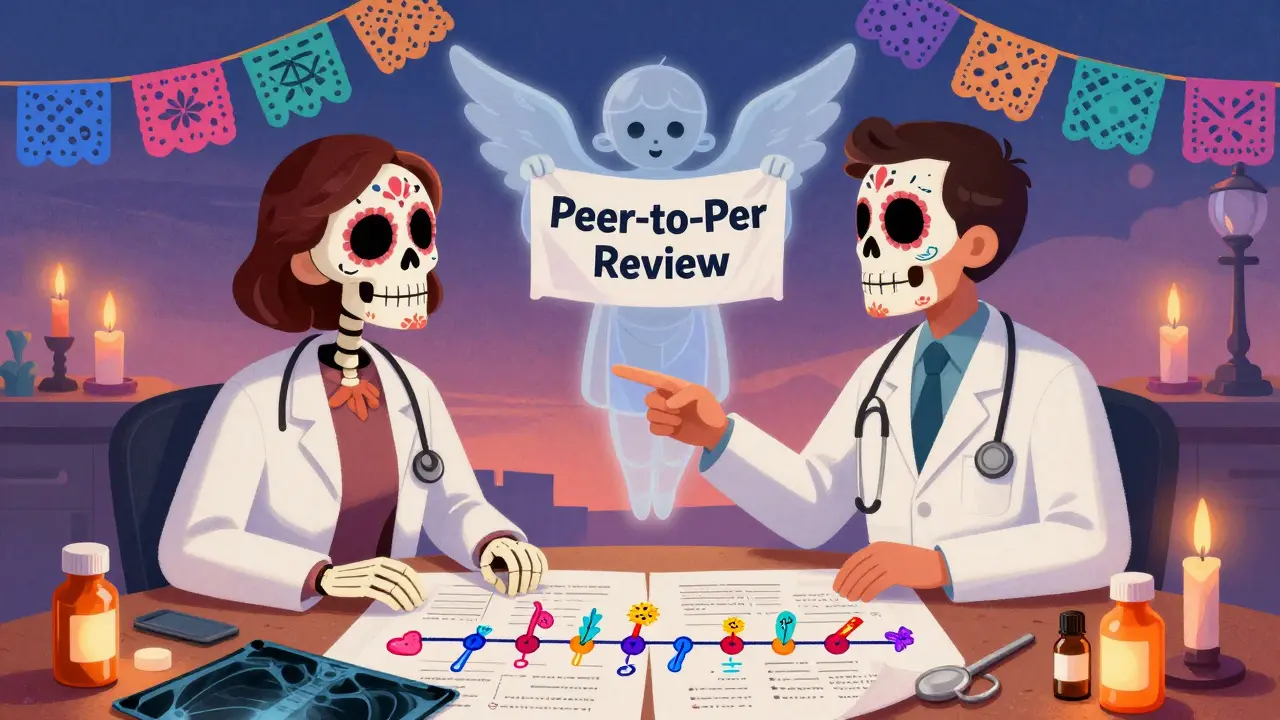
This is where most people fail. You can’t just send a letter and hope. Your doctor needs to talk to the insurance company. Call your doctor’s office and say: “My medication was denied. Can you call the insurer’s medical review team directly?” Most offices have a provider relations line. Ask them to request a peer-to-peer review-where your doctor speaks to a doctor employed by the insurer. This step alone increases approval odds dramatically. If your doctor refuses or says it’s “not their job,” ask for a referral to a patient advocate. Many hospitals and nonprofits offer free advocacy services. The Obesity Action Coalition and the American Medical Association both have resources to help you find one.Track Everything and Follow Up
Insurance companies have 30 days to respond-but many take longer. Don’t wait. After 10 business days, call and ask for the status. Ask for the name of the person handling your case. Write it down. Keep a log:- Date you submitted appeal
- Method of submission (fax, portal, mail)
- Confirmation number or receipt
- Names and titles of people you spoke to
- What they said
Request an External Review
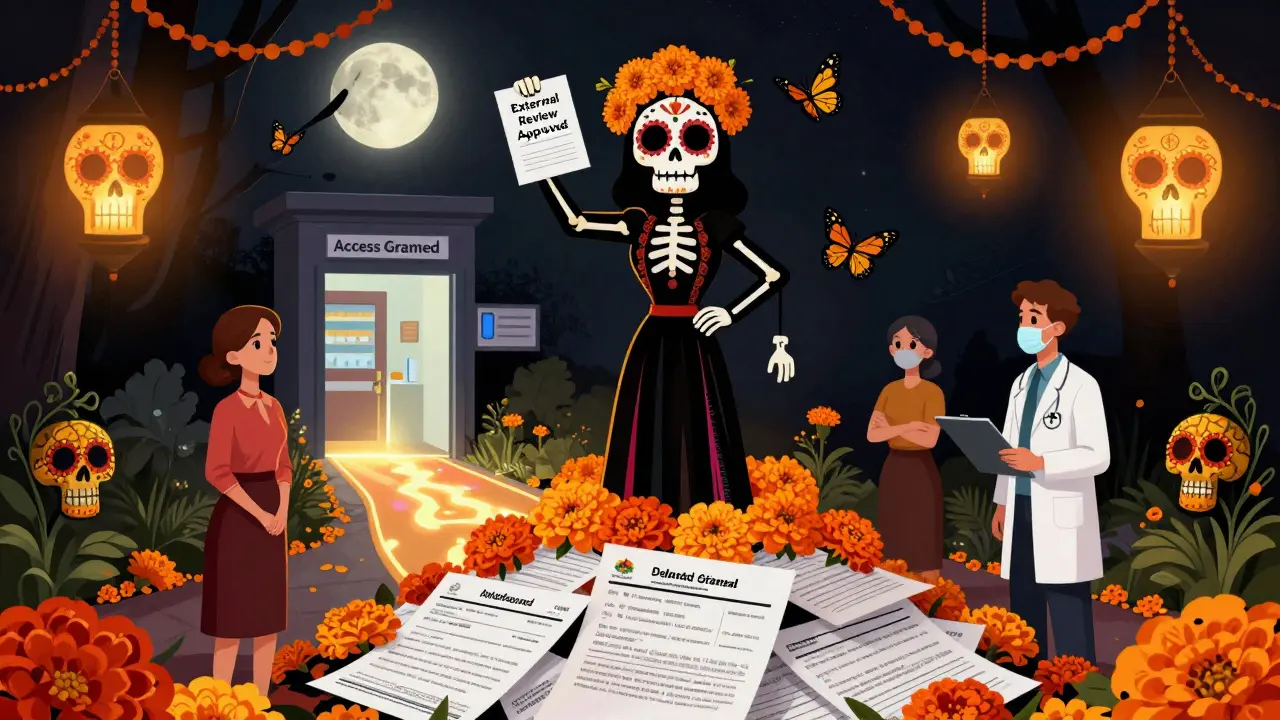
If your internal appeal is denied, you can ask for an external review by an independent third party. This is your final step. You have 365 days from the final denial to request this, but don’t wait. The process can take 30-60 days. Some states have shorter windows-check your state’s insurance department website. The external reviewer doesn’t work for your insurer. They look at your case like a judge. They’ll review your records, your doctor’s notes, and the insurer’s reasons. Over 70% of external reviews favor the patient when the appeal was well-documented.What to Do If You’re Still Denied
If every step fails, you still have options:- Ask for a hardship exception: If the drug is life-saving or you can’t afford it, some insurers will approve it under financial hardship.
- Use patient assistance programs: Most drug manufacturers offer free or discounted medication for qualifying patients. Go to NeedyMeds.org or the manufacturer’s website.
- Switch plans: If you’re on Medicare Advantage, you can change plans during open enrollment. Some plans have lower prior authorization rates.
- File a complaint: Contact your state’s insurance commissioner. In 2023, over 12,000 complaints about prior authorization denials were filed nationwide. Many led to policy changes.
Why This System Is Broken-and How to Beat It
The average physician spends 1-2 hours a week just managing prior authorizations. That’s time taken from patients. Nearly 80% of doctors say patients have quit treatments because of delays. One in four patients abandon prescriptions after a denial. This isn’t about insurance companies being evil. It’s about a broken system designed to delay, not protect. But you’re not powerless. The data shows: if you appeal, you win most of the time. The real secret? Don’t treat this like a form to fill out. Treat it like a medical case you’re presenting to a judge. Be precise. Be persistent. Use facts. And don’t let them bury your request in paperwork.What if my insurance denies my appeal?
If your internal appeal is denied, you have the right to request an external review by an independent third party. You have up to 365 days from the final denial to do this. Make sure your appeal letter included all clinical evidence and your doctor’s input-this significantly increases your chances. If the external review also denies your request, you can file a complaint with your state’s insurance commissioner or explore patient assistance programs from the drug manufacturer.
How long does a prior authorization appeal take?
Internal appeals usually take 30 days, but many insurers respond faster if you follow up. For urgent cases-where delay could cause serious harm-you can request an expedited review, which must be decided within 72 hours. External reviews take longer, typically 30 to 60 days, depending on your state. Always ask for a timeline when you submit your appeal and note the date you submitted it.
Can I appeal without my doctor’s help?
You can try, but your chances drop significantly. Insurance companies rely on medical judgment, not patient opinion. A letter from your doctor that explains why the medication is medically necessary-and why alternatives failed-is the most powerful part of your appeal. If your doctor won’t help, ask for a referral to a patient advocate or contact your local health department for assistance.
Do I need to pay to appeal a prior authorization denial?
No. There is no fee to file an appeal under federal law. Any company that asks you to pay to appeal is violating your rights. If this happens, report it to your state’s insurance commissioner. All appeals, including external reviews, must be free for patients.
What if I can’t afford the medication while I wait?
Many drug manufacturers offer free or low-cost programs for patients who qualify based on income. Visit NeedyMeds.org or the manufacturer’s website directly. Some pharmacies also offer discount cards. In the meantime, ask your doctor if there’s a temporary alternative that’s covered-something that can bridge the gap without worsening your condition.
Are Medicare Advantage plans easier to appeal than private insurance?
Yes. Medicare Advantage plans have a higher appeal success rate-about 22% higher than commercial plans-because of stricter federal oversight. They also must respond to prior authorization requests within 72 hours, reducing the need for appeals in the first place. If you’re on Medicare Advantage and get denied, you still have the same appeal rights, but the timeline is tighter and the process is more standardized.
Lydia H.
January 19, 2026 AT 22:55Just wanted to say this post saved my life last year. Got denied for my MS med, followed every step, called my doc’s office, got a peer-to-peer review, and got approved in 11 days. It’s exhausting, but it works. Don’t give up.
Also, if you’re on Medicare Advantage - YES, it’s easier. They actually reply within 72 hours. No joke.
PS: Always save your denial letter PDF. I printed mine, scanned it, emailed it to myself, and put it in a folder called ‘F*CK YOU INSURANCE’.
Christi Steinbeck
January 20, 2026 AT 20:58THIS. This is the kind of post people need to see before they cry into their coffee at 2 a.m. because their insurance said ‘no’ to insulin. You’re not weak for needing help. You’re smart for fighting back.
And yes, your doctor should be your ally - if they’re not, find a new one. Your health isn’t a negotiation.
Jacob Hill
January 22, 2026 AT 14:03Thank you for the breakdown. I’ve been through this three times with my RA meds. The one thing no one tells you? Always ask for the ‘coverage policy’ document. Most insurers hide it behind a login, but if you call and say ‘I need the clinical policy for [drug name], section 4.2,’ they’ll email it. Then you quote it back to them. It’s like playing chess with a robot that has to follow the rules.
Tracy Howard
January 24, 2026 AT 11:03Oh, sweet Canadian justice - where you pay taxes and then get told your biologic is ‘not cost-effective.’ I’m sorry, but if my body can’t metabolize 12 other drugs and you still won’t cover the one that doesn’t turn me into a zombie, then your algorithm is morally bankrupt. This isn’t a business. It’s a life.
Also, your doctor should be screaming at the insurer. If they’re not, they’re not trying hard enough. I’ve seen docs cry in their offices over this. You deserve better than a spreadsheet.
Aman Kumar
January 25, 2026 AT 08:30Let me be blunt: this system is engineered to break you. Insurance companies don’t deny because they’re stupid - they deny because they’re profitable. They know 80% of people will quit. They bank on your exhaustion. Your doctor’s 12-hour workday? That’s their design. The only thing that wins? Persistence. And documentation. And rage. Rage is a valid clinical tool.
Valerie DeLoach
January 25, 2026 AT 20:21For anyone reading this who’s new to the fight - you are not alone. I’ve helped over 200 people navigate this maze, and every single one of them had the same fear: ‘What if I’m not enough?’ You are enough. Your voice matters. Your body matters. Your doctor’s voice matters. And if they won’t fight for you? Find someone who will.
There are patient advocates, nonprofit legal aid groups, even Reddit threads like this one - you are not invisible.
Jackson Doughart
January 26, 2026 AT 09:59I’ve been on a biologic for 7 years. First denial? I cried. Second? I screamed. Third? I printed the insurer’s own policy, highlighted the exact clause my doctor met, and mailed it certified. Approved in 10 days.
Don’t overthink it. Just be meticulous. And if you’re tired? Rest. Then come back. This isn’t a race. It’s a marathon with paperwork.
Josh Kenna
January 28, 2026 AT 06:45Just got denied again for my thyroid med. Tried everything. Called the insurer, sent the docs, even emailed my senator. Still no. Now I’m on NeedyMeds and got 6 months free. But seriously, why is this so damn hard? I pay $800 a month for insurance and I can’t get a $300 pill? This system is rigged. And I’m tired.
Also, typo: I meant to say ‘CPT code’ not ‘CPT code’ - wait, I did say it right. I think. My brain is mush.
Erwin Kodiat
January 29, 2026 AT 20:36My mom got denied for her chemo med last year. We did everything in this post. Peer-to-peer. External review. Got approved. She’s in remission now. I just want to say - this isn’t just advice. It’s a lifeline.
And if you’re reading this and you’re scared? It’s okay. Just take one step. One email. One call. Then rest. Then do it again. You’ve got this.
Malikah Rajap
January 30, 2026 AT 23:12Wait - so you’re saying if I just quote their own policy back to them, they have to approve it? Like… legally? I feel like I just found the cheat code to life. Also, can we make this a TikTok trend? #PriorAuthorizationHacks #MyDoctorIsMyHero #InsuranceIsAScam
Lewis Yeaple
January 31, 2026 AT 03:10It is of paramount importance to note that the utilization management protocols employed by third-party payers are governed by the Patient Protection and Affordable Care Act, specifically Section 2719, which mandates transparency in coverage determinations. Furthermore, under ERISA, fiduciary obligations require that claims be adjudicated in accordance with the plan’s written terms, and failure to do so may constitute a breach of fiduciary duty. Therefore, the procedural compliance outlined herein is not merely advisable - it is legally enforceable.
sujit paul
February 1, 2026 AT 16:49Dear fellow human, I have studied the ancient texts of insurance policy and the dark arts of bureaucratic delay. The truth is hidden in the fine print, yes - but deeper still, in the silence between the lines. The insurance company does not deny because of cost - they deny because they fear your survival. They are not corporations. They are guardians of a system that thrives on suffering. You are not fighting for a pill. You are fighting for the soul of healthcare. I have seen this pattern in 14 countries. It is the same. Always the same. But you - you are the exception. You read. You act. You rise.
Astha Jain
February 1, 2026 AT 21:39OMG I just got denied for my antidepressant and I was about to cry but then I read this and now I’m like… okay let me print this and take it to my doc like a boss. Also, I spelled ‘documentation’ wrong in my first email. Oops. But I fixed it. And now I’m feeling kinda powerful. Like a medical ninja.
Jake Rudin
February 3, 2026 AT 21:20What is a medication, really? Is it a chemical compound? A promise? A symbol of a society that values productivity over presence? We deny pills because we fear vulnerability. We hide behind algorithms because we can’t bear to look someone in the eye and say, ‘I don’t have enough compassion to cover your life.’ And yet - here you are. Fighting. Not for a pill. But for the right to exist without apology.
Phil Hillson
February 5, 2026 AT 11:27Bro this post is a whole thing but honestly I just called my pharmacy and they gave me a 30-day free sample. Done. No paperwork. No yelling. No ‘peer to peer review.’ Just… got it. Why are we all overcomplicating this? The system is broken but I’m not gonna die on this hill. I’m gonna take the free sample and chill.