Imagine feeling tired all the time, your joints ache for no reason, and you’ve lost interest in sex. You go to the doctor, and they tell you it’s stress, aging, or depression. Years pass. Then, one day, your blood test shows your serum ferritin is over 2,800 ng/mL - nearly 15 times higher than normal. That’s what happened to many people with hemochromatosis. It’s not just a rare disease. It’s one of the most common genetic disorders in people of Northern European descent, especially in Scotland, Ireland, and Wales. And the fix? A simple, old-fashioned procedure: drawing blood.
What Exactly Is Hemochromatosis?
How Your Body Gets Too Much Iron
Everyone needs iron. It’s in your red blood cells, helping carry oxygen. But your body doesn’t have a natural way to get rid of extra iron. Normally, your gut absorbs just what you need. With hemochromatosis, that control breaks down. The HFE gene mutation - most often the C282Y variant - tells your body to keep absorbing iron even when it’s full. This isn’t from eating too much red meat. It’s genetic. Your liver makes less hepcidin, the hormone that blocks iron absorption. So your intestines keep pulling iron in, your liver stores it, and over time, it spills into your heart, pancreas, and joints.
Men are more likely to show symptoms because women lose iron through periods until menopause. By age 40, men with two copies of the faulty gene often have serious iron buildup. Women may not show signs until after 60. In Scotland and Ireland, about 1 in 83 people carry the main mutation. That’s not rare. It’s epidemic.
Early Signs Nobody Talks About
Most people don’t realize they have it until it’s advanced. The first signs are sneaky:
- Constant fatigue - not just tired, but bone-deep exhaustion
- Joint pain, especially in the knuckles of your index and middle fingers
- Loss of libido or erectile dysfunction
- Abdominal discomfort
- Darkening skin - not sunburn, but a bronze or gray tint
Doctors miss these. They’re common. They look like aging, stress, or even arthritis. A 2023 survey of patients found that nearly 70% saw 3 to 5 different doctors over 5 to 7 years before getting the right diagnosis. That’s a long time for iron to quietly destroy your organs.
How Doctors Diagnose It
Two blood tests are all you need to start suspecting hemochromatosis:
- Transferrin saturation - above 45% is a red flag
- Serum ferritin - above 300 ng/mL in men, 200 ng/mL in women
If those are high, you get a genetic test for the HFE mutation. The C282Y homozygous mutation accounts for 80-95% of cases. H63D and S65C are less common and rarely cause problems alone. No need for a liver biopsy anymore. Modern MRI scans using R2* technology can measure liver iron accurately and safely. That’s a big change from 20 years ago.
Here’s what’s critical: if your ferritin is over 1,000 ng/mL, your risk of cirrhosis jumps to 50-75%. Once cirrhosis sets in, your chance of liver cancer rises. But if you catch it early - before ferritin hits 1,000 - you can prevent almost all long-term damage.
Phlebotomy: The Simple, Proven Cure
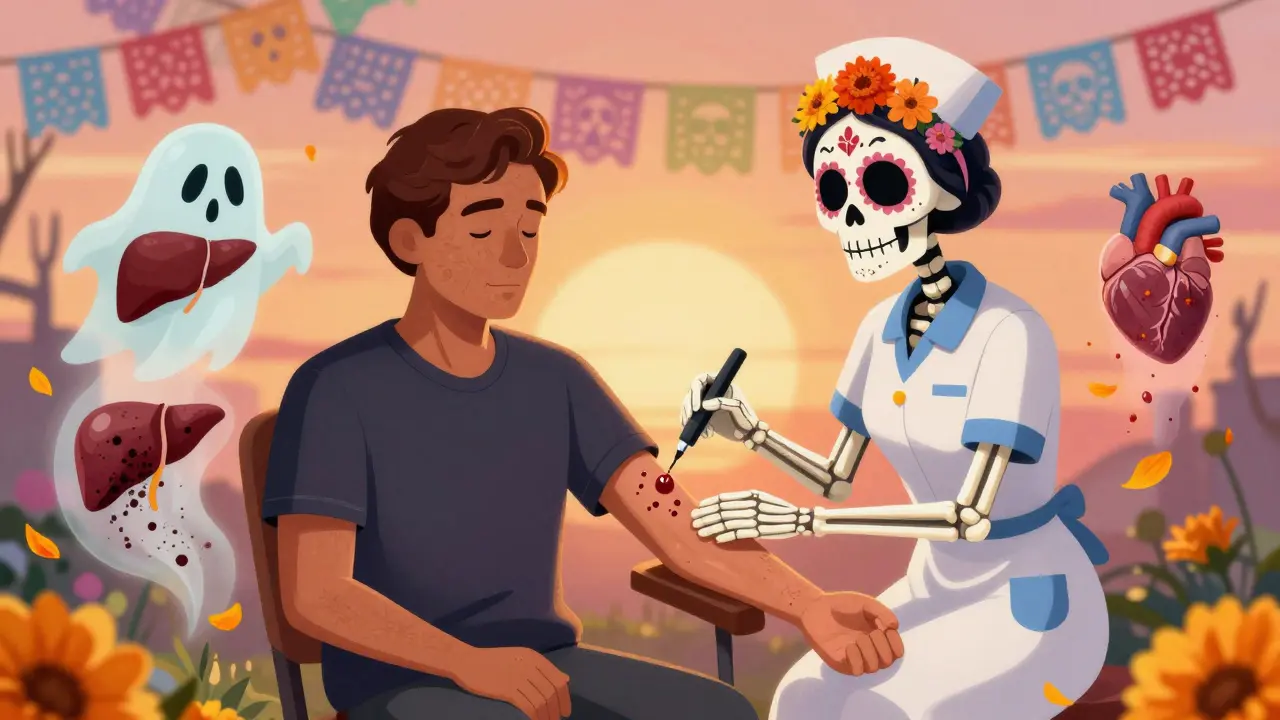
The treatment? Remove the excess iron. Not with pills. Not with expensive drugs. Just by drawing blood - the same way you donate blood.
This is called therapeutic phlebotomy. Each session removes about 450-500 mL of blood. That’s roughly 200-250 mg of iron. Your body doesn’t store iron freely - it’s bound to proteins. When you take out blood, you take out iron. Your body then pulls iron from your organs to make new red blood cells. Slowly, the overload drains.
There are two phases:
- Induction phase: Weekly blood draws until ferritin drops to 50 ng/mL. This can take 12 to 18 months - sometimes 50+ sessions for severe cases.
- Maintenance phase: After iron levels are normal, you need blood drawn every 2 to 4 months to keep ferritin between 50 and 100 ng/mL. Most people need 4 to 6 sessions a year.
It’s cheap. Insurance usually covers it. Each session costs $0-$50. Compare that to iron-chelating drugs like deferasirox - which cost $25,000-$35,000 a year and come with kidney and liver risks. Phlebotomy is safer, simpler, and free of side effects.
What Happens If You Don’t Treat It?
Iron doesn’t just sit there. It rusts your organs from the inside.
- Liver: Starts with fatty liver, then fibrosis, then cirrhosis. Once cirrhosis develops, your 10-year survival drops to 60%. Without treatment, liver cancer is likely.
- Pancreas: Iron damages insulin-producing cells. About 25% of untreated patients develop diabetes.
- Heart: Iron deposits can cause arrhythmias or heart failure. This is rare if treated early.
- Endocrine system: Low testosterone, loss of libido, and even thyroid problems are common.
One patient in Glasgow, diagnosed at 52 with ferritin at 3,200, had already developed early cirrhosis. After 62 phlebotomies over 15 months, his ferritin dropped to 85. His liver enzymes normalized. His energy returned. But he still needs blood drawn every 3 months - for life.
Why People Stop Treatment - And Why They Shouldn’t
Here’s the hard truth: most people feel better after a few months. Their fatigue fades. Their joints stop aching. They think they’re cured. So they stop.
That’s dangerous. Symptoms disappearing doesn’t mean iron is gone. It just means you’ve removed the excess circulating iron. The stored iron in your liver? Still there. If you stop phlebotomy, iron builds up again - fast.
A 2022 patient survey found that 42% of people with hemochromatosis quit maintenance therapy after 2-3 years. Many say it’s inconvenient. Some can’t find a clinic that does therapeutic phlebotomy - blood donation centers often refuse because it’s not for donation. Others struggle with vein access as they age.
But here’s what matters: sticking with maintenance therapy cuts your risk of liver cancer and cirrhosis to near zero. It’s not optional. It’s lifelong.
What About Family Members?
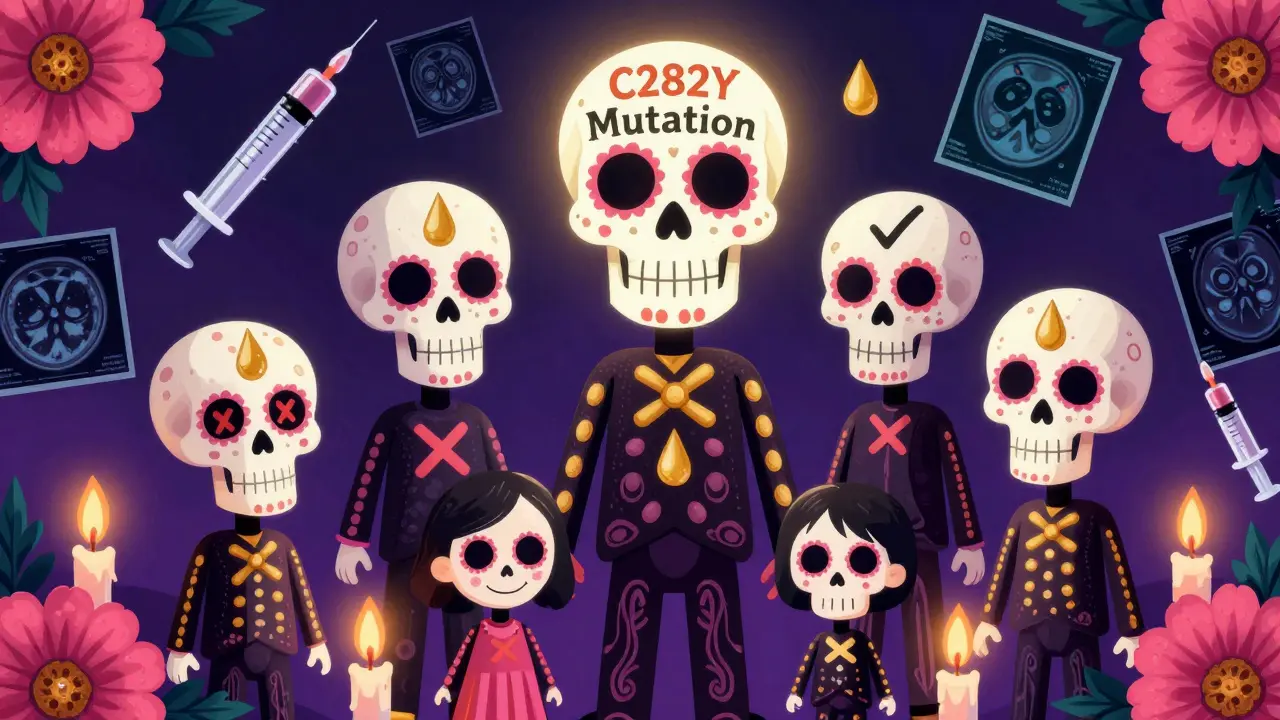
If you’re diagnosed, your siblings, children, and parents should get tested. Hemochromatosis is autosomal recessive. That means you need two bad copies of the gene - one from each parent. If you have it, your parents are carriers. Your siblings have a 25% chance of having two copies. Your children? They’ll get one bad copy at minimum. They won’t get the disease unless their other parent is also a carrier.
Testing is easy and cheap now - $150-$300 for HFE gene screening. The Hemochromatosis Foundation says 70% of cases are found because someone else in the family was diagnosed. Cascade testing saves lives.
What’s New in Treatment?
Scientists are working on drugs that mimic hepcidin - the hormone your body lacks. One, called PTG-300, is in Phase 2 trials. In early results, it lowered transferrin saturation by 53% in 12 weeks. That’s promising. But it’s not approved yet. And even if it is, it’ll cost more than phlebotomy.
For now, the best treatment is still the oldest: drawing blood. It’s free, effective, and proven.
What You Can Do Today
If you’re of Northern European descent, have unexplained fatigue, joint pain, or liver issues, ask your doctor for two simple tests: transferrin saturation and serum ferritin. Don’t wait for symptoms to get worse. Don’t let them blame it on stress. This is genetic. It’s treatable. And if caught early, you can live a normal, healthy life.
If you’ve been diagnosed, stick with your maintenance plan. Even if you feel fine. Even if it’s inconvenient. Every blood draw is a shield against liver failure, diabetes, and cancer.
Iron overload isn’t a death sentence. It’s a manageable condition - if you know the signs and act early.
Can hemochromatosis be cured?
No, hemochromatosis can’t be cured because it’s genetic. But it can be completely managed. Regular phlebotomy keeps iron levels in a safe range, preventing organ damage. People who stick with treatment live normal lifespans with no symptoms.
Can you get hemochromatosis from eating too much red meat?
No. Hemochromatosis is caused by a genetic mutation that makes your body absorb too much iron - no matter how much you eat. Eating red meat doesn’t cause it, but it can make iron overload worse. People with the condition are often advised to limit red meat and avoid iron supplements or vitamin C with meals, since vitamin C boosts iron absorption.
Is phlebotomy safe?
Yes, phlebotomy is very safe. It’s the same procedure as donating blood. Side effects are rare and mild - maybe dizziness or bruising. People with severe anemia or heart failure may need adjustments, but for most, it’s well tolerated. It’s far safer than long-term iron-chelating drugs.
How often do you need phlebotomy after the initial treatment?
After iron levels are normalized, most people need blood drawn every 2 to 4 months. That’s about 4 to 6 sessions a year. The goal is to keep serum ferritin between 50 and 100 ng/mL. Some people need it more often, especially if they’re very active or have other health issues.
Can women get hemochromatosis?
Yes, but they often show symptoms later than men - usually after menopause. Before that, monthly blood loss helps protect them from iron buildup. But if they have two copies of the HFE mutation, they still develop iron overload over time. Women with unexplained fatigue, joint pain, or liver problems should be tested, even if they’re young.
Is genetic testing necessary if ferritin is high?
Yes. High ferritin can come from many things - alcohol, obesity, hepatitis, or chronic inflammation. Only genetic testing can confirm hereditary hemochromatosis. Without it, you might get the wrong treatment. If you have high ferritin and transferrin saturation over 45%, HFE testing is essential.
Can you donate blood if you have hemochromatosis?
In many countries, including the UK and Canada, therapeutic phlebotomy patients can donate blood if they meet standard donor criteria. In the U.S., most blood banks don’t accept it for donation - even though the blood is healthy - because of regulatory rules. But some specialized clinics allow it. Always check with your local blood service or hemochromatosis support group.
What to Do Next
If you’ve been told your iron levels are high, don’t ignore it. Ask for a genetic test. If you have a family member with hemochromatosis, get tested - even if you feel fine. If you’ve been diagnosed, don’t stop your phlebotomy schedule. This isn’t a quick fix. It’s a lifelong habit - one that keeps your liver, heart, and pancreas healthy.
Iron overload is silent until it’s too late. But it doesn’t have to be. With a simple blood test and a routine procedure, you can stop it before it stops you.
Paul Ong
January 2, 2026 AT 07:31Do it.
Andy Heinlein
January 4, 2026 AT 01:55Ann Romine
January 4, 2026 AT 19:49Todd Nickel
January 5, 2026 AT 14:42Austin Mac-Anabraba
January 7, 2026 AT 13:23Phoebe McKenzie
January 7, 2026 AT 19:24gerard najera
January 8, 2026 AT 07:32Stephen Gikuma
January 8, 2026 AT 09:19Bobby Collins
January 8, 2026 AT 13:02jaspreet sandhu
January 8, 2026 AT 16:19Bryan Anderson
January 8, 2026 AT 20:51Liam George
January 9, 2026 AT 10:29Bill Medley
January 11, 2026 AT 06:02Richard Thomas
January 12, 2026 AT 04:59