When you take a generic pill, you expect it to work just like the brand-name version. But behind that simple tablet is a complex system designed to keep it safe - and contamination control is at the heart of it. If even a tiny amount of the wrong chemical, microbe, or residue gets into a batch of generic medication, the entire lot could be dangerous. That’s not speculation. In 2020, a single contaminant - nitrosamines - triggered recalls across 22 generic manufacturers, costing over $1.2 billion and shaking global confidence. The FDA issued 37.2% of its 2022 warning letters to drugmakers because of contamination issues. This isn’t about perfection. It’s about preventing what’s preventable.
What Counts as Adulteration?
The FDA defines a drug as adulterated if it’s made, packed, or stored under unsanitary conditions that could make it harmful. That means anything from leftover active ingredients from a previous batch, to mold spores from a leaky roof, to dust from uncleaned equipment. For generics, the stakes are even higher. These drugs are made in shared facilities, often on the same lines as other products. One wrong cleaning step, one unsealed door, one worker skipping gowning protocol - and you risk cross-contamination.How Clean Is Clean Enough?
Cleanrooms aren’t just fancy labs with white walls. They’re engineered environments with strict particle limits. For sterile injectables, the air must have no more than 3,520 particles larger than 0.5 micrometers per cubic meter - that’s ISO Class 5. For less critical areas like packaging, ISO Class 8 is acceptable. These aren’t suggestions. They’re enforced standards under EU GMP Annex 1 and FDA guidance. HVAC systems keep this clean. They push air at 20 to 60 changes per hour, with pressure differences of 10-15 Pascals between zones to stop dirty air from creeping in. Airlocks separate clean from dirty areas. Dedicated corridors keep people and materials moving in one direction - no backtracking. In high-potency drugs like cancer meds, facilities now design for contamination thresholds as low as 1 nanogram per square centimeter. That’s one billionth of a gram. If you can’t measure it, you can’t control it. So they measure.Testing Isn’t Enough - You Need Monitoring
For years, companies relied on end-product testing. Swab a surface after cleaning. Wait five days for cultures to grow. If the result is under 10 CFU per 25cm², the batch passes. But here’s the problem: by the time you get the result, the batch is already made. If it’s contaminated, you’ve wasted money, time, and possibly put patients at risk. Real-time monitoring changed that. Devices like the MetOne 3400+ track airborne particles continuously. A 2022 ISPE study showed these systems cut contamination incidents by 63%. Why? Because they catch what manual checks miss - transient events. A worker opens a door. A cart rolls in. A sneeze. Those moments create spikes. Manual checks happen once a day. Real-time systems catch them in real time. Even cleaning validation is evolving. ATP bioluminescence gives results in five minutes instead of five days. It’s 95% as accurate as traditional culture methods. And it’s not just for surfaces. Rinse samples from equipment, air sampling, and even water quality checks are now automated and logged digitally. No more paper logs that get lost or altered.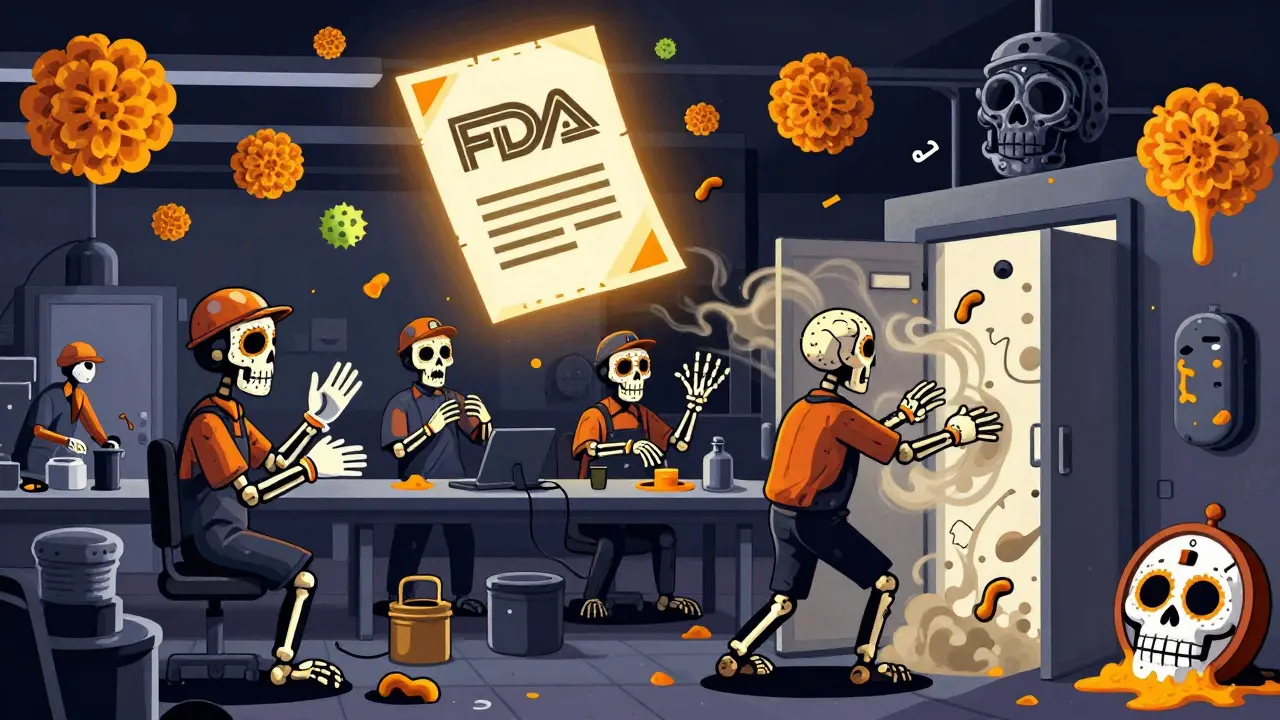
Human Error Is the Biggest Risk
You can have the cleanest room, the best filters, the most advanced sensors - but if a worker forgets to change gloves, or skips the air shower, or uses the wrong cleaning solution, it all falls apart. Industry experts say 83% of contamination events trace back to human behavior. That’s why training isn’t optional. It’s continuous. A 2021 study at an AstraZeneca generics facility found gowning compliance dropped 40% after an 8-hour shift. People get tired. They rush. They assume. So facilities now use color-coded equipment, staggered shift changes, and even automated alerts when someone enters a cleanroom without proper gear. One company reported a 65% drop in mix-ups after switching to color-coded tools for different products. And it’s not just about training. It’s about culture. Workers need to feel empowered to stop a line if something feels off. At one Teva facility, switching to reusable isolation gowns led to a 30% spike in gowning violations - because the gowns were harder to put on correctly. They had to spend $185,000 on upgraded air showers to fix it. The lesson? Don’t assume new gear is better. Test it.What’s Different for Generics vs. Brand-Name Drugs?
Innovator companies spend about $185 million to build a facility for a single product. Generics manufacturers? Around $80 million for the same capacity. That’s a huge gap. So generics don’t compete on infrastructure. They compete on process discipline. They can’t afford ULPA filters that remove 99.999% of particles - they’re too expensive and use 40% more energy. Instead, they rely on strict procedures: one batch at a time, thorough cleaning validation, and rigorous change control. Facilities that use the “one batch at a time” model report 53% fewer cross-contamination incidents. It’s slower, but safer. Raw material quality matters too. Indian suppliers report 22% more contamination in raw materials than EU sources, according to EDQM 2022 data. That means generics companies can’t just trust their suppliers. They need to test incoming materials - and sometimes, reject them.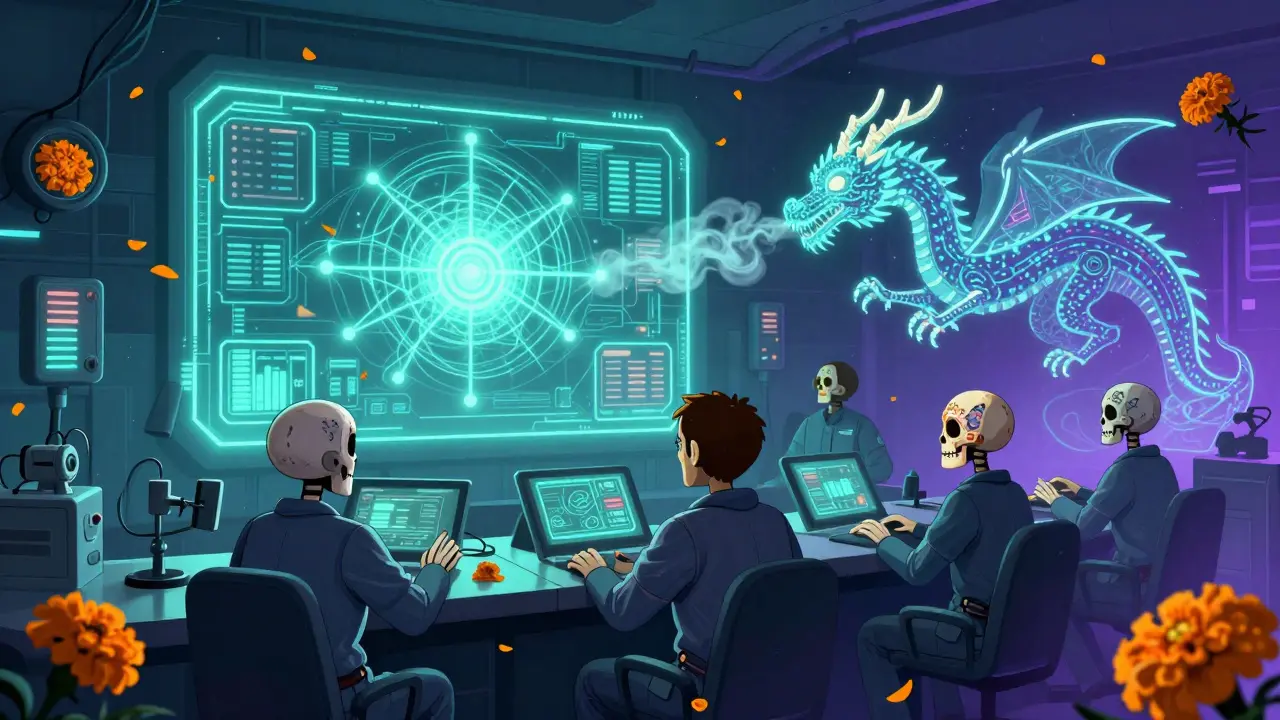
Dee Humprey
January 4, 2026 AT 02:10Vikram Sujay
January 4, 2026 AT 16:55Shanna Sung
January 6, 2026 AT 12:45Clint Moser
January 6, 2026 AT 23:55Brendan F. Cochran
January 7, 2026 AT 05:17Jason Stafford
January 8, 2026 AT 05:43Justin Lowans
January 9, 2026 AT 05:53Ethan Purser
January 10, 2026 AT 00:17Doreen Pachificus
January 11, 2026 AT 07:30Rory Corrigan
January 11, 2026 AT 21:59Roshan Aryal
January 12, 2026 AT 21:21Chris Cantey
January 14, 2026 AT 19:40Abhishek Mondal
January 16, 2026 AT 14:25Angie Rehe
January 16, 2026 AT 17:44saurabh singh
January 17, 2026 AT 17:48