Imagine a pharmacist staring at a screen with 17 different options for a single prescription of lisinopril. Some are standard generics, one is an authorized generic, and others are branded generics. If the system doesn't clearly distinguish between them, the risk of a dispensing error or a frustrated patient increases. This isn't just a minor inconvenience; it's a systemic challenge in healthcare that affects patient safety and costs billions of dollars.
The core problem is that while the FDA is the U.S. government agency responsible for protecting public health by ensuring the safety, efficacy, and security of human and veterinary drugs
has strict rules for bioequivalence, the software used in pharmacies often struggles to present this data clearly. Whether you're managing a retail chain or a hospital ward, getting pharmacy identification systems right means knowing exactly what is in the bottle and why it's being substituted. This guide breaks down the technical standards, the common pitfalls, and the best practices to ensure your system is accurate and compliant.The Technical Foundation of Drug Identification
To understand how systems tell a brand apart from a generic, we have to look at the "digital fingerprints" of medications. The most basic identifier is the National Drug Code a unique 10- or 11-digit, three-segment number that identifies labelers, product codes, and package codes (NDC). Every single version of a drug, regardless of the manufacturer, gets its own NDC. However, the NDC alone doesn't tell a pharmacist if a drug is therapeutically equivalent to the brand.
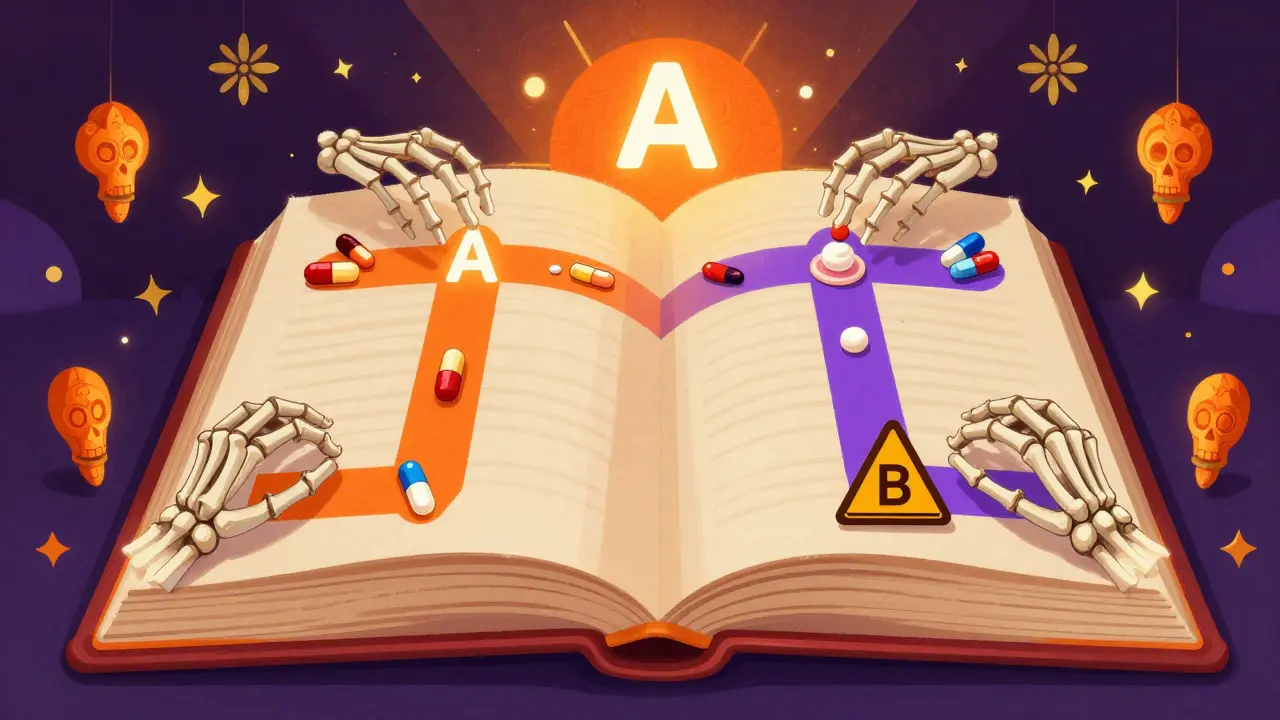
That is where the Orange Book the FDA's official publication "Approved Drug Products with Therapeutic Equivalence Evaluations" used to identify generic equivalents comes in. Systems use Therapeutic Equivalence (TE) codes from this book to automate substitutions. If a code starts with an "A" (like AB or AO), the system knows the generic is therapeutically equivalent to the reference listed drug. If the code starts with "B", the system should flag it as not equivalent, meaning the pharmacist cannot substitute it without a new prescription.
Modern systems like Epic or Cerner don't just store these codes; they integrate them into the workflow. A key detail for system admins is the "Appl No." field. When a product has an "A" prefix (e.g., A076543), it signals an FDA-approved generic via the Abbreviated New Drug Application (ANDA) pathway. This distinction is vital for auditing and regulatory compliance.
Navigating the "Grey Areas": Authorized and Branded Generics
Not every drug fits neatly into a "Brand vs. Generic" binary. This is where most system errors happen. First, you have authorized generics. These are literally the exact same drug as the brand name, but the original manufacturer sells it under a generic label. Because they are identical, they don't go through the same ANDA process, creating a mapping gap in some older pharmacy softwares.
Then there are branded generics. Think of certain oral contraceptives. These drugs are generic in the sense that they were approved via the ANDA process, but they are marketed with a proprietary name rather than a chemical name. If your system treats "branded generics" as pure brands, you might overcharge patients or fail to suggest a cheaper, true generic alternative.
| Type | Approval Path | Active Ingredient | Naming Convention | System Identifier |
|---|---|---|---|---|
| Brand Name | NDA | Proprietary | Trade Name | Reference Listed Drug (RLD) |
| Generic | ANDA | Same as Brand | Chemical Name | TE Code (e.g., AB) |
| Authorized Generic | NDA (Original) | Identical to Brand | Generic Name | Specific NDC mapping |
| Branded Generic | ANDA | Same as Brand | Proprietary Name | Mixed (ANDA + Trade Name) |
The Danger Zone: Narrow Therapeutic Index (NTI) Drugs
For most drugs, a generic is a perfect swap. But for Narrow Therapeutic Index drugs where small differences in dose or blood concentration may lead to serious therapeutic failures or adverse drug reactions (NTI) medications, a system-level "auto-substitute" can be dangerous. Drugs like warfarin, phenytoin, and levothyroxine are classic examples. A tiny shift in bioavailability between two "equivalent" generics can cause a patient's levels to swing wildly.
Best practice dictates that NTI drugs should never be automatically substituted by the software. High-performing systems, such as Epic's Beacon Oncology, implement "hard stops" or high-priority alerts. These alerts force the pharmacist to manually verify if the patient is stable on a specific manufacturer's version before switching. Failure to do this has led to documented adverse events, as seen in reports from the Institute for Safe Medication Practices (ISMP).
Implementation Best Practices for Pharmacy Managers
If you are setting up or optimizing a pharmacy information system, don't rely on the "out-of-the-box" settings. A 3-tiered approach is the most effective way to ensure accuracy and safety.
Step 1: System Configuration. Set your defaults to generic names, but ensure the system performs an automatic therapeutic equivalence check against the most recent Orange Book data. This usually requires about 15-20 hours of initial setup per workstation to map NDCs correctly and set up NTI alerts.
Step 2: Staff Training. Your team needs to know the difference between a generic and an authorized generic. According to ASHP recommendations, staff should undergo 8-10 hours of annual training specifically on identification nuances. When a technician sees 17 versions of lisinopril, they should know how to identify the most cost-effective and clinically appropriate one.
Step 3: Patient Communication. System accuracy is useless if the patient panics when the pill looks different. Implement visual aids or member portals-like the one used by Kaiser Permanente-that show a side-by-side comparison of the brand and generic. This transparency reduces brand-continuation requests by making the patient feel in control of the change.
Common Pitfalls and How to Avoid Them
- Ignoring NDC Updates: The FDA NDC Directory changes roughly 3,500 times a month. If your system doesn't have a real-time API link or a weekly update schedule, you'll end up with "orphan" drugs that the system can't identify.
- Over-reliance on CPOE: Many Computerized Physician Order Entry systems default to generic names. While this is good for cost, it can mask a prescriber's specific intent for a brand-name drug. Always cross-reference the "Dispense as Written" (DAW) order with the system's suggested generic.
- State Law Blind Spots: Substitution laws vary wildly. While 49 states allow pharmacist substitution for equivalent generics, some (like California) require rigorous documentation for brand continuation. Ensure your system has a mandatory "Justification" field for these specific states.
The Future of Identification: AI and Precision Medicine
We are moving toward a world where the "one size fits all" generic might be replaced by more precise identification. The 21st Century Cures Act is already pushing EHRs to include more structured data to distinguish between RLDs and authorized generics more clearly.
Even more exciting is the rise of AI-powered systems. Recent research in the Journal of the American Medical Informatics Association shows AI can predict therapeutic equivalence issues with over 87% accuracy. In the future, your system might not just check the Orange Book; it might check a patient's genetic markers to decide if they actually need the brand-name version of a drug due to how they metabolize specific inactive ingredients.
What is the difference between a generic and an authorized generic?
A standard generic is produced by a different company after the brand's patent expires and is approved via an ANDA. An authorized generic is the exact same drug as the brand-name product, produced by the original manufacturer but sold without the brand name. Systemically, they are identical in composition, but their NDC codes differ.
Why can't some generics be substituted automatically?
Drugs with a Narrow Therapeutic Index (NTI), such as warfarin or levothyroxine, have a very small window between a therapeutic dose and a toxic dose. Small variations in how different generics are absorbed can lead to clinical instability, which is why pharmacy systems should flag these for manual pharmacist review.
What does a "B" code in the Orange Book mean?
A Therapeutic Equivalence (TE) code starting with "B" indicates that the product is NOT therapeutically equivalent to the reference listed drug. This means the pharmacist cannot substitute the generic for the brand without a new prescription or direct authorization from the prescriber.
How often should NDC databases be updated?
Because the FDA updates the NDC directory thousands of times a month, the gold standard is a real-time API integration. If that's not possible, updates should occur at least weekly to avoid dispensing errors or billing rejections.
Are branded generics actually generics?
Yes. They are approved through the ANDA process (the generic pathway), meaning they have the same active ingredients as the brand. However, they are given a proprietary trade name for marketing purposes. In your system, these should be identified as generics for pricing but as brands for naming.
Next Steps for Optimization
If you're currently struggling with identification errors, start with a gap analysis. Compare your current NDC list against the latest Orange Book API export. If you find more than a 0.5% discrepancy, prioritize a system update.
For those in high-acuity environments like oncology or neurology, the immediate next step is auditing your NTI alerts. Ensure that every narrow-index drug has a "Hard Stop" that prevents the system from completing a transaction without a pharmacist's manual override. Finally, move toward a more transparent patient portal that visually explains bioequivalence to reduce the friction of switching from brand to generic.
Nell O'Leary
April 16, 2026 AT 15:08The integration of real-time API links for NDC updates is absolutely critical for maintaining data integrity within the CPOE workflow 💊 definitely helps avoid those orphan drug mismatches during the adjudication process!
Agatha Deo
April 18, 2026 AT 02:38Oh please, as if a few hours of "staff training" is going to fix a systemic failure caused by corporate greed and software developers who couldn't code their way out of a paper bag. It's just adorable that we think a PDF guide will stop the inevitable medication errors while the big pharma lobbyists laugh all the way to the bank
Jon lee
April 18, 2026 AT 07:08It's really helpful to see the distinction between authorized and branded generics laid out like this, it could save a lot of stress for new pharmacy techs starting out!
Maggie Graziano
April 19, 2026 AT 18:24ndcs are just tracking numbers for the govt to see who is taking what 👁️
Nathan Berlin
April 21, 2026 AT 08:56Imagine thinking US systems are the gold standard when our pharmaceutical manufacturing in India is way more efficient and scalable 🇮🇳💪 The West is just lagging behind while we lead the world in generic production 🚀🔥
Richard Moore
April 21, 2026 AT 12:27The part about NTI drugs is spot on, but some of these "hard stops" in Epic are honestly just annoying pop-ups that everyone clicks through without reading 😡 we need a better way to force actual clinical review!
Anna BB
April 21, 2026 AT 14:43It is so interesting to think about how AI might eventually personalize our medications... though I do wonder if we lose some of the human touch in pharmacy when we rely solely on algorithms... don't you think???
Michael Lewis
April 22, 2026 AT 12:06Stop complaining about the pop-ups and just do your jobs correctly! Patient safety is the only thing that matters here, so if a hard stop is in place, it's because someone's life depends on you actually paying attention for two seconds!
Colleen Tankard
April 22, 2026 AT 15:59The visual aids for patients are such a vibe 🎨✨ It really helps people not freak out when their pill changes color!
Sophia Rice
April 24, 2026 AT 06:50I totaly agree with the visual aids part, its so much easier when you can just show the patint the diffrence instead of explaining it for the tenth time 🌸
Theresa Griffin MEP
April 26, 2026 AT 04:28Systemic accuracy is mandatory. Compliance is non-negotiable.
Ben Ferguson
April 27, 2026 AT 15:57I remember this one time when I was dealing with a patient who had a complete meltdown because their levothyroxine went from a white tablet to a peach-colored one and it was absolutely the most dramatic scene I have ever witnessed in a retail setting, which just goes to show that no matter how high-tech your NDC mapping is, the human element of panic is a force of nature that no software can ever truly account for in a professional environment!
Rob Schlautman
April 28, 2026 AT 15:19honestly who even has the time to spend 20 hours setting up workstations when the corporate office just pushes a generic update that breaks everything anyway and we all just have to pretend that the orange book is the bible of pharmacy while the actual software is basically held together by duct tape and prayers it is just exhausting to even think about the sheer amount of wasted energy spent on these redundant systems that dont even work the way they are supposed to in the real world
Bonnie Piersall
April 30, 2026 AT 08:34The NTI section is pure gold. Dealing with those drugs is like walking a tightrope over a pit of fire, and if the software glitches, you're just playing Russian roulette with a patient's blood levels. It's a wild ride in the pharmacy world!
Rock Stone
April 30, 2026 AT 22:33Keep pushing for those AI improvements! It's a long road but the potential to reduce human error is huge. We've got this!