Every year, millions of people in the U.S. take prescription meds without knowing if they’re real. Counterfeit drugs aren’t just a problem overseas-they’re hiding in plain sight. The FDA’s databases are the only trusted source to check if your medicine is legitimate. But most people don’t know how to use them. You don’t need to be a pharmacist to spot a fake. You just need to know where to look and what to look for.
What the FDA Databases Actually Do
The FDA doesn’t just approve drugs. It tracks every single prescription medication sold in the U.S. through three main systems: the NDC Directory, the Drug Establishments Current Registration Site, and the Electronic Drug Registration and Listing System (eDRLS). These aren’t just databases-they’re the backbone of drug safety in America.
The NDC Directory is the most important. Every approved drug gets a unique 10- or 11-digit National Drug Code. It’s split into three parts: the labeler (who makes it), the product (what it is), and the package (how it’s sold). If the NDC doesn’t exist in this directory, the drug isn’t legally approved. That’s your first red flag.
The Drug Establishments Current Registration Site tells you who’s allowed to make, pack, or distribute drugs. If a pharmacy or distributor isn’t listed here, they’re operating illegally. And eDRLS is where companies submit their drug info electronically. If a company hasn’t updated their listing in the last year, their drugs might not be tracked at all.
How Counterfeit Drugs Slip Through
Counterfeiters don’t break into labs. They exploit gaps in the system. Most fake drugs come from foreign suppliers who never registered with the FDA. They ship bulk powder or pills labeled with fake NDCs. These get mixed into legitimate supply chains through third-party distributors who skip verification.
Here’s how it works: A small pharmacy buys meds from an unregistered wholesaler. The wholesaler says the NDC is real. The pharmacy doesn’t check the FDA database. The pills get sold to you. By the time the FDA finds out, hundreds of people have taken them. In 2022, over 1,200 inspections found 68 companies with broken verification systems. That’s not a glitch-it’s a pattern.
Some fakes look perfect. The packaging matches. The pills have the right color and imprint. But the NDC won’t match. Or the manufacturer’s name won’t show up in the registration site. That’s why checking the database isn’t optional-it’s your last line of defense.
How to Check a Drug Yourself
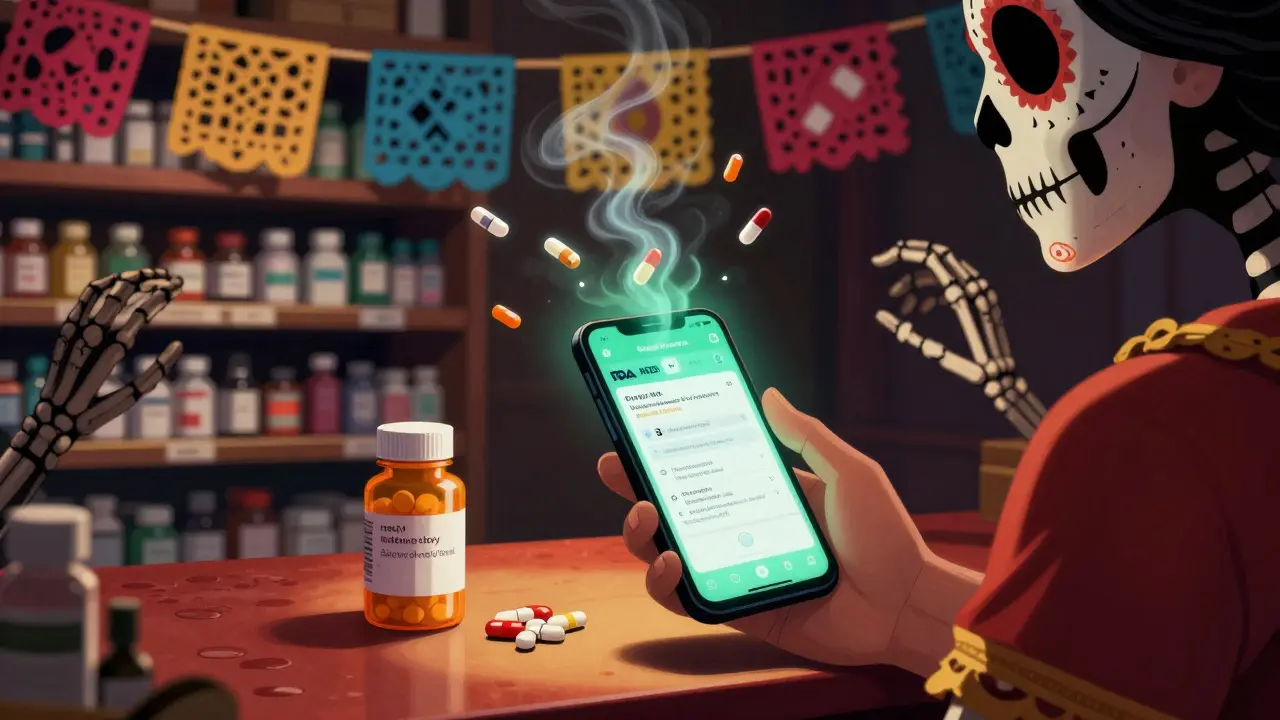
You don’t need special tools. Just your phone and 2 minutes.
- Find the NDC on the drug box. It’s usually printed near the barcode. Look for a 10- or 11-digit number, often with hyphens like 00012-3456-78.
- Go to the FDA’s NDC Directory: https://www.accessdata.fda.gov/scripts/cder/ndc/
- Enter the full NDC. Don’t guess. Don’t round. Type it exactly as it appears.
- Check the results. If it shows the drug name, manufacturer, and active ingredient-you’re good.
- If it says “Not Found,” “Inactive,” or “Unregistered”-stop. Don’t take it.
Now check the manufacturer. Go to the Drug Establishments Current Registration Site. Search by company name. If the company isn’t listed, the drug isn’t FDA-approved-even if the NDC looks real.
Pro tip: If you buy meds online, always verify the NDC before paying. A 2023 FDA report found that 63% of online pharmacies selling unapproved drugs had fake or invalid NDCs.
What the FDA Doesn’t Tell You
The system works-but only if everyone plays by the rules. The DSCSA law, fully in effect since November 2023, requires every company in the supply chain to electronically verify each drug package. But here’s the catch: the FDA doesn’t check every pill. They rely on companies to report problems.
Most small pharmacies and clinics still don’t have automated systems. They manually check NDCs. That’s slow. And mistakes happen. In 2021, 38% of verification failures were caused by mismatched NDC formats. One digit off, and the system rejects a real drug.
Also, the NDC doesn’t track individual pills. It tracks the product type. So if a box of 100 pills is fake, but the NDC is real, the system won’t flag it. That’s why the FDA is moving to a 12-digit NDC format by 2026-so each package gets a unique code, like a serial number.
Who’s Really Responsible?
You might think the FDA should stop all fakes. But they can’t. They inspect 1,200 companies a year. There are over 18,000 registered drug establishments. They rely on you to report suspicious meds.
If you find a drug that looks wrong-wrong color, wrong shape, weird taste, or no NDC-report it. Use the FDA’s MedWatch system. It’s free. It’s anonymous. And it helps them shut down bad actors.
Pharmacies and hospitals are required to report suspect drugs within 24 hours. But most patients don’t know they can do the same. Your report could save someone’s life.
What’s Changing in 2026
The FDA is upgrading the NDC system to 12 digits, adding images of pills to the database, and integrating AI tools to spot fake patterns. By 2026, you’ll be able to scan a pill’s barcode and see its real-time history-where it was made, who shipped it, and if it’s been flagged.
Right now, companies like TraceLink and SAP help big pharma track drugs. But soon, the FDA will give patients access to the same data. That means your phone could tell you if the bottle you bought was shipped from a verified warehouse-or a warehouse in a country with no FDA oversight.
Until then, the simplest tool you have is the NDC Directory. Use it every time you get a new prescription. Especially if you’re buying online, from a foreign pharmacy, or from a discount site that seems too good to be true.
Real-World Example: A Patient’s Close Call
In 2022, a woman in Ohio bought generic metformin from a website offering 80% off. The pills looked normal. The bottle had a label. But when she checked the NDC, it didn’t exist in the FDA database. She called her pharmacist. They confirmed it was fake. The pills had no active ingredient. She could’ve had a diabetic emergency.
She reported it. The FDA traced it to a lab in India. The website was shut down. Ten other patients were found to have taken the same fake batch. None were hospitalized. But it was close.
That’s the difference between checking and assuming.
What to Do If You Find a Fake
- Stop taking the medication.
- Keep the packaging and pills as evidence.
- Report it to the FDA at MedWatch.
- Call your pharmacy. Ask if they’ve seen similar reports.
- If you’re on a chronic drug, contact your doctor immediately. Don’t go without treatment.
Don’t wait for symptoms. Fake drugs don’t always make you sick right away. Sometimes, they just don’t work. And that’s just as dangerous.
Can I trust online pharmacies that say they’re FDA-approved?
No. Only pharmacies with a physical U.S. address and a valid license can legally sell prescription drugs online. The FDA doesn’t approve online pharmacies. If a site claims to be "FDA-approved," it’s lying. Always check the NDC and the company’s registration in the FDA’s Drug Establishments site. Look for the VIPPS seal from the National Association of Boards of Pharmacy instead.
Do over-the-counter (OTC) drugs have NDCs too?
Yes. All OTC drugs sold in the U.S. must have an NDC, even if they’re not prescription. You’ll find it on the box or blister pack. If you can’t find it, the product may not be legally sold. This includes pain relievers, antacids, and allergy meds. Always verify OTC drugs if you’re buying from unfamiliar sources.
Why doesn’t the FDA just shut down all fake drug sellers?
They try. But counterfeiters operate overseas, use fake websites, and change domains daily. The FDA can’t police every country or every online shop. Their power is limited to U.S. borders and registered companies. That’s why public reporting is critical. Every report helps them build cases and track patterns.
Are generic drugs more likely to be fake?
Not inherently. But generics are cheaper, so they’re more attractive to counterfeiters. The NDC for a generic drug is just as valid as the brand name-if it’s registered. Always check the NDC and manufacturer. A fake generic can be just as dangerous as a fake brand drug.
Can I use the FDA database to check if my drug is recalled?
Yes. The NDC Directory shows if a drug is active or inactive. If a drug is recalled, its status changes to "Inactive" or "Withdrawn." You can also search for recalls directly on the FDA’s Drug Recalls page. If your drug is listed, stop taking it and contact your pharmacy.
Final Advice: Don’t Guess, Check
Counterfeit drugs aren’t rare. They’re everywhere. And the people selling them know you won’t check. That’s why they win.
You don’t need to be a scientist to protect yourself. You just need to know where to look. The FDA’s databases are free. They’re public. And they’re designed for people like you-not just pharmacists or regulators.
Next time you pick up a new prescription, take 90 seconds to verify the NDC. It’s the simplest, most effective way to make sure your medicine is real. And in a world where fake drugs can kill, that’s not just smart-it’s essential.
Adarsh Uttral
February 1, 2026 AT 04:09just checked my metformin bc this post scared me lol. NDC was legit but i swear the pills looked different than last time. maybe im just paranoid now. either way, im checking every med from now on.
Yanaton Whittaker
February 2, 2026 AT 16:52AMERICA STILL THE ONLY COUNTRY THAT GIVES A SH*T ABOUT DRUG SAFETY 😤🇺🇸. Everyone else is just rolling the dice while we got this insane database system. If you’re buying meds from some sketchy site, you’re asking for trouble. And yes, I’m talking to YOU, international shoppers.
Donna Fleetwood
February 2, 2026 AT 22:23This is such a vital post! I used to just trust my pharmacy blindly, but after my dad almost took a fake blood pressure med (turned out it was from an unregistered distributor), I check every single NDC now. It takes 90 seconds, and it could save your life. Seriously, if you’re on chronic meds, make this a habit. You’re worth it 💪❤️
Blair Kelly
February 3, 2026 AT 01:09THE FDA DATABASE ISN’T A ‘TIP.’ IT’S A NON-NEGOTIABLE SAFETY PROTOCOL. IF YOU DON’T CHECK THE NDC, YOU’RE NOT A PATIENT - YOU’RE A LAB RAT FOR CROOKS. AND YES, THAT INCLUDES YOU, THE PERSON WHO BUYS ‘DISCOUNT’ MEDS OFF INSTAGRAM. STOP. BECAUSE ONE DIGIT OFF CAN KILL YOU. THIS ISN’T DRAMA. IT’S DATA.
Lily Steele
February 3, 2026 AT 08:40my pharmacist actually showed me how to use the NDC site last month and i was blown away. it’s so easy. i even checked my OTC ibuprofen just for fun - turned out the brand i buy online wasn’t even registered. switched back to the pharmacy. simple fix, huge peace of mind.
Marc Bains
February 5, 2026 AT 02:08as someone who’s lived in 5 countries, i can tell you - this system is a gift. in Nigeria, we just hope the pills work. here, we have tools. use them. don’t take it for granted. and if you’re from outside the US and reading this - please, don’t buy from shady sites. your body deserves better.
Kelly Weinhold
February 5, 2026 AT 18:24I just want to say thank you to whoever wrote this - it’s so easy to feel overwhelmed by all the health info out there, but this was clear, practical, and actually empowering. I showed my mom how to check her blood thinner’s NDC and she cried because she never knew she could do that. It’s not just about safety - it’s about dignity. You gave people power. That’s huge.
Eliana Botelho
February 7, 2026 AT 12:22Okay but what if the FDA database is wrong? I mean, I read somewhere that they don’t update it in real time. Like, what if the drug was recalled yesterday but the system still says ‘active’? Are we just supposed to trust a government database that’s decades old and underfunded? I’m not saying don’t check - I’m saying don’t assume it’s perfect. The system’s broken, and we’re being told to patch it with our own time. That’s not safety, that’s exploitation.
Rob Webber
February 8, 2026 AT 06:48Everyone’s acting like this is some groundbreaking revelation. Newsflash: the FDA’s databases have existed since the 90s. The real problem is that pharmacies don’t verify. The real problem is that insurance companies push generic drugs without context. The real problem is that the government doesn’t fund inspections. Stop putting the burden on patients. This isn’t empowerment - it’s negligence dressed up as advice.
calanha nevin
February 9, 2026 AT 16:27Verification of National Drug Codes through the FDA’s NDC Directory is a critical component of pharmaceutical integrity and patient safety. The system, while not infallible, represents the most robust publicly accessible pharmacovigilance infrastructure in the world. It is imperative that all consumers, particularly those managing chronic conditions, engage with this resource as a standard practice. Failure to do so constitutes an avoidable risk to public health.
Lisa McCluskey
February 9, 2026 AT 20:50I’ve been a nurse for 18 years. I’ve seen people collapse from fake insulin. I’ve seen families lose loved ones because the meds didn’t work. This isn’t theory. This is real. Check the NDC. Always. Even if you think it’s fine. Especially if you think it’s fine. That’s when it gets you.
owori patrick
February 9, 2026 AT 22:35in Nigeria, we don’t have this luxury. i wish we did. but i’m sharing this with my cousins in the US - they think everything’s safe because it’s ‘American.’ it’s not. check the NDC. always. your life matters more than convenience.
Mike Rose
February 10, 2026 AT 05:09why do i gotta check this stuff? it’s just a pill. i trust my dr. and the pharmacy. this post feels like a scam to make people paranoid.
Diksha Srivastava
February 10, 2026 AT 20:25my aunt in Delhi got fake diabetes meds last year - she lost vision in one eye. i’m so glad this exists. i’m printing this out and giving it to everyone i know. thank you for making this so clear. you saved lives today.