When you pick up a generic pill at the pharmacy, you expect it to work just like the brand-name version-same active ingredient, same effect, same safety. But what if that pill wasn’t made the same way? What if it was contaminated with something dangerous? In recent years, contamination in generic drugs has gone from rare news to a growing crisis. And it’s not just about a bad batch. It’s about broken systems, overseas factories with poor oversight, and drugs that are supposed to save lives-instead putting them at risk.
What’s Really in Your Generic Medicine?
Generic drugs make up over 90% of prescriptions filled in the U.S. They’re cheaper, widely available, and often the only option for people on tight budgets. But behind every low price tag is a complex global supply chain. About 80% of the active ingredients in these drugs come from China. India produces 40% of the finished pills sold in America. And here’s the problem: many of these factories operate with little to no real-time inspection. In 2024, the FDA inspected just 13% of foreign drug plants. That’s one inspection for every eight facilities that need checking. Meanwhile, the U.S. consumes over 6.7 billion generic prescriptions a year. The math doesn’t add up. One missed defect can mean millions of pills in circulation.Recent Cases That Shook the System
Let’s look at what’s actually happened. In 2018, a cancer-causing chemical called NDMA was found in Valsartan, a common blood pressure medication. The contaminant showed up because a Chinese manufacturer, Zhejiang Huahai Pharmaceutical, changed their production process and didn’t test for side effects. The FDA’s safe limit for NDMA is 96 nanograms per day. Some pills had 200 times that amount. Over 1,300 lawsuits followed. Patients who took the drug for years saw cancer rates jump-colorectal cancer hit 27 cases per 100,000 people exposed, compared to just 4 in the general population. Then came Mucinex. In 2025, independent tests found benzene-known to cause leukemia-in some generic versions of the cold and flu remedy. The FDA limit is 2 parts per million (ppm). Some samples hit 4.7 ppm. Two women in Illinois filed suit after developing bone marrow damage after using the product for 18 months. Their stories aren’t outliers. They’re symptoms of a larger failure. Oncology drugs took an even harder hit. A 2025 investigation by STAT News found that 17 chemotherapy drugs from Indian manufacturers failed basic quality tests. Twelve of them contained less than 80% of the labeled active ingredient. The FDA says a drug must deliver between 85% and 115% to be safe. These were dangerously underdosed. One hospital in New York reported that 7 out of 11 patients on contaminated cisplatin saw their cancer return after remission. That’s not a coincidence. That’s a manufacturing failure. And then there’s fentanyl. Between 2002 and 2025, over 52 million patches were recalled because the seal failed. In one 2023 recall, 0.8% of Duragesic patches leaked more than 15% of their dose. That’s enough to kill someone who didn’t even know they were taking more than prescribed. These aren’t mistakes. They’re preventable.Where the System Breaks Down
The root of the problem isn’t just bad actors. It’s a system built to cut corners. The FDA’s approval process for generics, created by the 1984 Hatch-Waxman Act, lets companies prove their drug is “bioequivalent” without repeating full clinical trials. That saved billions-but it also meant less scrutiny. If a generic looks and acts like the brand, the FDA assumes it’s safe. But “looks and acts like” doesn’t mean “made the same way.” Manufacturers in India and China often cut costs by:- Using outdated equipment that can’t control temperature or humidity
- Skipping cleaning procedures between batches
- Reusing solvents that carry over chemical residues
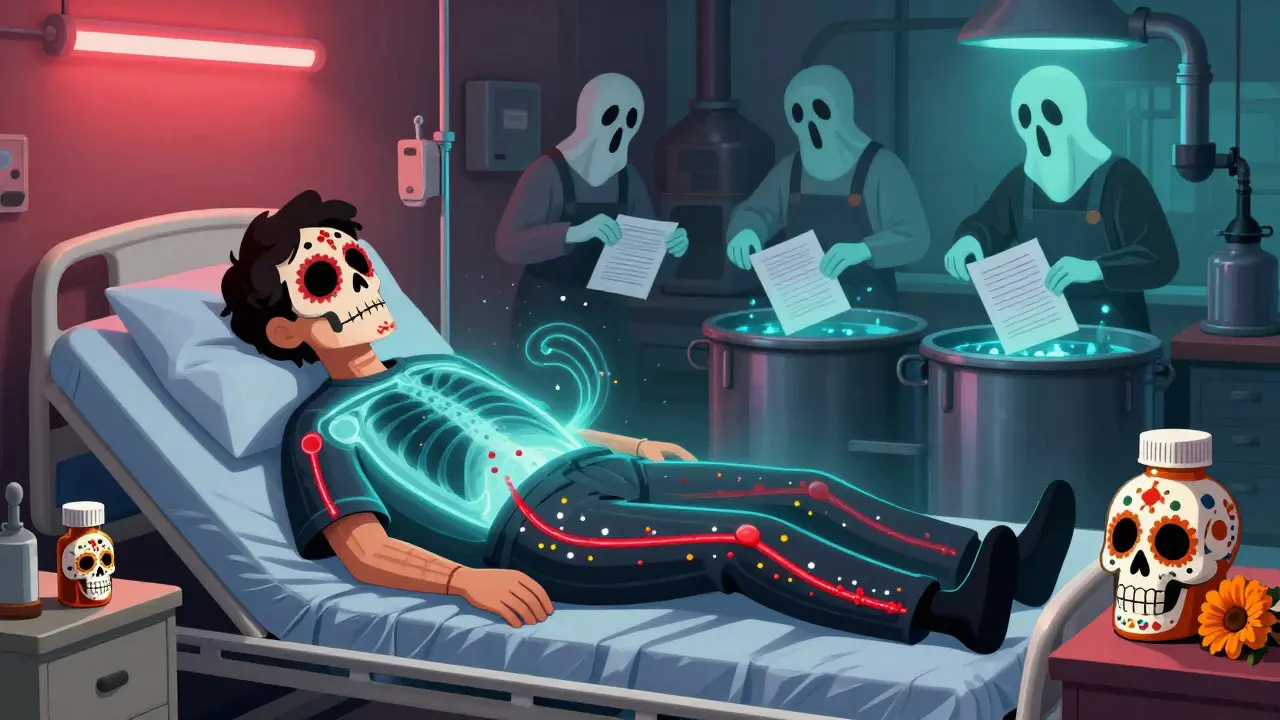
- Destroying quality records-yes, actual shredding and acid-pouring has been documented
What’s Being Done-And What’s Not
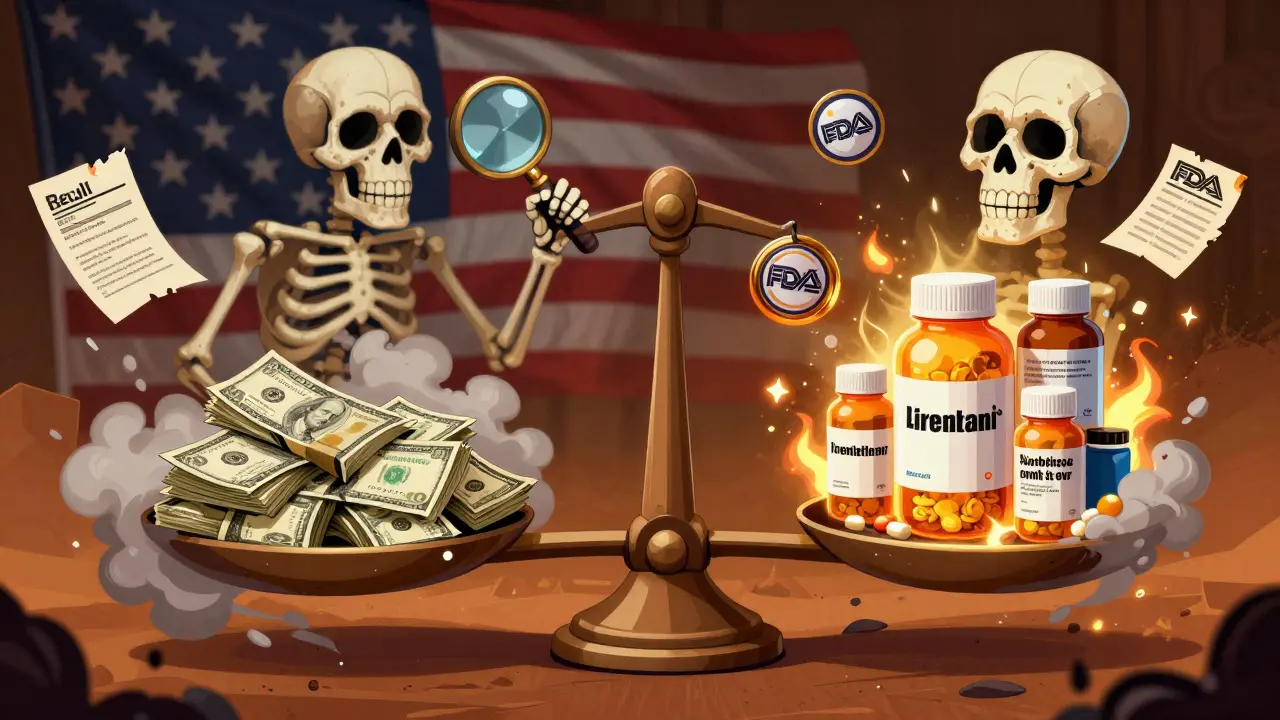
There are some changes on the horizon. The FDA’s 2025 announcement of a “Name Transparency Initiative” means they’ll finally start naming the drugs in inspection reports. That’s long overdue. But implementation is still shaky. New rules under GDUFA III require real-time stability testing for high-risk drugs. That’s good. But only 3% of Indian plants use the kind of continuous manufacturing systems that could cut contamination risks by 78%. Most still rely on batch production-where one bad day can ruin thousands of pills. The Drug Supply Chain Security Act demands full electronic tracking by 2027. Right now, only 62% of U.S. pharmacies can verify if a drug is legitimate. That means a lot of pills are moving through the system with no paper trail. And money? The FDA’s entire 2025 budget for foreign inspections was $78 million. That’s for 28,000 facilities. One inspection per facility every 23 years. That’s not oversight. That’s luck.How to Protect Yourself
You can’t control what happens in a factory in India or China. But you can take steps to reduce your risk.- Check the FDA recall list weekly. Pharmacists who do this spend 22% more time verifying sources. You can too. Go to fda.gov/drugs/drug-safety-and-availability/drug-recalls. Bookmark it.
- Ask for the manufacturer. When you pick up a generic, ask the pharmacist: “Who made this?” If they don’t know, push for the info. Some pharmacies track this internally.
- Watch for changes. If your blood pressure, thyroid, or pain meds suddenly stop working-or make you feel worse-ask your doctor about switching. One Reddit user reported that three different batches of generic levothyroxine failed potency tests. Patients’ TSH levels went wild until they switched brands.
- Don’t assume all generics are equal. Some manufacturers have clean records. Others don’t. If you’re on a critical drug like chemotherapy, heart medication, or insulin, ask your doctor if a brand-name version is covered by your insurance. Sometimes the cost difference is worth the safety.
The Bigger Picture
This isn’t about blaming one company or one country. It’s about a system that prioritizes cost over safety. The U.S. saved $1.7 trillion on drugs over the last decade thanks to generics. That’s huge. But if people are getting sick because of contaminated pills, that savings has a price. The FDA is trying. But they’re outgunned. The industry has $461 billion in global revenue. The inspection budget? Less than a rounding error. Until we demand real transparency, better oversight, and real consequences for bad actors, this cycle will keep repeating. Valsartan. Mucinex. Chemotherapy. Fentanyl. Each case is a warning. And each one could have been prevented.What Comes Next?
The FDA’s 2026-2030 plan includes AI tools to predict contamination risks and blockchain for supply chain tracking. That sounds promising. But experts like Dr. Dinesh Thakur, a former industry insider turned whistleblower, say: “Without meaningful penalties, nothing changes.” The Valsartan lawsuits are now heading to trial. If courts rule that manufacturers knew about NDMA risks as early as 2012-and hid it-then the entire generic industry will feel the shock. Fines won’t be enough. Accountability will be. Until then, stay informed. Ask questions. Don’t accept silence as an answer. Your health depends on it.Are all generic drugs unsafe?
No. Most generic drugs are safe and effective. The issue isn’t generics as a category-it’s specific manufacturers with poor quality control. Many U.S. and European companies produce high-quality generics. The problem is concentrated in certain overseas factories with a history of violations. You can reduce risk by checking FDA recalls and asking about the manufacturer.
How do I know if my generic drug was recalled?
Check the FDA’s official recall page at fda.gov/drugs/drug-safety-and-availability/drug-recalls. You can search by drug name, manufacturer, or date. Many pharmacies also post recall notices in-store or online. If you’re unsure, call your pharmacist-they’re required to track this information. Don’t rely on memory or outdated labels.
Why are contaminated generics still on the market?
Because inspections are rare and penalties are weak. A factory in India might get a warning letter, but unless it’s shut down or fined millions, it can keep producing. The FDA has a backlog of 28,000 foreign facilities needing inspection. With only 1,200 inspections per year, most plants go years without being checked. By the time a problem is found, millions of doses may already be sold.
Can I switch back to brand-name drugs?
Yes-if your insurance covers it. Many insurers still require you to try the generic first. But if you’ve had side effects, treatment failure, or suspect contamination, ask your doctor for a medical exception. Some drugs, like levothyroxine or warfarin, have very narrow therapeutic windows. Even small differences in potency can cause serious issues. In those cases, brand-name may be medically necessary.
What should I do if I think my medication is contaminated?
Stop taking it immediately. Contact your doctor to discuss alternatives. Report the issue to the FDA’s MedWatch program at fda.gov/medwatch. Keep the pill bottle, packaging, and any receipts. If you’ve experienced health problems, save your medical records. These can be critical if a recall or lawsuit follows. Don’t wait-reporting helps protect others too.
Pat Mun
February 12, 2026 AT 17:30So I’ve been taking generic metoprolol for years-no issues, right? But after reading this, I started digging into the bottle. Turns out, mine’s made by a factory in India that got flagged in 2022 for particulate contamination. I didn’t even know that stuff was public info. Now I’m calling my pharmacist tomorrow to ask for the batch number. If they don’t have it, I’m switching brands, even if it costs more. My heart’s not a budget experiment.
Also, I just checked the FDA recall page. There’s a 2024 alert for a generic clonidine from a plant in Chennai. I’ve been on that one since last fall. Yikes. This isn’t fearmongering-it’s basic self-care. We’ve been trained to trust the system, but the system’s got blind spots the size of a cargo ship.
Sophia Nelson
February 13, 2026 AT 07:57This whole thing is ridiculous. We’re paying billions for drugs that are basically Chinese soup with a label. Why do we even let these places make our medicine? The FDA is a joke. They inspect one facility every 23 years? That’s not oversight-that’s a vacation. I say ban all foreign generics. Make everything in the USA. Or at least Canada. I’d rather pay double than risk dying because some factory skipped a cleaning step.
Stacie Willhite
February 14, 2026 AT 22:04I just want to say-I hear you. I’m a nurse, and I’ve seen patients who switched generics and had their TSH levels go haywire. One woman cried because she thought she was ‘failing’ at managing her thyroid, when really, the pill she got that month was underdosed. It’s not her fault. It’s not the doctor’s fault. It’s the system.
But please don’t panic. Most generics are fine. The problem is concentrated. Ask for the manufacturer. Check the FDA site. Keep a log. Knowledge is power, even if the system doesn’t want you to have it.
Jason Pascoe
February 14, 2026 AT 23:14As an Aussie, I’ve always been weirded out by how much the US outsources pharma. Here, we’ve got TGA doing spot checks on imports, and if a batch fails, it gets pulled before it hits shelves. Not perfect, but way more proactive. The FDA’s underfunded, yeah-but I also think we’re all guilty of assuming ‘generic = safe’ without asking questions. Maybe the real fix isn’t more inspections… it’s more curiosity from patients.
Sonja Stoces
February 16, 2026 AT 18:18OMG I knew it. 😈 The government’s in on it. They want us sick so we keep buying meds. Think about it-why else would they allow 80% of our active ingredients to come from China? Coincidence? Nah. It’s a control system. They’re poisoning us slowly so we’re dependent. I stopped taking all generics after my cousin got leukemia from Mucinex. She was 29. Now I only take organic herbal tinctures. 🌿💊 #WakeUp
Annie Joyce
February 16, 2026 AT 23:02Okay, real talk-I used to be the ‘just take the generic’ person. Then my mom got a batch of generic lisinopril that tasted like metal. She got dizzy, her BP spiked, and her doctor finally tested the pills. Turned out, the batch had 67% of the labeled dose. She’s fine now, switched to brand, insurance covered it after a medical exception.
But here’s the thing: pharmacists don’t always know which factory made your pill. Ask them. If they look confused, ask again. And if they say ‘it’s all the same’? That’s not true. It’s like saying all bread is bread-yeast, flour, oven, all matter. Same with pills. Your body notices the difference.
Rob Turner
February 17, 2026 AT 00:00It’s funny how we’ve normalized this. We’ll go to a restaurant and ask where the fish was caught, but we’ll swallow a pill made in a factory we’ve never heard of and never inspected. We’re consumers of convenience, not citizens of health.
Maybe we need a ‘food label’ for drugs-like ‘Made in: Zhejiang, China | Batch: 2024-08-12 | Inspection Status: Not inspected since 2019’.
Just saying. We demand transparency for avocadoes. Why not for our hearts?
Luke Trouten
February 18, 2026 AT 11:36The tragedy here isn’t just the contamination-it’s the erosion of trust. We’re told medicine is science, but what we’re getting is supply chain roulette. The Hatch-Waxman Act was meant to make drugs affordable, not dangerous. There’s a moral line between cost-saving and cost-cutting, and we’ve crossed it.
It’s not about nationalism or blaming China or India. It’s about accountability. If a factory knowingly ships underdosed chemo, they should face criminal charges, not a warning letter. And if the FDA can’t enforce that, maybe we need a new agency-one that answers to patients, not lobbyists.
Gabriella Adams
February 19, 2026 AT 23:27As someone who works in regulatory compliance, I can tell you: the systems are not broken. They’re being starved. The FDA’s foreign inspection budget is less than what Apple spends on logo redesigns. The GDUFA III reforms are real. The blockchain tracking is coming. The transparency initiative is historic.
But change doesn’t happen because we scream. It happens because we demand-politely, persistently, and with data. Write your reps. Ask your insurer to disclose manufacturers. Demand batch transparency. This isn’t a conspiracy. It’s a policy failure. And policy failures can be fixed-with pressure.
Jonathan Noe
February 20, 2026 AT 23:57Look, I get it. You’re scared. But let’s not turn this into a panic. I work in pharma logistics. I’ve seen the inspections. Some plants are clean. Some are trash. The FDA doesn’t publish the names because they’re trying to avoid lawsuits. But if you want to know, go to the 4820 database-search by facility ID. It’s public. You just need to know how to look.
Also, 90% of generics are fine. The problem is the 10%. Don’t throw the baby out with the bathwater. Just be smart. Check. Ask. Verify.
Autumn Frankart
February 21, 2026 AT 23:31They’re doing this on purpose. The CDC and Big Pharma are working together to keep us docile. They know if we get sick enough, we’ll take more pills. That’s why they allow contamination. Why else would they shut down whistleblowers? Why would they redact the drug names? This isn’t negligence. This is genocide by prescription. I’ve been taking my meds since 2018. My hair’s falling out. My joints ache. I’m not imagining it. They’re poisoning us. #DeepStatePharma
Steve DESTIVELLE
February 22, 2026 AT 02:42When the West outsources its medicine to the East it is not a matter of economics it is a matter of metaphysics we have surrendered our bodies to the logic of capital and now we are surprised when the body betrays us
the pill is not a thing it is a symbol of our alienation from the sacred act of healing
we do not trust our own hands anymore we trust a factory in Zhejiang
and when the factory fails we weep not for the medicine but for the illusion of control
Alyssa Williams
February 23, 2026 AT 07:41I just found out my pharmacy has a list of approved manufacturers for generics. I asked my pharmacist and she pulled up a spreadsheet. Turns out, my levothyroxine is from a plant in Maryland. I switched to that one and my TSH is stable again. So yeah-it’s not all bad. But you have to dig. Don’t just take what’s handed to you. Ask. Push. Demand. You’re worth it.
Also-thank you for writing this. I’m sharing it with my support group.
Brad Ralph
February 24, 2026 AT 22:22So we’re supposed to be grateful that we can get a $4 pill… but if it kills us, is it really a deal? 🤔
Suzette Smith
February 25, 2026 AT 03:25I read this and thought-wait, what if my blood thinner is one of those? I’ve been on warfarin for 10 years. I never thought to check the manufacturer. I’m calling my doctor tomorrow. Maybe I’m overreacting… but maybe not.