Getting prescription generics through an app isn’t science fiction anymore-it’s what millions of people in the U.S. are doing right now. No more driving to the pharmacy, waiting in line, or paying full price for drugs that cost pennies to make. With just a few taps, you can get treated for high blood pressure, allergies, acne, or erectile dysfunction-and have the generic version delivered to your door for under $5 a month. But not all apps are created equal. Some are slick, fast, and reliable. Others leave you stuck in a bot-filled support loop with no human in sight. Here’s what actually works in 2026.
How App-Based Prescribing Actually Works
You start by downloading the app. That’s it. No clinic visit. No paperwork. You answer a series of questions about your health-things like your age, medications you’re on, allergies, and symptoms. Some apps use video calls with a doctor. Others skip the video and let you type everything out. Within minutes, you get a decision: approved, denied, or needs more info.
If approved, the prescription goes straight to a partnered pharmacy. Most use mail-order pharmacies that are licensed and regulated, not shady online sellers. The drugs are real generics-same active ingredients as the brand-name versions, just cheaper. You’ll get tracking updates like a package from Amazon. Delivery? Usually 1-3 days. Same-day delivery? Available in major cities if you pay extra.
The whole process takes less than 20 minutes for most people. No waiting weeks for an appointment. No insurance hassles if you’re paying out-of-pocket. And yes, it’s legal. All platforms use licensed U.S. physicians and comply with HIPAA. Your data is encrypted. Biometric login (Face ID or fingerprint) is standard. You’re not giving your health info to some random startup.
Who’s Leading the Pack in 2026?
There are four big names dominating this space-and they all do things differently.
- Amazon RxPass: For $5 a month, you get unlimited access to over 150 generic medications. That’s it. No consultation fee. No hidden charges. If it’s on the list, you get it. Popular for high-blood pressure meds (lisinopril), cholesterol (atorvastatin), and diabetes (metformin). But if you need something outside that list? You’re out of luck. Amazon’s strength is simplicity. Weakness? Limited options. It’s perfect if you take one or two stable generics.
- Ro: Ro covers over 1,200 medications across 15 conditions-from thyroid issues to depression to urinary tract infections. Their doctors are board-certified and available in all 50 states. You pay $15/month for access, then the cost of the medication. Their app integrates with Apple Health, so your doctor can see your full history. If you’re on multiple meds or have a complex condition, Ro is the most thorough option.
- Hims & Hers: This one started with hair loss and ED meds-and still dominates those categories. They’re great if you want tadalafil, finasteride, or minoxidil. Their branding is bold, their app is polished, and their customer service is decent. But they’re not the place to go for antibiotics or asthma inhalers. They specialize in lifestyle drugs, not chronic care.
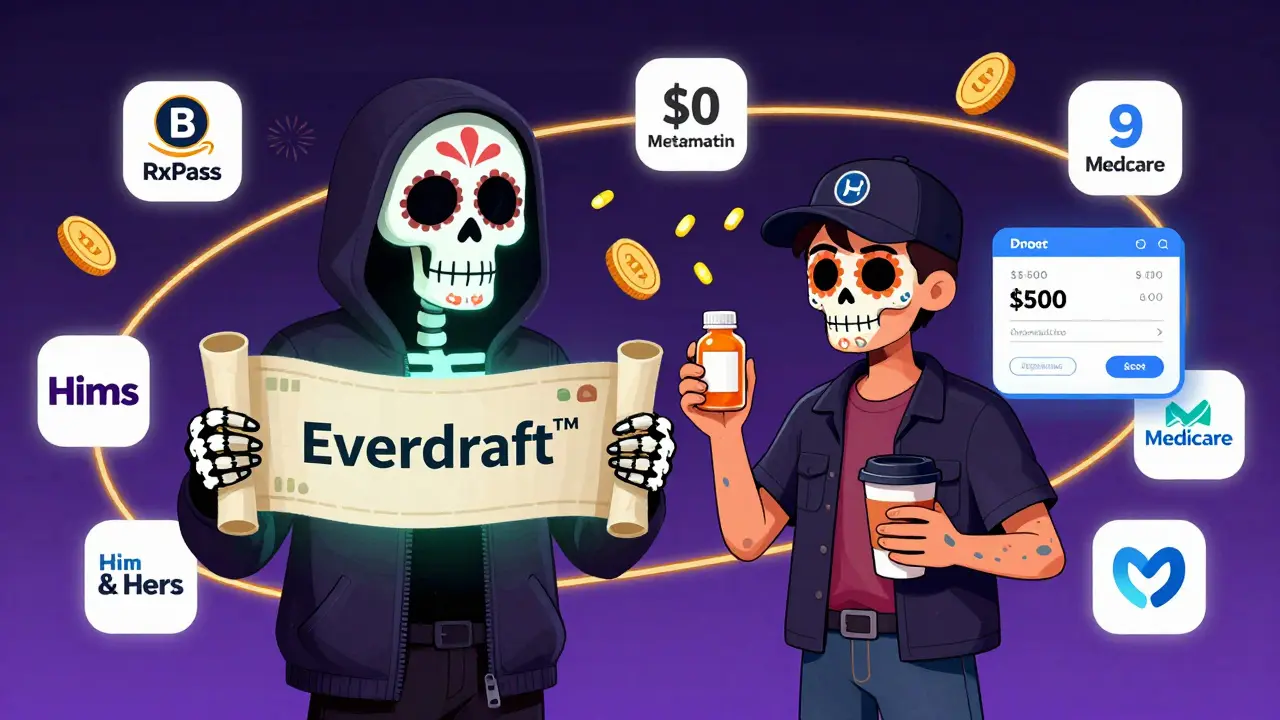
- Beem Health: Beem is different. It’s not just a pharmacy app-it’s a financial health tool. You get access to generics at low prices, but you can also get a cash advance up to $1,000 through their Everdraft™ feature if your prescription is due and you’re short on cash. They’ve got the highest Trustpilot rating (4.2/5) because they understand people struggle to pay for meds. Their user base is growing fast, especially among younger adults and gig workers.
What You’ll Actually Pay
Let’s say you need metformin for prediabetes. At your local CVS, it costs $45 for a 30-day supply. Through Amazon RxPass? $0. It’s included in the $5 monthly fee. Through Ro? You pay $15/month + $10 for the meds = $25 total. Hims & Hers? $40 for the med, no monthly fee. Beem Health? $12 for the med, and if you’re broke, you can get a $500 advance to cover it.
For atorvastatin (cholesterol):
- Pharmacy: $42
- Amazon RxPass: $0
- Ro: $12
- Hims & Hers: $35
- Beem Health: $10
For albuterol (asthma inhaler):
- Pharmacy: $60
- Amazon RxPass: Not covered
- Ro: $28
- Hims & Hers: Not covered
- Beem Health: $25
Amazon wins on price-but only if your meds are on their list. Ro wins on breadth. Beem wins on flexibility. Hims & Hers wins on branding and niche conditions.
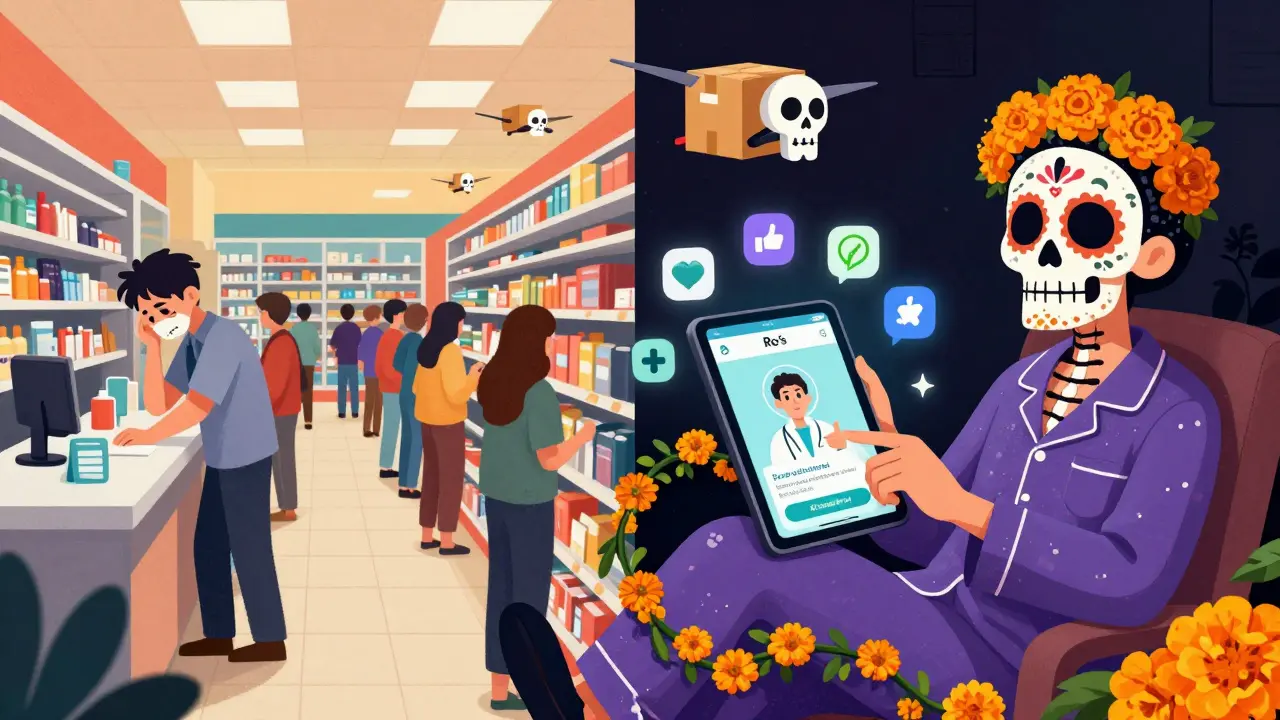
The Catch: What These Apps Don’t Tell You
These platforms aren’t magic. They have limits.
First, not all prescriptions get approved. About 25-35% of first-time requests are denied-not because you’re lying, but because the doctor doesn’t think it’s safe or necessary. For example, if you ask for Adderall without a prior diagnosis, you’ll get rejected. Same with controlled substances. You can’t get opioids, benzodiazepines, or stimulants through these apps. That’s by design.
Second, insurance doesn’t always work. About 40% of users who try to use insurance get an error. Most platforms don’t integrate with insurance networks yet. You’re better off paying out-of-pocket unless your employer offers it as a benefit.
Third, you might get cut off from your regular doctor. If you’re using multiple apps or switching between telehealth services, your primary care physician might not know what you’re taking. That’s dangerous. One case in the Journal of the American Pharmacists Association showed a patient on five meds from three different apps ended up with a life-threatening interaction because no one had the full picture.
And support? It’s hit or miss. Amazon has 24/7 chat with fast responses-but the reps can’t answer medical questions. Ro has pharmacists on call, but you might wait 45 minutes. Hims & Hers has decent chat, but if your prescription gets denied, you’re stuck in a loop. Beem Health has the best reviews for support, likely because they’ve built their entire model around helping people who can’t afford meds.
Who Should Use These Apps?
Perfect for:
- People taking one or two stable generics (blood pressure, cholesterol, diabetes)
- Those who hate going to the pharmacy or feel embarrassed about certain conditions (ED, acne, hair loss)
- People without insurance or with high-deductible plans
- Busy professionals, parents, or gig workers who don’t have time for doctor visits
Not for:
- People with complex conditions (multiple chronic diseases, mental health disorders requiring close monitoring)
- Those who need frequent lab tests or dosage adjustments
- Seniors who aren’t comfortable with apps or prefer face-to-face care
- Anyone needing controlled substances or injectables
If you’re young, healthy, and on a few simple meds? These apps save you time and money. If you’re older, on multiple drugs, or have a history of hospitalizations? Stick with your doctor and pharmacy. Don’t trade safety for convenience.
What’s Next in 2026?
Amazon is expanding RxPass to 300 medications by March 2026. Ro is syncing with Apple Health to fix care fragmentation. Beem Health is adding Medicare Part D integration. And more employers are adding these apps as part of health benefits.
The future isn’t about replacing doctors. It’s about making basic care faster, cheaper, and less stressful. The real winners will be the platforms that connect with your regular doctor, not replace them.
Right now, the best strategy? Use Amazon RxPass for your staples. Use Ro if you need more options. Use Beem if you need help paying. And always tell your primary care provider what you’re taking-even if it’s just a $5 generic.
Frequently Asked Questions
Are app-based prescriptions legal?
Yes. All major platforms use licensed U.S. physicians and partner with accredited pharmacies. Prescriptions are sent electronically to pharmacies that follow FDA and state regulations. These services comply with HIPAA for privacy and are legally allowed to prescribe generics for common conditions like hypertension, allergies, and acne.
Can I use my insurance with these apps?
Most don’t accept insurance yet. About 40% of users who try to use it run into issues. The apps are designed for out-of-pocket payments, which are often cheaper than insurance copays. Some employers now offer them as a benefit, so check with your HR department. If you have Medicare or Medicaid, avoid these apps for now-coverage is limited.
Why do some prescriptions get denied?
Doctors on these platforms are trained to avoid overprescribing. If your symptoms don’t match the condition, if you’re already on a similar drug, or if there’s a safety risk (like a drug interaction), they’ll deny it. This isn’t a rejection of you-it’s protection. About 25-35% of first requests are denied. You can usually appeal by providing more info or scheduling a follow-up.
Are generic medications from these apps safe?
Yes. Generics must meet the same FDA standards as brand-name drugs. They contain the same active ingredient, dosage, and strength. The only differences are in inactive ingredients (like fillers) and packaging. The pharmacies these apps use are licensed and regularly audited. Many are the same ones that supply big chains like CVS or Walgreens.
Can I get controlled substances like Adderall or Xanax?
No. None of the major platforms prescribe controlled substances. This is a legal and safety restriction. Even if you’ve been on them before, you’ll need an in-person doctor for refills. This prevents misuse and ensures proper monitoring.
What if I need help after hours?
Amazon RxPass offers 24/7 chat support with quick responses, but reps can’t answer medical questions. Ro offers access to pharmacists with longer wait times (about 45 minutes). Beem Health has the best support overall, with live agents who can help with billing, refills, or medical concerns. If you’re in crisis, always call 911 or go to an ER-these apps aren’t emergency services.
Do these apps work for seniors?
Only if they’re tech-savvy. Only 18% of seniors use these services, compared to 52% of people aged 25-44. Many older adults prefer face-to-face care, physical pill bottles, or in-person counseling. If a senior is using one, it’s best to have a family member help set it up and monitor refills. These apps are not ideal for those on complex regimens or with cognitive decline.
Nadia Watson
January 19, 2026 AT 14:47It's interesting how these apps are becoming so normalized, but I worry about the lack of continuity in care. I've seen patients switch between platforms and end up with conflicting prescriptions. No one's keeping the full picture, and that's a real risk.
Courtney Carra
January 20, 2026 AT 12:17Imagine if your blood pressure med came with a Spotify playlist 🎧 and a mindfulness prompt. That’s the future. Not just convenience - *vibes*. Ro’s Apple Health sync is basically therapy in pill form. We’re not just treating disease anymore, we’re curating wellness experiences.
thomas wall
January 21, 2026 AT 16:13This is the logical endpoint of a society that has abandoned responsibility in favor of convenience. We have turned medical care into a subscription service, as if health were a Netflix account. Where is the dignity in this? Where is the human connection? The erosion of the doctor-patient relationship is not innovation - it is negligence dressed in UX.
Paul Barnes
January 21, 2026 AT 16:27Amazon RxPass doesn’t cover albuterol? That’s not a feature - it’s a liability. Asthma is an emergency waiting to happen. If your app can’t handle a rescue inhaler, it shouldn’t be allowed near a prescription system at all.
pragya mishra
January 22, 2026 AT 02:21Why are you all pretending this isn’t just corporate greed wrapped in a wellness app? These companies make money when you stay sick. They want you on metformin forever, not cured. They don’t care if you’re healthy - they care if you’re subscribed.
sagar sanadi
January 23, 2026 AT 00:15Yeah right. 'Licensed US physicians.' What's next? A TikTok doctor prescribing insulin? These apps are just bots with a fake MD behind a curtain. The FDA doesn't even check these people. I bet half of them are in India getting paid $2/hour to click 'approve.'
kumar kc
January 23, 2026 AT 20:21These apps are dangerous. People die from drug interactions. You don't just order meds like socks.
Art Gar
January 25, 2026 AT 10:55The normalization of telehealth prescriptions is a symptom of systemic healthcare failure. When convenience replaces clinical judgment, we are not advancing medicine - we are commodifying it. This model will collapse under its own weight when the first preventable death occurs.
Edith Brederode
January 27, 2026 AT 08:50I’ve been using Beem for my metformin and it’s been a game-changer 💖 My rent was late last month and I used the cash advance to cover it - no shame. They treat you like a person, not a case number. Thank you for writing this - I needed to see someone say it out loud.
clifford hoang
January 27, 2026 AT 13:05Let’s be real - this is all a psyop. Big Pharma owns these apps. They’re not saving you money - they’re locking you into lifelong dependency on generics they control. The ‘$0 metformin’? That’s a trap. They’ll raise the RxPass fee to $20 next year and you’ll still pay more than if you’d just gone to CVS. They want you addicted to the illusion of affordability.
And don’t get me started on Apple Health syncing. Your data is being sold to insurers who’ll raise your premiums because you ‘took too many meds.’ This isn’t innovation - it’s surveillance capitalism with a stethoscope.
Arlene Mathison
January 28, 2026 AT 19:39If you’re young and healthy, this is the future - and it’s awesome. I got my allergy meds delivered in 2 days for $3. No waiting. No awkward small talk with the pharmacist. I wish my mom’s pharmacy had this. Stop acting like it’s a dystopia - it’s just better.
And yes, I told my doctor. She was surprised I didn’t just go to Urgent Care. We laughed. That’s the point - it’s supposed to be easy.
Carolyn Rose Meszaros
January 29, 2026 AT 09:30Beem’s Everdraft feature saved me last month 😭 I was between gigs and couldn’t afford my thyroid med. They gave me $500 and I paid it back in two weeks. No judgment. No credit check. Just… help. Why can’t all healthcare do this?
Also, Hims & Hers is the only app that made me feel less embarrassed about asking for ED meds. No shame. Just a clean app and a box at my door. Thank you for normalizing this.
Greg Robertson
January 29, 2026 AT 19:38My dad’s on 7 meds. He uses Amazon RxPass for two of them - the ones he’s been on for 10 years. He still goes to his doctor for everything else. This isn’t about replacing care - it’s about streamlining the boring stuff. Why should he drive 45 minutes for a $10 pill?
Renee Stringer
January 31, 2026 AT 07:04These apps are a slippery slope. Once you allow prescriptions without physical exams, what’s next? AI diagnosing cancer from selfies? We’re eroding the foundation of medical ethics for the sake of efficiency. This isn’t progress - it’s a quiet surrender.
Crystal August
February 2, 2026 AT 05:21Amazon RxPass is a joke. Only 150 meds? That’s not a service - it’s a loyalty program. And Ro’s $15/month fee? That’s just another subscription tax. If you’re not rich, you’re still getting screwed. This isn’t healthcare access - it’s premium access for the algorithmically privileged.