Walk into any pharmacy in the United States today, and you’ll likely see a sign advertising "$4 generics" or even "$2 prescriptions." It feels like a simple deal: pay a low price, get your medication. But behind that counter, a complex web of laws, contracts, and government programs is quietly determining how much the pharmacy actually gets paid for that pill-and whether they make a profit or take a loss.
The system isn't broken by accident; it was built this way to save money. Federal and state laws drive pharmacies to substitute brand-name drugs with cheaper generics. While this saves patients billions, it creates a tricky financial reality for pharmacists. Understanding these reimbursement models explains why some pharmacies close, why prices vary wildly between states, and how new laws are trying to fix the balance.
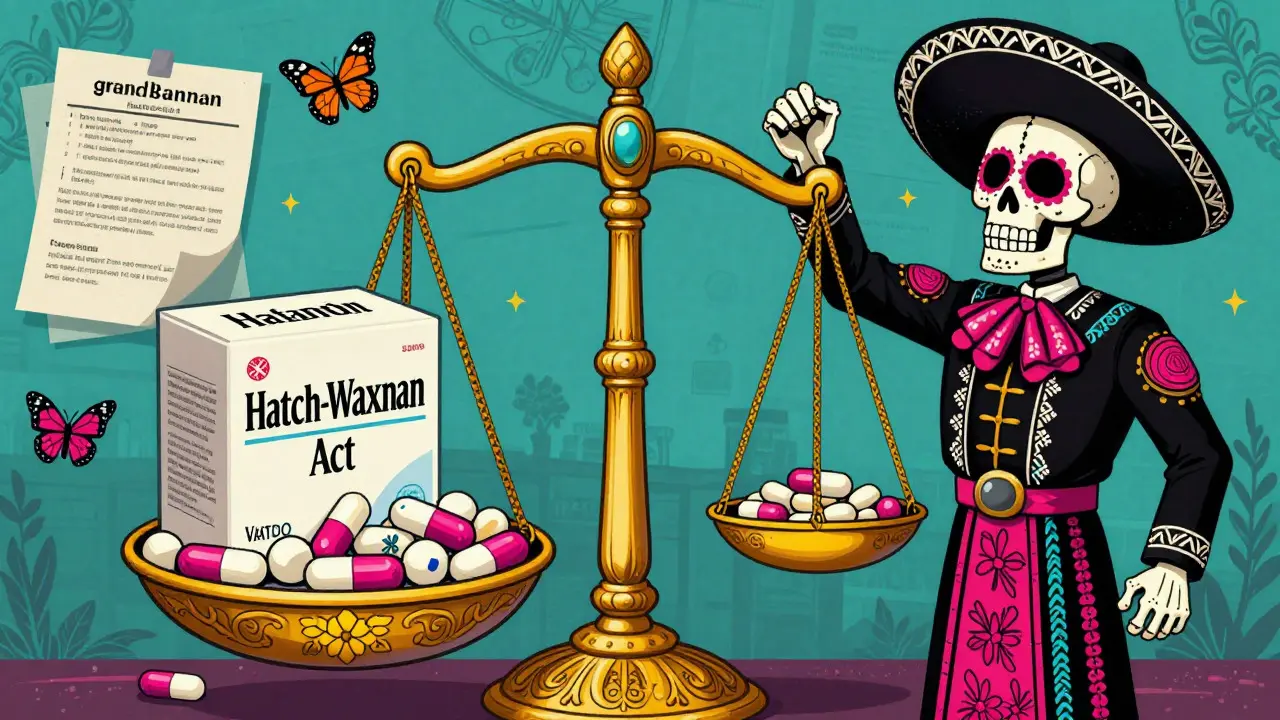
The Foundation: The Hatch-Waxman Act
To understand why we pay what we pay for generic drugs, we have to look back at 1984. Before this year, bringing a new drug to market took years of expensive trials, but once a patent expired, there was no fast track for competitors to make cheaper versions. This changed with the Hatch-Waxman Act, officially known as the Drug Price Competition and Patent Term Restoration Act.
This law created the Abbreviated New Drug Application (ANDA) pathway. Instead of running full clinical trials, generic manufacturers only had to prove their drug was bioequivalent to the brand-name version. In exchange, brand-name companies got slightly extended patent protection. This "grand bargain" led to an explosion in generic availability. Today, generics represent about 90% of all prescriptions filled in the US, yet they account for only about 23% of total drug spending. That gap is where the savings live-but also where the reimbursement conflicts begin.
How Pharmacies Get Paid: AWP vs. MAC Pricing
When a pharmacy dispenses a medication, they don't just add a markup to the cost. They rely on reimbursement formulas set by insurance plans and government programs. For brand-name drugs, insurers often use Average Wholesale Price (AWP) minus a percentage (often 20-25%) as an estimate of what the pharmacy paid. This method is flawed because AWP is largely a theoretical benchmark that rarely reflects actual acquisition costs, but it has been the standard for decades.
For generic drugs, however, many insurers-especially Medicaid and commercial plans-use Maximum Allowable Cost (MAC) pricing. Under MAC programs, the insurer sets a specific maximum amount they will reimburse for a generic drug per unit (tablet or capsule). If the pharmacy buys the drug for less than the MAC rate, they keep the difference. If they buy it for more, they absorb the loss.
Here is the problem: MAC rates are often set based on the lowest possible wholesale price available anywhere in the country. An independent pharmacy in a rural area might not have access to those same bulk discounts as a large chain. As a result, they might be reimbursed $0.50 for a pill they bought for $0.60. This negative margin forces them to either eat the cost or risk losing network status. According to the National Community Pharmacists Association, average generic drug reimbursement margins for independent pharmacies dropped from 3.2% in 2018 to just 1.4% in 2023.
| Model | How It Works | Impact on Pharmacy | Common Use Case |
|---|---|---|---|
| AWP-Based | Reimburses based on Average Wholesale Price minus a discount percentage. | Predictable but often overestimates cost for cheap generics. | Brand-name drugs, some older generic contracts. |
| MAC Pricing | Reimburses a fixed maximum cost per unit, reflecting actual purchase cost. | High risk if acquisition cost exceeds MAC; squeezes margins. | Medicaid, Commercial Insurance for high-volume generics. |
| Fixed Copay ($2/$4 List) | Standardized low out-of-pocket cost for patient; pharmacy gets negotiated fee. | Dependent on dispensing fees covering acquisition + overhead. | Medicare Part D (proposed), Retail Cash Programs. |
The Role of PBMs and Spread Pricing
Sitting between the insurance company and the pharmacy are Pharmacy Benefit Managers (PBMs). These middlemen negotiate rebates with drug manufacturers and determine which pharmacies are in the network. The three largest PBMs-CVS Caremark, Express Scripts (Cigna), and OptumRX (UnitedHealth Group)-process over 80% of all prescription claims in the US.
One controversial practice is Spread Pricing. Here’s how it works: The PBM tells the insurance plan that a generic drug costs $10. The insurance pays the PBM $10. The PBM then pays the pharmacy only $7. The PBM keeps the $3 difference as profit. While this boosts PBM revenue, it obscures the true cost of care and can lead to situations where patients pay higher copays than necessary because the underlying reimbursement data is inflated.
Before 2018, many PBM contracts included "gag clauses" that legally prevented pharmacists from telling patients if their cash price would be lower than their insurance copay. Although federal and state laws have banned most of these clauses, the legacy of opaque pricing remains. Patients often assume their insurance is getting them the best deal, when in reality, the PBM’s spread may be driving up the effective cost.
Medicare Part D and the Generic Model
Medicare Part D covers outpatient prescription drugs for roughly 50.5 million beneficiaries. Unlike Medicaid, which is jointly funded by states and the federal government, Part D is administered through private insurance plans regulated by the Centers for Medicare & Medicaid Services (CMS).
Part D plans use formularies-lists of covered drugs organized into tiers. Generics are almost always placed on the lowest tier, meaning patients pay the least out-of-pocket. However, the reimbursement to the pharmacy is still subject to negotiation and MAC-like constraints. CMS requires that Part D formularies be reviewed by a Pharmacy and Therapeutics (P&T) committee, ensuring that coverage decisions are clinically sound rather than purely financial.
In response to rising costs and adherence issues, CMS introduced the Medicare $2 Drug List Model. This voluntary model tests whether offering a standardized $2 copay for low-cost, clinically important generic drugs improves health outcomes. To qualify, drugs must meet criteria such as high frequency of use among Medicare patients and clear clinical guidelines. This approach mirrors successful retail models seen in grocery chains and large pharmacies, aiming to simplify cost-sharing for seniors while encouraging the use of effective, affordable treatments.
State Laws and Substitution Rules
Federal law sets the baseline, but states have significant power to shape how generics are reimbursed and substituted. Almost every state has Automatic Substitution Laws. These laws allow-or require-pharmacists to dispense a generic equivalent unless the prescriber explicitly writes "Dispense as Written" (DAW) on the prescription.
These laws are driven by cost-containment goals. For example, Medicaid programs use Preferred Drug Lists (PDLs) that prioritize generics. If a doctor prescribes a brand-name drug when a generic exists, the pharmacist must often seek prior authorization from the insurer before filling it. This adds administrative burden but ensures savings. In 2022, 28% of Medicare Part D plans required prior authorization for at least one generic drug, highlighting how tightly controlled access has become.
States are also stepping in to regulate PBMs. As of early 2023, 44 states had enacted laws addressing pharmacy reimbursement practices, transparency in spread pricing, and appeals processes. Some states mandate that PBMs disclose the actual acquisition cost of drugs to pharmacies, helping independents fight unfair MAC rates. These state-level interventions are critical because they provide a check on the immense power held by national PBM conglomerates.
Challenges for Independent Pharmacies
The current reimbursement landscape is particularly harsh for community-owned pharmacies. Large chains benefit from economies of scale, negotiating better wholesale prices and absorbing lower margins more easily. Independents, however, face a triple threat:
- Negative Margins: When MAC prices fall below acquisition costs, pharmacies lose money on every script filled.
- Administrative Burden: Handling prior authorizations, formulary changes, and PBM disputes takes time away from patient care. Physicians spend an average of 13 hours a week on prior auths alone, much of which involves generic-to-brand switches.
- Network Exclusion: PBMs may steer patients toward affiliated pharmacies (like those owned by CVS or Walgreens), reducing volume for independents.
This pressure has led to a decline in independent pharmacy numbers over the past decade. Advocacy groups argue that without fair reimbursement models, local healthcare infrastructure will continue to erode, leaving rural and underserved communities with fewer options for medication access and counseling.
Future Trends: Value-Based Care and Transparency
The industry is shifting. The Inflation Reduction Act of 2022 capped out-of-pocket costs for Medicare Part D beneficiaries at $2,000 annually starting in 2025. This cap encourages plans to promote generics aggressively to keep overall costs down. Additionally, the Federal Trade Commission is scrutinizing "pay-for-delay" settlements, where brand manufacturers pay generic makers to delay market entry, keeping prices artificially high.
Looking ahead, value-based payment models may replace traditional fee-for-service reimbursement. Instead of paying per pill, insurers might pay pharmacies for achieving health outcomes, such as maintaining blood pressure control or improving diabetes management. This shift could reward pharmacists for their clinical expertise rather than punishing them for low-margin generic sales. However, experts predict this transition will take 5-7 years to fully materialize.
Until then, the tension between cost containment and pharmacy sustainability remains. Laws like Hatch-Waxman succeeded in making drugs affordable, but the reimbursement mechanisms evolved in ways that sometimes penalize the very professionals delivering those savings. As states tighten regulations and CMS tests new models like the $2 list, the goal is clear: ensure patients get cheap, effective meds without bankrupting the pharmacies that serve them.
What is the Hatch-Waxman Act and how does it affect generic payments?
The Hatch-Waxman Act of 1984 created the ANDA pathway, allowing generic manufacturers to enter the market quickly after patents expire. This increased competition drove down drug prices. However, it also established the framework for rebate systems and reimbursement models that currently squeeze pharmacy margins, as insurers leverage generic availability to demand lower costs.
Why do pharmacies lose money on generic drugs?
Pharmacies often lose money due to Maximum Allowable Cost (MAC) pricing. Insurers set a maximum reimbursement rate based on the lowest wholesale price available nationally. If a local pharmacy cannot buy the drug at that exact price, they are reimbursed less than they paid, resulting in a negative margin. This is exacerbated by spread pricing from PBMs.
What is the Medicare $2 Drug List Model?
It is a voluntary initiative by CMS to test a simplified cost-sharing structure where Medicare Part D beneficiaries pay a flat $2 copay for a selected list of low-cost, clinically important generic drugs. The goal is to improve medication adherence and satisfaction by removing variable cost barriers.
How do PBMs influence generic drug reimbursement?
PBMs negotiate rebates with manufacturers and set reimbursement rates for pharmacies. They often use spread pricing, keeping the difference between what the insurer pays and what the pharmacy receives. Their dominance allows them to steer patients to preferred pharmacies and enforce strict MAC pricing, significantly impacting pharmacy profitability.
Do state laws affect how much pharmacies get paid for generics?
Yes. State laws govern automatic substitution rules, requiring pharmacists to swap brands for generics unless specified otherwise. Additionally, many states have passed legislation to increase transparency in PBM practices, ban gag clauses, and mandate fairer reimbursement appeals processes for independent pharmacies.