Rare Pediatric Side Effect Calculator
Estimate Patient Needs for Rare Side Effect Detection
1 in
Enter the ratio for how rare the side effect is (e.g., 5000 for 1 in 5000)
1 hospital
Results
Enter values to see how collaborative networks detect rare side effects
When a child is given a new medication or treatment, doctors don’t always know what might go wrong. Side effects in kids aren’t just smaller versions of adult reactions-they’re different. Sometimes rare, sometimes delayed, sometimes hidden until years later. Traditional clinical trials barely scratch the surface because children aren’t just tiny adults. And because they’re a smaller, more vulnerable group, pharmaceutical companies and researchers have historically left them out of safety studies. That’s where pediatric safety networks come in.
Why Pediatric Safety Networks Exist
Imagine trying to find a needle in a haystack-but the needle changes shape every few days, and you only have one hand to search with. That’s what tracking side effects in children used to be. A single hospital might see a handful of kids with an unusual reaction to a drug. But without sharing that data, no one else knows. Maybe it’s a pattern. Maybe it’s a warning. Without collaboration, it’s just noise. Pediatric safety networks solve this by linking hospitals, researchers, and public health agencies into one coordinated system. They don’t just collect data-they actively test changes in real time, watch for unintended consequences, and adjust practices based on what they learn. These networks were built because we couldn’t afford to wait for a child to be harmed before we understood the risk. The most prominent example is the Collaborative Pediatric Critical Care Research Network (CPCCRN), launched by the Eunice Kennedy Shriver National Institute of Child Health and Human Development (NICHD) in 2014. It brought together seven major children’s hospitals across the U.S., each contributing real patient data from intensive care units. Their goal? To study how treatments for critically ill kids actually performed-and what hidden dangers they carried.How These Networks Operate
These aren’t loose alliances. They’re tightly structured systems with clear roles. At the center is a Data Coordinating Center (DCC), which acts like the nervous system. It designs the forms doctors use to record side effects, calculates how many kids are needed to spot a rare reaction, and runs the statistical analyses that turn scattered reports into clear signals. Each hospital in the network follows the same protocols. If a child develops unexplained vomiting after a new antibiotic, that’s not just logged in their chart-it’s sent to the DCC in real time, coded the same way as every other case across the country. That’s how you catch patterns. One hospital might see two cases. Ten hospitals might see 20. That’s no longer coincidence-it’s evidence. The network also has a Data and Safety Monitoring Board (DSMB), a group of independent experts who review all safety data monthly. If a pattern emerges-say, three kids in different states developed liver inflammation after the same treatment-the DSMB can pause the trial, investigate, and warn other doctors before more children are exposed. This structure doesn’t just prevent harm. It speeds up learning. In traditional trials, it can take years to gather enough data to confirm a side effect. In a safety network, it can take months.Another Side of the Coin: Injury Prevention Networks
Not all pediatric safety networks focus on drugs. The Child Safety Collaborative Innovation and Improvement Network (CoIIN), funded by the Health Resources and Services Administration (HRSA), tackles injuries-things like car seat misuse, falls, drowning, and even child abuse. CoIIN worked with 16 states and 34 local teams, each testing different safety strategies. One team noticed that their program to prevent sexual violence among teens wasn’t working as expected. After tracking data in real time, they found that kids weren’t engaging with the materials. So they redesigned the sessions, added peer-led discussions, and saw participation jump. That’s the power of feedback loops. Unlike CPCCRN, which monitored biological side effects, CoIIN tracked behavioral and environmental outcomes. But the principle was the same: collect data, analyze it quickly, and adapt before more kids get hurt.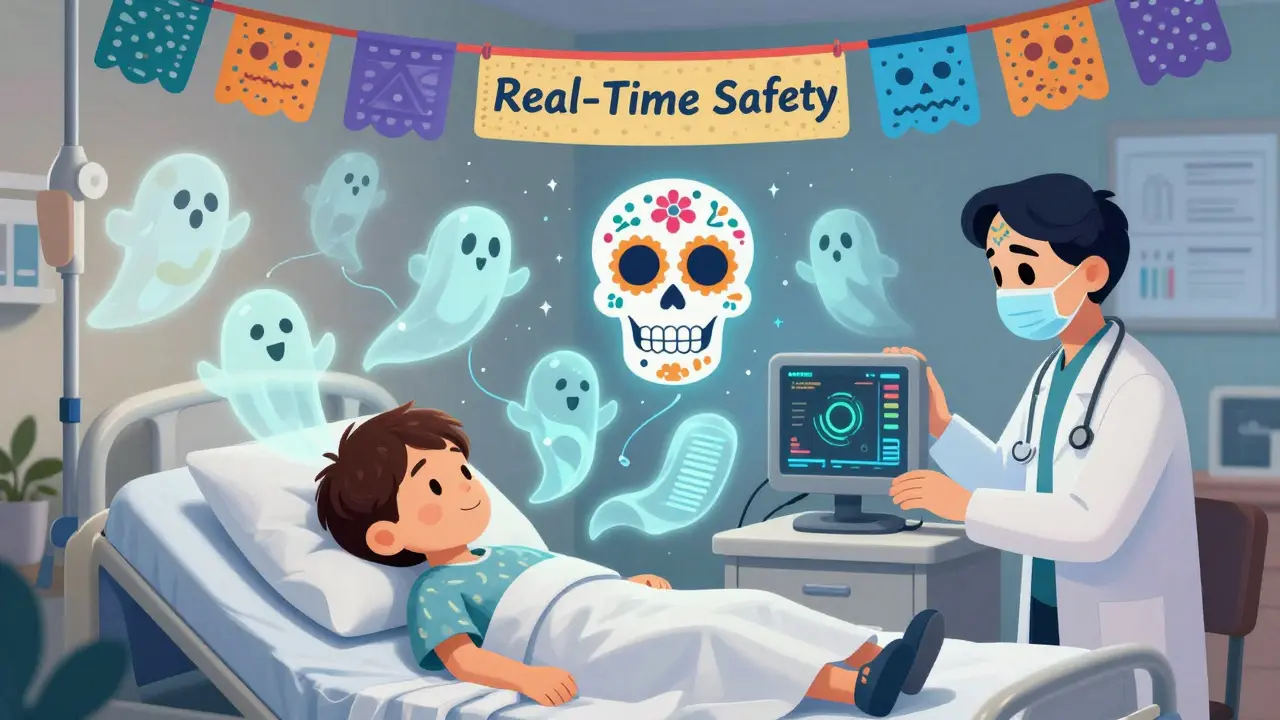
Why This Approach Works Better Than Traditional Trials
Randomized controlled trials-the gold standard in medicine-don’t work well for kids. For ethical reasons, you can’t randomly give some children a risky drug and others a placebo. Also, many pediatric conditions are too rare to study in single hospitals. A side effect that happens in 1 in 5,000 kids? A single hospital might never see it. Pediatric safety networks bypass these problems. They study treatments as they’re used in real life. They don’t need placebo groups. They don’t wait for perfect conditions. They use what’s already happening in clinics and hospitals across the country. A 2013 study in Academic Pediatrics called these networks “the only practical way” to generate safety data for children. They’re especially powerful for detecting rare, delayed, or unexpected reactions-exactly the kind that slip through traditional trials. One clinical site leader put it simply: “The centralized sample size calculations prevented underpowered safety analyses in several protocols.” In plain terms: without the network, they’d have missed things.Challenges and Lessons Learned
None of this is easy. Hospitals have to change how they document care. Doctors have to spend extra time entering data. States have to coordinate across agencies. CoIIN teams found that trying to tackle too many safety issues at once led to burnout. In their second phase, they cut back to focus on just two or three priorities-and saw better results. There were also tensions. One hospital might want to study a new ventilator setting. Another might care more about infection control. The network’s steering committee had to vote on priorities. It wasn’t always smooth. But having NICHD or HRSA as neutral overseers kept things on track. The biggest hurdle? Data systems. Every hospital had its own electronic records. Making them talk to each other was a technical nightmare. HIPAA compliance, encryption, standardized terminology-it took years to get right. But once they did, the data became powerful.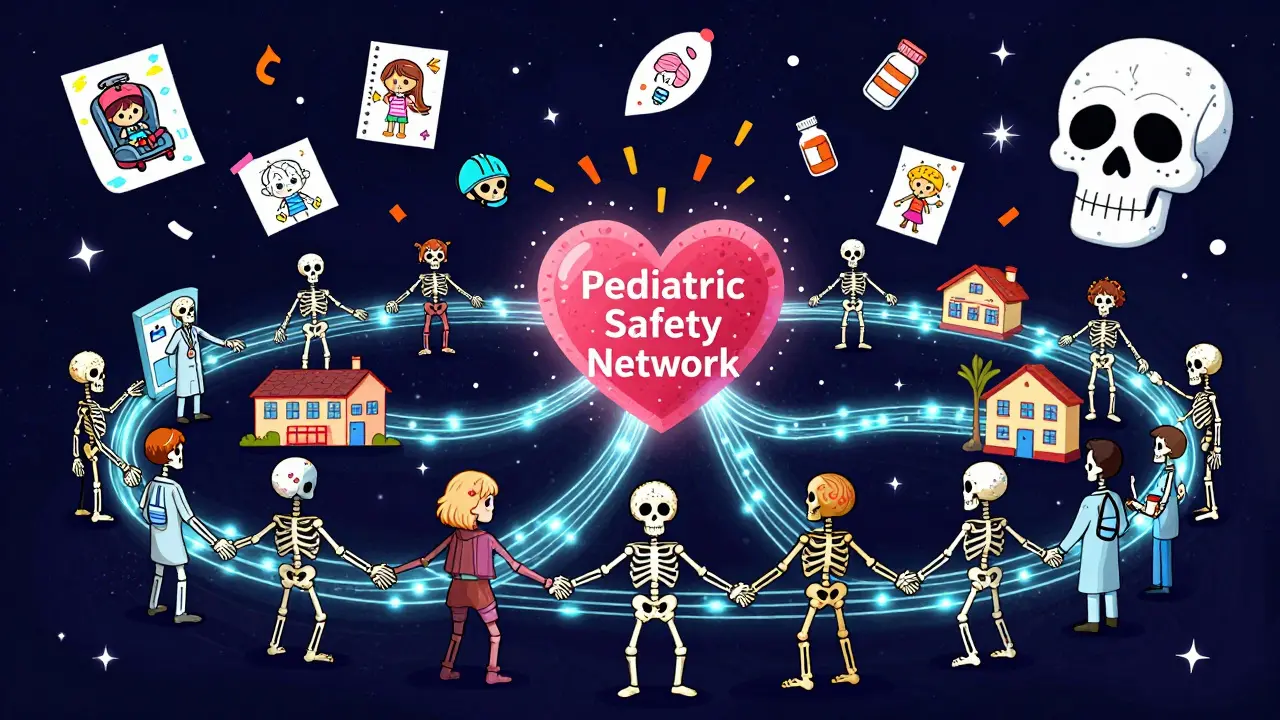
Christina Widodo
January 11, 2026 AT 17:08Alice Elanora Shepherd
January 12, 2026 AT 10:51Monica Puglia
January 12, 2026 AT 17:55Windie Wilson
January 13, 2026 AT 18:14Daniel Pate
January 14, 2026 AT 11:47Alex Fortwengler
January 15, 2026 AT 16:10Amanda Eichstaedt
January 16, 2026 AT 18:25Jennifer Phelps
January 17, 2026 AT 04:01