Imagine you have ten minutes to leave your home due to a flash flood or a wildfire. You grab your keys, your wallet, and your pets. But in the rush, your heart medication or insulin stays on the kitchen counter. This isn't just a hypothetical scenario; the American College of Emergency Physicians found that 38% of emergency room visits during disaster recovery are caused by people losing access to their meds. When you're in a crisis, the last thing you need is a secondary medical emergency because your treatment was interrupted.
A medication go-bag is a portable, water-resistant kit containing a backup supply of essential medications and critical health documentation. It's designed to keep you stable during the first 72 hours to two weeks after a disaster-the critical window where pharmacies are closed and doctors are overwhelmed. While some might think a basic first-aid kit is enough, a go-bag is specifically about medication safety and continuity of care for chronic conditions.
How Much Medication Should You Actually Pack?
There is a bit of a debate among experts on exactly how many days of supplies you need. The American Red Cross generally suggests a 7-day supply, but if you live in an area prone to major disasters-like California's earthquake zones-Alert San Diego recommends a full two-week supply. Why the difference? Because in a massive event, it can take much longer than a week for infrastructure to recover. If you're managing a chronic condition, the CDC suggests leaning toward that 14-day mark to be safe.
The tricky part is avoiding the "expired medicine graveyard." To keep your bag current, don't just toss old pills in a bag and forget about them. A pro tip from Consumer Reports is to ask your doctor for 90-day refills instead of 30-day ones. This gives you a larger buffer, allowing you to set aside a dedicated emergency stash while still using your primary supply. When your new refill arrives, rotate the oldest pills into your go-bag and put the fresh ones in your daily organizer.
| Organization | Recommended Supply | Primary Focus |
|---|---|---|
| American Red Cross | 7 Days | General Disaster Preparedness |
| Alert San Diego | 14 Days | High-Risk Regional Events |
| CDC | 14 Days (for chronic conditions) | Vulnerable Populations (65+) |
| FEMA | 3-7 Days | Immediate Evacuation/72-hour window |
The Essential Checklist: Beyond Just Pills
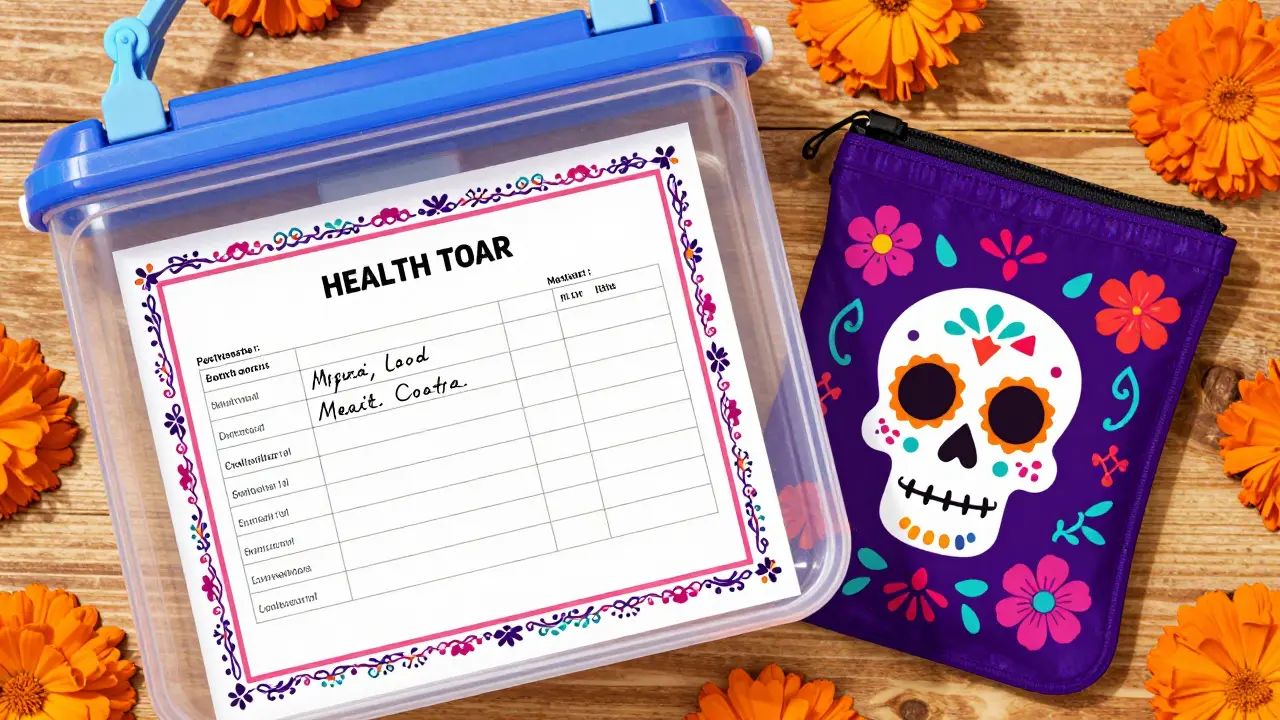
A bag full of pills is useless if a paramedic doesn't know what they are or how to give them. You need a "paper trail" for your health. If you're unconscious or unable to speak, this documentation becomes your voice. Your kit should include a waterproof container with the following:
- A Detailed Medication List: Don't just list the drug name. Include the dosage, the time of day you take it, and specifically *why* you take it (e.g., "Lisinopril - 10mg - Blood Pressure").
- Healthcare Provider Contacts: The name and phone number of your primary care physician and any specialists.
- Allergy List: Clearly mark any drug allergies to prevent dangerous interactions in a triage setting.
- Insurance and ID: Photocopies of your insurance card and a government-issued ID.
- Legal Documents: A copy of your advance directives or a DNR order if applicable.
Keep these documents in a waterproof container . If your bag gets soaked in a rainstorm or a flood, paper lists are the first things to disappear. Using a simple Ziploc bag or a hard plastic case can save your life during a medical hand-off.
Solving the Temperature Problem
For millions of people, a go-bag is complicated by Biologics and temperature-sensitive meds like insulin. Heat is the enemy of these medications. If insulin gets too warm, it loses potency, which can lead to diabetic emergencies during an evacuation. This is a common failure point in many emergency kits.
If you rely on refrigerated meds, you can't just put them in a backpack. Consider these options:
- Evaporative Cooling Pouches: Tools like the Frio Wallet use crystals that activate with water to keep medication cool for up to 48 hours without needing electricity.
- Temperature Monitors: New tech like the MedAngel ONE can alert your phone if the temperature inside your bag exceeds a safe limit.
- The "Cold Chain" Plan: Identify a nearby pharmacy or clinic that has backup power. If you're evacuating, know where the nearest "cold hub" is located.
Where to Store Your Bag for Maximum Safety
You might be tempted to keep your go-bag in the garage or basement, but that's a mistake. Basements flood, and garages experience extreme temperature swings that can degrade your medication. Instead, store your kit in a cool, dry place-like a high shelf in your bedroom closet.
Safety is also about access. The bag needs to be somewhere you can grab in seconds, but it must be out of reach of children. A high shelf is perfect because it's secure but accessible to an adult. Also, make sure everyone in your household knows exactly where it is. If you're the one who usually handles the meds and you're not there during the emergency, your spouse or child needs to be able to find the bag and get you to safety.
Practical Maintenance: The "Twice-a-Year" Rule
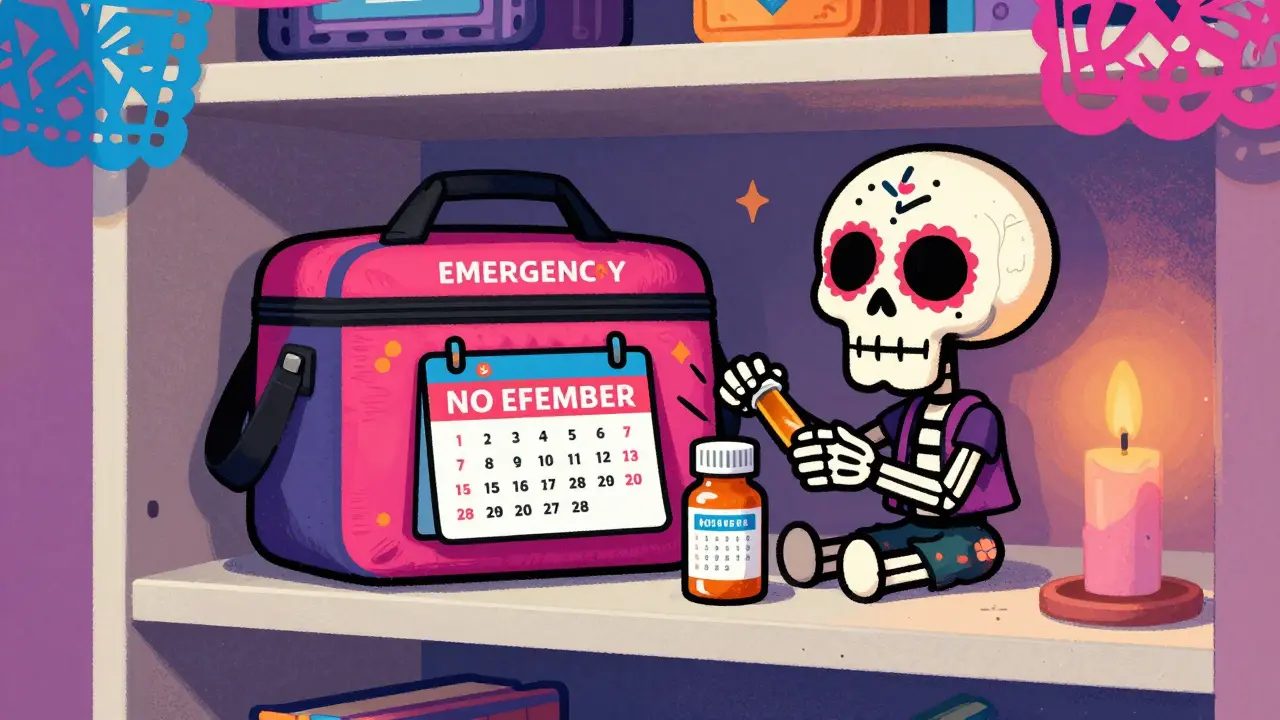
A go-bag is not a "set it and forget it" project. Medications expire, and health needs change. Westchester County Emergency Services suggests checking your kit at least twice a year. A good rule of thumb is to do this during the Daylight Savings time changes in March and November.
During these checks, look for:
- Expiration Dates: Especially for things like epinephrine auto-injectors, which lose their effectiveness quickly after the date on the box.
- Dosage Changes: If your doctor changed your blood pressure dose from 10mg to 20mg, your emergency list is now wrong. Update it immediately.
- Physical Integrity: Check for leaking bottles or crumbling pills, which can happen if the bag was exposed to humidity.
What Happens if You Lose Your Bag?
Even with the best planning, things go wrong. You might be separated from your bag, or it might get lost in the chaos. Knowing your options can lower your panic. In the U.S., pharmacists in about 42 states have the authority to dispense emergency supplies of medication without a current prescription if a disaster has been officially declared.
To make this process smoother, keep a digital backup of your medication list on a cloud service or an encrypted note on your phone. If you can show a pharmacist a digital list and a photo of your prescription bottle, they are much more likely to be able to help you quickly. This digital bridge combined with your physical go-bag creates a redundant system that ensures you don't miss a dose when it matters most.
Can I just use a daily pill organizer in my go-bag?
While pill organizers are great for daily use, they aren't ideal for a go-bag because they often lack clear labeling and can be prone to spilling. It's better to keep medications in their original pharmacy containers or use a high-quality organizer paired with a very detailed written list that matches the slots in the organizer.
How do I handle medications that must stay refrigerated?
Use specialized cooling pouches like the Frio Wallet, which can maintain safe temperatures for 48 hours without electricity. Avoid using standard ice packs if they might leak or freeze the medication, and consider a temperature-monitoring device to ensure the meds haven't been exposed to extreme heat.
What if I don't have enough money to buy a double supply of meds?
Talk to your pharmacist about "buffer stocks" or ask your doctor if they can provide samples. Some pharmacy benefit managers also allow for larger refills (90 days) which can make it easier to set aside a small portion for an emergency kit without paying extra for a separate prescription.
Is a 7-day supply really enough for a major disaster?
For many, 7 days is the minimum to survive the initial chaos. However, experts in high-risk areas (like earthquake or hurricane zones) recommend 14 days. If you have a chronic condition that would be life-threatening without medication, aim for the 14-day mark to account for delayed rescue or pharmacy closures.
Do I need to include over-the-counter (OTC) meds?
Yes. Include a small supply of medications for common ailments like pain relievers, antacids, and antihistamines. These can handle minor issues, allowing you to save your limited medical resources and professional help for more serious conditions.
Quinton Bangerter
April 21, 2026 AT 20:31Typical establishment advice. Imagine trusting a 'government-issued ID' or a cloud service when the grid goes down. Once the satellites are scrambled and the pharma companies decide who actually gets their insulin based on social credit scores, your little Ziploc bag isn't going to do a thing. Real survivalists know that relying on a centralized medical system is a fool's errand from the start. I've got my own stash and I don't need a 'certified' list to tell me how to stay alive while the sheep are lining up at a closed pharmacy.
Ms. Sara
April 22, 2026 AT 07:19Adding a digital copy to the cloud is a great safety net, but don't forget to keep a physical copy of that list on your person, like in a wallet or a medical alert bracelet. In a triage situation, a paramedic isn't always going to have the time or the means to unlock your phone, especially if it's dead or damaged. It's all about creating multiple layers of redundancy so there's no room for error when things get chaotic.
caesar simpkins
April 23, 2026 AT 08:26The sheer terror of forgetting a life-saving medication in the heat of a wildfire is absolutely haunting! It's a total nightmare scenario that literally no one wants to experience!
Venkatesh Venky
April 24, 2026 AT 16:01The cold chain logistics here are key. Implementing a fail-safe for biologics is a major win for patient safety. Just gotta keep that throughput steady and avoid any thermal degradation of the active pharmaceutical ingredients!
Brigid Prosser
April 26, 2026 AT 02:10Spot on with the rotation strategy! It's like a little health dance every few months to make sure everything's fresh. Just keep hammering away at that prep and you'll be golden when the chaos hits. Don't let the fear paralyze you; just get your kit sorted and breathe easy!
Charlotte Boychuk
April 27, 2026 AT 12:33Such a sparkly bit of advice! 🌈 Keeping things organized in a little waterproof pouch just feels so much more manageable than panic-searching through a junk drawer while the world is ending.
anne camba
April 28, 2026 AT 05:26The fragility of human existence is mirrored in the fragility of a pill bottle... it is quite a sobering thought, really... just a tiny piece of plastic separating us from total systemic collapse... we are all just one lost bag away from a crisis...