Pharmacy Language Access Rights Checker
Select the scenario that best matches your recent pharmacy experience to see if your rights were upheld.
Scenario A
The pharmacist asked me to use my child or spouse to translate the medication instructions because they speak both languages.
Scenario B
I was told that professional interpreters are available only during specific hours, or I was offered a free smartphone translation app instead.
Scenario C
I received my prescription in English only. There were no multilingual warning labels on the bottle, and no signs indicating help was available.
Imagine picking up a prescription for blood pressure medication. The pharmacist hands you the bottle, but the label is in English, and you only speak Spanish. You nod, smile, and walk away. Later that night, confused by the dosage instructions, you skip a dose or take too much. This isn't just a hypothetical scenario; it is a dangerous reality for millions of people in the United States. Language access in healthcare is not merely a courtesy-it is a critical safety net.
For individuals with Limited English Proficiency (LEP), understanding medication instructions is a matter of life and death. Misunderstood labels can lead to overdoses, dangerous drug interactions, or skipping essential treatments due to fear or confusion. Recent federal updates have tightened the rules on how pharmacies must handle these situations, making interpreter rights a central pillar of patient safety plans.
The Legal Foundation: Why Interpreter Rights Matter
The backbone of language access in healthcare is Section 1557 of the Affordable Care Act (ACA). Originally enacted in 2010, this section prohibits discrimination based on race, color, national origin, sex, age, or disability in health programs receiving federal financial assistance. For years, enforcement was patchy, but that changed significantly on July 5, 2024.
The new enforcement provisions under Section 1557 require all healthcare providers, including pharmacies, to provide "meaningful access" to LEP patients. What does "meaningful access" actually mean? It means you cannot rely on family members, friends, or untrained staff to interpret medical information unless the patient explicitly requests it. Providers must offer qualified interpreters who understand both English and the patient's primary language, along with specialized medical terminology.
This shift is crucial because using family members as interpreters often leads to errors. Family members may soften bad news, mistranslate technical terms, or feel uncomfortable discussing sensitive health issues. By mandating professional interpretation services, the law aims to eliminate these gaps and ensure that every patient receives accurate, unbiased information about their medications.
New York’s SafeRx Model: A Gold Standard
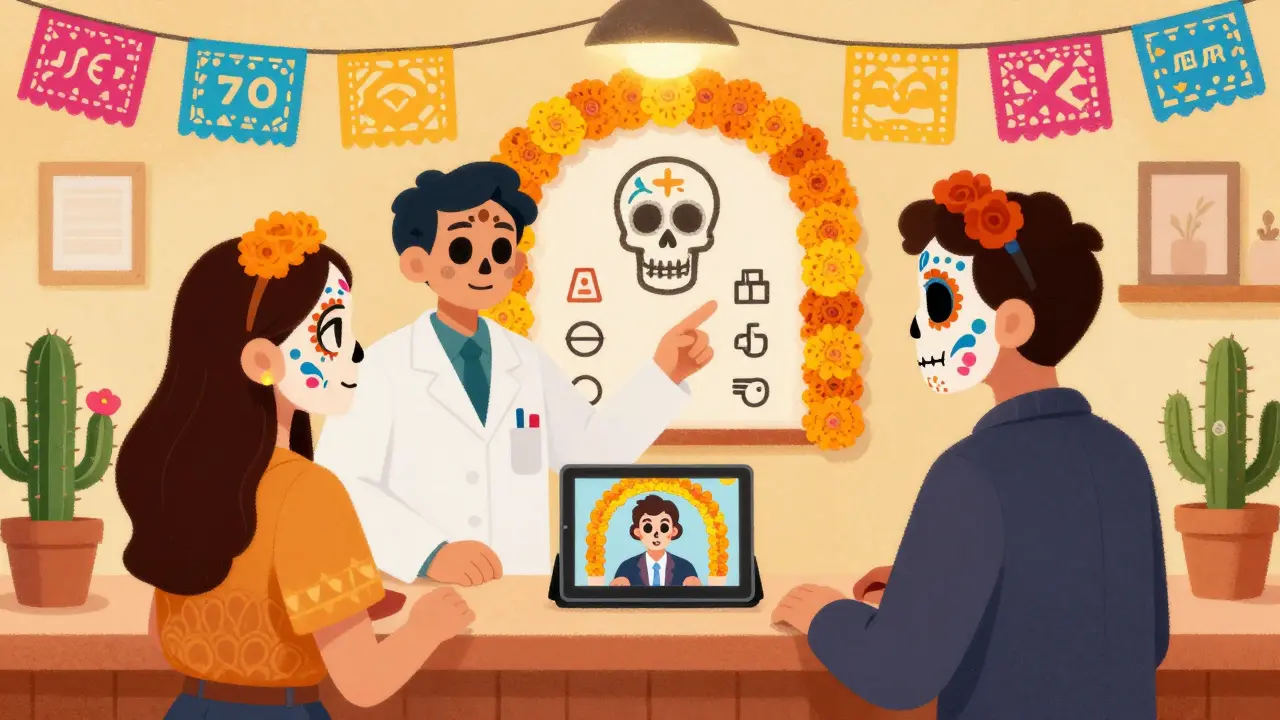
While federal laws set the baseline, some states have gone further. New York State’s SafeRx regulations, specifically Education Law section 6829, serve as a model for comprehensive pharmacy-specific language access. These regulations require pharmacies to provide free oral interpretation services for medication counseling immediately upon request. The interpreter does not need to be physically present; telephone or video interpretation is acceptable and widely used.
One of the most visible aspects of SafeRx is the requirement for multilingual signage. Pharmacies must post conspicuous notices near the counter using the phrase "Point to your language." This simple visual cue empowers patients to identify their preferred language without needing to speak English first. Studies show that 83% of surveyed LEP patients recognize these signs and know how to request help, dramatically reducing the anxiety of navigating a foreign-language healthcare system.
Additionally, New York requires the translation of auxiliary warning labels-such as "May cause drowsiness" or "Take with food"-in addition to the main prescription label. This attention to detail ensures that patients understand not just what to take, but how to take it safely. The state defines "pharmacy primary languages" as those spoken by at least one percent of the local population, capping the requirement at seven languages per region to balance accessibility with operational feasibility.
| Requirement | Federal (ACA Section 1557) | New York State (SafeRx) |
|---|---|---|
| Interpreter Availability | Must provide qualified interpreters | Immediate access via phone/video required |
| Written Materials | Translated materials if available/practical | Mandatory translation of labels and warnings |
| Signage | Not explicitly specified | "Point to your language" signs required |
| Family Interpreters | Prohibited unless requested by patient | Prohibited; professional services mandated |
| Scope | All federally funded healthcare entities | Specifically targets retail pharmacies |
The Human Cost of Poor Communication
Why are these regulations so strict? The data is stark. A study by Dr. Lisa M. Weiss published in PMC found that inadequate comprehension of prescription instructions poses a significant risk to LEP individuals. In fact, inadequate language services contributed to 32% of adverse drug events among LEP patients, according to research by Dr. Glenn Flores in JAMA Internal Medicine (2021).
Consider the experience of Maria, a fictional composite based on real patient reports. Maria has hypertension and diabetes. She picks up her metformin but doesn’t understand the instruction to take it "with meals." She takes it on an empty stomach, suffers severe nausea, and stops taking the medication entirely. Her blood sugar spikes, leading to an emergency room visit. This scenario is preventable. When professional interpretation services are used, medication errors among LEP patients drop by 67%, according to the American Pharmacists Association.
Beyond physical harm, poor communication erodes trust. Patients who cannot understand their care plan feel marginalized and anxious. They are less likely to ask questions, less likely to adhere to treatment, and more likely to delay seeking help until conditions become critical. Language access restores dignity and agency, allowing patients to actively participate in their own health management.
Implementation Challenges for Pharmacies
While the benefits are clear, implementing these requirements is not without challenges. Large chain pharmacies like CVS and Walgreens have adapted relatively quickly, integrating mandatory 10-hour language access training modules for their staff. They have contracted with major service providers like LanguageLine Solutions, which holds a 42% market share in medical interpretation, to ensure 24/7 availability.
However, independent pharmacies face steeper hurdles. A 2023 analysis by Rxtran.com reported that 23% of surveyed pharmacies in New York struggled with compliance costs. Smaller shops may lack the budget for premium interpretation contracts or the administrative staff to manage waiver documentation. Only 67% of independent pharmacies have fully implemented compliant systems, compared to 92% of chains.
Another challenge is identifying LEP patients accurately. Relying on assumptions can lead to missed opportunities for assistance. Best practices include using intake questionnaires that ask about language preference upfront. Staff must also be trained to recognize when a patient is struggling to understand, even if they appear fluent in basic English. Medical terminology is complex; a patient might order coffee easily but fail to grasp the nuances of "titrate dose" or "contraindication."
Technological Advances and Future Trends
Technology is playing an increasingly important role in bridging the language gap. Video remote interpreting (VRI) allows patients to see facial expressions and lip movements, which can be helpful for nuanced instructions. AI-powered translation tools are emerging, though current regulations still require human verification for medication instructions to ensure accuracy. The FDA has issued draft guidance encouraging standardized pictograms on medication labels to supplement text-based translations, aiming to create a universal visual language for drug safety.
Looking ahead, the regulatory landscape continues to evolve. California implemented similar pharmacy-specific requirements in 2022, and Massachusetts proposed comparable legislation in 2024. The federal government’s Language Access Implementation Plan requires all federally-funded healthcare entities to conduct language need assessments by December 2024 and implement comprehensive plans by June 2025. By 2026, Medicare and Medicaid providers will need to achieve full language access compliance.
The market for medical interpretation services is growing rapidly, projected to reach $3.8 billion by 2027. This growth reflects a broader recognition that language access is not an optional extra but a core component of quality care. As demographics shift, with non-English speaking populations increasing in many regions, the demand for robust language services will only intensify.
Practical Steps for Patients and Providers
If you are a patient with limited English proficiency, you have rights. Do not hesitate to ask for an interpreter. Look for the "Point to your language" sign. If a pharmacy refuses to provide one, remind them of their legal obligations under ACA Section 1557. You can also contact the federally-funded Language Access Help Desk for guidance.
For pharmacy owners and managers, start by assessing your community’s linguistic needs using U.S. Census data. Identify the top languages spoken in your area. Contract with a reputable interpretation service provider. Train your staff not just on how to use the technology, but on cultural competency and the importance of clear communication. Document every interaction where interpretation is provided or refused. This documentation protects both the patient and the pharmacy in case of disputes.
Ultimately, language access is about equity. It ensures that everyone, regardless of the language they speak, has the same opportunity to understand their health and make informed decisions. It reduces disparities, prevents errors, and saves lives. As we move forward, the integration of technology, stricter enforcement, and continued education will help close the remaining gaps, creating a healthcare system that truly serves everyone.
What are my rights as a patient with Limited English Proficiency?
Under Section 1557 of the Affordable Care Act, you have the right to receive free, qualified interpretation services in your preferred language. Healthcare providers cannot force you to use a family member or friend as an interpreter unless you specifically request it. They must also provide translated written materials when feasible.
Do I have to pay for an interpreter at the pharmacy?
No. Qualified interpretation services must be provided free of charge to the patient. This is a legal requirement for any healthcare provider receiving federal funds, including most pharmacies. The cost is borne by the provider, not the patient.
Can I use a smartphone app instead of a professional interpreter?
While apps can be helpful for casual conversation, they are not considered "qualified interpreters" for medical purposes under current regulations. Professional interpreters are trained in medical terminology and ethics, ensuring accuracy and confidentiality. Apps may misinterpret critical dosage instructions or side effects, posing a safety risk.
What should I do if a pharmacy refuses to provide an interpreter?
You can politely remind the staff of their legal obligations under ACA Section 1557. If they continue to refuse, you can file a complaint with the Office for Civil Rights (OCR) at the U.S. Department of Health and Human Services. You can also seek assistance from local patient advocacy groups or the Language Access Help Desk.
How do pharmacies determine which languages to support?
Pharmacies typically use U.S. Census Bureau data to identify the "primary languages" spoken in their specific region. In New York, for example, languages spoken by at least 1% of the local population must be supported, up to a maximum of seven languages per region. This ensures resources are allocated to the communities that need them most.
Are video interpreters better than phone interpreters?
Video remote interpreting (VRI) offers advantages such as seeing facial expressions and lip movements, which can aid comprehension. However, phone interpretation is faster and more accessible in settings without reliable internet. Both are legally acceptable as long as the interpreter is qualified and the connection is clear.
Does this apply to online pharmacies?
Yes. Online pharmacies that dispense medications and provide counseling are subject to the same language access requirements. They must offer translated websites, labels, and access to interpreters via chat or phone for any counseling sessions.
What happens if I refuse an interpreter?
If you explicitly refuse an interpreter, the pharmacy must document this refusal in your patient profile. This protects them from liability while respecting your autonomy. However, they should still ensure you understand the risks of proceeding without assistance.
How can I find out if my local pharmacy is compliant?
Look for multilingual signage, such as the "Point to your language" poster. Ask the staff directly about their interpretation services. You can also check with your state’s department of health or attorney general’s office for lists of compliant providers or recent enforcement actions.
Will AI replace human interpreters in pharmacies soon?
Not yet. Current regulations require human verification for medication instructions to ensure safety. While AI tools are improving, they lack the nuance and ethical training of professional interpreters. Hybrid models, where AI assists but humans verify, may become more common in the future.