Many people turn to CBD for relief from pain, anxiety, or sleep issues - and that’s fine. But if you’re taking any prescription medication, you could be putting yourself at risk without even knowing it. The problem isn’t CBD itself. It’s what happens when it meets your pills in your liver.
How CBD Interferes With Your Medications
Your body breaks down most prescription drugs using a system called the cytochrome P450 (CYP450) enzymes. These are like tiny factory workers in your liver, processing everything from blood thinners to heart meds to thyroid pills. About 60% of all prescription medications rely on this system. And CBD? It doesn’t just pass through. It shuts down those workers. CBD is a powerful inhibitor of two key enzymes: CYP3A4 and CYP2C19. When CBD blocks them, your medications don’t get broken down properly. That means they build up in your bloodstream - sometimes to dangerous levels. Think of it like pouring more fuel into a car engine that can’t burn it off. The result? Toxicity, side effects, or worse. This isn’t theory. It’s happening in real patients. In one study, seven people taking warfarin (a blood thinner) needed their doses changed after starting CBD. Two of them bled internally. Another study found that CBD raised blood levels of clobazam - a seizure drug - by up to 300%. That’s not a small change. That’s a medical emergency waiting to happen.Medications That Can Turn Dangerous With CBD
Not all drugs are created equal. Some are fine with a little extra in the system. Others? One extra milligram can kill you. These are called Narrow Therapeutic Index (NTI) drugs - meaning the difference between a safe dose and a toxic one is razor-thin. Here are the most common and dangerous ones linked to CBD interactions:- Warfarin - A blood thinner. Too much = internal bleeding. Too little = stroke.
- Amiodarone - Used for irregular heartbeat. CBD can cause heart rhythm chaos.
- Levothyroxine - For underactive thyroid. CBD can make it stop working, leaving you exhausted, cold, and gaining weight.
- Clobazam, Valproate, Lamotrigine - Seizure meds. CBD can push levels too high, causing dizziness, confusion, or liver damage.
- Tacrolimus and Sirolimus - Immunosuppressants after organ transplants. CBD can cause organ rejection or deadly infections.
What Happens to Your Liver?
CBD isn’t harmless to your liver. In clinical trials of Epidiolex - the FDA-approved CBD drug for epilepsy - about 20% of patients saw elevated liver enzymes. That’s a sign your liver is under stress. In rare cases, it led to actual liver injury. If you already have liver disease - even mild fatty liver - CBD could make it worse. The FDA says CBD is contraindicated in people with moderate to severe liver impairment. That means if your doctor has ever told you your liver isn’t working perfectly, you should not take CBD. And it’s not just about the dose. Chronic use makes it worse. One study found that enzyme inhibition can last for days after you stop taking CBD. So even if you take it in the morning and your pill at night, your liver might still be overwhelmed.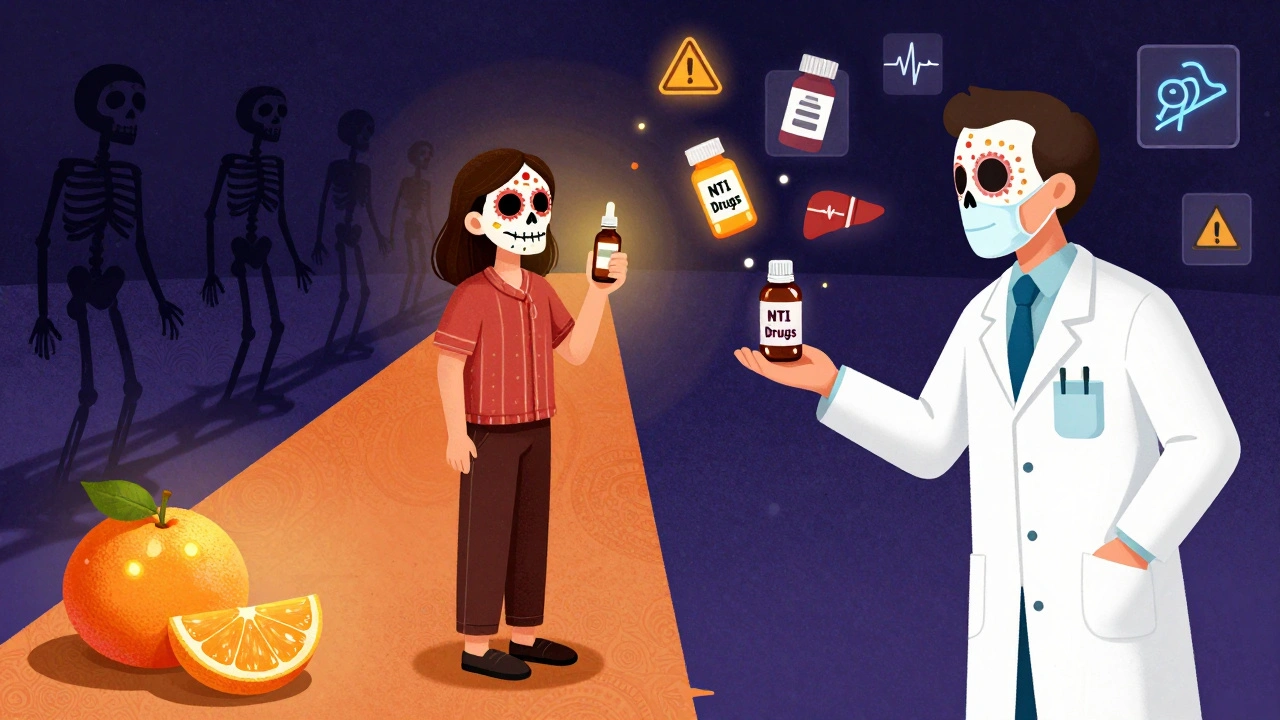
More Than Just Pills: The Sedation Risk
CBD can make you sleepy. That’s why some people use it for insomnia. But if you’re already taking something that causes drowsiness - like Xanax, opioids, antidepressants, antihistamines (like Benadryl), or even alcohol - CBD piles on the effect. The result? Extreme fatigue, slowed breathing, poor coordination, and a much higher risk of falls or car accidents. One patient in a case report passed out after taking CBD with his nighttime pain meds. He broke his hip. He didn’t realize the combination was dangerous until it was too late. This isn’t rare. It’s predictable. And it’s preventable.What You Should Do Right Now
If you’re on any prescription medication and thinking about trying CBD - stop. Don’t start until you talk to someone who knows your full medical history. Here’s what to do:- Make a complete list of every medication, supplement, and herb you take - even the ones you forget about, like melatonin or St. John’s Wort.
- Check for grapefruit warnings on your pill bottles. If it’s there, CBD is likely unsafe.
- Ask your pharmacist. They see hundreds of drug interactions every week. They’re trained for this. Don’t go to a CBD store and ask the clerk - go to your pharmacy.
- Start low, if approved. If your doctor says it’s okay, begin with 5-10 mg of CBD and wait at least 4-6 hours before taking your other meds. Monitor how you feel.
- Get blood tests. For high-risk drugs like warfarin or immunosuppressants, your doctor should check your blood levels before and after starting CBD.
Inna Borovik
December 5, 2025 AT 19:45Just had a patient on warfarin start a 10mg CBD tincture for anxiety. INR jumped from 2.1 to 5.8 in 72 hours. No bleeding yet, but close. This isn't theoretical. I see it weekly. If you're on anything with a narrow therapeutic index, treat CBD like it's a new prescription - because it is. Your pharmacist should be the first person you ask, not Reddit.
Also, if your CBD bottle doesn't list the exact mg per mL and has no third-party COA, you're gambling with your liver. Don't be that person.
Jackie Petersen
December 7, 2025 AT 04:10Oh here we go. Big Pharma’s latest scare tactic. CBD’s been used for centuries. The real danger is your prescription cocktail - 80% of those drugs were developed by companies that pay doctors to push them. CBD is plant-based, natural, and you’re scared of it because you don’t own the patent.
My uncle took CBD with his blood pressure med and felt better. He’s alive. Your fear is a product.
Also, grapefruit? Yeah, so’s orange juice. Are you gonna stop drinking OJ too? Hypocrite.
Annie Gardiner
December 7, 2025 AT 22:48What if the real problem isn’t CBD… but our entire medical system’s obsession with control? We’ve turned healing into a transaction. You take a pill because you were told to, not because you understand it. CBD forces you to ask questions - and that terrifies people who profit from your compliance.
Is it risky? Maybe. But so is living in a world where your doctor doesn’t know what’s in your supplement bottle either. We’re all just trying to survive a broken system.
Also, I stopped taking my thyroid med for three weeks once. I didn’t die. I just felt… more me. Maybe the meds are the real intruder.
Rashmi Gupta
December 8, 2025 AT 22:30My cousin in Mumbai takes CBD oil with his epilepsy meds. No issues. His doctor monitors him. In India, we don’t treat herbs like weapons. We treat them like tools.
Why is the West so afraid of natural things unless they’re patented? You fear what you don’t control. CBD doesn’t need a patent. It just needs respect.
Also, liver enzymes rise with alcohol, coffee, and stress. Should we ban those too? Or maybe… the body knows how to adapt?
Karen Mitchell
December 9, 2025 AT 14:05It is an inescapable fact that the ingestion of cannabidiol, a non-psychoactive phytocannabinoid, may induce pharmacokinetic alterations via inhibition of hepatic cytochrome P450 isoenzymes, thereby precipitating potentially life-threatening serum concentrations of co-administered medications with narrow therapeutic indices. This is not a matter of opinion. It is biochemistry.
Furthermore, the absence of regulatory oversight in the CBD industry renders product consistency and labeling accuracy statistically unreliable. To suggest otherwise is not merely irresponsible - it is dangerous. One must consult a licensed pharmacist or clinical pharmacologist prior to any concurrent use. There is no room for anecdotal exception.
Geraldine Trainer-Cooper
December 11, 2025 AT 09:23also my dog takes cbd for anxiety and hes still alive so maybe humans are tougher than we think
Kenny Pakade
December 12, 2025 AT 14:54They’re scared of CBD because it’s not American-made. Look at the FDA’s budget - 80% goes to Big Pharma lobbying. They want you to believe natural = dangerous so you keep buying their overpriced pills.
My neighbor’s wife was on warfarin, started CBD, and now she’s hiking in Colorado. No bleeding. No hospital. Just better sleep.
And if you think grapefruit’s the same as CBD, then why isn’t the FDA banning citrus? Because they can’t. It’s too popular. CBD’s the new threat because it’s free.
Wake up. This is control, not care.
Katie O'Connell
December 13, 2025 AT 08:29While I acknowledge the empirical evidence presented regarding CYP450 inhibition, I find the rhetorical framing of this piece to be alarmist and culturally reductive. The conflation of anecdotal case reports with population-level risk assumes a homogeneity of metabolic capacity that does not exist - genetic polymorphisms in CYP2C19 and CYP3A4 render some individuals virtually unaffected by CBD’s inhibitory effects.
Moreover, the moral imperative to ‘consult your doctor’ assumes a level of medical literacy and access that is not universally available. To equate CBD use with recklessness ignores the socioeconomic dimensions of pharmaceutical dependency.
Perhaps the real crisis is not CBD - but the erosion of patient autonomy in favor of institutionalized pharmacological control.