Imagine you’re stuck in pain, bloated, and rushing to the bathroom multiple times a day. You’ve seen doctors, done tests, and everything comes back normal. But you still feel awful. Or maybe you’re losing weight, bleeding when you go, and constantly tired - and your doctor says you have inflammation in your gut. These aren’t the same thing. One is called IBS. The other is IBD. They sound alike. They even feel alike. But they’re completely different - and mixing them up can cost you time, treatment, and peace of mind.
What Is IBS? It’s Not in Your Head - It’s in Your Gut’s Wiring
IBS, or Irritable Bowel Syndrome, is a functional disorder. That means your gut looks perfectly normal on scans, biopsies, and blood tests - but it doesn’t work right. Think of it like a faulty thermostat. The heater isn’t broken; it just turns on when it shouldn’t, or doesn’t turn on when it should. Your intestines are doing the same thing.
According to the Rome IV criteria, used by doctors worldwide since 2016, IBS is diagnosed when you have abdominal pain at least one day a week for three months, along with changes in bowel habits - diarrhea, constipation, or both. Bloating hits 76% of people with IBS. Mucus in stool? That’s common too - seen in nearly half of cases. And it often gets worse after eating. You might feel fine in the morning, then cramp up after lunch. That’s not stress. That’s your gut’s nerves being too sensitive.
Here’s the key: no inflammation. No ulcers. No damage. No cancer risk. Your colon isn’t being eaten away. Your intestines aren’t scarred. That’s why colonoscopies come back clean. Blood tests? Normal. Stool tests? No signs of infection or bleeding. The problem isn’t physical structure - it’s how your brain and gut talk to each other. That’s why treatments focus on calming the nerves, not fighting inflammation.
What Is IBD? Inflammation That Eats Your Gut
IBD - Inflammatory Bowel Disease - is the opposite. It’s not about miscommunication. It’s about your immune system turning on your own gut. There are two main types: Crohn’s disease and ulcerative colitis. Both cause real, visible damage.
In ulcerative colitis, the lining of your colon gets inflamed and develops open sores - ulcers. In Crohn’s, inflammation can hit anywhere from mouth to anus, and it digs deep into the bowel wall. This isn’t surface-level. This is structural. And it shows up on tests.
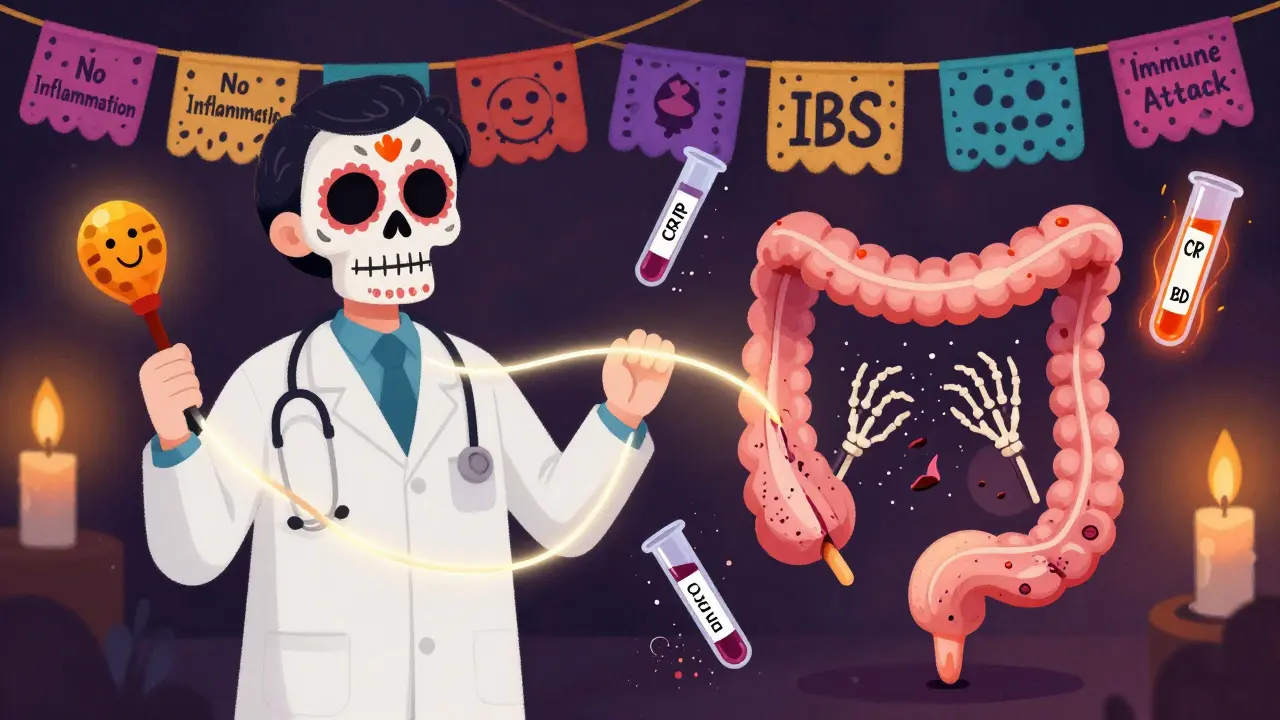
Here’s what doctors see: elevated C-reactive protein (CRP) levels above 5 mg/L (normal is under 3). Fecal calprotectin over 250 µg/g - a marker of gut inflammation. Biopsies show immune cells invading the tissue. Scans reveal strictures - narrowed sections of intestine - or fistulas, abnormal tunnels between organs. One in three Crohn’s patients develops a stricture within ten years. One in six gets a fistula.
And the symptoms? They go beyond cramps and bloating. Blood in stool? Common - 92% of ulcerative colitis patients have it. Black, tarry stools? That’s upper GI bleeding, seen in 15% of Crohn’s cases. Unexplained weight loss? Happens in 65% during flares. Fever? Appears in 40% of moderate-to-severe cases. You might also get joint pain, eye redness, or painful skin lumps - called erythema nodosum. These aren’t side effects. They’re part of the disease. IBD doesn’t just live in your gut. It shows up elsewhere.
How Do Doctors Tell Them Apart?
Doctors don’t guess. They test. And the difference is clear.
For IBD, they start with blood and stool tests. If CRP or calprotectin is high, they move to endoscopy - a camera inserted into your colon. They look for redness, swelling, ulcers. They take tissue samples. If they see immune cells and damaged tissue, it’s IBD. MRI or CT scans show thickened bowel walls, abscesses, or fistulas. No question.
For IBS? They do the opposite. They rule everything else out. If your blood work is clean, your stool tests show no infection, your colonoscopy looks normal, and you don’t have red flags - weight loss, bleeding, family history of colon cancer - then they say: it’s IBS. No inflammation. No damage. No need for more scans. It’s a diagnosis of exclusion, but it’s still real.
The CDC, Mayo Clinic, and WebMD all say the same thing: if you have bleeding, fever, or unexplained weight loss - go back to your doctor. Those aren’t IBS symptoms. They’re IBD red flags. And they need urgent attention.
Treatment: Calm the Nerves vs. Stop the Fire
IBS and IBD don’t get the same treatment - because they’re not the same disease.
For IBS, the goal is to reduce symptoms. You won’t cure it. But you can feel better. The low-FODMAP diet works for 76% of people - cutting out certain carbs that ferment in the gut and cause gas and bloating. Low-dose antidepressants like amitriptyline help calm overactive nerves. Studies show they reduce pain by half in 60% of patients. Medications like eluxadoline help with diarrhea-predominant IBS. Probiotics? Some help. Stress management? Big help. Your gut listens to your mind.
For IBD? You need to stop the inflammation. That means drugs that shut down your immune system. Anti-TNF drugs like infliximab put Crohn’s into remission in 50-60% of patients within weeks. Corticosteroids work fast for flares - but you can’t stay on them forever. They cause bone loss, diabetes, mood swings. Newer biologics like vedolizumab target only the gut, not the whole body. They help 48% of ulcerative colitis patients stay in remission after a year.
And if drugs fail? Surgery might be needed. In ulcerative colitis, removing the colon can be curative. In Crohn’s, you can’t remove it all - it comes back. But you can remove damaged sections. That’s not an option in IBS. You don’t cut out a normal gut.
Can You Have Both?
Yes. And it’s more common than you think.
Studies show 22 to 35% of people with IBD in remission still have IBS-like symptoms - abdominal pain, bloating, altered bowel habits - even when their inflammation is under control. That’s not a flare. That’s a separate condition living alongside it.
It’s like having asthma and acid reflux. One’s an immune problem. The other’s a nerve problem. They can both be active at the same time. Treating the IBD won’t fix the IBS. You need two approaches.
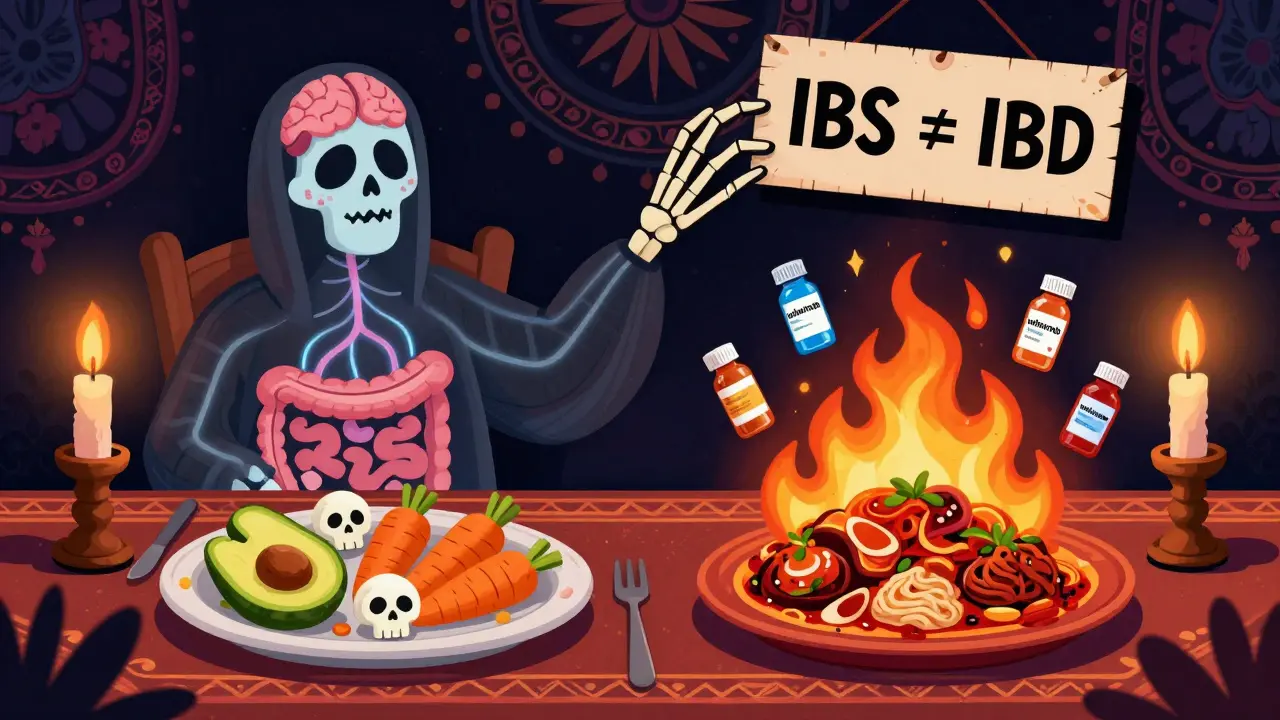
And here’s a myth to kill: IBS does not turn into IBD. No matter how long you have it. No matter how bad the symptoms get. Your gut won’t suddenly start inflaming. The damage doesn’t happen that way. The Crohn’s & Colitis Foundation says it clearly: IBS does not develop into IBD. Ever.
Quality of Life: Both Hurt - But Only One Kills
Both conditions wreck your life. People with IBS have said they’d give up caffeine, sex, even their cell phones to be symptom-free. That’s how much it controls them.
But IBD carries heavier risks. After 10 years of pancolitis (ulcerative colitis affecting the whole colon), your risk of colon cancer rises by 2% each year. Toxic megacolon - a life-threatening swelling of the colon - happens in 2-4% of severe cases. IBS doesn’t cause cancer. It doesn’t cause perforations. It doesn’t lead to emergency surgeries.
That’s the difference. IBS is debilitating. IBD can be deadly. And knowing which one you have? That’s everything.
What Should You Do If You’re Not Sure?
Don’t self-diagnose. Don’t rely on Google. Go to a gastroenterologist. Bring a symptom diary. Write down when you hurt, what you ate, how often you go, if there’s blood, if you’ve lost weight, if you’ve had a fever.
Ask for blood tests. Ask for calprotectin. Ask for a colonoscopy if you’re over 50, or if you have any red flags. If you’re young and have bloating and cramps but no bleeding or weight loss - IBS is likely. But if you’re losing weight, bleeding, or running a fever - don’t wait. Get tested now.
And if you’ve been told you have IBS but your symptoms keep getting worse? Go back. Maybe you have IBD and it was missed. Or maybe you have both. Either way - you deserve answers.
Is IBS the same as IBD?
No. IBS is a functional disorder - your gut looks normal but acts up. IBD is an inflammatory disease - your immune system attacks your gut, causing real damage like ulcers and strictures. They’re not the same condition, even if symptoms overlap.
Can IBS turn into IBD?
No. IBS does not progress into IBD. There is no evidence that long-term IBS causes inflammation or structural damage. The two are separate conditions with different causes. If you’re diagnosed with IBS, you won’t suddenly develop Crohn’s or ulcerative colitis.
Does IBS cause bleeding or weight loss?
No. Blood in stool and unexplained weight loss are not symptoms of IBS. These are red flags for IBD or other serious conditions like cancer. If you experience these, you need medical evaluation immediately - don’t assume it’s just IBS.
Can you have both IBS and IBD at the same time?
Yes. Up to 35% of people with IBD in remission still have IBS-like symptoms. This is called overlap syndrome. Treating the inflammation won’t fix the gut sensitivity - you need separate management for both.
What’s the best test to tell IBS from IBD?
The best test is a colonoscopy with biopsy, plus blood and stool tests for inflammation (CRP, calprotectin). IBS shows normal results. IBD shows visible inflammation, ulcers, or immune cells in tissue samples. No single test diagnoses IBS - it’s diagnosed by ruling out IBD and other diseases.
Are there foods that help IBS or IBD?
For IBS, the low-FODMAP diet helps 76% of people reduce bloating and pain. For IBD, diet doesn’t cure inflammation, but avoiding trigger foods (like dairy or spicy meals) can reduce flares. During active IBD, low-residue diets help. Always work with a dietitian - nutrition matters for both, but differently.
Is IBD an autoimmune disease?
Yes. IBD is considered an autoimmune condition - your immune system mistakenly attacks your digestive tract. IBS is not autoimmune. It’s a disorder of gut-brain communication and nerve sensitivity.
Can stress cause IBS or IBD?
Stress doesn’t cause IBD, but it can trigger flares. For IBS, stress is a major trigger - it worsens pain and bowel changes because of the gut-brain connection. Managing stress helps IBS more than it helps IBD, but both benefit from mindfulness, therapy, or exercise.
If you’ve been living with gut symptoms for years - whether you’ve been told you have IBS or IBD - know this: you’re not imagining it. And you’re not alone. But getting the right diagnosis changes everything. Don’t settle for a label without proof. Ask for tests. Push for answers. Your gut deserves more than guesses.
Frank Declemij
January 28, 2026 AT 15:24IBS is real even if your colon looks fine. I’ve had it for 12 years. No inflammation, no cancer risk, but the pain? Real. Low-FODMAP changed my life. No meds needed. Just food tweaks and patience.
Doctors used to tell me it was anxiety. It wasn’t. It was my gut wiring being glitchy.
Pawan Kumar
January 30, 2026 AT 09:04One must question the pharmaceutical-industrial complex’s investment in labeling functional disorders as "non-inflammatory"-a semantic sleight-of-hand to avoid acknowledging the systemic nature of gut dysbiosis. The microbiome is not merely a bystander; it is the conductor of this symphony of suffering, and modern medicine remains tone-deaf.
DHARMAN CHELLANI
January 31, 2026 AT 21:08IBS = your gut hates your life choices. IBD = your body is trying to kill you. Simple. Stop overcomplicating it with big words. Eat less crap. Stop stressing. Done.
Robin Keith
February 2, 2026 AT 09:22It’s fascinating-this entire paradigm of gut-brain communication-isn’t it just a metaphor for our existential dissonance? We live in a world that demands productivity, yet our most primal biological systems are screaming for stillness. IBS isn’t a syndrome-it’s a spiritual wake-up call. The colon is the body’s last frontier of truth-telling, and we’ve silenced it with antispasmodics and proton-pump inhibitors like some kind of medical opiate.
And IBD? That’s the immune system’s rebellion against a civilization that’s lost its soul. The inflammation isn’t in the mucosa-it’s in the culture. We’ve forgotten how to breathe, how to rest, how to be. The gut knows. The gut always knows.
Sheryl Dhlamini
February 3, 2026 AT 02:32I was diagnosed with IBS at 22, then found out at 31 I actually had Crohn’s. They missed it because I didn’t bleed constantly. Please-if you feel off and your doctor says "it’s just IBS," get a second opinion. Your gut isn’t drama. It’s data.
Doug Gray
February 3, 2026 AT 21:00IBS = functional disorder (aka: psychosomatic)
IBD = autoimmune (aka: real disease)
So... if your colon looks fine but you’re in pain, it’s "all in your head"? Cool. Thanks for the validation, science.
:/
LOUIS YOUANES
February 3, 2026 AT 23:43My cousin had IBD. Lost half her colon. Now she’s on biologics and still can’t eat a salad. Meanwhile, my buddy with IBS just avoids onions and calls it a day. Same symptoms. Different worlds.
Don’t let anyone tell you IBS isn’t brutal. It just doesn’t kill you. And that’s not a comfort-it’s a curse.
paul walker
February 5, 2026 AT 07:35Just got my calprotectin results back-280. Was told "it’s IBS" for 3 years. I pushed. Got a colonoscopy. Ulcerative colitis. Don’t let anyone gaslight you. If you’re not feeling better, go back. You’re worth the fight.
Alex Flores Gomez
February 5, 2026 AT 23:59Anyone else notice how every "expert" says "IBS doesn’t turn into IBD" but no one talks about how IBD patients often develop IBS-like symptoms after remission? That’s the real overlap. The system treats them like separate boxes but our guts don’t read manuals.
Also-FODMAPs are a scam if you’re not tracking with a food diary. Just saying.
Kacey Yates
February 6, 2026 AT 22:43My GI said I had IBS. I asked for a calprotectin test. She rolled her eyes. I paid $180 out of pocket. Result: 412. IBD. Now I’m on vedolizumab. Don’t be the person who gets told "it’s all in your head" and believes it. Fight for tests. You’re not paranoid. You’re smart.