Imagine you are buying a car. The dealer quotes you $30,000 for the brand-new model. But then you point out that three other dealerships are selling an identical engine and chassis for $18,000 under a different badge. Suddenly, that $30,000 price tag feels less like a fixed rule and more like a starting point for a serious conversation. This is exactly what happens in pharmaceutical markets when buyers leverage generic competition during price negotiations.
In health economics, this isn't just a theoretical concept; it is the primary engine driving down costs for patients and payers. When generic versions of drugs enter the market, they don't just offer an alternative-they fundamentally change the power dynamic between manufacturers and buyers like insurance companies, government agencies, and pharmacy benefit managers (PBMs). Understanding how this leverage works reveals why some drugs cost pennies while others remain expensive, and how policy decisions can either accelerate savings or accidentally stifle them.
The Mechanics of Generic Price Pressure
At its core, generic competition drives prices down through sheer volume and reduced overhead. Unlike brand-name manufacturers who spend billions on research, development, and marketing to establish a new drug, generic makers only need to prove their product is bioequivalent to the original. This drastically lowers their costs, allowing them to undercut the brand name significantly.
The data supports this dramatic shift. Research by Conrad et al. (2019) shows that median generic discounts hit 90.1 percent when there are six competitors in the market. If you push that number to nine competitors, the discount jumps to 97.3 percent. It is a steep curve. The first few generics entering a market trigger the initial drop, but each additional player squeezes margins further until prices approach the bare minimum required to manufacture and distribute the pill.
Buyers use this predictable behavior as a weapon in negotiations. Even before a generic hits the shelves, the threat of its arrival forces brand manufacturers to consider lowering prices or offering rebates to keep customers from switching immediately upon approval. Once the generic is available, buyers-particularly large entities like Medicare or national health systems-can demand deep discounts by citing these market benchmarks. They know the ceiling has been removed.
Strategic Models: How Buyers Structure Negotiations
Not all buyers negotiate the same way. Different countries and organizations have developed specific frameworks to maximize the value of generic competition. Here is how the most prominent models work:
- Tiered Pricing: Used notably in Canada since April 2014, this model sets maximum allowable prices based on the number of generic competitors. If only one generic exists, the price cap is higher. As more competitors enter, the cap drops automatically. This mimics natural market competition while providing stability for manufacturers.
- Reference Pricing: In this system, a benchmark price is established using the average cost of therapeutic alternatives. If a brand-name drug costs more than the reference price, the patient or payer must cover the difference. This pushes prescribers and patients toward cheaper generic options without banning the brand entirely.
- Market-Based Monitoring: Common among PBMs and smaller insurers, this involves constant tracking of competitor prices. Negotiators adjust contracts dynamically, ensuring that if a new generic enters the market next month, the rebate structure reflects that reality today.
Each model tries to solve the same problem: how to capture the savings from competition without disrupting supply chains or discouraging future innovation. Tiered pricing offers predictability, while reference pricing leverages clinical interchangeability to drive volume toward lower-cost options.
The Medicare Experiment: Government as Buyer
The United States took a massive step into this arena with the Inflation Reduction Act (IRA) of 2022, which created the Medicare Drug Price Negotiation Program. For the first time, the federal government could directly negotiate prices for certain high-spend drugs. However, the law includes a critical nuance: it prohibits direct negotiation for drugs that already have existing generic competition.
So, how does generic competition still play a role? The Centers for Medicare & Medicaid Services (CMS) uses generic prices as a "starting point" for negotiating brand-name drugs. According to CMS guidance released in June 2023, negotiators identify therapeutic alternatives-including generics-and calculate their average sales price (ASP). This figure becomes the anchor for the initial offer. If a brand-name drug has no direct generic equivalent but faces competition from similar drugs in the same chemical class, those prices still drag the negotiation downward.
This approach creates a complex dynamic. On one hand, it allows Medicare to achieve significant savings by referencing the low costs of comparable treatments. On the other hand, experts warn of unintended consequences. Matrix Global Advisors (2025) analyzed the potential impact and suggested that if the government sets brand prices too low before generics even enter the market, it might reduce the incentive for generic manufacturers to challenge patents. Why invest in costly litigation to bring a generic to market if the brand's price is already suppressed by government mandate?
Barriers to Leveraging Competition
If generic competition is so powerful, why don't all drugs become cheap overnight? The answer lies in strategic barriers erected by brand manufacturers. These tactics delay or prevent the very competition buyers rely on for leverage.
| Tactic | Description | Impact on Negotiation |
|---|---|---|
| Reverse Payments | Brand pays generic manufacturer to delay market entry. | Eliminates competition for years, keeping prices high. |
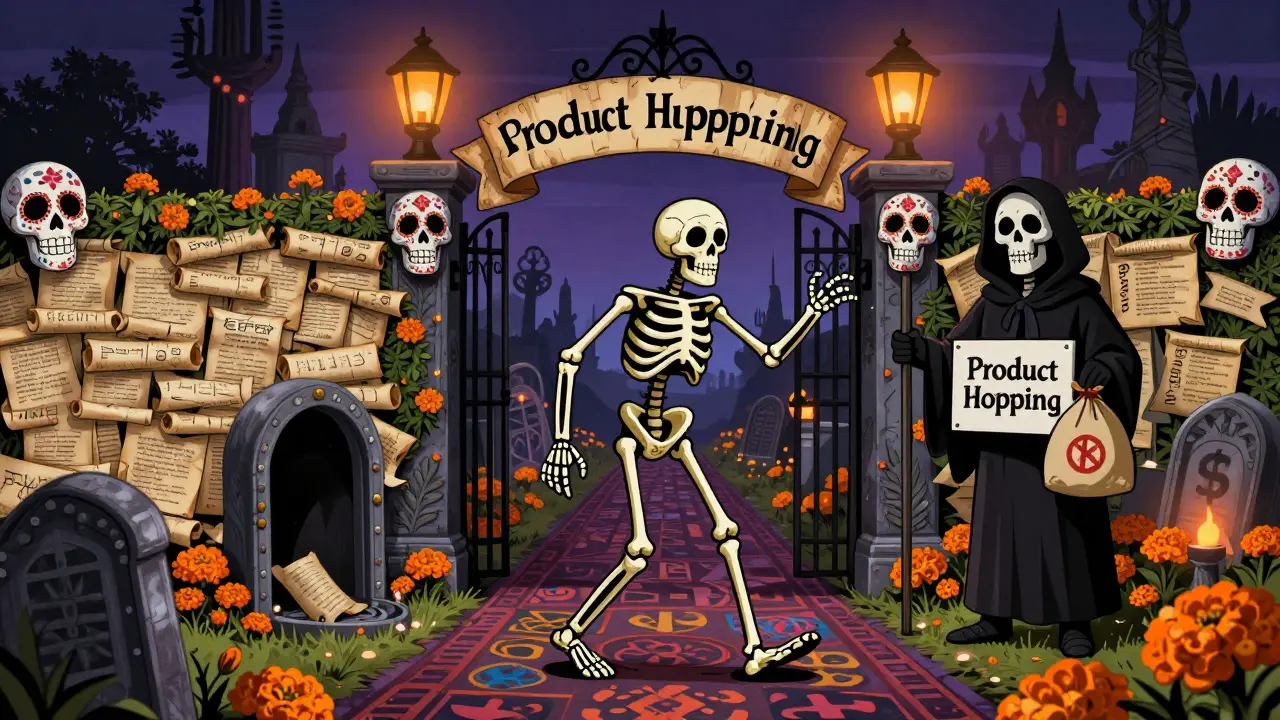
| Product Hopping | Brand discontinues old formulation and launches a new one before generic approval. | Invalidates pending generic approvals, resetting the clock. |
| Authorized Generics | Brand sells its own generic version at launch. | Captures generic market share, reducing pressure on brand price. |
| Patent Thickets | Filing multiple overlapping patents to complicate challenges. | Increases legal costs and risk for generic challengers. |
The Federal Trade Commission (FTC) documented 1,247 product hopping maneuvers between 2015 and 2020 alone. These strategies artificially extend monopolies, meaning buyers cannot leverage generic competition because the competition never arrives. Until regulatory bodies crack down harder on these anti-competitive practices, negotiators will continue to face inflated prices for drugs that should theoretically be generic-ready.
Stakeholder Perspectives and Future Trends
The debate over how to best leverage generic competition is far from settled. Patient advocacy groups like AARP strongly support aggressive negotiation tactics, citing potential annual savings of $6.8 billion for Medicare beneficiaries from the first ten negotiated drugs. They argue that every dollar saved is a dollar kept in patients' pockets.
Conversely, industry groups like PhRMA argue that excessive price suppression undermines the innovation ecosystem. Their concern is valid in theory: if profits vanish, R&D funding dries up. However, generic manufacturers present a different worry. The European Generic and Biosimilar Medicines Association (EGA) found that 78 percent of European manufacturers view predictable pricing as essential for investment. If government interventions create volatile or overly restrictive pricing environments, generic firms may hesitate to enter new markets, ultimately hurting consumers.
Looking ahead, the landscape is shifting toward more sophisticated data integration. By 2025, 73 percent of health technology assessment agencies plan to incorporate real-world comparative effectiveness data into their negotiations. This means buyers won't just look at price tags; they will compare outcomes. If a generic performs equally well to a brand, the price argument becomes undeniable. Additionally, the rise of biosimilars-generic versions of complex biologic drugs-presents new challenges. While small-molecule generics achieve 90 percent market share, biosimilars currently average only 45 percent. Buyers are learning that leveraging competition in the biologic space requires different tactics, often involving physician education and formulary incentives rather than pure price pressure.
Practical Takeaways for Healthcare Buyers
For healthcare systems and PBMs looking to optimize their negotiation strategies, the path forward is clear. First, build robust analytics capabilities. You need real-time visibility into patent expirations, pending generic applications, and competitor pricing. Second, diversify your leverage points. Don't rely solely on direct price cuts; use tiered formularies and step-therapy protocols to steer volume toward generics automatically. Finally, stay engaged with policy developments. Legislation like the proposed EPIC Act aims to protect generic entry incentives by delaying Medicare negotiations for small-molecule drugs until after competition is established. Understanding these legislative shifts helps buyers anticipate market changes and adjust their long-term contracting strategies accordingly.
Why do generic drug prices drop so sharply with more competitors?
Generic manufacturers have significantly lower production and marketing costs than brand-name companies. As more firms enter the market, they compete primarily on price to secure distribution contracts with pharmacies and insurers. This intense rivalry drives prices down rapidly, often reaching 90-97 percent discounts compared to the original brand name when six or more competitors exist.
Can Medicare negotiate prices for drugs that already have generics?
No, the Inflation Reduction Act specifically prohibits direct negotiation for drugs with existing generic competition. However, Medicare can use the prices of generic therapeutic alternatives as a benchmark to negotiate lower prices for brand-name drugs that lack direct generic equivalents but have similar treatments available.
What is "product hopping" and how does it affect negotiations?
Product hopping occurs when a brand manufacturer discontinues an older drug formulation and launches a new one just before a generic version of the old drug is approved. This invalidates the generic application, forcing the generic maker to start over. It delays competition, allowing the brand to maintain monopoly pricing and weakening the buyer's leverage.
How does tiered pricing work in international markets?
Tiered pricing, used in countries like Canada, sets maximum allowable drug prices based on the number of generic competitors. Prices are higher when competition is limited and decrease automatically as more generics enter the market. This provides a predictable framework for both manufacturers and payers while encouraging competitive pricing.
Do reverse payments hurt consumers?
Yes, reverse payments involve brand manufacturers paying generic companies to delay market entry. This keeps competition off the shelves for years, maintaining high drug prices. Studies show that such settlements can delay generic entry significantly, costing consumers and payers billions in unnecessary expenses.
Why is leveraging competition harder for biosimilars than small-molecule generics?
Biosimilars are complex biological products that are harder to manufacture and switch between due to safety concerns and physician hesitation. While small-molecule generics achieve about 90 percent market share, biosimilars average only 45 percent. This lower adoption rate reduces the competitive pressure on brand-name biologics, making price negotiations more challenging.