G6PD Medication Safety Checker
Check if medications are safe for people with G6PD deficiency. This tool is based on WHO guidelines and clinical evidence.
Imagine taking a common medicine for an infection, only to find your body starts destroying your own red blood cells. This isn’t rare-it happens every day to people with G6PD deficiency who aren’t tested or warned. G6PD deficiency is a genetic condition that affects about 400 million people worldwide, mostly in Africa, the Mediterranean, and Southeast Asia. It’s not something you can see or feel until something triggers it-like a medication you didn’t know was dangerous. The result? A sudden, life-threatening drop in hemoglobin called hemolytic anemia. But here’s the good news: hemolysis prevention is almost always possible-if you know what to avoid.
What G6PD Deficiency Actually Does to Your Blood
Your red blood cells need protection from everyday oxidative stress-things like infections, fava beans, or even certain chemicals. Glucose-6-phosphate dehydrogenase (G6PD) is the enzyme that keeps that protection running. When you’re deficient, your cells can’t make enough NADPH to keep glutathione active. Without it, your red blood cells break open under pressure. This isn’t a slow disease. It’s a silent timer. One wrong pill, and your hemoglobin can crash by 50% in less than a week.
There are over 200 known variants of G6PD deficiency, grouped into five classes. Most people fall into Class III-moderate deficiency-which makes up 80% of cases globally. People with Class I or II-common in Mediterranean and African populations-are at highest risk. Even if you’ve never had symptoms, you could still be carrying the gene. And yes, women can be affected too. About 15% of female carriers experience hemolysis because of how X-chromosome inactivation works. The myth that only men are at risk is outdated-and dangerous.
The 7 Medications That Can Trigger a Hemolytic Crisis
Not all drugs are risky. But some are absolute no-go zones. The World Health Organization lists 87 medications that can trigger hemolysis in G6PD-deficient people. Here are the most dangerous ones you need to know:
- Rasburicase - Used for tumor lysis syndrome. FDA has a Black Box Warning: 100% risk of severe hemolysis if given without testing. One dose can drop hemoglobin to 3 g/dL.
- Methylene blue - Used for methemoglobinemia. In G6PD-deficient patients, it causes hemolysis in 95% of cases. It’s ironic: the treatment for one blood problem triggers another.
- Primaquine - Used to cure malaria relapses. In Class I and II patients, it causes complete hemolysis at standard doses. WHO now requires G6PD testing before use.
- Dapsone - Used for leprosy and some skin conditions. Hemolysis occurs in 80% of patients at doses above 50 mg daily.
- Nitrofurantoin - A common UTI antibiotic. Avoid if you have G6PD deficiency. Safer alternatives like fosfomycin exist.
- Sulfonamides - Including sulfamethoxazole-trimethoprim (Bactrim). Even though the evidence is limited (only 17 documented cases since 1965), 92% of package inserts still warn against it. Better to be safe.
- Aspirin (high doses) - Not a problem in low doses (like 81 mg for heart health), but high-dose aspirin for fever or pain can trigger hemolysis in sensitive individuals.
Some medications are safe. Chloroquine for malaria prevention? Safe. Artemisinin-based combinations? Safe. Tafenoquine? Only safe if you’ve been tested first. The key isn’t avoiding all drugs-it’s avoiding the right ones.
Testing Is Not Optional-It’s Life-Saving
Many people live their whole lives unaware they have G6PD deficiency until they’re given a risky drug. In the U.S., only 12 states require newborn screening. In many African countries, it’s not done at all. But testing is fast, cheap, and accurate.
The fluorescent spot test gives results in 15 minutes and is 98.7% sensitive. A new FDA-approved point-of-care test (STANDARD G6PD Test System) delivers lab-quality results in just 8 minutes. This isn’t science fiction-it’s available now. If you’re from a high-prevalence region, have unexplained anemia, or are about to take any new medication, get tested. Don’t wait for a crisis.
And if you’ve already had a hemolytic episode? Don’t test right after. Your enzyme levels are temporarily boosted as new red blood cells are made. Wait at least three months for an accurate result.
What to Do If You’re Diagnosed
Getting diagnosed isn’t the end-it’s the start of living safely. Here’s what to do next:
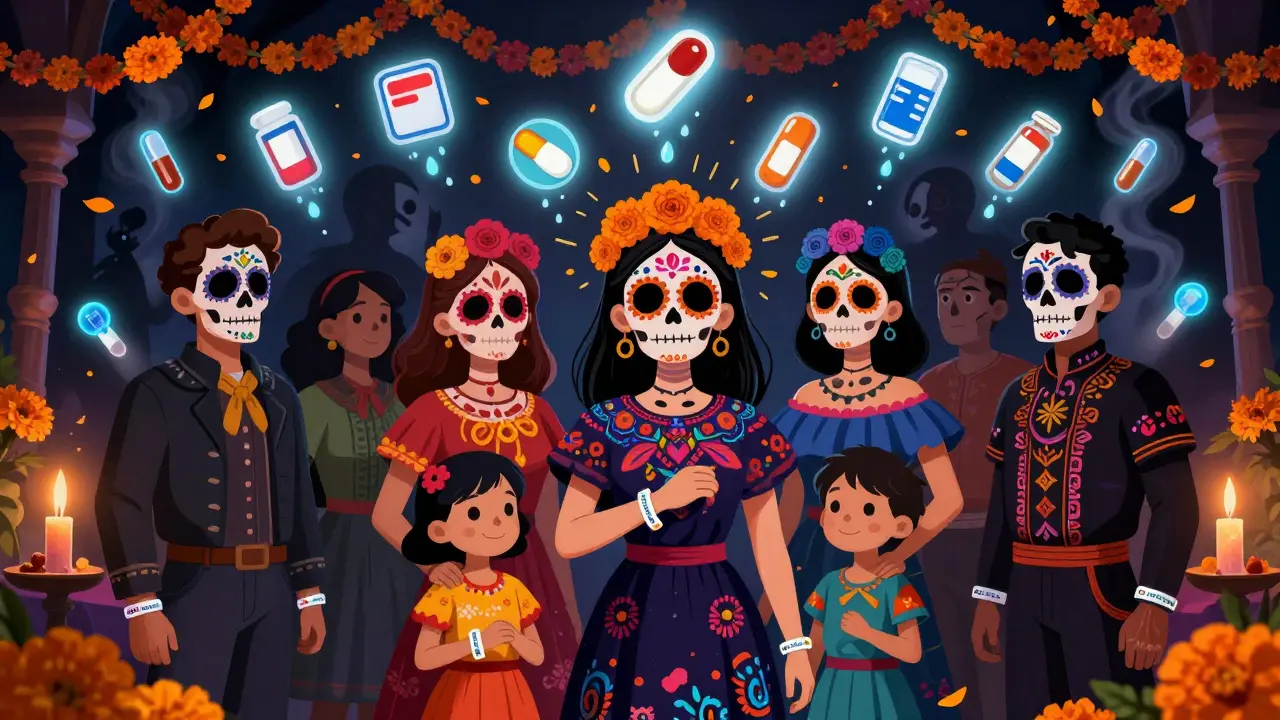
- Get a medical alert bracelet - It says “G6PD Deficient” and lists key drugs to avoid. Emergency staff won’t know your history, but they’ll see the bracelet.
- Keep a printed list of safe and unsafe medications - Use the WHO’s 2024 Essential Medicines List as your guide. Update it yearly.
- Carry a letter from your doctor - Especially if you travel. Many doctors outside your country don’t know about G6PD.
- Teach your family - If you’re unconscious in an ER, someone needs to tell the staff you’re G6PD deficient.
- Ask before any new prescription - Even if it’s “just” an antibiotic or painkiller. Say: “I have G6PD deficiency. Is this safe?”
One patient from Thailand, after being diagnosed, started carrying a laminated card with the list of unsafe drugs. In three years, she never had another episode. She’s not special-she’s informed.
Alternatives That Work
You don’t have to go without treatment. Safe alternatives exist for nearly every risky drug:
| Risky Drug | Use | Safe Alternative |
|---|---|---|
| Primaquine | Malaria radical cure | Tafenoquine (with testing) or chloroquine |
| Rasburicase | Tumor lysis syndrome | Allopurinol |
| Methylene blue | Methemoglobinemia | Ascorbic acid (vitamin C) or exchange transfusion |
| Nitrofurantoin | UTI treatment | Fosfomycin or cephalexin |
| Sulfonamides | Infections | Amoxicillin, doxycycline, or ciprofloxacin |
For travelers to malaria zones, use atovaquone-proguanil (Malarone) instead of primaquine. It’s more expensive, but it’s safe-and 95% of G6PD-deficient travelers who used it avoided hemolysis.
Why Most Doctors Don’t Know This
It’s not their fault. Medical schools rarely teach G6PD deficiency in depth. Drug labels are outdated. Many warnings are based on just a handful of old case reports. Dr. David C. Rees from King’s College London points out that sulfonylureas like glyburide are flagged in 92% of drug inserts-yet only 17 cases of hemolysis have ever been documented since 1965. That’s fear, not evidence.
But the real problem? Lack of systems. In the U.S., only 12 states screen newborns. In many hospitals, G6PD status isn’t in the electronic record. A nurse in Texas reported giving methylene blue to a patient who hadn’t been tested. Hemoglobin dropped from 14.2 to 5.8 in 48 hours. He needed three blood transfusions.
When hospitals use clinical decision support tools that flag risky drugs based on G6PD status, prescribing errors drop by 89%. That’s not theory-it’s real data from 15 hospitals in California.
What’s Changing for the Better
Things are improving. The WHO now recommends universal screening in all countries where G6PD deficiency affects more than 5% of the population-that’s 127 countries, covering 3.2 billion people. The Global Fund has put $127 million into testing infrastructure across 32 African and Asian nations. In Saudi Arabia, after introducing universal newborn screening, hospital admissions for hemolytic crises dropped by 78% over 10 years.
New research is promising too. A 2024 study showed that N-acetylcysteine (NAC) can protect red blood cells from oxidative damage when given with primaquine. It’s not standard yet-but it could change how we treat malaria in G6PD-deficient people. And Phase I trials for a recombinant G6PD enzyme replacement therapy are set to begin in late 2024. The goal? A future where deficiency doesn’t mean danger.
Final Takeaway: Knowledge Is Your Shield
G6PD deficiency isn’t a death sentence. It’s a manageable condition-if you know the rules. The people who thrive with it aren’t lucky. They’re informed. They test. They ask. They carry their list. They don’t assume a doctor knows. They don’t trust labels without proof.
If you or someone you love has G6PD deficiency, here’s your action plan:
- Get tested if you’re from a high-risk region or have unexplained anemia.
- Keep a current list of unsafe and safe medications.
- Always tell every healthcare provider before any treatment.
- Use a medical alert bracelet.
- Teach your family what to say in an emergency.
Over 90% of people who get proper education and avoid triggers never have another hemolytic episode. You don’t need to live in fear. You just need to know what to avoid-and how to speak up.
Can women have G6PD deficiency?
Yes. While G6PD deficiency is X-linked and more common in men, women can be affected too. About 15% of female carriers experience hemolysis due to random X-chromosome inactivation. This means some of their red blood cells lack the enzyme, making them vulnerable to oxidative stressors like certain medications. Don’t assume you’re safe just because you’re a woman.
Is G6PD testing done at birth?
In some places, yes. The American Academy of Pediatrics recommends testing all newborns in regions where G6PD deficiency affects more than 5% of the population. This includes parts of the U.S., Saudi Arabia, and many African and Asian countries. But in most U.S. states and many low-resource countries, newborn screening is not mandatory. If you’re unsure, ask your pediatrician or request the test.
Can I take ibuprofen or acetaminophen if I have G6PD deficiency?
Yes. Both ibuprofen and acetaminophen (paracetamol) are considered safe at standard doses. They are not oxidative stressors and do not trigger hemolysis in G6PD-deficient individuals. However, avoid high-dose aspirin-especially for fever or pain management-as it can be risky. Always check with your doctor before taking any new medication, even over-the-counter ones.
What should I do if I accidentally take a risky medication?
Seek medical help immediately. Symptoms of hemolysis include dark urine (like cola), extreme fatigue, yellowing skin or eyes, rapid heartbeat, and shortness of breath. A blood test will show a sudden drop in hemoglobin and signs of red blood cell destruction. Treatment includes stopping the drug, hydration, oxygen, and sometimes a blood transfusion. The sooner you get help, the better your outcome.
Are herbal supplements safe with G6PD deficiency?
Many are not. Some herbal products contain compounds that act as oxidative stressors. Examples include camphor, naphthalene (found in mothballs), and high doses of vitamin K3 (menadione). Even some traditional remedies like tea tree oil or certain Chinese herbs can be dangerous. Always check with your doctor before taking any supplement-herbal doesn’t mean safe.
Can I eat fava beans if I have G6PD deficiency?
No. Fava beans (broad beans) are one of the most common triggers for hemolysis in G6PD-deficient people, especially in Mediterranean and African populations. Even inhaling fava bean pollen can cause a reaction in some. Avoid fava beans entirely, including in soups, salads, or processed foods. This is one trigger that’s easy to avoid-and one of the most dangerous.
Will G6PD deficiency affect my children?
It can. G6PD deficiency is inherited on the X chromosome. If you’re a man with G6PD deficiency, all your daughters will carry the gene, but none of your sons will. If you’re a woman who carries the gene, each son has a 50% chance of having the deficiency, and each daughter has a 50% chance of being a carrier. Genetic counseling is recommended if you’re planning a family, especially if you’re from a high-prevalence region.
What’s Next for You
If you’ve never been tested and you’re from a region with high G6PD prevalence, get tested now. If you’ve been diagnosed, make sure your doctor has your records. Carry your list. Educate your family. Speak up. Hemolysis isn’t inevitable-it’s preventable. And in a world where medicine is getting smarter, you don’t have to be the exception that gets left behind.
Jane Lucas
December 28, 2025 AT 09:14dean du plessis
December 30, 2025 AT 02:29Kylie Robson
December 31, 2025 AT 03:04Caitlin Foster
December 31, 2025 AT 09:26Andrew Gurung
January 1, 2026 AT 15:54Paula Alencar
January 2, 2026 AT 10:24Chris Garcia
January 3, 2026 AT 02:26James Bowers
January 4, 2026 AT 02:15Elizabeth Alvarez
January 4, 2026 AT 18:48Miriam Piro
January 5, 2026 AT 22:38Olivia Goolsby
January 6, 2026 AT 09:03Janice Holmes
January 7, 2026 AT 23:30Will Neitzer
January 8, 2026 AT 22:31Alex Lopez
January 9, 2026 AT 23:25Nikki Thames
January 10, 2026 AT 21:59