Dry Mouth Product Finder
Find products tailored to your needs
Select your requirements and see which dry mouth products match your needs. Based on expert recommendations in the article.
Recommended Products
Products that match your selections. Based on dental professional recommendations.
Waking up with a cottony mouth, struggling to swallow your morning toast, or noticing your lips crack even when you drink water - these aren’t just annoyances. They’re signs of dry mouth, a condition that affects nearly 1 in 10 adults and up to 3 in 10 people over 65. It’s not just about discomfort. Without enough saliva, your mouth loses its natural defense system. Bacteria multiply faster, plaque builds up, and your risk for cavities, gum disease, and oral infections skyrockets. The good news? You don’t have to live with it. With the right products and daily habits, you can manage dry mouth effectively - and protect your teeth in the process.
Why Dry Mouth Is More Than Just Thirst
Dry mouth, or xerostomia, isn’t caused by not drinking enough water. It’s usually a side effect of something else - most often, medications. Over 500 common prescriptions list dry mouth as a side effect, including antidepressants, blood pressure meds, antihistamines, and pain relievers. Aging also plays a role. As we get older, our salivary glands naturally produce less fluid. Medical conditions like diabetes, Sjögren’s syndrome, and radiation therapy for head and neck cancer can also trigger it.Saliva isn’t just wetness. It’s your mouth’s natural cleanser. It neutralizes acids, washes away food particles, and helps digest food. Without it, your teeth are exposed to constant acid attacks. That’s why people with dry mouth often develop cavities in unusual places - along the gum line or on the front edges of teeth - where plaque collects easily.
What to Look for in Dry Mouth Products
Not all mouthwashes, sprays, or gels are created equal. Many commercial products contain alcohol, sugar, or sodium lauryl sulfate - ingredients that actually make dry mouth worse. The best products are designed to mimic natural saliva. Here’s what to check for:- Xylitol: A natural sweetener that doesn’t feed cavity-causing bacteria. In fact, it helps reduce them. Look for it in rinses, lozenges, and gum.
- Carboxymethylcellulose or hydroxyethyl cellulose: These thickening agents help retain moisture in your mouth longer.
- Alcohol-free: Alcohol dries out tissues. Avoid it completely.
- No sodium lauryl sulfate (SLS): This foaming agent in toothpaste can irritate dry, sensitive oral tissues.
- Fluoride: Essential for strengthening enamel against decay.
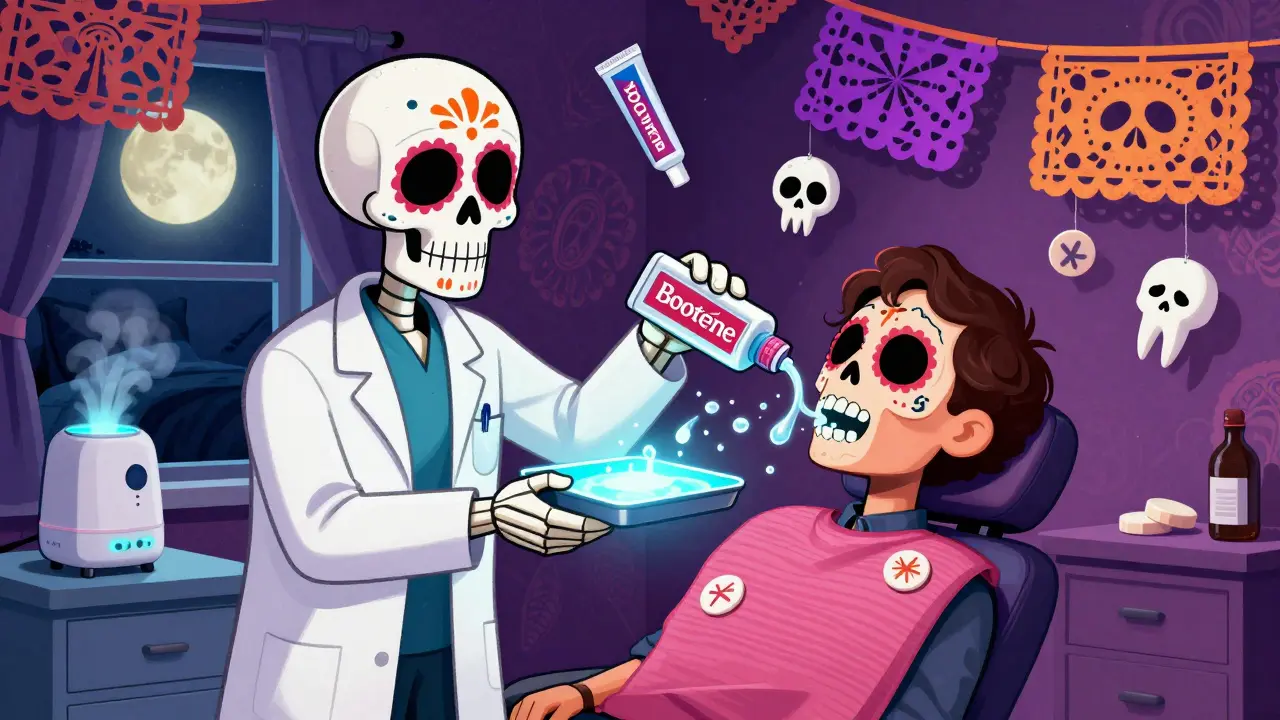
One brand stands out in professional recommendations: Biotène is a line of oral care products specifically formulated for dry mouth, with formulations that mimic saliva’s pH and moisture balance. It’s the #1 dentist, pharmacist, and hygienist recommended brand for dry mouth management.
Top Dry Mouth Products and How to Use Them
Here’s how the most trusted products break down by type and use:
| Product Type | Brand | Key Features | Best For | Price (Approx.) |
|---|---|---|---|---|
| Moisturizing Gel | Biotène Oralbalance Gel | Long-lasting (up to 4 hours), thick consistency, alcohol-free, xylitol | Nighttime use, severe dryness | $8.29 for 1.5 oz |
| Oral Rinse | Biotène Dry Mouth Oral Rinse | Xylitol, no alcohol, pH-balanced, gentle formula | Daily use, morning/night routine | $12.99 for 33.8 fl oz |
| Lozenges | ACT Dry Mouth Lozenges | Xylitol, sugar-free, dissolves slowly | Daytime relief, on-the-go | $6.79 for 36 pieces |
| Lozenges (Extended Release) | XyliMelts | Adhesive discs that stick to gums, release moisture slowly | Longer relief, sleep, travel | $11.49 for 40 discs |
| Toothpaste | Colgate Dry Mouth Toothpaste | Fluoride, no SLS, designed for dry mouth patients | Daily brushing | $5.99-$7.99 per tube |
Biotène’s Oralbalance Gel is especially useful at night. Apply a thin layer to your gums, tongue, and inside cheeks before bed. It stays put longer than sprays or rinses. If you’re on the go, ACT lozenges or XyliMelts are convenient. Just pop one in your mouth and let it dissolve slowly - no chewing, no swallowing. XyliMelts even stick to your gums like a patch, releasing moisture for hours.
Simple Habits That Make a Big Difference
Products help - but habits fix the root problem. Here’s what dental professionals recommend daily:
- Sip water constantly. Keep a bottle with you. Don’t wait until you’re thirsty. Small sips throughout the day are better than chugging.
- Suck on ice chips. They moisten your mouth without spiking sugar or acid levels.
- Chew sugar-free gum with xylitol. It stimulates saliva flow naturally. Look for brands like Spry or Epic.
- Breathe through your nose. Mouth breathing dries out your oral tissues. If you snore or have nasal congestion, talk to your doctor.
- Use a humidifier at night. Adding moisture to your bedroom air prevents overnight dryness. A simple cool-mist humidifier works wonders.
- Avoid alcohol, caffeine, and sugary drinks. Coffee, soda, and wine all worsen dryness. Stick to water, herbal teas, or sugar-free beverages.
- Steer clear of acidic or sugary foods. Citrus fruits, candy, and baked goods feed bacteria that thrive in dry mouths. If you eat them, rinse with water right after.
Nighttime Routine for Maximum Relief
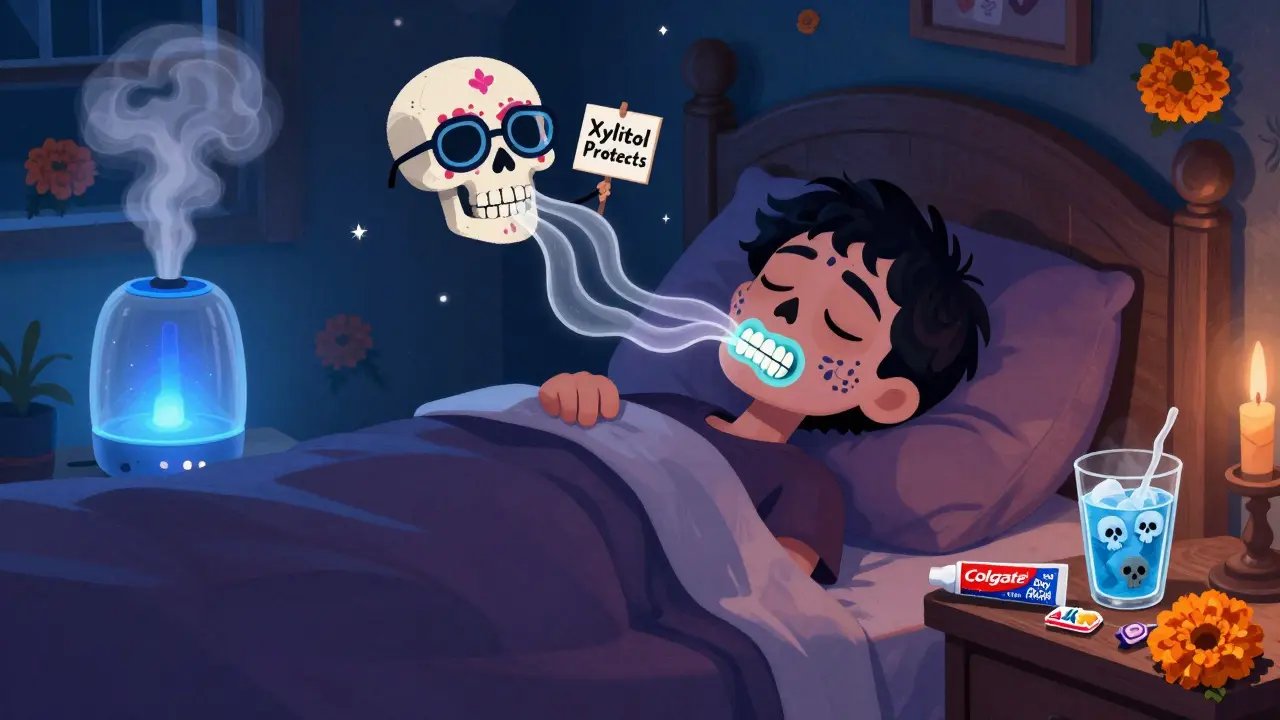
Nighttime is when dry mouth hits hardest. Your saliva production drops naturally while you sleep - and if you already have low flow, it’s a perfect storm for damage. Here’s a simple nighttime routine:
- Brush with fluoride toothpaste designed for dry mouth (like Colgate Dry Mouth).
- Rinse with a xylitol-based, alcohol-free mouthwash (like Biotène Oral Rinse).
- Apply Biotène Oralbalance Gel to your gums, tongue, and inner cheeks.
- Put on a humidifier in your bedroom.
- Consider a custom fluoride gel tray from your dentist - especially if you’ve had multiple cavities.
These steps don’t take more than 5 minutes. But they can reduce your risk of decay by up to 70% over time, according to dental studies.
When to See Your Dentist
Even with the best products and habits, dry mouth can still lead to serious problems. If you notice any of these, schedule a dental visit:
- More than two cavities in the past year
- Red, swollen, or bleeding gums
- Sores or white patches in your mouth that don’t heal
- Difficulty swallowing or speaking
- Bad breath that won’t go away
Your dentist can check for early signs of decay, recommend prescription fluoride treatments, and even create custom trays to hold fluoride gel overnight. Most dentists now screen for dry mouth during routine exams - especially for patients over 50 or those taking multiple medications.
What Doesn’t Work - And Why
Some common fixes actually make things worse:
- Drinking sugary soda to relieve dryness - sugar feeds bacteria, and acid erodes enamel.
- Using regular mouthwash - most contain alcohol, which dries your mouth even more.
- Chewing regular gum - it has sugar, which increases decay risk.
- Using lemon water - while it may feel refreshing, citric acid eats away at enamel.
- Waiting until you’re thirsty - by then, you’re already dehydrated.
There’s no magic bullet. But combining the right products with smart habits gives you control. You don’t have to live with a dry, uncomfortable mouth - and you don’t have to lose your teeth because of it.
Can dry mouth go away on its own?
Sometimes, yes - if it’s caused by temporary factors like dehydration or breathing through your mouth while sick. But if it’s due to medications, aging, or a medical condition, it won’t go away without active management. Left untreated, it leads to tooth decay, gum disease, and infections.
Is xylitol safe for daily use?
Yes, xylitol is safe and recommended by the Mayo Clinic for daily use in dry mouth products. It helps prevent cavities by reducing harmful bacteria. But consuming large amounts - more than 40-50 grams per day - can cause bloating or diarrhea in some people. Most lozenges and rinses contain safe, low doses.
Can I use Biotène with my regular toothpaste?
You can, but it’s better to switch to a toothpaste made for dry mouth, like Colgate Dry Mouth or Sensodyne Pronamel. Regular toothpaste often contains SLS, which can irritate dry tissues. Use Biotène rinse or gel after brushing - not as a replacement.
Are dry mouth products covered by insurance?
Most over-the-counter products aren’t covered. But if your dry mouth is caused by a medical condition (like Sjögren’s syndrome or radiation therapy), your doctor may prescribe a saliva-stimulating medication like pilocarpine, which can be covered. Always check with your provider.
How long does it take to see improvement?
You’ll notice less discomfort within a few days of starting a consistent routine. But protecting your teeth takes longer. It can take 3-6 months of daily care to significantly reduce your risk of new cavities. Stick with it - the payoff is a healthier mouth and fewer dental visits.
Can I make my own dry mouth rinse at home?
It’s not recommended. Homemade rinses often lack the right pH balance and can be too acidic or too alkaline, damaging enamel. Store-bought products are tested for safety and effectiveness. A simple water rinse with a pinch of baking soda can help temporarily, but it’s not a long-term solution.
Managing dry mouth isn’t about finding one miracle product. It’s about building a routine - one that protects your teeth, eases discomfort, and lets you eat, speak, and sleep without constant irritation. Start with one change: swap your mouthwash for a xylitol-based, alcohol-free rinse. Add a humidifier. Sip water instead of coffee in the afternoon. Small steps add up to real results.
Dolores Rider
January 24, 2026 AT 01:54venkatesh karumanchi
January 24, 2026 AT 17:14John McGuirk
January 26, 2026 AT 07:08Kevin Waters
January 27, 2026 AT 12:18Kat Peterson
January 28, 2026 AT 03:24Jamie Hooper
January 30, 2026 AT 02:46asa MNG
January 31, 2026 AT 04:21Chloe Hadland
February 1, 2026 AT 20:03Amelia Williams
February 3, 2026 AT 05:46Viola Li
February 4, 2026 AT 17:52Darren Links
February 6, 2026 AT 07:35Izzy Hadala
February 7, 2026 AT 21:00Elizabeth Cannon
February 9, 2026 AT 12:19Gina Beard
February 9, 2026 AT 15:57