Key Takeaways for Sick Day Management
- Never stop insulin: Basal insulin is required even if you aren't eating.
- Hydrate aggressively: Use specific fluid rotations based on your glucose levels.
- Check ketones often: Test when blood glucose exceeds 240 mg/dL.
- Monitor closely: Check glucose every 2-4 hours depending on age.
- Know the red flags: Seek help if you can't keep liquids down for over 4 hours.
The Golden Rule: Never Skip Your Insulin
One of the most dangerous mistakes people make during a flu or stomach bug is stopping their insulin because they aren't eating carbohydrates. This is a recipe for DKA. Your body needs basal insulin long-acting insulin that provides a steady background level to keep blood glucose stable to manage the glucose produced by your liver, especially when stress hormones are peaking.
If you use long-acting options like Lantus, Levemir, or Basaglar, keep taking them. For those using an insulin pump, you might encounter a specific challenge: insulin resistance. Clinical observations suggest that increasing your basal rate by 20% for a 12-hour window can help stabilize glucose when ketones are present. If you're on multiple daily injections (MDI), consult your doctor about temporary dose increases during a spike.
Mastering the Hydration Rotation
Staying hydrated is your best defense against DKA, as water helps flush excess glucose and ketones out of your system. But you can't just drink plain water; you need to balance hydration with glucose management. The goal is to avoid crashes while keeping the spikes under control.
A common rule of thumb for children is the "age in ounces" method: a 10-year-old should aim for 10 ounces of fluid per hour. For adults, the target is usually 6-8 ounces every hour. The type of fluid you choose should depend on your current reading:
- Glucose < 100 mg/dL: Stick to sugary fluids to prevent a low.
- Glucose 100-180 mg/dL: Alternate between water and a beverage with about 15g of carbs (like a small glass of juice or a sports drink).
- Glucose > 180 mg/dL: Use sugar-free fluids, such as water or broth.
Be careful with over-the-counter cold medicines. Many syrups contain high amounts of sugar or alcohol that can throw your numbers off. Always check the label or look for sugar-free alternatives.
When and How to Check Ketones
Ketones are acidic chemicals your body produces when it burns fat for fuel instead of glucose. In diabetes, too many ketones mean you don't have enough insulin to get energy into your cells. You should start testing for ketones as soon as your blood glucose exceeds 240 mg/dL or if you have two consecutive readings over 300 mg/dL.
| Ketone Level (Blood) | Interpretation | Action Required |
|---|---|---|
| 0.6 mmol/L or less | Normal/Low | Continue standard sick day monitoring |
| 0.6 - 1.0 mmol/L | Mild | Increase fluids, check glucose every 2 hours |
| 1.1 - 1.5 mmol/L | Moderate | Contact provider, consider basal increase |
| Over 1.5 mmol/L | High/Dangerous | Immediate medical attention / ER |
If you use urine strips, look for "moderate" or "large" readings. However, blood ketone meters are generally more accurate and provide a real-time number. If you are a pump user and see blood ketones over 1.5 mmol/L, one of your first steps should be changing your infusion site, as the cannula may be kinked or the site may be inflamed, preventing insulin absorption.
T1D vs. T2D: Different Rules for Different Types
While the goal is the same-avoiding DKA-the approach varies based on the type of diabetes. People with Type 1 Diabetes an autoimmune condition where the pancreas produces little to no insulin must be incredibly vigilant with ketone checks because they have zero endogenous insulin production. They cannot reduce their basal dose below 80% even when fasting.
People with Type 2 Diabetes a condition characterized by insulin resistance and relative insulin deficiency may not always need ketone checks unless they are using insulin or their glucose stays above 240 mg/dL for a long time. However, some Type 2 patients who normally only use oral medications may actually need temporary insulin during a severe illness to keep their levels within the recommended sick-day target of 110-180 mg/dL.

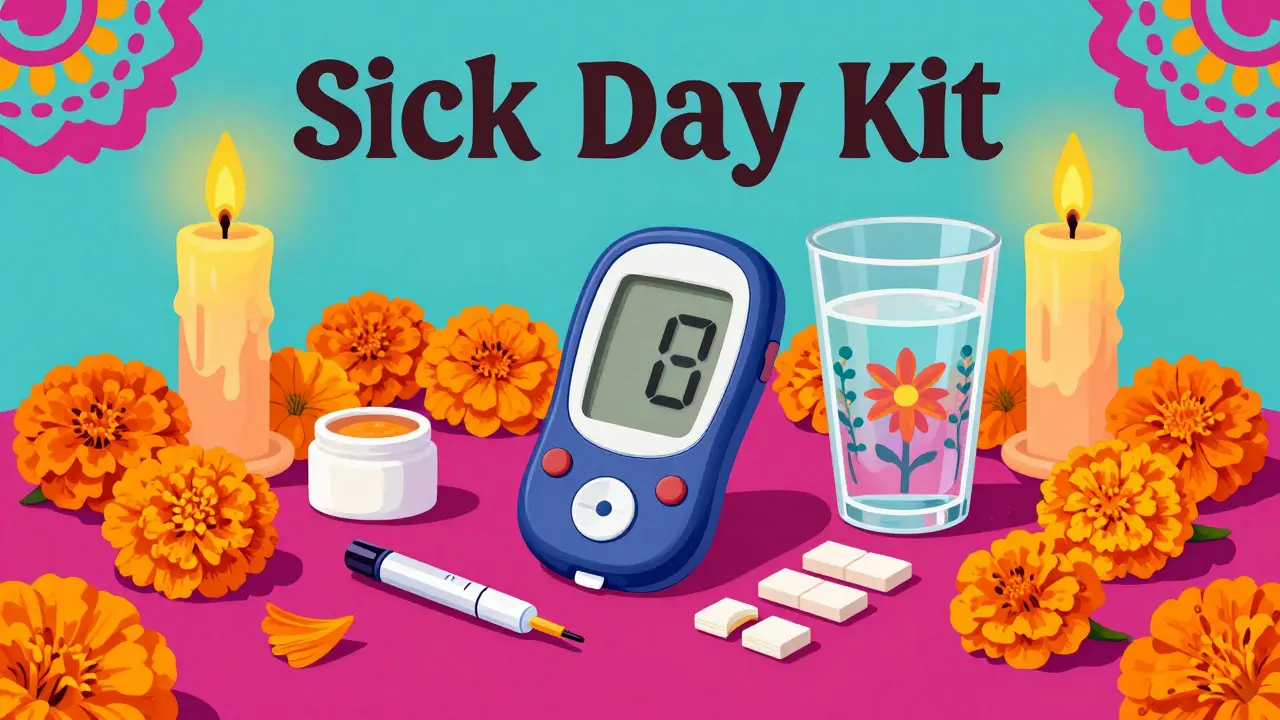
Building Your Sick Day Kit
You shouldn't be hunting for supplies when you have a 102-degree fever. Prepare a dedicated kit that stays in a known location. According to clinical guidelines, your kit should include:
- Fresh Ketone Strips: Ensure they aren't expired (most are only good for 6 months after opening).
- Backup Supplies: A 7-day supply of all medications and insulin.
- Measuring Cup: An 8-ounce cup to ensure you're actually hitting your hydration targets.
- Fast-Acting Carbs: Glucose tabs or gel for the "15-15 rule" (15g of carbs every 15 minutes) if you hit a low.
- Thermometer: To track fever, which directly impacts insulin sensitivity.
Red Flags: When to Head to the ER
Not every illness can be managed at home. There are specific markers that mean you've moved past "sick day rules" and into an emergency. You should seek immediate care if:
- Persistent Vomiting: You cannot keep any liquids down for more than 4 hours.
- Respiratory Distress: You start breathing deeply or rapidly (Kussmaul breathing), which is a sign of severe acidosis.
- Rapid Weight Loss: An unintended drop of 5 pounds or more during a short illness indicates severe hyperglycemia.
- Unresponsive Glucose: Your blood sugar stays above 240 mg/dL despite taking correction doses.
- Altered Mental State: Confusion or extreme lethargy.
Can I stop my insulin if I'm not eating because of nausea?
No. You must never stop your basal (long-acting) insulin. Even when you aren't eating, your liver releases glucose and stress hormones increase insulin resistance. Skipping insulin can lead to diabetic ketoacidosis (DKA) very quickly.
How often should I check my blood sugar when sick?
For adults, it is recommended to check every 3-4 hours. For children, the frequency should increase to every 2-3 hours due to their higher risk of rapid fluctuations.
What is the "age in ounces" rule for hydration?
This is a pediatric guideline where a child drinks an amount of fluid in ounces equal to their age every hour. For example, an 8-year-old would aim for 8 ounces of fluid per hour.
Why do my blood sugars spike even though I'm not eating?
Illness triggers the release of cortisol and adrenaline. These stress hormones cause the liver to release more glucose and make your cells more resistant to insulin, leading to higher readings despite fasting.
When should I use a blood ketone meter versus a urine strip?
Blood ketone meters are preferred because they provide a precise mmol/L value and reflect current ketone levels immediately. Urine strips are a helpful alternative but can be delayed and are less precise.
What should I do if my ketones are moderate but my glucose is normal?
This is a warning sign. Increase your water intake and contact your healthcare provider. It may indicate that your insulin is not working effectively or that you are dehydrated, which can concentrate ketones.
Trey Kauffman
April 13, 2026 AT 01:27Ah yes, the joy of biological betrayal. Nothing says "wellness" like your own liver deciding to dump glucose into your bloodstream just because you have a sniffle. Truly a poetic masterpiece of human evolution. 🙄
Emily Wheeler
April 13, 2026 AT 15:18It is honestly so fascinating how the body's stress response creates this complex intersection of chemical signals where the cortisol just overrides everything, and while it feels overwhelming in the moment, focusing on the systematic rotation of fluids as a way to maintain a delicate internal equilibrium is actually a beautiful way to approach healing, almost like a meditative practice of monitoring one's own biology to ensure that the mind can remain present while the body fights off the infection and we all just try our best to stay afloat in this chaotic sea of hormone fluctuations.
Franklin Anthony
April 13, 2026 AT 16:00funny how they want us checking ketones every 2 hours while the pharma companies just sell us more expensive strips lol just a thought maybe the numbers are just suggestions anyway’
Victor Parker
April 14, 2026 AT 18:34Typical. They tell you to trust the meter but who made the meter? 🧐 Probably the same people hiding the real cures from us. Just follow your gut and maybe drink some lemon water instead of those "suggested" sports drinks 🙄
Ryan Hogg
April 15, 2026 AT 02:44I had a stomach bug last month and I literally couldn't stop crying because I was so scared of DKA. I felt like I was fighting for my life alone in my room and nobody gets how terrifying the "moderate" ketone reading is. It's just a nightmare.
Simon Stockdale
April 15, 2026 AT 20:24why do we even need these fancy kits when americans just need more grit and better food in the first place lol seriously though i always forget to check my ketone strips expiry date and then i'm just standing there with a dead strip like a total idiot while my fever is hitting 103 and i'm just trying to survive the night in the greatest country on earth god bless!
Danny Wilks
April 16, 2026 AT 18:27The precision of the "age in ounces" rule for pediatric care is a rather interesting clinical benchmark, and it's quite helpful to see it articulated so clearly here since many of us often overlook the specific volumetric requirements of hydration during a hyper-glycemic state. I tend to prefer the more methodical approach of tracking every single ounce in a log, as it reduces the anxiety associated with the unpredictability of illness-induced glucose spikes.
Lynn Bowen
April 17, 2026 AT 00:51The hydration rotation is a great tip for anyone who struggles with the balance of sugars during a fever.
Kelly DeVries
April 18, 2026 AT 21:53omg i literally cannot with people who skip basal insulin like do you even want to live lol’ its actually insane how some people just wing it and then act surprised when they end up in the er’ literally just read the guide and stop the drama’
Suchita Jain
April 19, 2026 AT 01:32It is imperative that one adheres to the medical guidelines provided. I find it quite distressing that some individuals would consider ignoring their basal insulin requirements during an illness. Such negligence is completely unacceptable and irresponsible.
Rakesh Tiwari
April 20, 2026 AT 19:54Oh, look at us, following a list of rules like obedient little children. How wonderful that we've reduced the complexity of human survival to a table of mmol/L values. I'm sure the corporate overlords are thrilled we're so diligent about buying their strips. 🙄