Medication Cost-Benefit Calculator
Understand Cost vs Benefit
Calculate whether expensive treatments provide value by comparing cost per quality-adjusted life year (QALY) to common thresholds. Input your treatment details to see if the benefits justify the price.
Treatment Details
Results
Side Effect Impact
The treatment has no side effects to assess.
Financial Assistance Options
No assistance options available for this treatment.
When a medication costs $500,000 per treatment and comes with a 30% chance of life-threatening side effects, why would anyone take it? The answer isn’t simple. For some people, it’s the only thing standing between them and death. For others, it’s the difference between being bedridden and playing with their grandkids. This isn’t about greed or profit - it’s about cost vs benefit in real, human terms.
Not All Expensive Drugs Are Created Equal
Not every high-priced drug is a miracle. Some are just overpriced versions of older treatments. But others - like CAR-T cell therapies for leukemia or gene therapies for spinal muscular atrophy - completely change the game. Take tisagenlecleucel, a CAR-T treatment that costs $475,000 per infusion. It’s not a pill you pop daily. It’s a one-time, personalized treatment that reprograms your own immune cells to hunt down cancer. For kids with relapsed B-cell leukemia who’ve run out of options, this isn’t a luxury. It’s a lifeline. Studies show 80% of these patients go into remission after one treatment. That’s not improvement - that’s cure.Compare that to older chemotherapy regimens. They cost less - maybe $10,000 a year - but they come with brutal side effects: constant nausea, hair loss, organ damage, and a 40% chance of the cancer coming back within a year. Suddenly, the $475,000 treatment doesn’t look so extreme. It looks like a trade-off: pay once, live longer, live better.
The Hidden Math Behind the Price Tag
Drug companies don’t set prices based on how much it costs to make the pill. They price based on value. And value isn’t just about survival. It’s about quality. A 2024 NIH study found that the 50 most expensive drugs in the U.S. cost an average of $16,178 per dose. Over 60% of them are biologics - complex molecules made from living cells. These aren’t mass-produced like aspirin. Each batch requires a lab, trained technicians, sterile conditions, and weeks of testing. That’s why they’re expensive.But here’s the real question: does the benefit justify the cost? That’s where the incremental cost-effectiveness ratio (ICER) comes in. It measures how much extra money you spend to gain one extra year of healthy life - called a QALY (quality-adjusted life year). In the U.S., anything under $150,000 per QALY is generally seen as acceptable. In the UK, they draw the line at £30,000. When a drug like daratumumab for multiple myeloma had an ICER of £120,000 per QALY, the UK’s NICE rejected it. But after the manufacturer dropped the price by 60%, it was approved. The benefit was real. The cost was negotiable.
Side Effects Aren’t the Dealbreaker You Think
People assume side effects make expensive drugs unacceptable. But that’s not how patients experience them. Consider hepatitis C. A decade ago, treatment meant weekly interferon injections for a year. Side effects? Severe flu-like symptoms, depression, fatigue, even suicidal thoughts. Cure rate? Around 50%. Today, a 12-week course of Harvoni costs $7,153 out-of-pocket - still expensive. But side effects? Mild headache or tiredness. Cure rate? 95%. For many, the cost was worth it. The side effects were barely noticeable compared to what they’d lived through before.A 2023 patient forum from the American Society of Clinical Oncology found that 78% of people who received CAR-T therapy considered the treatment worth it - even though 60% of them ended up in the hospital for cytokine release syndrome, a dangerous immune reaction. They knew the risks. They chose them anyway. Why? Because before the treatment, they were dying. After? They were walking, working, going to school. The side effects were temporary. The cancer wasn’t.
The Real Problem: Who Pays?
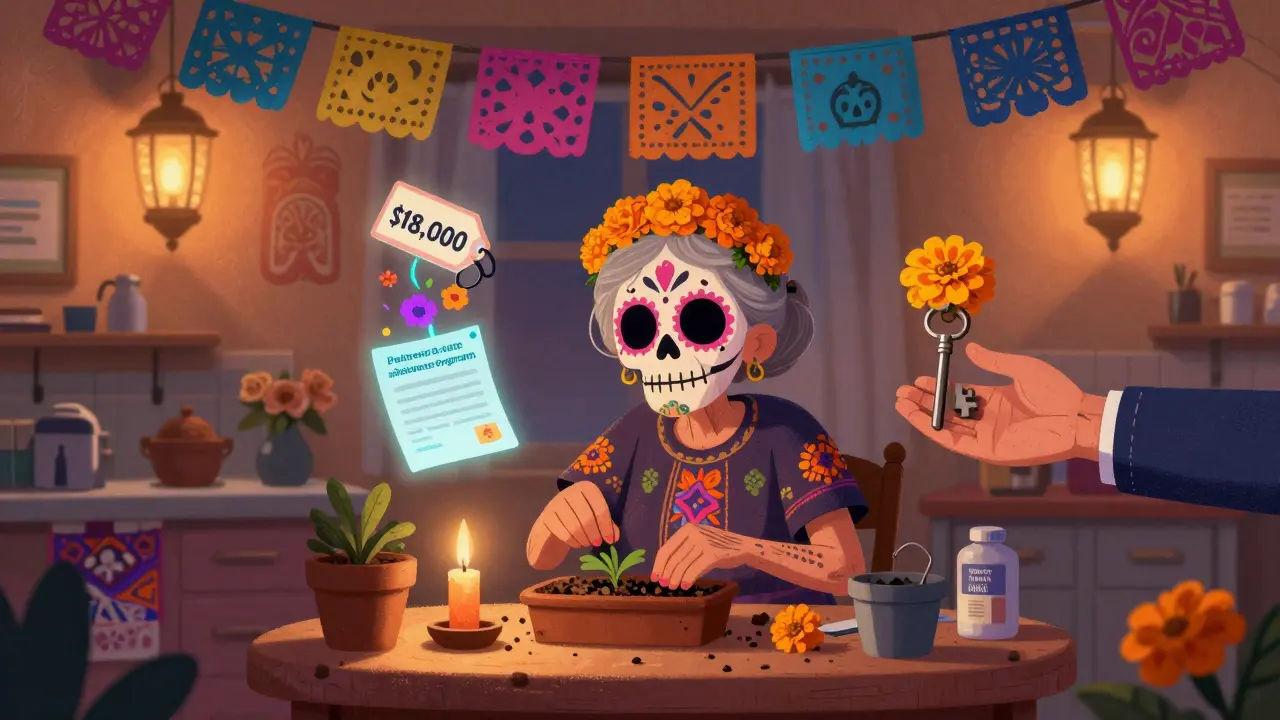
The biggest issue isn’t the drug’s price. It’s who ends up footing the bill. In the U.S., Medicare Part D beneficiaries without financial help paid an average of $5,692 out-of-pocket in 2019 for just one drug - ruxolitinib. That’s more than most people make in a month. A 2022 survey found 68% of patients on drugs over $10,000 a month skipped doses because they couldn’t afford them. Another 42% chose between medicine and food.That’s not a medical decision. That’s a survival decision. And it’s happening across the country. A Reddit user from Ohio shared how her son with hemophilia needed emicizumab - $15,000 a month. Her insurance covered 80%, but she still owed $3,000. She worked two jobs. She skipped her own medications. She cried every time she had to refill the prescription.
Meanwhile, in Germany and France, drug prices are negotiated before they hit the market. HTA agencies evaluate whether a drug adds real value. If it doesn’t, it gets rejected. In the U.S., there’s no such system. Drugmakers set the price. Insurance companies scramble to cover it. Patients suffer the gaps.
When Expensive Medications Make Sense
So when does the cost make sense? Here’s what actually works:- When alternatives don’t work - If you’ve tried everything else and nothing helped, the expensive option isn’t a luxury. It’s your last shot.
- When side effects are manageable - Temporary hospitalization, nausea, or fatigue are far better than permanent disability or death.
- When it stops long-term costs - A $500,000 gene therapy for a rare disease might eliminate $2 million in lifetime hospital visits, surgeries, and supportive care.
- When it restores quality of life - Being able to hug your child, go to work, or sleep through the night has a value no spreadsheet can capture.
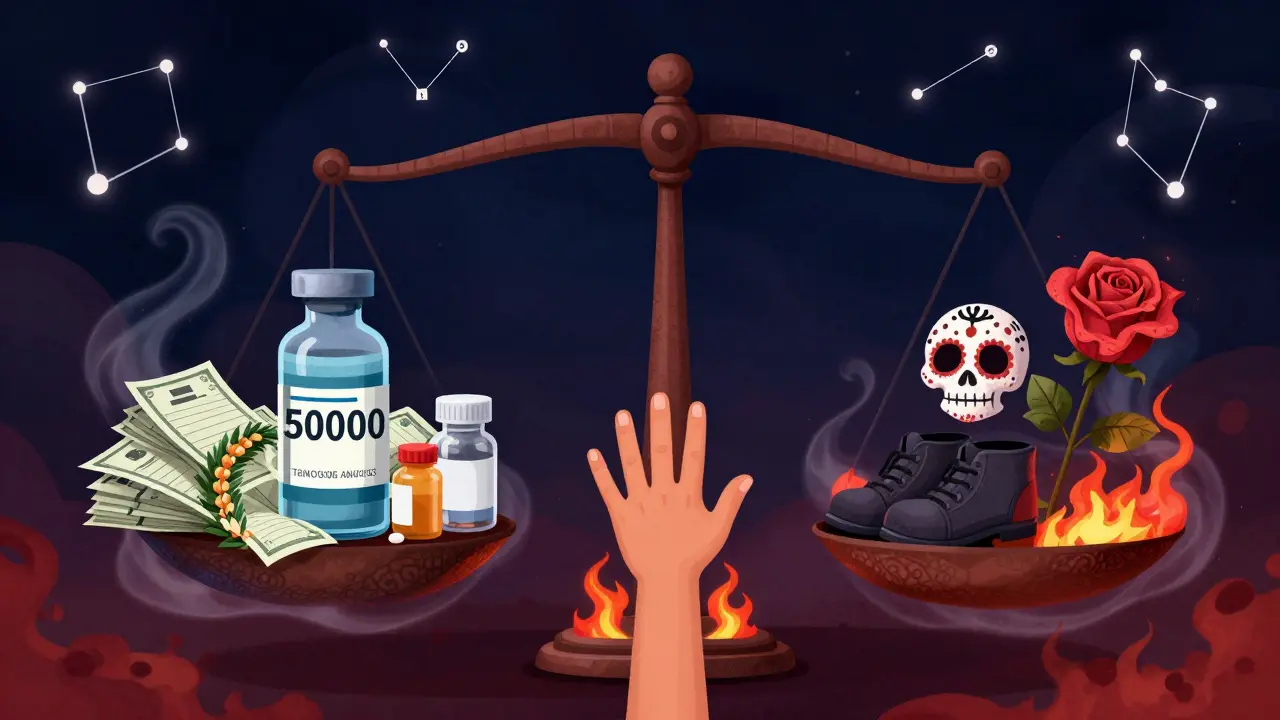
Take the case of a 52-year-old woman with rheumatoid arthritis. She tried six different drugs over eight years. Each one failed. Her joints were crumbling. She couldn’t hold a spoon. Then she started on a biologic that cost $18,000 a month. Her out-of-pocket? $3,000. She got a patient assistance program. Within three months, she was gardening again. She went back to work part-time. She didn’t just gain health - she regained her life.
How to Navigate the System
If you’re facing an expensive medication, here’s what you need to do:- Ask for financial help - 90% of drugmakers have patient assistance programs. Some cover 100% of costs. Call the manufacturer directly - don’t wait for your doctor to tell you.
- Check nonprofit foundations - Organizations like the Chronic Disease Fund or Patient Access Network Foundation give grants to cover copays. They’re not magic, but they help.
- Understand your insurance phases - Medicare Part D has a “donut hole.” You pay more after you hit a certain spending limit. Know when it hits. Plan ahead.
- Get a specialty pharmacy case manager - These are real people who work with insurers, pharmacies, and your doctor. They can cut through red tape. Ask your doctor to connect you.
- Compare net price, not list price - The sticker price is fake. What matters is what the insurer actually pays after rebates. Use VA or Federal Supply Schedule numbers as rough guides.
The Bigger Picture
The U.S. spends more on prescription drugs than any other country. In 2022, specialty drugs made up 54% of pharmacy spending - but only 3% of prescriptions. That’s the imbalance. And it’s getting worse. By 2030, specialty drugs will be 79% of pharmacy costs.But here’s the truth: we can’t afford to stop innovation. We can’t afford to let people die because a drug is too expensive. We also can’t afford to keep paying $1 million for a treatment that only extends life by three months with no quality improvement.
The future lies in better pricing - not less innovation. The Inflation Reduction Act’s new drug price negotiations starting in 2026 will target 10 drugs first. They’re a start. But real change needs transparency. We need to know what drugs actually do. We need to know how much they cost to make. We need to stop pretending that every new drug is a miracle.
For now, the decision is personal. It’s emotional. It’s brutal. But when the math lines up - when the side effects are worth the gain - people will choose the expensive drug every time. Because sometimes, the cost isn’t the problem. The alternative is.
Why are some medications so expensive if they’re just pills?
Many high-cost drugs aren’t simple pills - they’re biologics or gene therapies made from living cells. These require complex labs, sterile environments, and months of testing. Each batch is custom-made for one patient. That’s why they cost tens or hundreds of thousands of dollars. A $500,000 CAR-T therapy isn’t a pill - it’s a personalized treatment using your own immune cells.
Do side effects always make expensive drugs not worth it?
No. Many patients accept serious side effects if the drug offers a cure or dramatic improvement. For example, CAR-T therapy can cause life-threatening cytokine release syndrome, but 78% of patients still say it was worth it because it ended their cancer. Side effects matter - but not as much as dying.
Can I get help paying for expensive drugs?
Yes. Drug manufacturers offer patient assistance programs that cover 40% of out-of-pocket costs on average. Nonprofits like the Chronic Disease Fund gave $2.1 billion in aid in 2022. Specialty pharmacy case managers can also help navigate insurance and find financial support. Don’t assume you’re on your own - ask your doctor or pharmacist.
Why doesn’t the U.S. negotiate drug prices like other countries?
The U.S. has no centralized agency that evaluates drug value before it’s sold. Other countries like the UK and Germany use health technology assessments to reject drugs that aren’t worth the cost. The U.S. lets drugmakers set prices, and insurers fight to cover them. The Inflation Reduction Act started negotiations in 2026, but it only applies to 10 drugs - and excludes most expensive ones.
Are expensive drugs really more effective than cheaper ones?
Sometimes. Independent reviews like Prescrire International found only 7 out of 100 new drugs in 2023 offered major progress over existing ones. But for rare diseases or cancer, new drugs can be the only option. A $10,000 drug might work for 40% of patients. A $500,000 drug might work for 80% - and save lives where others fail.
Marie Crick
February 19, 2026 AT 04:54This is why we need to stop pretending pharmaceutical companies are saints.
Maddi Barnes
February 20, 2026 AT 18:03Look, I get it - $500k sounds insane until you’re the parent of a kid who’s been through 3 rounds of chemo and still has leukemia. My cousin got CAR-T last year. She was in the hospital for 3 weeks with cytokine storm, lost 20 lbs, couldn’t talk for 4 days… but she’s back in 4th grade now. She’s drawing dinosaurs and eating ice cream. I’d pay $1M for that. People who say ‘it’s not worth it’ haven’t sat in a pediatric oncology ward at 2am watching their child breathe through a tube. 🥺
Taylor Mead
February 21, 2026 AT 07:50Agreed with Maddi. The real issue isn’t the cost - it’s that we let drug companies set prices like they’re auctioning off a rare Picasso. The science is amazing. The business model? Broken. We need transparency on R&D costs, not just ‘value-based pricing’ nonsense. Also, why do we let insurers negotiate behind closed doors? Patients shouldn’t be collateral damage.
Hariom Sharma
February 22, 2026 AT 11:46As someone from India, I’ve seen how people here wait years just to get basic meds. But reading this made me realize - even if it’s expensive, if it saves a life, it’s worth fighting for. I hope the U.S. finds a way to make this fair. No one should have to choose between medicine and rent. 💪
Greg Scott
February 23, 2026 AT 07:08My mom took that $18k/month biologic for RA. She’s been off opioids for 2 years. She can hold my baby now. I don’t care how much it costs - she’s alive and happy. That’s the metric that matters.
Scott Dunne
February 23, 2026 AT 14:56It’s laughable that Americans think this is a ‘moral’ issue. In Europe, we don’t waste billions on treatments that extend life by 3 months with no quality of life gain. The U.S. system is a joke - subsidizing pharma greed under the guise of ‘innovation.’ We need price caps, not patient stories.
Jeremy Williams
February 24, 2026 AT 17:33I’m a bioethicist. The ICER framework is flawed because it assumes all QALYs are equal. But what about a child who gets to go to prom? Or a grandmother who watches her granddaughter graduate? These aren’t numbers. They’re human moments. And yes - they’re worth more than $150k per QALY. The math fails when it ignores meaning.
Nina Catherine
February 26, 2026 AT 00:45my sister got the gene therapy for sma and it cost 2.1 million… but now she walks. i mean, walks. with a walker. but still. she went from being in a wheelchair to feeding herself. we got help from a nonprofit and her insurance covered 90%. still… i cried every time i had to sign the paperwork. this system is broken but the science? pure magic. 🥹
Robert Shiu
February 26, 2026 AT 01:46Hey - if you’re reading this and you’re struggling to afford meds, please reach out. I work with a nonprofit that helps people get patient assistance. You don’t have to suffer because you’re scared to ask. I’ve seen too many people quit because they think they’re alone. You’re not. I’m here. Let’s get you help. 💙
Benjamin Fox
February 26, 2026 AT 15:57USA BEST HEALTHCARE IN THE WORLD 😎
Amrit N
February 27, 2026 AT 09:16my uncle got the hepatitis c cure in 2020… paid 8k out of pocket. no side effects. cured. no more liver transplants. no more monthly doctor visits. he saved 200k in lifetime care. so yeah… the ‘expensive’ drug was cheaper. dumb system.
Courtney Hain
February 28, 2026 AT 14:24Let’s be real - the $500k drugs aren’t even the real problem. The real scam is how Big Pharma uses orphan drug status to charge 10x more for drugs that treat 500 people. They create fake rare diseases. I’ve seen the internal emails. They fund patient advocacy groups to push for approval. Then they jack up prices. And Congress lets them. The Inflation Reduction Act? A distraction. They’re still selling ‘miracle’ drugs that are just repackaged generics. The FDA is complicit. Wake up.
Chris Beeley
March 1, 2026 AT 19:51As a Nigerian with a PhD in pharmacoeconomics from UCL, let me tell you - the entire Western model of drug pricing is a colonial relic. You pay $500k because you’ve been conditioned to believe innovation = luxury. Meanwhile, in India, we produce CAR-T equivalents for $15k using decentralized bioreactors. But no, we can’t export because ‘patents’. The real miracle? The fact that we’ve been doing this quietly for a decade while you all scream about ‘costs’.
Ashley Paashuis
March 2, 2026 AT 19:54Thank you for writing this with such depth. As a nurse who’s seen patients choose between insulin and groceries, I can’t tell you how much this matters. The data is clear. The humanity is clear. The system? Still failing. But stories like the 52-year-old woman gardening again? That’s why we keep fighting. We need policy change - but we also need to keep sharing these truths. You did that. Thank you.